



الصفحة 2
الصفحة 2
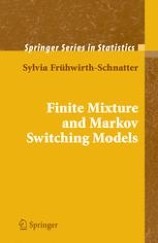
Finite Mixture and Markov Switching Models
The prominence of finite mixture modelling is greater than ever. Many important statistical topics like clustering data, outlier treatment, or dealing with unobserved heterogeneity involve finite mixture models in some way or other. The area of potential applications goes beyond simple data analysis and extends to regression analysis and to non-linear time series analysis using Markov switching models.It is the first time that the Bayesian perspective of finite mixture modelling is systematically presented in book form. It is argued that the Bayesian approach provides much insight in this context and is easily implemented in practice. Although the main focus is on Bayesian inference, the author reviews several frequentist techniques, especially selecting the number of components of a finite mixture model, and discusses some of their shortcomings compared to the Bayesian approach. The aim of this book is to impart the finite mixture and Markov switching approach to statistical modelling to a wide-ranging community. This includes not only statisticians, but also biologists, economists, engineers, financial agents, market researcher, medical researchers or any other frequent user of statistical models. This book should help newcomers to the field to understand how finite mixture and Markov switching models are formulated, what structures they imply on the data, what they could be used for, and how they are estimated.

Evolution Algebras and their Applications
Behind genetics and Markov chains, there is an intrinsic algebraic structure. It is defined as a type of new algebra: as evolution algebra. This concept lies between algebras and dynamical systems. Algebraically, evolution algebras are non-associative Banach algebras; dynamically, they represent discrete dynamical systems. Evolution algebras have many connections with other mathematical fields including graph theory, group theory, stochastic processes, dynamical systems, knot theory, 3-manifolds, and the study of the Ihara-Selberg zeta function. In this volume the foundation of evolution algebra theory and applications in non-Mendelian genetics and Markov chains is developed, with pointers to some further research topics.

Empirical Techniques in Finance
This book offers the opportunity to study and experience advanced empi- cal techniques in finance and in general financial economics. The book focuses on the contemporary empirical techniques used in the analysis of financial markets and how these are implemented using actual market data. With an emphasis on Implementation, this book helps foc- ing on strategies for rigorously combing finance theory and modeling technology to extend extant considerations in the literature. The main aim of this book is to equip the readers with an array of tools and techniques that will allow them to explore financial market problems with a fresh perspective. In this sense it is not another volume in eco- metrics. Of course, the traditional econometric methods are still valid and important; the contents of this book will bring in other related modeling topics that help more in-depth exploration of finance theory and putting it into practice. As seen in the derivatives analysis, modern finance theory requires a sophisticated understanding of stochastic processes. The actual data analyses also require new Statistical tools that can address the unique aspects of financial data. To meet these new demands, this book explains diverse modeling approaches with an emphasis on the application in the field of finance.

Eigenvalues, Inequalities, and Ergodic Theory
A problem of broad interest – the estimation of the spectral gap for matrices or differential operators (Markov chains or diffusions) – is covered in this book. The area has a wide range of applications, and provides a tool to describe the phase transitions and the effectiveness of random algorithms. In particular, the book studies a subset of the general problem, taking some approaches that have, up till now, only appeared largely in the Chinese literature.Eigenvalues, Inequalities and Ergodic Theory serves as an introduction to this developing field, and provides an overview of the methods used, in an accessible and concise manner.

Discrete-Time Markov Chains : Two-Time-Scale Methods and Applications
The motivation stems from existing and emerging applications in optimization and control of complex hybrid Markovian systems in manufacturing, wireless communication, and financial engineering. Much effort in this book is devoted to designing system models arising from these applications, analyzing them via analytic and probabilistic techniques, and developing feasible computational algorithms so as to reduce the inherent complexity. This book presents results including asymptotic expansions of probability vectors, structural properties of occupation measures, exponential bounds, aggregation and decomposition and associated limit processes, and interface of discrete-time and continuous-time systems. One of the salient features is that it contains a diverse range of applications on filtering, estimation, control, optimization, and Markov decision processes, and financial engineering.

Dependence in Probability and Statistics
This book gives a detailed account of some recent developments in the field of probability and statistics for dependent data. The book covers a wide range of topics from Markov chain theory and weak dependence with an emphasis on some recent developments on dynamical systems, to strong dependence in times series and random fields. A special section is devoted to statistical estimation problems and specific applications. The book is written as a succession of papers by some specialists of the field, alternating general surveys, mostly at a level accessible to graduate students in probability and statistics, and more general research papers mainly suitable to researchers in the field. The first part of the book considers some recent developments on weak dependent time series, including some new results for Markov chains as well as some developments on new notions of weak dependence. This part also intends to fill a gap between the probability and statistical literature and the dynamical system literature. The second part presents some new results on strong dependence with a special emphasis on non-linear processes and random fields currently encountered in applications. Finally, in the last part, some general estimation problems are investigated, ranging from rate of convergence of maximum likelihood estimators to efficient estimation in parametric or non-parametric time series models, with an emphasis on applications with non-stationary data.

Data Mining in Bioinformatics
8. 1. 1 Protein Subcellular Location The life sciences have entered the post-genome era where the focus of biological research has shifted from genome sequences to protein functionality. Withwhole-genomedraftsofmouseandhumaninhand,scientistsareputting more and more e?ort into obtaining information about the entire proteome in a given cell type. The properties of a protein include its amino acid sequences, its expression levels under various developmental stages and in di?erent tissues, its3Dstructure and activesites,its functionalandstructural binding partners, and its subcellular location. Protein subcellular location is important for understanding protein function inside the cell. For example, the observation that the product of a gene is localized in mitochondria will support the hypothesis that this protein or gene is involved in energy metabolism. Proteins localized in the cytoskeleton are probably involved in intracellular tra?cking and support.

Cycle Representations of Markov Processes
This book provides new insight into Markovian dependence via the cycle decompositions. It presents a systematic account of a class of stochastic processes known as cycle (or circuit) processes - so-called because they may be defined by directed cycles. An important application of this approach is the insight it provides to electrical networks and the duality principle of networks. This edition adds new advances, which reveal wide-ranging interpretations of cycle representations such as homologic decompositions, orthogonality equations, Fourier series, semigroup equations, and disintegration of measures. The text includes chapter summaries as well as a number of detailed illustrations.

Cooperative systems : Control and optimization
This book provides an insight in the basic understanding of cooperative systems as well as in theory, modeling, and applications of cooperative control, optimization and related problems.

Controlled Markov Processes and Viscosity Solutions
This book is intended as an introduction to optimal stochastic control for continuous time Markov processes and to the theory of viscosity solutions. Stochastic control problems are treated using the dynamic programming approach. It approachs stochastic control problems by the method of dynamic programming. The fundamental equation of dynamic programming is a nonlinear evolution equation for the value function. For controlled Markov diffusion processes, this becomes a nonlinear partial differential equation of second order, called a Hamilton-Jacobi-Bellman (HJB) equation. Typically, the value function is not smooth enough to satisfy the HJB equation in a classical sense. Viscosity solutions provide framework in which to study HJB equations, and to prove continuous dependence of solutions on problem data. The theory is illustrated by applications from engineering, management science, and financial economics.

Continuous time processes for finance : Switching, self-exciting, fractional and other recent dynamics
This book explores recent topics in quantitative finance with an emphasis on applications and calibration to time-series. This last aspect is often neglected in the existing mathematical finance literature while it is crucial for risk management. The first part of this book focuses on switching regime processes that allow to model economic cycles in financial markets. After a presentation of their mathematical features and applications to stocks and interest rates, the estimation with the Hamilton filter and Markov Chain Monte-Carlo algorithm (MCMC) is detailed. A second part focuses on self-excited processes for modeling the clustering of shocks in financial markets.

Computer Performance Engineering ; 5th European Performance Engineering Workshop, EPEW 2008, Palma de Mallorca, Spain, September 24-25, 2008. Proceedings
This book constitutes the proceedings of the Fifth European Performance Engineering Workshop, EPEW 2008, held in Palma de Mallorca, Spain, in September 24-25, 2008.
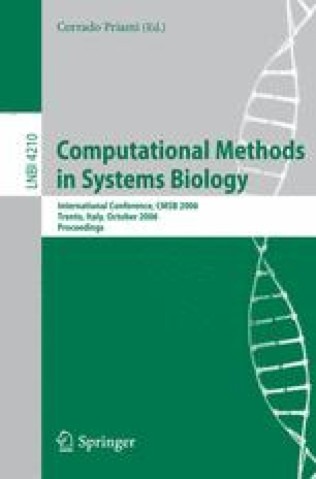
Computational methods in systems biology ; Vol. 4210 ; International Conference, CMSB 2006, Trento, Italy, October 18-19, 2006, Proceedings
This book constitutes the refereed proceedings of the International Conference on Computational Methods in Systems Biology, CMSB 2006, held in Trento, Italy, in October 2006. The papers present a variety of techniques from computer sciences, such as language design, concurrency theory, software engineering, and formal methods.
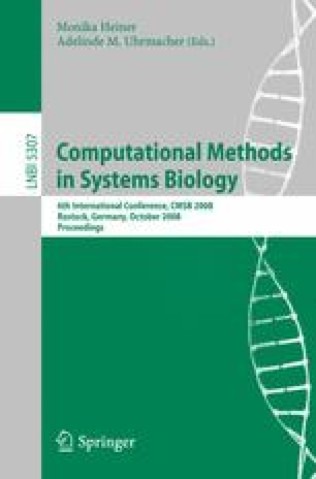
Computational methods in systems biology ; 6th International Conference CMSB 2008, Rostock, Germany, October 12-15, 2008. Proceedings
This book constitutes the refereed proceedings of the 6th International Conference on Computational Methods in Systems Biology, CMSB 2008, held in Rostock, Germany, in September 2008.
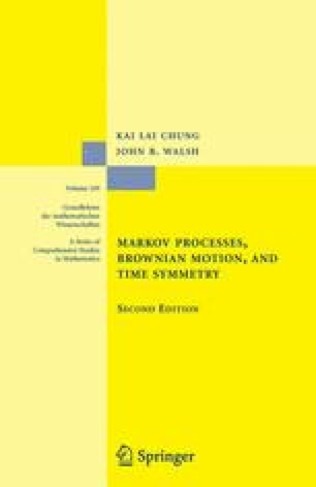
Markov Processes, Brownian Motion, and Time Symmetry
The book consists of two parts. Part I,This part introduces strong Markov processes and their potential theory. In particular,it studies Brownian motion, and shows how it generates classical potential theory.Part II, focus on the effects of time reversal, duality, and time-symmetry on potential theory. Certain theorems in Part I are re-proved in Part II under slightly weaker hypotheses. The volume is very useful for people who wish to learn Markov processes but it seems to the reviewer that it is also of great interest to specialists in this area who could derive much stimulus from it. One can be convinced that it will receive wide circulation." (Mathematical Reviews)
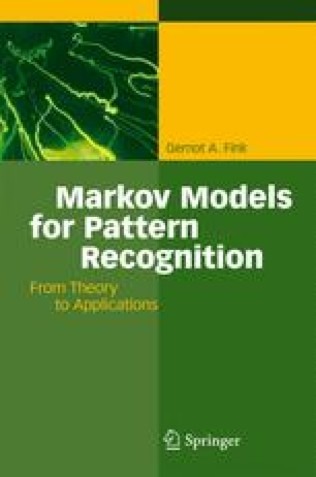
Markov Models for Pattern Recognition : From Theory to Applications
Describes the underlying theoretical concepts - covering Hidden Markov models and Markov chain models - and presents the techniques and algorithmic solutions essential to creating real world applications. The actual use of Markov models in their three main application areas - namely speech recognition, handwriting recognition, and biological sequence analysis - is presented with examples of successful systems.
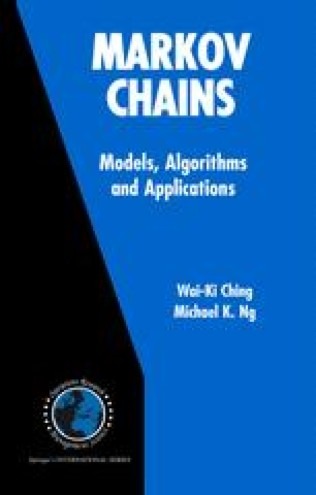
Markov Chains : Models, Algorithms and Applications
Markov chains are a particularly powerful and widely used tool for analyzing a variety of stochastic (probabilistic) systems over time. This monograph will present a series of Markov models, starting from the basic models and then building up to higher-order models. Included in the higher-order discussions are multivariate models, higher-order multivariate models, and higher-order hidden models. In each case, the focus is on the important kinds of applications that can be made with the class of models being considered in the current chapter. Special attention is given to numerical algorithms that can efficiently solve the models. Therefore, Markov Chains: Models, Algorithms and Applications outlines recent developments of Markov chain models for modeling queueing sequences, Internet, re-manufacturing systems, reverse logistics, inventory systems, bio-informatics, DNA sequences, genetic networks, data mining, and many other practical systems.
Lectures on Probability Theory and Statistics : Ecole d'Eté de Probabilités de Saint-Flour XXXIII - 2003
Contains two of the three lectures that were given at the 33rd Probability Summer School in Saint-Flour (July 6-23, 2003). Amir Dembo’s course is devoted to recent studies of the fractal nature of random sets, focusing on some fine properties of the sample path of random walk and Brownian motion. In particular, the cover time for Markov chains, the dimension of discrete limsup random fractals, the multi-scale truncated second moment and the Ciesielski-Taylor identities are explored. Tadahisa Funaki’s course reviews recent developments of the mathematical theory on stochastic interface models, mostly on the so-called nabla varphi interface model. The results are formulated as classical limit theorems in probability theory, and the text serves with good applications of basic probability techniques.
Le raisonnement bayésien : Modélisation et inférence = Bayesian reasoning : Modeling and inference
Describes in detail the practice of the Bayesian statistical approach using many examples chosen for their educational interest. The first part gives the general principles of statistical modeling making it possible to supervise but also to come to the aid of the imagination of the apprentice modeler. By examining examples of increasing difficulty, the reader forges the keys to building their own model. The second part presents the most useful calculation algorithms for estimating the unknowns of the model. Each inference method is presented and illustrated by numerous application cases.

Le choix bayésien: Principes et pratique
Covers the so-called Bayesian approach to statistical inference and in particular its decision-making aspects. The bases of this axiomatics (choice of the a priori, optimal decisions, tests and regions of confidence) are discussed in detail, as well as more recent openings of Bayesian analysis such as the choice of models, the use of numerical methods. Stochastic approximation (MCMC), the theory of noninformative laws (Berger-Bernardo axioms) and the relation to the classical theory of admissibility. Each chapter is completed by an extensive series of exercises of increasing difficulty and by bibliographical notes on the themes addressed. This book can be used in a Master's program in Applied Mathematics, Biometrics, Econometrics or any other program that uses quantitative information processing techniques. It only requires a basic course in probability theory and mathematical statistics as a preliminary.
