



الصفحة 2
الصفحة 2

Diagnostica per immagini dellapparato urogenitale = Imaging of the urogenital system
The work is divided into nine parts and deals with normal macroscopic and radiological anatomy in the first six chapters, to then consider the individual malformative, lithiasic, inflammatory and neoplastic pathologies.

CONCREEP 10 : Mechanics and physics of creep, shrinkage, and durability of concrete and concrete structures
Contains 187 papers invited on the basis of carefully peer-reviewed abstracts. It elucidates the intricacies of concrete, linking atomistic physics to real life civil engineering design. Topics include: microstructures and micromechanics; multiscale creep, shrinkage, fracture, and durability properties; constitutive and numerical modeling; simulation and design of concrete structures; molecular- to lab-scale simulations and characterization of concrete; macroscopic material testing; creep and shrinkage of concrete under extreme conditions; monitoring of concrete structures and exploitation of measurement data; and creep and shrinkage properties of new cementitious materials.

Computer Simulations of Liquid Crystals and Polymers ; Proceedings of the NATO Advanced Research Workshop on Computational Methods for Polymers and Liquid Crystalline Polymers, Erice, Italy. 16-22 July 2003
Liquid crystals, polymers and polymer liquid crystals are soft condensed matter systems of major technological and scientific interest. An understanding of the macroscopic properties of these complex systems and of their many and interesting peculiarities at the molecular level can nowadays only be attained using computer simulations and statistical mechanical theories. Both in the Liquid Crystal and Polymer fields a considerable amount of simulation work has been done in the last few years with various classes of models at different special resolutions, ranging from atomistic to molecular and coarse-grained lattice models. Each of the two fields has developed its own set of tools and specialized procedures and the book aims to provide a state of the art review of the computer simulation studies of polymers and liquid crystals. This is of great importance in view of a potential cross-fertilization between these connected areas which is particularly apparent for a number of experimental systems like, e.g. polymer liquid crystals and anisotropic gels where the different fields necessarily merge. An effort has been made to assess the possibilities of a coherent description of the themes that have developed independently, and to compare and extend the theoretical and computational techniques put forward in the different areas.

Mathematical Modeling of Complex Biological Systems : A Kinetic Theory Approach
Describes the evolution of several socio-biological systems using mathematical kinetic theory. Specifically, it deals with modeling and simulations of biological systems—comprised of large populations of interacting cells—whose dynamics follow the rules of mechanics as well as rules governed by their own ability to organize movement and biological functions. The authors propose a new biological model for the analysis of competition between cells of an aggressive host and cells of a corresponding immune system.Because the microscopic description of a biological system is far more complex than that of a physical system of inert matter, a higher level of analysis is needed to deal with such complexity. Mathematical models using kinetic theory may represent a way to deal with such complexity, allowing for an understanding of phenomena of nonequilibrium statistical mechanics not described by the traditional macroscopic approach. The proposed models are related to the generalized Boltzmann equation and describe the population dynamics of several interacting elements (kinetic population models).The particular models proposed by the authors are based on a framework related to a system of integro-differential equations, defining the evolution of the distribution function over the microscopic state of each element in a given system. Macroscopic information on the behavior of the system is obtained from suitable moments of the distribution function over the microscopic states of the elements involved.

Manual of Benirschke and Kaufmanns Pathology of the Human Placenta
Benirschke and Kaufmann's Pathology of the Human Placenta has long been regarded as the gold standard in the field. It is comprehensive and thorough and contains the detail necessary for those in the subspecialties of placental, perinatal and pediatric pathology. However, placentas are relatively common specimens and are not examined primarily by specialists in the field, but by general pathologists. Thus, there is a need for a more practical and concise manual that can be used by pathology trainees and generalists in their daily work. Manual of Benirschke and Kaufmann's Pathology of the Human Placenta will fill that need. The Manual is a practical, user-friendly guidebook for the general pathologist and pathologist in training for everyday, bench-side use. Organized in 27 chapters, the book will discuss placental development, general features, approach to the specimen by macroscopic and microscopic evaluation, all aspects of placental abnormalities and lesions, disease processes and the placenta, legal aspects of the placental examination, future directions and much more. The sections on macroscopic and microscopic evaluations feature quick-reference tables that allow the reader to identify abnormalities, learn the situations where they occur, and refer back to the text for in-depth discussions. Each chapter will end with selected readings from Pathology of the Human Placenta for more detailed discussions, classic recommended readings, as well as an up-to-date bibliography of current literature. The manual features over 444 illustrations, more than 100 of them in full-color. A must-have for every pathologist and pathology resident.

Macroscopic Transport Equations for Rarefied Gas Flows : Approximation Methods in Kinetic Theory
This book discusses classical and modern methods to derive macroscopic transport equations for rarefied gases from the Boltzmann equation, for small and moderate Knudsen numbers, i.e.as well as the new order of magnitude method, which avoids the short-comings of the classical methods, but retains their benefits.
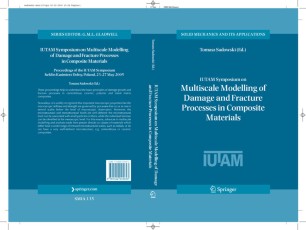
IUTAM Symposium on Multiscale Modelling of Damage and Fracture Processes in Composite Materials ; Proceedings of the IUTAM Symposium held in Kazimierz Dolny, Poland, 23-27 May 2005
This volume constitutes the Proceedings of the IUTAM Symposium. The main aim of the Symposium was to discuss the basic principles of damage growth and fracture processes in different types of composites: ceramic, polymer and metal matrix composites, cement and bituminous composites and wood. Nowadays, it is widely recognized that important macroscopic properties like the macroscopic stiffness and strength, are governed by processes that occur at one to several scales below the level of observation starting from nanoscale.

Chemical Kinetics and Reaction Dynamics
Chemical Kinetics and Reaction Dynamics brings together the major facts and theories relating to the rates with which chemical reactions occur from both the macroscopic and microscopic point of view. This book helps the reader achieve a thorough understanding of the principles of chemical kinetics and includes: *Detailed stereochemical discussions of reaction steps / *Classical theory based calculations of state-to-state rate constants / *A collection of matters on kinetics of various special reactions such as micellar catalysis, phase transfer catalysis, inhibition processes, oscillatory reactions, solid-state reactions, and polymerization reactions at a single source. / The growth of the chemical industry greatly depends on the application of chemical kinetics, catalysts and catalytic processes.

Biology and mechanics of blood flows ; Part II : Mechanics and medical aspects
Biology and Mechanics of Blood Flows presents the basic knowledge and state-of-the-art techniques necessary to carry out investigations of the cardiovascular system using modeling and simulation. Part II of this two-volume sequence, Mechanics and Medical Aspects, refers to the extraction of input data at the macroscopic scale for modeling the cardiovascular system, and complements Part I, which focuses on nanoscopic and microscopic components and processes. This volume contains chapters on anatomy, physiology, continuum mechanics, as well as pathological changes in the vasculature walls including the heart and their treatments. Methods of numerical simulations are given and illustrated in particular by application to wall diseases. This authoritative book will appeal to any biologist, chemist, physicist, or applied mathematician interested in the functioning of the cardiovascular system.
