



الصفحة 2
الصفحة 2

Eutrophication in the Baltic Sea : Present Situation, Nutrient Transport Processes, Remedial Strategies
This book takes a holistic process-based ecosystem perspective on the eutrophication in the Baltic Sea, with a focus on the factors regulating how the system would respond to changes in nutrient loading. This includes a very special process for the Baltic Sea: land uplift. After being depressed by the glacial ice, the land is now slowly rising adding vast amounts of previously deposited nutrients and clay particles to the system.

Environmental Security and Public Safety ; Problems and Needs in Conversion Policy and Research after 15 Years of Conversion in Central and Eastern Europe
Although the end of the Cold War has paved the way to a substantial demilitarisation and conversion, the leftovers of this process – such as former military installations, military training areas, and huge quantities of unserviceable ammunition and equipment – still pose a severe threat to the environment of both NATO and Partner countries.The rehabilitation of these areas for civilian uses is extremely costly and is generally in the short and medium term not possible. For this reason, the development of new methods for the estimation avoidance of risks should receive special priority. In the context of this ARW, the reconnaissance and appraisal of conversion areas with respect to costs, returns, and legal considerations were discussed. The decades-long use of some areas led to the heavy loading of contaminates. Every task of conversion has as its goal the elimination of dangers to humans and nature, and the return of areas to civil use, such that these areas can be used realise economic interests of the society.

Engineering Damage Mechanics : Ductile, Creep, Fatigue and Brittle Failures
Engineering Damage Mechanics is deliberately oriented toward applications of Continuum Damage Mechanics to failures of mechanical and civil engineering components in ductile, creep, fatigue and brittle conditions depending upon the thermomechanical loading and the materials: metals and alloys, polymers, elastomers, composites, concretes. Nevertheless, to help engineers, researchers, beginners or not, the first two chapters are devoted to the main concepts of damage mechanics and to the associated computational tools.

Dynamics of soils and their engineering applications
Offers systematic dynamic analysis of soils and their engineering applications, including machine foundations, and aims to develop a clear understanding of the subject. It comprises sixteen chapters. Chapter 1 introduces the reader to the various problems in soil dynamics. In Chapter 2, concepts of theory of vibrations are discussed along with their applications in designing Vibration Absorbers and Pickups. Wave propagation in elastic medium including wave refraction in layered medium is covered in Chapter 3. Chapter 4 deals with the procedure of determining dynamic properties of soils using various laboratory and field tests. Dynamic earth pressures in retaining walls and dynamic bearing capacity of footings are dealt with in Chapters 5 and 6 respectively

Dynamics of Freezing-Thawing Soil around Subway Shield Tunnels
Addresses development laws for axial strain and excess pore water pressure in silty clay around subway shield tunnels before and after freezing-thawing when subjected to subway loading, as well as the effect of freezing-thawing on the dynamic parameters of silty clay, including the dynamic modulus and damping ratio, introducing readers to the design and construction of bypasses in subway tunnels with the artificial freezing method. On this basis, it then studies the microstructures of silty clay before and after freezing-thawing cyclic loading by means of scanning electron microscope tests and mercury intrusion porosimetry tests. Lastly, the book presents a numerical simulation of the dynamics of silty clay around subway tunnels before and after thawing.

Diagrid structures : systems, connections, details
Diagrids are load-bearing structures made of steel diagonal grids. They were first used in the great buildings of the turn of the millennium, such as the Swiss Re Tower in London ("The Gherkin") and the Hearst Magazine Tower in New York City. Dagrids owe their ensuing popularity not only to their stunning aesthetic value, but also to their very tangible benefits: lateral loading capacity, a massive saving of material, a significant gain in open, usable floor area, and increased flexibility. At its opening in 2014, the Leadenhall Building in London will be the first skyscraper without a bearing inner core-thanks to a diagrid structure.

Designers' guide to EN1991-1-2, EN1992-1-2, EN1993-1-2 and EN1994-1-2 : Handbook for the fire design of steel, composite and concrete structures to the Eurocodes
The nature of the loading must first be understood before applying the structural engineering principles set out in the Eurocodes. For this reason this book is meant as a guide to four separate documents, EN1991 Part 1.2, EN1992 Part 1.2, EN1993 Part 1.2 and EN1994 Part 1.2 with reference where appropriate to the Eurocode covering the basis of design, EC06.

Control of cracking in reinforced concrete structures
Provides guidelines which can extend the existing standards and codes to cover these types of special works, especially those which are massive in nature, taking account of their specific behaviour in terms of cracking and shrinkage together with other important properties such as water/air leak tightness

Mathematical Methods in Electro-Magneto-Elasticity
The mechanics of Coupled Fields is a discipline at the edge of modern research connecting Continuum Mechanics with Solid State Physics. It integrates the Mechanics of Continuous Media, Heat Conductivity and the theory of Electromagnetism that are usually studied seperately. For an accurate description of the influence of static and dynamic loadings, high temperatures and strong electromagneticfields in elastic media and constructive installations, a new aproach is required; an approach that has the potential to establish a synergism between the above-mentioned fields. Throughout the book a vast number of problems are considered: two-dimensional problems of electro-magneto-elasticity as well as static and dynamical problems for piecewise homogenous compound piezoelectric plates weakened by cracks and openings. The boundary conditions, the constuctive equations and the mathematical methods for their solution are thoroughly presented, so that the reader can get a clear quantative and qualitative understnding of the phenomena taking place.

Material Properties under Intensive Dynamic Loading
Understanding the physical and thermomechanical response of materials subjected to intensive dynamic loading is a challenge of great significance in engineering today. This volume assumes the task of gathering both experimental and diagnostic methods in one place, since not much information has been previously disseminated in the scientific literature. This book will thus be an invaluable companion for both the seasoned practioner as well as for the novice entering the field of experimental shock physics.
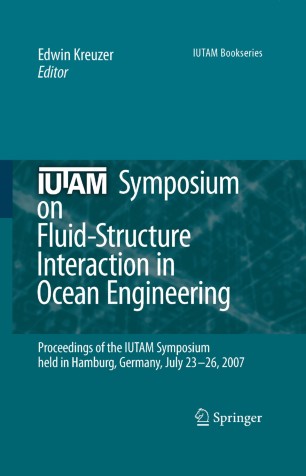
IUTAM Symposium on Fluid-Structure Interaction in Ocean Engineering ; Proceedings of the IUTAM Symposium held in Hamburg, Germany, July 23-26, 2007
This book collects contributions from leading scientists working on the following topics: Ocean waves, probabilistic models of sea waves, fluid-loading on structures including pipes, cables, drill-strings etc., behavior of floating systems, stability and capsizing of ships, coupled structural behavior, sloshing in tanks, CFD validation and verification.

ITI treatment guide, Vol.14 : Immediate implant placement and loading-single or multiple teeth requiring replacement
Outlines the current literature on immediate implant placement and immediate loading and elaborates on our understanding of the biology surrounding tooth extraction and osseointegration that underpin these treatment concepts. The importance of patient and site selection in conjunction with comprehensive treatment planning is highlighted and a risk assessment tool to aid decision making is provided. All key aspects of both the surgical and loading procedures are described in order to provide protocols that optimize the final treatment outcome. This volume also presents 9 step-by-step clinical cases performed by experts in the field, and typical complications of immediate implants are discussed, along with recommendations on how these can be prevented.

ITI treatment guide ; Vol.2 : Loading protocols in implant dentistry : Partially dentate patients
ITI Treatment Guide series is a compendium of evidence-based implant therapy techniques in daily practice. Using an illustrated step-by-step approach, renowned clinicians demonstrate how to manage different clinical situations with an emphasis on sound diagnostics, evidence-based treatment, and predictable outcomes.

ITI treatment guide ; Vol 4 : Loading protocols in implant dentistry : Edentulous patients
The ITI Treatment Guide series is a compendium of evidence-based implant therapy techniques in daily practice. Using an illustrated step-by-step approach, renowned clinicians demonstrate how to manage different clinical situations with an emphasis on sound diagnostics, evidence-based treatment, and predictable outcomes.

Circuit and Interconnect Design for RF and High Bit-Rate Applications
Circuit and Interconnect Design for RF and High Bit-rate Applications covers each of these topics from theory to practice, with sufficient detail to help you produce circuits that are ‘first-time right’. A thorough analysis of the interplay between on-chip circuits and interconnects is presented.

Building a Data Warehouse : With Examples in SQL Server
The book is organized as follows. In the beginning of this book (chapters 1 through 6), you learn how to build a data warehouse, for example, defining the architecture, understanding the methodology, gathering the requirements, designing the data models, and creating the databases. Then in chapters 7 through 10, you learn how to populate the data warehouse, for example, extracting from source systems, loading the data stores, maintaining data quality, and utilizing the metadata. After you populate the data warehouse, in chapters 11 through 15, you explore how to present data to users using reports and multidimensional databases and how to use the data in the data warehouse for business intelligence, customer relationship management, and other purposes. Chapters 16 and 17 wrap up the book: After you have built your data warehouse, before it can be released to production, you need to test it thoroughly. After your application is in production, you need to understand how to administer data warehouse operation.
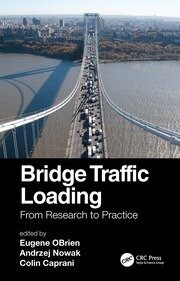
Bridge traffic loading : From research to practice
Delivers not just the state-of-the-art of vertical loading, but also to provide recommendations of best-practice for all the major challenges in the field – short-span, single and multi-lane bridge loading, dynamic allowance and long-span bridges. It reviews issues that continue to be debated, such as which statistical distribution is most appropriate, whether free-flowing or congested traffic governs and dealing with future traffic growth. Specialist consultants and bridge owners should find this invaluable, as will regulators.

Blast effects on buildings
Provides the latest practical guidance on designing buildings to optimise their resilience to blast loading. Focused specifically on the design of commercial buildings, it is an indispensible guide to help engineers reduce the risks posed to building occupants and businesses from terrorist and other explosions. This book provides the engineer with a single and comprehensive source of reference for all the main elements of blast engineering design in modern practice. Industry-accepted methods for the design of glazing to resist blast loading are published for the first time, as well as a new chapter on hostile vehicle mitigation techniques. Guidance on structural steelwork and reinforced concrete design is extended and enhanced, supplemented with material on design in new materials such as steel-concrete-steel composites, this latter addition being published for the first time.

Biology and mechanics of blood flows ; Part I : Biology
Biology and Mechanics of Blood Flows presents the basic knowledge and state-of-the-art techniques necessary to carry out investigations of the cardiovascular system using modeling and simulation. Part I of this two-volume sequence, Biology, addresses the nanoscopic and microscopic scales. The nanoscale corresponds to the scale of biochemical reaction cascades involved in cell adaptation to mechanical stresses among other stimuli. The microscale is the scale of stress-induced tissue remodeling associated with acute or chronic loadings. The cardiovascular system, like any physiological system, has a complicated three-dimensional structure and composition. Its time dependent behavior is regulated, and this complex system has many components.
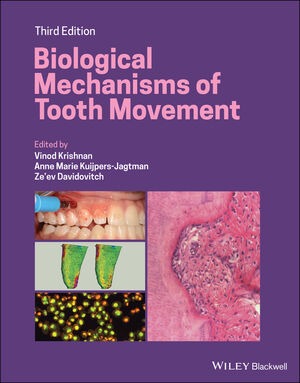
Biological mechanisms of tooth movement ; 3rd ed.
Cover subjects such as: The development of biological concepts in orthodontics, including the cellular and molecular biology behind orthodontic tooth movement Mechanics meets biology, including the effects of mechanical loading on hard and soft tissues and cells, and biological reactions to temporary anchorage devices Inflammation and orthodontics, including markers for tissue remodeling in the gingival crevicular fluid and saliva Personalized diagnosis and treatment based on genomic criteria, including the genetic influences on orthodontic tooth movement Rapid orthodontics, including methods to accelerate or decelerate orthodontic tooth movement Perfect for residents and PhD students of orthodontic and periodontal programs, Biological Mechanisms of Tooth Movement is also useful to academics, clinicians, bone biologists, and researchers with an interest in the mechanics and biology of tooth movement.
