


تحسين النتائح
ترتيب حسب
من
الى


This auto-translation book demonstrates a time series of nutrition improvement in Japan since the introduction of nutrition sciences to Japan about 150 years ago. The chapters present the historical event where nutritional deficiency due to food shortage was improved in almost a century, by the introduction of nutrition policy and practices such as the "Nutrition Improvement Law". The book contributed to the construction of a longevity nation by resolving the double burden of malnutrition, which is a mixture of undernutrition and overnutrition and creating a social environment in which sustainable healthy diets can be accessed.
It is evident that a defective or deregulated complement system results in kidney diseases. An important role of complement effector and regulatory proteins in pathological settings of the kidney has been demonstrated. A large panel of distinct human kidney diseases is caused by defective complement control. Genetic analyses have identified mutations in complement regulators that are associated with these diseases. Mutations have been identified in the fluid phase alternative pathway regulator Factor H and the membrane regulator Membrane Cofactor Protein MCP (CD46). The functional characterization of the mutant proteins allows to define the pathophysiological events on a molecular level. These new concepts and data on disease mechanisms allowed establishing new diagnostic and promising therapeutic approaches for several human kidney diseases. Molecular biology, clinics and therapy are discussed in this volume.
Science produces fascinating puzzles: why is there such a range of placental structures when other mammalian organs are so structurally uniform ? Why and how did the different placental structures evolve ? Comparative placental studies can facilitate the identification of the common factors in placental growth, differentiation and function and their relevance to possible evolutionary pathways. Comparative Placentation is the only book presenting up-to-date data illustrating the great variety of structure but uniform function of vertebrate placentas from fish to man. This information is essential for selection of suitable models to investigate particular practical problems of impaired or anomalous growth in human and animal placentation. The unique collection of the best light and electron micrographs from the last thirtyfive years which precisely illustrate the structural range in each taxon, make the book the most authoritative publication in this field and a vital source of information for anyone interested on reproductive physiology, anatomy and medicine.
This volume reviews today’s knowledge about hepatitis with emphasis on comparative aspects between hepatitis in humans and animals, but also between different etiological agents. This particular viewpoint makes the book relevant for scientists from both human and veterinary medicine, gastroenterologists, pathologists, virologists and students of human and veterinary medicine.
Combines data from human embryology, animal research and developmental neuropathology. This book provides an overview of the development of the human Central Nervous System (CNS) in the context of its many developmental disorders due to genetic, environmental and hypoxic causes. It highlights numerous clinical cases and contains over 400 figures.

Functional magnetic resonance imaging (fMRI) has contributed significantly to progress in neuroscience by permitting noninvasive imaging of the "human brain at work" under physiological conditions. Within clinical neuroimaging, fMRI is opening up a new diagnostic field by measuring and visualizing brain function. However, fMRI is not yet a standard diagnostic imaging procedure. This textbook is devoted to preoperative fMRI in patients with brain tumors and epilepsies, which are the most well-established clinical applications. By localizing and lateralizing specific brain functions in individual patients, as well as epileptogenic zones, fMRI facilitates the selection of a safe treatment and the planning and performance of function-preserving neurosurgery.
Covers the latest advancements in the study of ciliary complexity. Protocols cover genomic, proteomic, imaging, and functional analysis of different ciliated tissues and their wide applicability in cilia biology. Chapters in this book primarily focus on methods to study multiciliated cells, and discuss topics such as SARS-CoV-2 infections of human primary nasal multiciliated epithelial cells; expansion microscopy of ciliary proteins; live-imaging centriole amplification in mouse brain multiciliated cells; biophysical properties of cilia motility; and mucociliary transport device construction. Written in the highly successful Methods in Molecular Biology series format, chapters include introductions to their respective topics, lists of the necessary materials and reagents, step-by-step, readily reproducible laboratory protocols, and tips on troubleshooting and avoiding known pitfalls.
Cytogenetics is a very important research tool in basic and applied research. The uses of cytogenetics in human-population monitoring, in biological dosimetry in radiation accidents and in astronauts and as a predictive measure of cancer are topics discussed in this book. The book will help the reader to better understand cytogenetics and the intricacies of the methodology. The different methods of fluorescence in situ hybridization are discussed and the results achieved are presented. The book provides a comprehensive review of basic and applied aspects of cytogenetics and therefore will be of interest to all who are interested in chromosomes and their alterations by different types of mutagens, including chemical mutagens and ionizing and nonionizing radiation, with special reference to electromagnetic fields.
It is more evident now than ever before that dynamic organization of human genome into nucleoprotein structure, chromatin confers the unique regulatory mechanisms for most of the cellular phenomena, which include replication, transcription, DNA repair, recombination and also apoptosis. The dynamic nature of the chromatin is regulated by chromatin modifications (epigenetic alterations), remodeling, histone chaperones and functional interactions of different chromatin interacting n- histone proteins. Dysfunction of this highly inter connected machineries disturb the cellular homoeostasis, and thereby causes several diseases. As we advance in our knowledge of chromatin function and also disease mechanisms in more details, their causal relationship is becoming more evident. This has lead to the identification of chromatin function as target for new generation therapeutics.
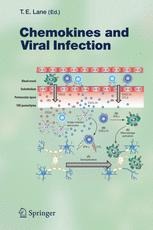
This edition of Current Topics in Microbiology and Immunology examines the role of chemokines and chemokine receptors in host defense and disease development following viral infection. Chemokines represent a family of over 40 small proteins that, for the most part, are secreted into the environment and function by binding to G protein-coupled receptors (GPCRs) that are expressed on numerous different cell types. When initially identified close to 30 years ago, these molecules were associated with various human inflammatory diseases and it was recognized that expression may be integral in leukocyte recruitment to inflamed tissue. There are now four sub-families of chemokines identified based on defined structural criteria relating to the positional location of conserved cysteine residues within the amino-terminus of the protein. Chemokines are now recognized as important in numerous biological processes ranging from maintaining the organizational integrity of secondary lymphoid tissue to participating in various aspects of both innate and adaptive immune responses following microbial infection. With this in mind, this book highlights the functional roles of chemokines and their receptors in participating in various aspects of the immune response against well-known viral pathogens.
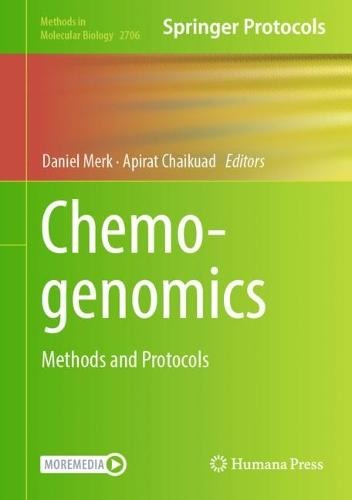
Presents both theoretical guidance and protocols on chemogenomics including chemogenomics library assembly, compound profiling, and phenotypic assays. The chapters in this book cover topics such as the assembly and use of Kinase Chemogenomics; data mining for chemogenomic compound candidates; protocols for protein family-focused assay systems to profile chemogenomic compounds; functional and target engagement assays in cellular settings for broad characterization; and a discussion on phenotypic assays where chemogenomic sets may be applied.
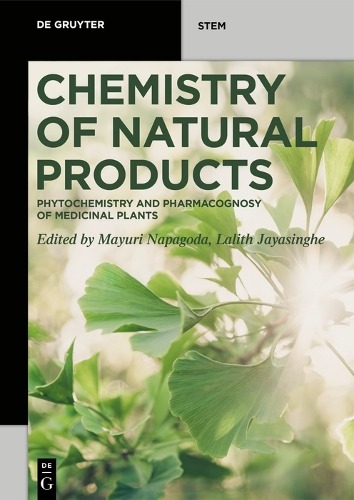
Plants produce secondary metabolites that humans harness for their own benefit. About half of drugs currently in clinical use are based on these chemicals found in nature. Chemistry of Natural Products covers secondary metabolites present in medicinal plants and their biosynthesis, biological activities, and isolation and separation techniques.
Presents the proceedings of "Chemical Signals in Vertebrates 11", hosted by the University of Liverpool and held July 25 - 28, 2006 at the University of Chester in the United Kingdom. Chemical Signals in Vertebrates 11 contains the latest research on chemical communication relevant to vertebrates, particularly focusing on new research since the last meeting in 2003. Topics covered include chemical ecology, biochemistry, behavior and neurobiology of both the main olfactory and vomeronasal systems of vertebrates, from amphibia to mammals including humans. A broad range of taxonomic groups and topics are discussed, including sections on new directions in semiochemistry, olfactory response and function, recognition within species, sexual communication, maternal-offspring communication, communication between species, and applications for zoo animal enrichment and pest control. The volume is dedicated to the memory of Dr. Bets Rasmussen and includes a special tribute chapter on her ground-breaking research on elephant communication.
This book also represents the tenth in a series of books on chemical communication, chemical ecology, olfactory and vomeronasal research in vertebrate species. The species covered in the chapters herein range from fish to mammals including humans. By taxonomic breakdown the mammals are the most represented in number of species and chapter contributions. However, the hosts of the meeting endeavored to have some representative contributions covering all of the major vertebrate taxa.
This comprehensive volume, written by experts in the field, provides a current understanding of the molecular properties of the heat shock proteins and their roles in health and disease. Cell Stress Proteins includes advances in several aspects of stress protein research, with chapters ranging from basic studies of the role of heat shock proteins in protein folding to reviews examining the breakdown of stress protein regulation during disease. It also provides analysis of the biochemical and molecular properties of heat shock proteins which can be utilized in evaluating their role in human physiology and pathology. Cell Stress Proteins is an ideal book for researchers, clinicians, physicians, and graduate students in the fields of biochemistry, cell biology, microbiology, immunology, and genetics.
In this volume, the expression of specific adhesion molecules within human cancer tissues are highlighted. The expression signatures from published DNA microarray and immunohistochemistry studies are detailed. The concept that the alteration of specific adhesion molecules influence the cancer migration ability and cancer damage responses is detailed in this volume; both features are essential for the survival of an invading tumor cell. Defining the minimal adhesion receptors preserved on cancer cells during tumor progression will define the metastatic adhesion signature. Understanding the metastatic adhesion signature will reveal vulnerabilities that could be exploited for the prevention and/or eradication of the invading cancer cell.
For about hundred years the investigation of heart physiology has had one central guiding principle, the "law" of Frank and Starling. This connects the return of blood into the heart and the blood pressure with cardiac con traction force. The "law" does it in a way that enables the cardiovascular system to react to perturbations without major malfunctions. This book is a compilation of reviews of prominent scientists on this subject. The differ ence of the original formulation of the Frank-Starling principle is that mechanotransduction is the central theme that leads the reader through the book. Since the discovery of the "law" the scope of topics related to this subject has broadened enormously, as can be seen easily by glancing at the contents of this book. Mechanotransduction in the heart has many faces that range from molecules to humans and their diseases.
Discussions on topics such as gene suppression, editing, and reprogramming; cardiac gene therapy vectors and promoters; cardiac gene delivery methods; pulmonary hypertension; and patient screening and measuring the efficacy of cardiac gene therapy. Written in the highly successful Methods in Molecular Biology series format, chapters include introductions to their respective topics, lists of the necessary materials and reagents, step-by-step, readily reproducible laboratory protocols, and tips on troubleshooting and avoiding known pitfalls.
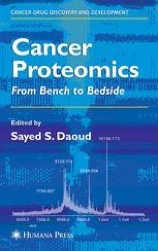
the authors collectively provide the current status of proteomics in cancer therapy and offers the existing technologies used in proteomics that allow for protein profiling and for the identification of druggable targets in human samples. Mass spectrometry based protein characterization and protein microarrays hold great promise of predicting response to specific drugs in cancer therapy. Insightful to the reader with broad perspectives on topics related to the use of proteomic strategies in cancer therapy, Cancer Proteomics offers anticipated challenges that may arise from its application in daily practice.
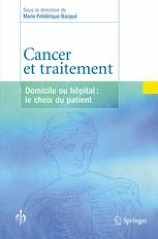
This book takes stock of the needs, expectations and challenges of caring for a cancer patient at home or in hospital. Indeed, if the number of cancer cases is increasing in Western countries, their management is evolving. The emphasis today is on a more humane announcement of the disease, less aggressive treatments and a better quality of life. Better informed patients often wish to be treated at home. As the survival time lengthens, hospital stays are reduced and chosen. Home care teams will soon be relying on the hospital more easily, thanks to specific communication methods and care networks. Here, all the stakeholders involved in the psycho-oncological approach to the patient discuss the choice of place and means of treatment for patients: from the general practitioner to the psychologist, from the oncologist to the mobile palliative care unit.

سوريا - اتستراد درعا - غباغب
+963-15 2050 - 15 860 380 /1/2/3 - 11 662 3900