



الصفحة 2
الصفحة 2
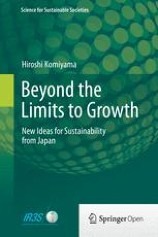
Beyond the limits to growth : New ideas for sustainability from Japan
This book offers an optimistic view of the future and provides a road map for societies to get there. Drawing upon extensive research and many years as a thought leader in environmental and sustainability issues in Japan and internationally, Hiroshi Komiyama analyzes the most pressing challenges to the attainment of sustainability of economically advanced nations and argues forcefully for Japan to lead them out of the present dilemma through active promotion of creative consumer and societal demand. He shows how an active industry–government–academic partnership can provide the environment needed to promote such new creative demand and illustrates its potential through presentation of a Platinum Society Network that was launched on a regional basis in Japan in 2010 to facilitate the solution of common issues through the exchange of information and ideas.

Advances in Renewable Energy and Sustainable Environment : Select Proceedings of NCRESE 2019
comprises the select peer-reviewed proceedings of the National Conference on Renewable Energy and Sustainable Environment (NCRESE) 2019. brings together the latest developments in harvesting, storing and optimizing alternate and renewable energy resources. It covers latest developments in green energy technologies as well as smart grids, and their applications towards a sustainable environment. can be useful for beginners, academicians, entrepreneurs, and professionals interested in renewable energy technologies and sustainable environment practices.

Achieving the Paris climate agreement goals : Global and regional 100% renewable energy scenarios with non-energy GHG Pathways for +1.5°C and +2°C
Presents detailed pathways to achieve 100% renewable energy by 2050, globally and across ten geographical regions. Based on state-of-the-art scenario modelling, it provides the vital missing link between renewable energy targets and the measures needed to achieve them. Bringing together the latest research in climate science, renewable energy technology, employment and resource impacts, the book breaks new ground by covering all the elements essential to achieving the ambitious climate mitigation targets set out in the Paris Climate Agreement. For example, sectoral implementation pathways, with special emphasis on differences between developed and developing countries and regional conditions, provide tools to implement the scenarios globally and domestically. Non-energy greenhouse gas mitigation scenarios define a sustainable pathway for land-use change and the agricultural sector. Furthermore, results of the impact of the scenarios on employment and mineral and resource requirements provide vital insight on economic and resource management implications.
