



الصفحة 2
الصفحة 2

Innovation Capacity and the City : The Enabling Role of Design
This book represents one of the key milestones of DESIGNSCAPES: value creation through design-enabled innovation”. The book demonstrates that adopting design allows us to embed innovation within the city so as to arrive at feasible answers to complex global challenges. In this way, innovation can become disruptive, while also sparking a dynamic of gradual change in the “urbanscape” it acts within. To explore this potential, the book puts forward the concept of “design enabled innovation in urban environments” and examines the part that the city can play in promoting and facilitating the adoption of design among public and private sector innovators. This leads to a potential evaluation framework in which a given urbanscape is assessed both in terms of its capacity for generating innovation, and of the nature (more or less design-dependent or design-prone) of the innovative initiatives it hosts. This thread of reasoning holds many promising implications, including a possible “third way” between those who dream of an alternative economic model where revenues and growth are sacrificed on the altar of social and environmental respect, and the supporters of the traditional market-based view, who feel it is enough to add a touch of responsibility and concern to a system that should continue rewarding the profitability of innovations.

Icons of Space : Advances in Hierotopy
Brings together important scholars of Byzantine religion, art, and architecture, to honour the work of renowned art historian Alexei Lidov. As well as his numerous publications, Lidov is well known for developing the concept of hierotopy, an innovative approach for studying the creation of sacred spaces. Hierotopy and the related concepts of ‘spatial icons’ and ‘image-paradigms’ emphasize fundamental questions about icons, including what defines them as structures, spaces, and experiences.

Human-Nature Interactions : Exploring Nature’s Values Across Landscapes
Highlights how humans value nature, the opportunities and challenges in changing socio-ecological systems / Provides insights into concepts and methods to study human-nature relationships, designed for a broad audience / Focus on integrative approaches exploring interactions across different scales, intensity levels and landscapes

Housing Estates in the Baltic Countries : The Legacy of Central Planning in Estonia, Latvia and Lithuania
This book focuses on the formation and later socio-spatial trajectories of large housing estates in the Baltic countries—Estonia, Latvia, and Lithuania. It also explores claims that a distinctly “westward-looking orientation” in their design produced housing estates that were superior in design to those produced elsewhere in the Soviet Union. The first two parts of the book provide contextual material to help readers understand the vision behind housing estates in Estonia, Latvia, and Lithuania. These sections present the background of housing estates in the Baltic Republics as well as challenges and debates concerning their formation, evolution, and present condition and importance.

Housing Estates in Europe : Poverty, Ethnic Segregation and Policy Challenges
Explores the formation and socio-spatial trajectories of large housing estates in Europe. Are these estates clustered or scattered? Which social groups originally had access to residential space in housing estates? What is the size, scale and geography of housing estates, their architectural and built environment composition, services and neighbourhood amenities, and metropolitan connectivity? How do housing estates contribute to the urban mosaic of neighborhoods by ethnic and socio-economic status? What types of policies and planning initiatives have been implemented in order to prevent the social downgrading of housing estates?The collection of chapters in this book addresses these questions from a new perspective previously unexplored in scholarly literature. The social aspects of housing estates are thoroughly investigated (including socio-demographic and economic characteristics of current and past inhabitants; ethnicity and segregation patterns; population dynamics; etc.), and the physical composition of housing estates is described in significant detail (including building materials; building form; architectural and landscape design; built environment characteristics; etc.).

Home
Develops the conceptual and methodological underpinnings of a critical geography of home, drawing on key feminist, postcolonial, and housing thinkers as well as contemporary methodological currents in non-representational thinking and performance. The book’s chapters consider the making and unmaking of home across the domestic scale – house-as-home; the urban – city-as-home; national – nation-as-home; and homemaking in relation to transnational migration and diaspora. Each chapter includes illustrative examples from diverse geographical contexts and historical time periods. Chapters also address some of the key cross-cutting dimensions of home across these scales, including digital connectivity, art and performance, more-than-human constructions of home, and violence and dispossession.

Historical Seismology : Interdisciplinary Studies of Past and Recent Earthquakes
Modern seismology has faced new challenges in the study of earthquakes and their physical characteristics. This volume is dedicated to the use of new approaches and presents a state of the art in historical seismology. Selected historical and recent earthquakes are chosen to document and constrain related seismic parameters using updated methodologies in the macroseismic analysis, field observations of damage distribution and tectonic effects, and modelling of seismic waveforms. A critical re-evaluation of historical accounts and early seismograms provides us with the basis for a realistic seismic hazard assessment.

High-quality outdoor learning : Evidence-based education Outside the classroom for children, teachers and society
Reviews evidence and case studies on the effects of outdoor learning on teachers and learners. It shows how real-world learning outside the classroom contributes to unlocking the full potential of learners, demonstrating its benefits for academic learning, social competencies, personal and emotional development, psychological well-being, and physical activity and health. In addition, the book highlights how outdoor learning nurtures environmental awareness and helps learners to tackle current sustainability challenges. Its focus on high-quality learning makes it a unique contribution to the implementation of SDG 4. Aimed at lecturers at teacher training universities, teachers, professional educators, coaches, and multipliers who train staff of educational NGOs, as well as decision makers on all levels of education systems, this book is of interest to all those who seek a more in-depth understanding of the future of education.

Highly-Skilled Migration : Between Settlement and Mobility: IMISCOE Short Reader
This book discusses the emerging patterns of sedentary migration versus mobility of the highly-skilled thereby providing a comprehensive overview of the recent literature on highly-skilled migration. Highly-skilled migrations are arguably the only non-controversial migrant category in political and public discourse.

High mountain conservation in a changing world
This book aims to provide case studies and a general view of the main processes involved in the ecosystem shifts occurring in the high mountains, and to analyse the implications for nature conservation. Although case studies from the Pyrenees are preponderant, conclusions are aimed at any mountain range surrounded by highly populated lowland areas. The chapters give emphasis to approaches from environmental geography, functional ecology, biogeography, and paleoenvironmental reconstructions. The introductory and closing chapters summarize the main challenges that nature conservation may face in mountain areas under the environmental shifting conditions.

Herbals of Asia : Prevalent diseases and their treatments
Excellent source of information by identifying hundreds of medicinal herbs and unfolding their medicinal uses for treatment of prevalent diseases Presents recent developments in research on medicinal plants for different diseases, formulation of products, and market strategy Research scholars in relevant field, health practitioners, herbalists and pharmaceutical industries will benefit from the text’s rich list of references as well as plant field photographs Demonstrates the global relevance of sharing local knowledge, and highlights the need to make information on plants available on a worldwide basis

Groundwater Management in Asian Cities : Technology and Policy for Sustainability
The number of city dwellers who do not have access to piped water and rely on groundwater is also increasing. In many Asian cities, groundwater is not only the source of domestic water but also an important resource for industrial development, making better management of groundwater resources essential for sustainable development. Because groundwater is easier to access and costs less than water from piped systems, groundwater abstraction cannot be easily regulated. Policies for groundwater management adopted in Japan and other Asian countries are compared, and technologies for efficient use of groundwater are elucidated. Groundwater contamination is also a serious problem that exacerbates water scarcity in Asian cities. Case studies illustrate the cause and consequences of naturally occurring contaminants such as arsenic and fluoride, and groundwater contamination due to anthropogenic contaminants is described. Also discussed are technologies for treating contaminated groundwater to reduce the health risks of drinking contaminated groundwater.

Groundwater Dynamics in Hard Rock Aquifers : Sustainable Management and Optimal Monitoring Network Design
Groundwater is of utmost importance in the arid and semi-arid environment. The areas in such regions are forced to face a variety of problems regarding groundwater as it is the main source of water no matter for any use viz., drinking, domestic, irrigation or industrial particularly for the rural population. The main challenges in hard rock areas in the semi-arid region are the water conservation, management and planning of the water resources. This is further complicated with several complexities of the geological formation. With the semi-arid environment, complex geological settings and over shooting stresses, the aquifer system becomes extremely fragile and sensitive. In spite of a good amount of research in this field, it is still needed to understand the behaviour of such complex system precisely and also apply the result in reasonably larger scales.

Greening the Greyfields : New Models for Regenerating the Middle Suburbs of Low-Density Cities
This book outlines new concepts, development models, governance and implementation processes capable of addressing the challenges of transformative urban regeneration of cities at precinct scale.

Green economy in the transport sector : A case study of Limpopo Province, South Africa
This book provides policy framework on “towards a Green Economy in the Transport Sector” draws inspiration from the UNEP report on Green Economy Modeling (2014), which focused on South Africa with respect to Transport, Natural Resource Management, Agriculture, and Energy sectors. This is because in the last 10 years natural resources, environmental risks and ecological issues have come to the attention of the international community because the subject is fundamentally important for overarching sustainable growth. It is important to note that environmental problems such as greenhouse gas emissions and climate change in different regions of the world including South Africa result in significant problems.

Governing the Sustainable Development Goals : Quantification in Global Public Policy
This book conceptualises the Sustainable Development Goals as epistemic infrastructures that connect numbers, networks and governing paradigms.The book approaches quantification not merely as a tool for governing, but rather as a broader epistemic system through which global public policy is produced. This book focuses on the role of international organisations in shaping and implementing the 2030 Agenda and demonstrates how the SDGs have transformed and accelerated trends in quantification.
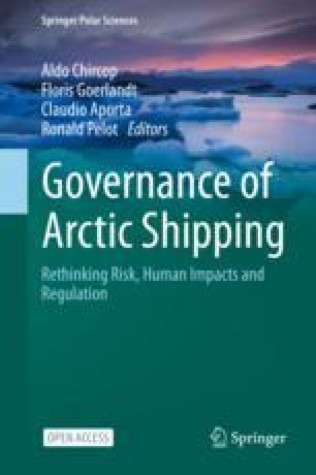
Governance of Arctic Shipping : Rethinking Risk, Human Impacts and Regulation
This is a result of the Dalhousie-led research project Safe Navigation and Environment Protection, supported by a grant from the Ocean Frontier Institute’s the Canada First Research Excellent Fund (CFREF).

Globalization and Environmental Challenges : Reconceptualizing Security in the 21st Century
This book contiants chapters address the theoretical, philosophical, ethical and religious and spatial context of security; discuss the relationship between security, peace, development and environment; review the reconceptualization of security in philosophy, international law, economics and political science and for the political, military, economic, social and environmental security dimension and the adaptation of the institutional security concepts of the UN, EU and NATO; analyze the reconceptualization of regional security and alternative security futures and draw conclusions for future research and action.
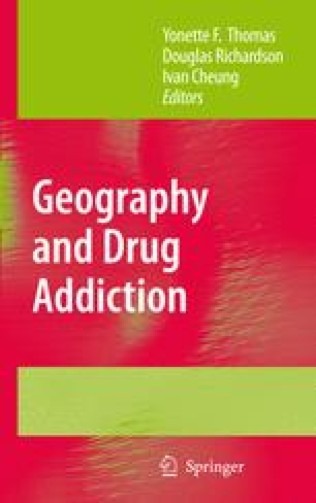
Geography and Drug Addiction
لإhis book contains drug addiction contributes to better understanding the etiology of addiction, its diffusion, its interaction with geographically variable environmental, social, and economic factors, and the strategies for its treatment and prevention. This book explores links between geography and drug abuse and identifies research ideas, connections, and research pathways which point to some promising avenues for future work in this area

Geographies of the University
Raises awareness of the histories, geographies, and practices of universities and analyzes their role as key actors in today’s global knowledge economy. Universities are centers of research, teaching, and expertise with significant economic, social, and cultural impacts at different geographical scales. Scholars from a variety of disciplines and countries offer original analyses and discussions along five main themes: historical perspectives on the university as a site of knowledge production, cultural encounter, and political interest; institutional perspectives on university governance and the creation of innovative environments; relationships between universities and the city; the impact of universities on national and regional economies and cultures; and the processes of internationalization through student mobility, the creation of education hubs, and global regionalism in higher education.
