



الصفحة 2
الصفحة 2
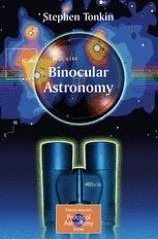
Binocular astronomy
Anyone who has used a binocular telescope or even wide-field binoculars to look at the night sky will know just how breathtakingly beautiful the view can be when you observe with both eyes. Observing galaxies and nebulae with ‘regular’ prismatic binoculars is just a beginning. Binocular eyepieces and adapters can be added to almost any commercially-made astronomical telescope, and of course specialized astronomical binoculars can be assembled or purchased complete. These range from modest instruments to giants that are basically two large telescopes mounted together. Binocular Astronomy contains everything you’ll need to know about this exciting branch of astronomical observing.
Astrophysics Update 2
"Astrophysics Updates" is intended to serve the information needs of professional astronomers and postgraduate students about areas of astronomy, astrophysics and cosmology that are rich and active research spheres. Observational methods and the latest results of astronomical research are presented as well as their theoretical foundations and interrelations. The contributed commissioned articles are written by leading exponents in a format that will appeal to professional astronomers and astrophysicists who are interested in topics outside their own specific areas of research. This collection of timely reviews may also attract the interest of advanced amateur astronomers seeking scientifically rigorous coverage.
Astrophysics is easy! : An introduction for the amateur astronomer
With some justification, many amateur astronomers believe astrophysics is a very difficult subject, requiring at least degree-level mathematics to understand it properly. This isn’t necessarily the case. Mike Inglis' quantitative approach to the subject explains all aspects of astrophysics in simple terms and cuts through the incomprehensible mathematics with which this fascinating subject is all too often associated. Astrophysics is Easy! begins by looking at the H-R diagram and other basic tools of astrophysics, then ranges across the universe, from a first look at the interstellar medium and nebulae, through the birth, evolution and death of stars, to the physics of galaxies and clusters of galaxies.
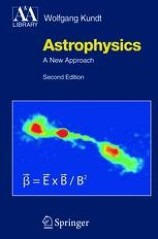
Astrophysics : A new approach
For a quantitative understanding of the physics of the universe - from the solar system through the milky way to clusters of galaxies all the way to cosmology - these edited lecture notes are perhaps among the most concise and also among the most critical ones: Astrophysics has not yet stood the redundancy test of laboratory physics, hence should be wary of early interpretations. Special chapters are devoted to magnetic and radiation processes, supernovae, disks, black-hole candidacy, bipolar flows, cosmic rays, gamma-ray bursts, image distortions, and special sources. At the same time, planet earth is viewed as the arena for life, with plants and animals having evolved to homo sapiens during cosmic time. -- This text is unique in covering the basic qualitative and quantitative tools, formulae as well as numbers, needed for the precise interpretation of frontline phenomena in astrophysical research. The author compares mainstream interpretations with new and even controversial ones he wishes to emphasize.
Astrophysical disks : Collective and stochastic phenomena
The book deals with collective and stochastic processes in astrophysical discs involving theory, observations, and the results of modelling. Among others, it examines the spiral-vortex structure in galactic and accretion disks , stochastic and ordered structures in the developed turbulence. It also describes sources of turbulence in the accretion disks, internal structure of disk in the vicinity of a black hole, numerical modelling of Be envelopes in binaries, gaseous disks in spiral galaxies with shock waves formation, observation of accretion disks in a binary system and mass distribution of luminous matter in disk galaxies.
A Pan-Chromatic View of Clusters of Galaxies and the Large-Scale Structure
The reviews presented in this volume cover a wide-range of cluster of galaxies topics like the physics of the ICM gas, the internal cluster dynamics, the detection of clusters using different observational techniques, the great advances in analytical or numerical modeling of clusters, weak and strong lensing effects, the large scale structure as traced by clusters, the cosmological significance of clusters as well as the formation and evolution of clusters within the new cosmological paradigm.
A companion to astronomy and astrophysics : Chronology and glossary with data tables
Astronomy and Astrophysics is a comprehensive, fundamental, up-to-date reference book. It is filled with vital information and basic facts for amateur astronomers and professional astrophysicists, and for anyone interested in the Universe, from the Earth and other planets to the stars, galaxies and beyond. Although serious and thorough, the language, and ideas will attract the general reader, as well as students and professionals. Astronomy and Astrophysics consists of two main parts, a Timeline and a Dictionary. The Timeline is a concise history, arranged chronologically, which provides the complete story of cosmic discovery from early Chinese and Greek astronomy to the latest findings of modern astrophysics and robotic spacecraft.
