



الصفحة 2
الصفحة 2

Corporate Entrepreneurship and Venturing
The common theme in Corporate Entrepreneurship and Venturing is how and why corporate entrepreneurship and corporate venturing can contribute to innovation and strategic renewal in large established companies. In particular it explores ways to balance exploitation and exploration in established companies. The issue is how the locus of entrepreneurship affects the way corporate entrepreneurship addresses the exploitation/exploration challenge. One stream of research focuses on the entrepreneurial culture in large companies and how they can create an environment in which intrapreneurs (entrepreneurs within large companies) can blossom. In this view entrepreneurial initiatives can emerge throughout the organization and this type of entrepreneurship has been labelled as ‘dispersed corporate entrepreneurship’. Two related chapters fit into that stream of research. The other three chapters address the challenge of corporate venture capital programs. These programs have funds to invest in start-ups (external ventures) and the corporate parent want to benefit from the technology, new products or new competences developed in these start-ups. In this case they have separated the locus of entrepreneurship from the main line of business operations, which has been labelled ‘focused corporate entrepreneurship’. In this ‘focused corporate entrepreneurship’ stream the issue is not so much the motivational factors and supportive culture to entrepreneurial initiatives, but the creation and development of linkage mechanisms between the start-ups and the parent company in order to create new combinations based on competences from both the start-up and the parent company. Although the challenges in these two streams of literature are different, they both address the strategic issue of balancing exploitation and exploration.

Low-Cost Approaches to Promote Physical and Mental Health : Theory, Research, and Practice
Most physical and mental health professionals will agree that their time, space, and funds are generally in short supply, even under optimal conditions. Their participants (clients or patients), too, will admit to similar deficits of time and patience, even with optimal motivation. Overburdened mental health facilities are trying to cope with limited budgets and overworked and underpaid personnel. Low-Cost Approaches to Promote Physical and Mental Health addresses both sides of this shortfall by offering either self-administered or easily administered verbal and non-verbal interventions designed to promote positive health behaviors while requiring little or no outside funding.

Business Ethics : The Ethical Revolution of Minority Shareholders
The empirical part of the book presents four cases of US, French and Israeli companies, most of them in high-tech, in which the minority shareholders lose almost all of their investments. The cases are based on current events and try to find the common aspects and basic rules that govern the wrongdoing to minority shareholders.The book concludes that once the minority shareholders, who are ultimately all of us, are assisted by the new vehicles of Ethics, and are properly organized, motivated and conscious of their strengths, they will be able to win their fight and safeguard their interests.

Asset allocation and private markets : A guide to investing with private equity, private debt, and private real assets
Asset Allocation and Private Markets provides institutional investors, such as pension funds, insurance groups and family offices, with a single-volume authoritative resource on including private markets in strategic asset allocation. The discussion focuses on private equity, private debt and private real assets, and their correlation with other asset classes to establish optimized investment portfolios.
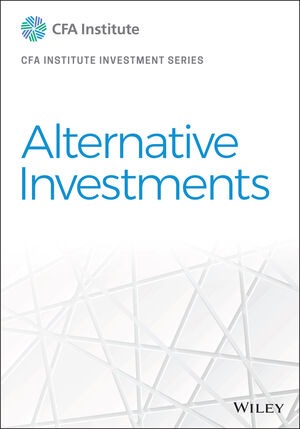
Alternative investments
Alternative Investments is the definitive guide to understanding non-traditional asset classes. Alternatives are a disparate group of investments that are distinguished from long-only, publicly traded investments in stocks, bonds, and cash (often referred to as traditional investments). Alternative investments include real estate, commodities, infrastructure, and other non-traditional investments such as private equity or debt and hedge funds.

Advances in Computer, Information, and Systems Sciences, and Engineering ; Proceedings of IETA 2005, TeNe 2005 and EIAE 2005
All aspects of the conference were managed on-line; not only the reviewing, submissions and registration processes; but also the actual conference. Conference participants - authors, presenters and attendees - only needed an internet connection and sound available on their computers in order to be able to contribute and participate in this international ground-breaking conference. The on-line structure of this high-quality event allowed academic professionals and industry participants to contribute work and attend world-class technical presentations based on rigorously refereed submissions, live, without the need for investing significant travel funds or time out of the office.

Activist Business Ethics
Examines international aspects, the personification of stakeholders, the predominance of values and ethics for CEOs and the inefficient safeguards of the stakeholders' interests. The book presents new vehicles for the safeguard of those interests, such as the Internet, Transparency, Ethical Funds and Activist Associations, and future activist vehicles, such as the Supervision Board and the Institute of Ethics.
