



الصفحة 2
الصفحة 2

Elementary physics of complex plasmas
Complex plasmas are dusty plasmas in which the density and electric charges of the dust grains are sufficiently high to induce long-range grain-grain interactions, as well as strong absorption of charged-plasma components. Together with the sources replenishing the plasma such systems form a highly dissipative thermodynamically open system that exhibits many features of collective behaviour generally found in complex systems. Most notably among them are self-organized patterns such as plasma crystals, plasma clusters, dust stars and further spectacular new structures. Beyond their intrinsic scientific interest, the study of complex plasmas grows in importance in a great variety of fields, ranging from space-plasma sciences to applied fields such as plasma processing, thin-film deposition and even the production of computer chips by plasma etching, in which strongly interacting clouds of complex plasmas can cause major contamination of the final product.

Electromagnetic Field Matter Interactions in Thermoelasic Solids and Viscous Fluids
This book in two parts delivers a thorough derivation of nonrelativistic interaction models of electromagnetic field theories with thermoelastic solids and viscous fluids, the intention being to derive unique representations for the observable field quantities. Part I, a revised and updated version of LNP 88 "Field Matter Interactions in Thermoelastic Solids," investigates the foundations and the equivalence of various formulations of the interaction of the electromagnetic field with thermoelastic solids in the classical continuum physics limit, while Part II extensively surveys two major fields of applications, namely, magnetoelastic instabilities and vibrations, and electrorheological fluids.

Dynamics of Combustion Systems
Combustion systems are confined fields of compressible fluids where exothermic processes of combustion take place, subject to boundary conditions imposed at its borders. The subject of Dynamics of Combustion Systems is presented in three parts: Part 1. Exothermicity – considering the thermodynamic effects due to evolution of exothermic energy in a combustion system Part 2. Field– exposing the dynamic properties of flow fields where the exothermic energy is deposited Part 3. Explosions – revealing the dynamic features of fields and fronts due to rapid deposition of exothermic energy

Dynamics of Combustion Systems
Combustion systems are confined fields of compressible fluids where exothermic processes of combustion take place, subject to conditions imposed at their boundaries. The subject of Dynamics of Combustion Systems is presented.

Diffusion in Condensed Matter : Methods, Materials, Models
Diffusion as the process of particle transport due to stochastic movement is a phenomenon of crucial relevance for a large variety of processes and materials. This comprehensive, handbook-style survey of diffusion in condensed matter gives detailed insight into diffusion as the process of particle transport due to stochastic movement. Leading experts in the field describe in 23 chapters the different aspects of diffusion, covering microscopic and macroscopic experimental techniques and exemplary results for various classes of solids, liquids and interfaces as well as several theoretical concepts and models. Students and scientists in physics, chemistry, materials science, and biology will benefit from this detailed compilation.

Continuum Thermomechanics
The general goal of this book is to deduce rigorously, from the first principles, the partial differential equations governing the thermodynamic processes undergone by continuum media under forces and heat. Solids and fluids are considered in a unified framework. Reacting mixtures of fluids are also included for which general notions of thermodynamics are recalled, such as the Gibbs equilibrium theory.Linear approximate models are mathematically obtained by calculating the derivatives of the constitutive response functions. They include the classical models for linear vibrations of thermoelastic solids and also for wave propagation in fluids (dissipative and non-dissipative acoustics and internal gravity waves).

Continental Scientific Drilling : A Decade of Progress, and Challenges for the Future
Scientific drilling is an indispensable tool of modern Earth science - search, as it provides the only means of obtaining direct information on processes operating at depth. Drilling allows for the determination of - situ properties of solid materials and fluids and permits testing of hypot- ses and models derived from surface observations. In addition, drill holes may be used as a natural laboratory for experiments and as observatories for long-term monitoring of on-going active processes. Earth drilling, therefore, plays a critical role in scientific research directed towards - proved understanding of the workings of our planet and has a key role in solving urgent socio-economic problems. As a rule, drilling projects are an integral component of major geosci- tific research programs, comprising comprehensive pre-site investigations, accompanying laboratory studies, the drilling phase itself, and consecutive measurements and tests in the drill hole. Such drilling programs are costly and thus only realizable to a limited extent. International cost sharing, the optimal utilization of all available resources, the incorporation of inter- tional leading experts, and the application of the existing know-how, as well as the selection of an optimal drilling location (“World Geological Site”), are thus essential elements of an international scientific drilling p- gram.

Computational Multiscale Modeling of Fluids and Solids : Theory and Applications
The book includes the micro-scale, the meso-scale and the macro-scale. The chapters follow this classification. The book will explain in detail many tricks of the trade of some of the most important methods and techniques that are used to simulate materials on the perspective levels of spatial and temporal resolution. Case studies are occasionally included to further illustrate some methods or theoretical considerations. Example applications for all techniques are provided, some of which are from the author’s own contributions to some of the research areas. Methods are explained, if possible, on the basis of the original publications but also references to standard text books established in the various fields are mentioned.

Collective Dynamics of Nonlinear and Disordered Systems
Phase transitions in disordered systems and related dynamical phenomena are a topic of intrinsically high interest in theoretical and experimental physics. This book presents a unified view, adopting concepts from each of the disjoint fields of disordered systems and nonlinear dynamics. Special attention is paid to the glass transition, from both experimental and theoretical viewpoints, to modern concepts of pattern formation, and to the application of the concepts of dynamical systems for understanding equilibrium and nonequilibrium properties of fluids and solids. The content is accessible to graduate students, but will also be of benefit to specialists, since the presentation extends as far as the topics of ongoing research work.

Mathematical Methods for Mechanics : A Handbook with MATLAB Experiments
The interaction between mathematics and mechanics is a never ending source of new developments. Today, challenging problems like space flight, gyroscope motions and tidal currents, can be studied on a laptop, feats that people still in the 1950’s dreamed of accomplishing. The present textbook addresses such problems and moreover, a wide-ranging spectrum of topics from bifurcation theory, optimization and control to rigid-body motion and continuum mechanics of elastic bodies and fluids. It fully encompasses the provision of mathematical tools up to their technical application. Because verifiability is a main element of science and numerical mathematics remain lackluster without demonstrations, a portion of the book is dedicated purely to computations.

Mathematical Foundation of Turbulent Viscous Flows : Lectures given at the C.I.M.E. Summer School held in Martina Franca, Italy, September 1-5, 2003
Five leading specialists reflect on different and complementary approaches to fundamental questions in the study of the Fluid Mechanics and Gas Dynamics equations. Constantin presents the Euler equations of ideal incompressible fluids and discusses the blow-up problem for the Navier-Stokes equations of viscous fluids, describing some of the major mathematical questions of turbulence theory.
Materials for Tomorrow : Theory, Experiments and Modelling
This book contains six chapters on central topics in materials science. Each is written by specialists in the field, and gives a state-of-the-art presentation of the subject for graduate students and scientists not necessarily working in that field. Computer simulations of new materials, theory and experimental work are all extensively discussed. As nanomaterials are of great current interest, most of the topics discussed have a bearing on nanomaterials and nanodevices. In addition to inorganic nanotubes, metallic nanocrystals, electronic nanodevices, spintronics and interfaces on an atomic scale, the text also presents computer simulations on one of the less well understood fields in solid-state physics and materials science: glasses and undercooled fluids.

Magnetohydrodynamics : Historical Evolution and Trends
Magnetohydrodynamics (MHD) studies the interaction between the flow of an electrically conducting fluid and magnetic fields. It involves such diverse topics as the evolution and dynamics of astrophysical objects, thermonuclear fusion, metallurgy and semiconductor crystal growth, etc. Although the first ideas in magnetohydrodynamics appeared at the beginning of the last century, the "explosion" in theoretical and experimental studies occurred in the 1950s-60s. This state-of-the-art book aims at revising the evolution of ideas in various branches of magnetohydrodynamics (astrophysics, earth and solar dynamos, plasmas, MHD turbulence and liquid metals) and reviews current trends and challenges.
Low-Temperature Physics
This book provides a concise but thorough introduction to important phenomena of low-temperature physics. It is ideally suited as a textbook for advanced undergraduates but will also be valuable for graduate students, scientists and engineers working in this field. Clear explanations of both theoretical and experimental approaches coupled with carefully selected problems will enable students to gain a firm understanding of even the most recent research developments.
Lattice Boltzmann Modeling : An Introduction for Geoscientists and Engineers
Lattice Boltzmann models have a remarkable ability to simulate single- and multi-phase fluids and transport processes within them. A rich variety of behaviors, including higher Reynolds numbers flows, phase separation, evaporation, condensation, cavitation, buoyancy, and interactions with surfaces can readily be simulated. This book provides a basic introduction that emphasizes intuition and simplistic conceptualization of processes. It avoids the more difficult mathematics that underlies LB models. The model is viewed from a particle perspective where collisions, streaming, and particle-particle/particle-surface interactions constitute the entire conceptual framework. Beginners and those with more interest in model application than detailed mathematical foundations will find this a powerful "quick start" guide. Example simulations, exercises, and computer codes are included. Working code is provided on the Internet
Large Eddy Simulation for Incompressible Flows : An Introduction
First concise textbook on Large-Eddy Simulation, a very important method in scientific computing and engineeringFrom the foreword to the third edition written by Charles Meneveau: ".
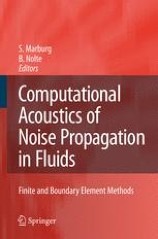
Computational Acoustics of Noise Propagation in Fluids - Finite and Boundary Element Methods
Among numerical methods applied in acoustics, the Finite Element Method (FEM) is normally favored for interior problems whereas the Boundary Element Method (BEM) is quite popular for exterior ones. That is why this valuable reference provides a complete survey of methods for computational acoustics, namely FEM and BEM. It demonstrates that both methods can be effectively used in the complementary cases. The chapters by well-known authors are evenly balanced: 10 chapters on FEM and 10 on BEM. An initial conceptual chapter describes the derivation of the wave equation and supplies a unified approach to FEM and BEM for the harmonic case. A categorization of the remaining chapters and a personal outlook complete this introduction. In what follows, both FEM and BEM are discussed in the context of very different problems.

Catalyst separation, recovery and recycling : Chemistry and process design
This book looks at new ways of tackling the problem of separating reaction products from homogeneous catalytic solutions. The new processes involve low leaching supported catalysts, soluble supports such as polymers and dendrimers and unusual solvents such as water, fluorinated organics, ionic liquids and supercritical fluids. The advantages of the different possibilities are discussed alongside suggestions for further research that will be required for commercialisation.

Barile's clinical toxicology : Principles and mechanisms ; 3rd ed.
Examines the complex interactions associated with clinical toxicological events as a result of therapeutic drug administration or chemical exposure. Special emphasis is placed on signs and symptoms of diseases and pathology caused by toxins and clinical drugs. Includes the source, pharmacological and toxicological mechanism of action, detection and identification in body fluids, and treatment of exposure. An overview of protocols for managing various toxic ingestions, and the antidotes and treatments associated with their pathology, are discussed. In addition, effect of toxins on a limited number of body systems and drug-induced adverse drug reactions are also covered

Aspects of physical biology : Biological water, protein solutions, transport and replication
The present volume focuses on three main subtopics (biological water, protein solutions as well as transport and replication), presenting for each of the them the on-going debates on recent results. The role of water in biological processes, the mechanisms of protein folding, the phases and cooperative effects in biological solutions, the thermodynamic description of replication, transport and neural activity, all are subjects that are revised in this volume, based on new experiments and new theoretical interpretations.
