



الصفحة 2
الصفحة 2

Fast, Efficient and Predictable Memory Accesses : Optimization Algorithms for Memory Architecture Aware Compilation
Fast, Efficient and Predictable Memory Accesses presents techniques for designing fast, energy-efficient and timing predictable memory systems. By using a careful combination of compiler optimizations and architectural improvements, we can achieve more than what would be feasible at one of the levels in isolation. The described optimization algorithms achieve the goals of high performance and low energy consumption. In addition to these benefits, the use of scratchpad memories significantly improves the timing predictability of the entire system, leading to tighter worst case execution time bounds (WCET). The WCET is a relevant design parameter for all timing critical systems. In addition, the book covers algorithms to exploit the power down modes of main memories in SDRAM technology, as well as the execute-in-place feature of Flash memories. The final chapter considers the impact of the register file, which is also part of the memory hierarchy.

Executing magic in the modern era : Criminal bodies and the Gallows in popular medicine
This book explores the magical and medical history of executions from the eighteenth to the early twentieth century by looking at the afterlife potency of criminal corpses, the healing activities of the executioner, and the magic of the gallows site. The use of corpses in medicine and magic has been recorded back into antiquity. The lacerated bodies of Roman gladiators were used as a source of curative blood, for instance. In early modern Europe, a great trade opened up in ancient Egyptian mummies and the fat of executed criminals, plundered as medicinal cure-alls. However, this is the first book to consider the demand for the blood of the executed, the desire for human fat, the resort to the hanged man’s hand, and the trade in hanging rope in the modern era. It ends by look at the spiritual afterlife of dead criminals.

Examining Innovation Management from a Fair Process Perspective
Companies nowadays still differ considerably in that they interact with employees. This interaction depends on different organisational cultures, leadership styles, and the ways in which information and communication take place. A recent trend, even in economic theory, is that interactions are valued in themselves and not solely to achieve rational economic maximisation. People care about outcomes, but they also care about the interactional processes that produce those outcomes. Thomas Limberg investigates a new approach to the management of human relationships in a knowledge-based work environment and analyses the relationship between fair process and innovation performance. Key findings are that social interactions have a significant influence on execution performance in organisations, and fairness can have positive effects on innovative behaviour and therefore on innovation performance. In the transition from a production-based to a knowledge-based economy, fair process is becoming a powerful tool for managing human interactions and for influencing attitudes and behaviours that are so critical in reaching high innovation performance.

Emergent Properties in Natural and Artificial Dynamical Systems
An important part of the science of complexity is the study of emergent properties arising through dynamical processes in various types of natural and artificial systems. This is the aim of this book, which is the outcome of a discussion meeting within the first European conference on complex systems. It presents multidisciplinary approaches for getting representations of complex systems and using different methods to extract emergent structures. This carefully edited book studies emergent features such as self organization, synchronization, opening on stability and robustness properties. Invariant techniques are presented which can express global emergent properties in dynamical and in temporal evolution systems. This book demonstrates how artificial systems such as a distributed platform can be used for simulation used to search emergent placement during simulation execution.

Electronics Process Technology : Production Modelling, Simulation and Optimisation
Electronics Process Technology is a systemised presentation of new techniques and methods in electronics manufacture. Planning, preparation and execution are interlinked to achieve robust manufacturing processes that realise optimum quality, costs and quantities in the final product. Topics covered include: • modelling of manufacturing processes; • graph-theoretical approach to manufacturing planning; • process simulation and optimisation including cost optimisation; • quality assurance and statistical process analysis and control; • reliability models for electronic products and • assembly accuracy.

Dynamic Analysis of Petri Net-Based Discrete Systems
Design of modern digital hardware systems and of complex software systems is almost always connected with parallelism. For example, execution of an object-oriented p- gram can be considered as parallel functioning of the co-operating objects; all modern operating systems are multitasking, and the software tends to be multithread; many complex calculation tasks are solved in distributed way. But designers of the control systems probably have to face parallelism in more evident and direct way. Controllers rarely deal with just one controlled object. Usually a system of several objects is to be controlled, and then the control algorithm naturally turns to be parallel. So, classical and very deeply investigated model of discrete device, Finite State Machine, is not expressive enough for the design of control devices and systems. Theoretically in most of cases behavior of a controller can be described by an FSM, but usually it is not convenient; such FSM description would be much more complex, than a parallel specification (even as a network of several communicating FSMs).
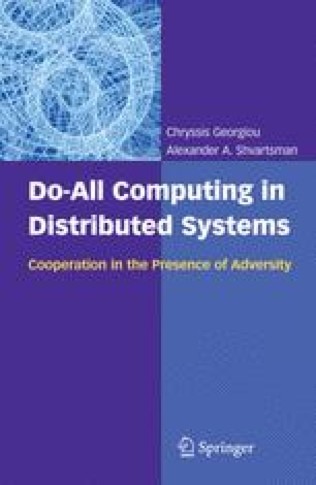
Do-All Computing in Distributed Systems : Cooperation in the Presence of Adversity
Do-All Computing in Distributed Systems: Cooperation in the Presence of Adversity is the first book that presents an in depth study of cooperation problems, abstracted in terms of the Do-All problem, where a collection of processors cooperatively perform a collection of independent tasks in the presence of adversity.

Dissecting the Criminal Corpse : Staging Post-Execution Punishment in Early Modern England
Those convicted of homicide were hanged on the public gallows before being dissected under the Murder Act in Georgian England. Yet, from 1752, whether criminals actually died on the hanging tree or in the dissection room remained a medical mystery in early modern society. Dissecting the Criminal Corpse takes issue with the historical cliché of corpses dangling from the hangman’s rope in crime studies. Some convicted murderers did survive execution in early modern England. Establishing medical death in the heart-lungs-brain was a physical enigma. Criminals had large bullnecks, strong willpowers, and hearty survival instincts. Extreme hypothermia often disguised coma in a prisoner hanged in the winter cold. The youngest and fittest were capable of reviving on the dissection table. Many died under the lancet. Capital legislation disguised a complex medical choreography that surgeons staged. They broke the Hippocratic Oath by executing the Dangerous Dead across England from 1752 until 1832.

Digital project management strategic theory and practice ; Vol 31
Foundational resource for courses on digital project management methods, offering step-by-step guidance and real-world examples. It provides actionable insights into implementing digital tools in project management studies, from data collection to visualization. The book also highlights the role of strategic theory and practice in project management strategic decision-making across project planning, execution, monitoring and control management.

Digital dentistry : A step-by-step guide and case atlas
A guide to all current basic digital imaging and CAD-CAM procedures, with an emphasis on the most popular systems and software programs. An atlas of multidisciplinary cases that were treated with digital dentistry, from diagnosis and treatment planning to execution and follow-up, in order of complexity Assessment of the scientific basis for using digital dentistry in each category A presentation of clinical cases to support the use of digital methodologies in all relevant scenarios An exploration of the role of digital dentistry in dental public health, preventive dentistry, and dental education
Deployment and operation of complex software in heterogeneous execution environments : The SODALITE approach
This book provides an overview of the work developed within the SODALITE project, which aims at facilitating the deployment and operation of distributed software on top of heterogeneous infrastructures, including cloud, HPC and edge resources. The experts participating in the project describe how SODALITE works and how it can be exploited by end users. While multiple languages and tools are available in the literature to support DevOps teams in the automation of deployment and operation steps, still these activities require specific know-how and skills that cannot be found in average teams. The SODALITE framework tackles this problem by offering modelling and smart editing features to allow those we call Application Ops Experts to work without knowing low level details about the adopted, potentially heterogeneous, infrastructures. The framework offers also mechanisms to verify the quality of the defined models, generate the corresponding executable infrastructural code, automatically wrap application components within proper execution containers, orchestrate all activities concerned with deployment and operation of all system components, and support on-the-fly self-adaptation and refactoring.

Dependable Embedded Systems
This book introduces readers to many new techniques for enhancing and optimizing reliability in embedded systems, which have emerged particularly within the last five years.

Data structure and algorithms using C++ : A practical implementation
Intended to flow from the basic concepts of C++ to technicalities of the programming language, its approach and debugging. The chapters of the book flow with the formulation of the problem, it's designing, finding the step-by-step solution procedure along with its compilation, debugging and execution with the output. Keeping in mind the learner’s sentiments and requirements, the exemplary programs are narrated with a simple approach so that it can lead to creation of good programs that not only executes properly to give the output, but also enables the learners to incorporate programming skills in them. The style of writing a program using a programming language is also emphasized by introducing the inclusion of comments wherever necessary to encourage writing more readable and well commented programs. As practice makes perfect, each chapter is also enriched with practice exercise questions so as to build the confidence of writing the programs for learners.

Cryptography and cryptanalysis in Java : Creating and programming advanced algorithms with Java SE 17 LTS and Jakarta EE 10
Includes challenging cryptographic solutions that are implemented in Java 17 and Jakarta EE 10. It provides a robust introduction to Java 17's new features and updates, a roadmap for Jakarta EE 10 security mechanisms, a unique presentation of the "hot points" (advantages and disadvantages) from the Java Cryptography Architecture (JCA), and more. You Will Learn : Develop programming skills for writing cryptography algorithms in Java / Dive into security schemes and modules using Java / Explore “good” vs “bad” cryptography based on processing execution times and reliability / Play with pseudo-random generators, hash functions, etc. / Leverage lattice-based cryptography methods, the NTRU framework library, and more

Concepts and Semantics of Programming Languages 1 : A Semantical Approach with OCaml and Python
Explores the syntactical constructs of the most common programming languages, and sheds a mathematical light on their semantics, while also providing an accurate presentation of the material aspects that interfere with coding. It is dedicated to functional and imperative features. Included is the formal study of the semantics of typing and execution; their acquisition is facilitated by implementation into OCaml and Python, as well as by worked examples. Data representation is considered in detail: endianness, pointers, memory management, union types and pattern-matching, etc., with examples in OCaml, C and C++. The second volume introduces a specific model for studying modular and object features and uses this model to present Ada and OCaml modules, and subsequently Java, C++, OCaml and Python classes and objects.
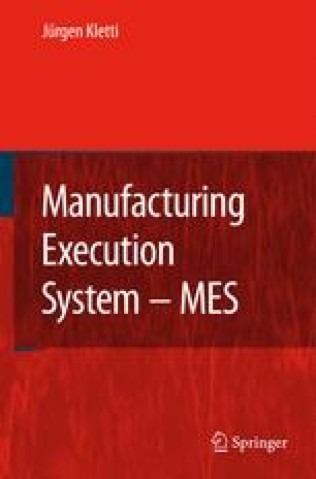
Manufacturing Execution Systems - MES
The production plants of today develop into modern service centers. Economic efficiency of modern added value is not a property of products alone but of the process. Decisive potential in business now is a question of process capability, rather than production capability. Process capability in business requires real-time systems for optimization. Business-IT needs to be developed from telecommunications and ERP to real time services, which are not offered by the prevailing ERP systems. Today, only modern Manufacturing Execution Systems (MES) offer real-time applications. They generate current as well as historic mappings of production facilities and thus they can be used as basis for optimizations. It is important to map the supply chain in real time. Increasing complexity in production requires an integrated view of the production and service facilities: detailed scheduling, status collection, quality, performance analysis, tracing of material and so on have to be recorded and displayed in an integrated way.
Management Quality and Competitiveness : Lessons from the Industrial Excellence Award
This book showcases examples of excellent manufacturing companies who have succeeded in creating value and job growth in Western Europe. The examples show managers of industrial firms how a clearly articulated strategic position can be combined with excellent execution to achieve competitiveness in Europe, in spite of the usually cited disadvantage of high labor costs and rigidity. Not every company is alike — strategic positions differ, and the means of execution differ, but what is common is a clear plan together with mobilization of all employees to apply their abilities in supporting this common plan. The book is indispensable reading for all managers that are interested in improving competitiveness.

Linear Genetic Programming
Linear Genetic Programming examines the evolution of imperative computer programs written as linear sequences of instructions. In contrast to functional expressions or syntax trees used in traditional Genetic Programming (GP), Linear Genetic Programming (LGP) employs a linear program structure as genetic material whose primary characteristics are exploited to achieve acceleration of both execution time and evolutionary progress.

Languages and Compilers for Parallel Computing ; 19th International Workshop, LCPC 2006, New Orleans, LA, USA, November 2-4, 2006, Revised Papers
The 19th Workshop on Languages and Compilers for Parallel Computing was heldinNovember2006inNewOrleans,LouisianaUSA.Morethan40researchers from around the world gathered together to present their latest results and to exchange ideas on topics ranging from parallel programming models, code generation,compilationtechniques,paralleldatastructureandparallelexecution models,toregisterallocationandmemorymanagementinparallelenvironments.
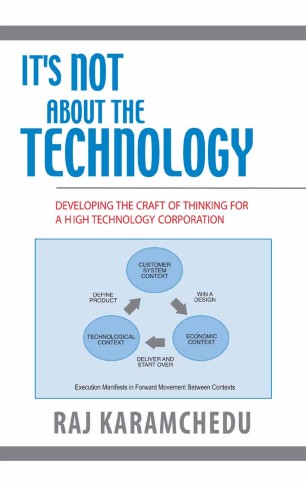
Its Not About the Technology : Developing the Craft of Thinking for a High Technology Corporation
This book is not about a new concept, or a new technique. It tackles the big questions of how to develop the craft of the thinking that is required of us in high technology companies. It is predicated on a radical notion that, even though the problematic is the execution in a high technology corporation, neither a high level market strategy nor the kind of technology itself matters, insofar as learning the craft of execution goes. How marketers and engineers comprehend a context uniquely shapes the ways they interact, engage in decision-making phenomenon, and eventually their execution performance in a company. The breakdown of their interaction occurs when the individual contexts of a marketer and an engineer are permanently secluded from one another.this book methodically demystifies the key to successful execution in the high technology space
