



الصفحة 2
الصفحة 2

Environmental Challenges in Civil Engineering II
Rports on findings concerning structural material behavior, and new methods and technologies in constructions. A special emphasis is given to sustainable constructions practices, including material recycling and reuse, renovation and restoration of historical building and to those fostering sustainable development of cities and rural areas, and a better integration of buildings with the environment. Offering a good balance of theory and practice, and covering both technical and organizational aspects in civil engineering and architectural projects, this book offers extensive information on solutions and current challenges in construction projects and structural interventions in the context of environmental protection and earthquake prevention.

Endurance time excitation functions : Intensifying dynamic loads for seismic analysis and design
Seismic assessment and earthquake-resistant design are essential applications of earthquake engineering for achieving seismic safety for buildings, bridges, infrastructure, and many other components of the built environment. The Endurance Time Method (ETM) is used for seismic analysis of simple and complex structural systems and civil engineering infrastructure as well as producing optimal and cost-effective structural and detail designs. ETM is a relatively new approach to seismic assessment and design of structures. It has developed into a versatile tool in the field, and its practical applications are expected to increase greatly in the near future.

Earthquakes, Tsunamis and Nuclear Risks : Prediction and Assessment Beyond the Fukushima Accident
This book covers seismic probabilistic risk assessment (S-PRA) and related studies which have become more important to increase the safety of nuclear facilities against earthquakes and tsunamis in the face of the many uncertainties after the Fukushima accident. The topics are (1) Active faults and active tectonics important for seismic hazard assessment of nuclear facilities,(2) Seismic source modeling and simulation and modeling techniques indispensable for strong ground motion prediction, and (3) PRA with external hazard and risk communication.
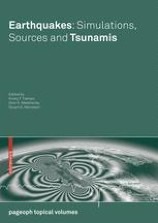
Earthquakes : Simulations, Sources and Tsunamis
This book includes a variety of studies that focus on the modeling of tsunamis and earthquakes, both large-scale simulation and visualization programs, as well as detailed models of small-scale features. Particular attention is paid to computational techniques, languages, and hardware that can be used to facilitate data analysis, visualization, and modeling. Also included are studies of several earthquake forecasting techniques and associated comparisons of their results with historic earthquake data. Finally, the volume ends with theoretical analyses of statistical properties of seismicity by internationally recognized experts in the field. This volume will be of particular interest to researchers interested in the multiscale simulation and visualization of large earthquakes and tsunamis.

Earthquake Source Asymmetry, Structural Media and Rotation Effects
This is the first book on rotational effects in earthquakes, a revolutionary concept in seismology. Existing models do no yet explain the significant rotational and twisting motions that occur during an earthquake and cause the failure of structures. This breakthrough monograph thoroughly investigates rotational waves, basing considerations on modern observations of strong rotational ground motions and detection of seismic rotational waves. To describe the propagation of such waves the authors consider structured elastic media that allow for rotational motions and rotational deformations of the ground, sometimes stronger than translational deformations. The rotation and twist effects are investigated and described and their consequences for designing tall buildings and other important structures are presented. The book will change the way the world views earthquakes and will interest scientists and researchers in the fields of Geophysics, Geology and Civil Engineering.

Earthquake Monitoring and Seismic Hazard Mitigation in Balkan Countries
this book including deployment of modern seismograph stations and arrays and these developments are detailed in the book. Station and network operations require near real time record analysis and topics dealt with here are 2-D signal detector, epicenter location and earthquake monitoring. Balkan is seismically the most active part of Europe due to multiple plate interactions in the Aegean Sea. The tectonic evolution and on-going geodynamic deformations are described in 2 articles. Earthquake hazard analysis and topographic site effects are discussed and likewise large earthquake hazards in the Aegean and the Marmara seas relate to practical applications of such procedures. Foremost; the book gives a good account of past, present and likely future seismological developments in Balkan countries and various kinds of network operations on local to global scales.

Earthquake Geotechnical Engineering ; 4th International Conference on Earthquake Geotechnical Engineering-Invited Lectures
This book contains the full papers on which the invited lectures of the 4th International Conference on Geotechnical Earthquake Engineering (4ICEGE) were based. It provides a comprehensive overview of the progress achieved to date in soil dynamics and geotechnical earthquake engineering, as well as in engineering seismology and seismic risk assessment and management. In situ and laboratory testing, theoretical issues and numerical modeling of soil dynamics, seismic hazard with emphasis on the long-period ground motion displacements, site effects and microzonation, liquefaction assessment and mitigation, soil-structure interaction, performance based design of geotechnical structures, earthquake resistant design and performance of shallow and deep foundations, retaining structures, embankments and dams, underground structures and lifelines, are all among the different topics covered in this book. Interdisciplinary subjects such as vulnerability assessment of, transportation networks and lifelines as well as of geotechnical structures are also discussed. Finally, the book provides a thorough presentation of the existing worldwide important large-scale testing facilities and geotechnical strong ground motion arrays.

Earthquake Early Warning System
The book provides information on the major EEW systems in operation and on the state of the art of the different blocks forming an EW system: the rapid detection and estimation of the earthquake’s focal parameters, the signal transmission, the engineering interface and the information reliability/false alarm problem.

Earthquake disaster simulation of civil infrastructures : From tall buildings to urban areas
Covers a range of numerical modeling approaches, higher performance computation methods, and high fidelity visualization techniques for earthquake disaster simulation of tall buildings and urban areas. It also demonstrates successful engineering applications of the proposed methodologies to typical landmark projects (e.g., Shanghai Tower and CITIC Tower, two of the world's tallest buildings; Beijing CBD and San Francisco Bay Area).

Earthquake alert with smartwatch = تنبيه الزلازل باستخدام الساعة الذكية
After the recent events and earthquakes that affected the region, resulting in the deaths of many individuals due to the lack of timely emergency response, the idea for this project emerged Earthquake Alert with Smartwatch. Initially, our application gathers information about the user, such as age, family members, and any existing medical conditions. In the event of an earthquake, the application sends an alert to the user. It receives earthquake information, such as ‘magnitude, time, location…’ from United States Geological Survey “USGS” through an API. If the user is within the geographical area affected by the earthquake, the application will assist the Smartwatch in calculating vital signs such as ‘heart rate and blood pressure’. Additionally, there is another artificial intelligence model that receives the user's audio recordings and converts them into written texts. All this information, along with the user's geographical location, will be sent to the nearest emergency point for the purpose of aiding those individuals trapped under the rubble.

Earth Sciences and Mathematics ; Vol.1
This volume contains papers addressing different topics as deformation modelling applied to natural hazards, inverse gravimetric problem to determine 3D density structure, advanced differential SAR interferometry, climate change, geomagnetic field, Earthquake statistics, meteorological studies using satellite images, climate energy balance models, study of soils properties, and multifractal data sets.

Drift-Driven Design of Buildings : Mete Sozen’s Works on Earthquake Engineering
Summarizes the most essential concepts that every engineer designing a new building or evaluating an existing structure should consider in order to control the damage caused by drift (deformation) induced by earthquakes. It presents the work on earthquake engineering done by Dr. Mete Sozen and dozens of his collaborators and students over decades of experimentation, analysis, and reconnaissance. Many of the concepts produced through this work are integral part of earthquake engineering today. Nevertheless, the connection between the concepts in use today and the original sources is not always explained.

Directions in strong motion instrumentation ; Proceedings of the NATO SFP Workshop on Future Directions in Instrumentation for Strong Motion and Engineering Seismology, Kusadasi, Izmir, May 17-21, 2004
This book, which contains papers by invited authorities, represents a unique interaction between seismologists and earthquake engineers who examine issues of mutual concern in an overlapping area of major interest. The papers have been grouped around three major areas. -Seismic Hazard and Extreme Motions -Engineering Uses of Strong Motion Seismograms -Arrays and Observations.

Developing Tsunami-Resilient Communities : The National Tsunami Hazard Mitigation Program
Tsunamis remain an ever-present threat to lives and property along the coasts of most of the world’s oceans. Because of the geographical extent of U.S. coastlines, an earthquake in Alaska can generate a local tsunami for Alaskans and, hours later, a distant tsunami for communities in Hawaii and along the Pacific Coast . This volume chronicles the development and accomplishments of a joint State/Federal partnership that was forged to reduce tsunami hazards along U.S. coastlines – the National Tsunami Hazard Mitigation Program. By integrating hazard assessment, warning guidance, and mitigation activities, the program has created a roadmap and a set of tools to develop communities more resilient to local and distant tsunamis. Among the set of tools are tsunami forecasting, educational experiments, early alerting systems, and design guidance for tsunami-resilient communities. Part of this book has already been published in a recent journal issue.

Designers' guide to EN 1998-1 and 1998-5. Eurocode 8 : Design provisions for earthquake resistant structures
Provides comprehensive guidance in the form of design aids, indications for the most convenient design procedures and worked examples. The books also include background information to aid the designer in understanding the reasoning behind and the objectives of the codes. All of the individual guides work in conjunction with the Designers' Guide to EN1990 Eurocode: Basis of Structural Design.
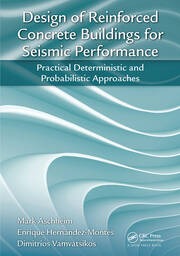
Design of Reinforced Concrete Buildings for Seismic Performance : Practical Deterministic and Probabilistic Approaches
Presents an elegant, simple and theoretically coherent design framework. Required strength is determined on the basis of an estimated yield displacement and desired limits of system ductility and drift demands. A simple deterministic approach is presented along with its elaboration into a probabilistic treatment that allows for design to limit annual probabilities of failure. The design method allows the seismic force resisting system to be designed on the basis of elastic analysis results, while nonlinear analysis is used for performance verification. Detailing requirements of ACI 318 and Eurocode 8 are presented. Students will benefit from the coverage of seismology, structural dynamics, reinforced concrete, and capacity design approaches, which allows the book to be used as a foundation text in earthquake engineering.

Design for a concrete residential building in Swaida city
Our project in Sweida city. A concrete residential building consist from ten typical floors with a basement. The structural system to resist earthquakes is shear walls in both directions. All calculations based on the Arab Syrian code.

Computational earthquake physics ; Part II
Exciting developments in earthquake science have benefited from new observations, improved computational technologies, and improved modeling capabilities. Designing realistic supercomputer simulation models for the complete earthquake generation process is a grand scientific challenge due to the complexity of phenomena and range of scales involved from microscopic to global. The present volume - Part II - incorporates computational environment and algorithms, data assimilation and understanding, model applications and iSERVO. Topics covered range from iSERVO and QuakeSim: implementing the international solid earth research virtual observatory by integrating computational grid and geographical information web services; LURR (Load-Unload Response Ratio) described in six papers involving this promising earthquake forecasting model; pattern informatics and phase dynamics and their applications, which was also a highlight in the Workshop; computational algorithms, including continuum damage models and visualization and analysis of geophysical datasets; evolution of mantle material; the state vector approach; and assimilation of data such as geodetic data, GPS data, and seismicity and laboratory experimental data.

Computational earthquake physics ; Part I
The book is divided into two parts: The present volume - Part I - focuses on microscopic simulation, scaling physics, dynamic rapture and wave propagation, earthquake generation, cycle and seismic pattern. Topics covered range from numerical developments, rupture and gouge studies of the particle model, Liquefied Cracks and Rayleigh Wave Physics, studies of catastrophic failure and critical sensitivity, numerical and theoretical studies of crack propagation, developments in finite difference methods for modeling faults, long time scale simulation of interacting fault systems, modeling of crustal deformation, through to mantle convection.
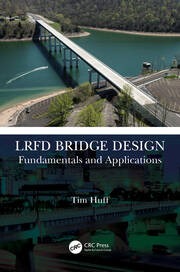
LRFD Bridge Design : Fundamentals and Applications
Examines and explains material from the 9th edition of the AASHTO LRFD Bridge Design Specifications, including deck and parapet design, load calculations, limit states and load combinations, concrete and steel I-girder design, bearing design, and more. With increased focus on earthquake resiliency, two separate chapters– one on conventional seismic design and the other on seismic isolation applied to bridges– will fully address this vital topic. The primary focus is on steel and concrete I-girder bridges, with regard to both superstructure and substructure design. / Includes several worked examples for a project bridge as well as actual bridges designed by the author / Examines seismic design concepts and design details for bridges / Presents the latest material based on the 9th edition of the LRFD Bridge Design Specifications / Covers fatigue, strength, service, and extreme event limit states / Includes numerous solved problems and exercises at the end of each chapter to illustrate the concepts presented
