



الصفحة 2
الصفحة 2

Global Lessons from the AIDS Pandemic : Economic, Financial, Legal and Political Implications
This book examines the global HIV/AIDS pandemic from a multidisciplinary perspective, analyzing its economic impact, the reasons behind the political response to the pandemic, international laws relating to public health and patents and mechanisms for financing global and national responses. The authors paint a global picture of the HIV/AIDS pandemic one issue, one country and one region at a time and show why prevention, treatment and human rights protection must each form part of a comprehensive HIV/AIDS strategy. The book analyzes the successes and failures of national governments, international organizations and the private sector in fighting the HIV/AIDS pandemic and recommends changes to our international economic, financial, legal and political institutions. This book highlights the lessons the world has to learn from our experience with HIV/AIDS in order to improve the way we address global diseases.

Global Fintech : Financial Innovation in the Connected World
How the global financial services sector has been transformed by artificial intelligence, data science, and blockchain. Artificial intelligence, big data, blockchain, and other new technologies have upended the global financial services sector, creating opportunities for entrepreneurs and corporate innovators. Venture capitalists have helped to fund this disruption, pouring nearly $500 billion into fintech over the last five years. This book offers global perspectives on technology-fueled transformations in financial services, with contributions from a wide-ranging group of academics, industry professionals, former government officials, and current government advisors. They examine not only the struggles of rich countries to bring the old analog world into the new digital one but also the opportunities for developing countries to “leapfrog” directly into digital.

Global energy supply and emissions : An interdisciplinary view on effects, restrictions, requirements and options
offers an authoritative analysis of the state-of-the art in energy and climate research and policy. It starts by describing the current status of technologies that are expected to have an influence on the energy systems of the future. For an adequate evaluation, it presents the latest findings on the effects of energy supply and consumption as well as of the emissions on both the environment and people’s health. This is followed by an extensive discussion of the economic and social problems related to climate change, the need for energy transitions, and other issues that may require public investment and international agreements. reviews the problem of energy policy from a global perspective, providing readers with the technical, political, economic and ethical background needed to understand the current situation and work at better solutions for a sustainable, just and prospering world.

Foundations for Local Governance : Decentralization in Comparative Perspective
Various forms of decentralization are recently pursued in the world, including developing countries. However, there has not been a coherent framework to access these intended outcomes generated by decentralization measures implemented in Asian and African countries. This book provides such a framework based on comparative analyses of different experiences of decentralization measures in six developing countries, where the policy rationale to “bring services closer to people” originated in different socio-political backgrounds. Although decentralization measures are potentially useful for attaining both political democratization and economic efficiency, what is often packaged under the umbrella of “decentralization” needs to be disaggregated analytically. Successful reforms need coherent approaches in which a range of stakeholders would become willing to share responsibilities and resources in order to achieve the ultimate outcome of poverty reduction in the developing countries.

Finance for Food : Towards New Agricultural and Rural Finance
Reflects the current state of discussion about agricultural and rural finance in developing and transition countries. It provides insight into specific themes, such as commodity value chains, farm banking, risk management in agricultural banking, structured finance, crop insurance, mobile banking, and how to increase effectiveness in rural finance. Case studies illustrate various aspects of agricultural and rural finance in developing economies. The book is based on one of the yearly financial Sector Development Symposia held by the KfW Development Bank.

Ethics and Drug Resistance : Collective Responsibility for Global Public Health
This book provides in-depth analysis of the wide range of ethical issues associated with drug-resistant infectious diseases.

Enhancing Smallholder Farmers' Access to Seed of Improved Legume Varieties Through Multi-stakeholder Platforms : Learning from the TLIII project Experiences in sub-Saharan Africa and South Asia
This book shares the experiences of Tropical Legumes III (TLIII) project in facilitating access to seed of improved legume varieties to smallholder farmers through innovation platforms. It highlights practices and guiding principles implemented in eight developing countries of sub-Saharan Africa and South Asia. This book details key processes that respective teams employed to create an innovation space that delivers seed, other inputs, knowledge and financial services to agricultural communities and most importantly, the underserved farmers in remote areas of the drylands

Encyclopaedia of the History of Science, Technology, and Medicine in Non-Western Cultures
The second edition of this landmark encyclopaedia will contain approximately 1000 entries dealing in depth with the history of the scientific, technological and medical accomplishments of cultures outside of the United States and Europe. The entries consist of fully updated articles together with hundreds of entirely new topics.This unique reference work includes: Intercultural articles on broad topics such as Mathematics and Astronomy Philosophical articles on concepts and ideas related to the study of non-Western Science, such as Rationality, Objectivity, and Method, Religion and Science, East and West, and Magic and Science Articles on topics such as Native American Mathematics, Polynesian Navigation, Korean Maps, and African Metallurgy Biographical articles for those cultures where individual scientists are known to us, such as China and the Islamic world.

Emerging States and Economies : Their Origins, Drivers, and Challenges Ahead
This book asks why and how some of the developing countries have “emerged” under a set of similar global conditions, what led individual countries to choose the particular paths that led to their “emergence,” and what challenges confront them. If we are to understand the nature of major risks and uncertainties in the world, we must look squarely at the political and economic dynamics of emerging states. Their rapid economic development has changed the distribution of wealth and power in the world. Yet many of them have middle income status. To global governance issues, they tend to adopt approaches that differ from those of advanced industrialized democracies. At home, rapid economic growth and social changes put pressure on their institutions to change. This volume traces the historical trajectories of two major emerging states. It also analyzes cross-country data to find the general patterns of economic development and sociopolitical change in relation to globalization and to the middle income trap.

Disrupted Development and the Future of Inequality in the Age of Automation
This book examines the future of inequality, work and wages in the age of automation with a focus on developing countries. The authors argue that the rise of a global ‘robot reserve army’ has profound effects on labor markets and economic development, but, rather than causing mass unemployment, new technologies are more likely to lead to stagnant wages and premature deindustrialization.
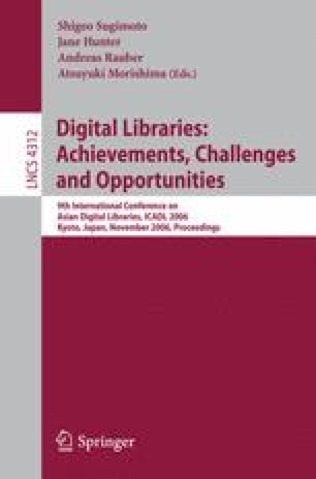
Digital Libraries : Achievements, Challenges and Opportunities ; 9th International Conference on Asian Digial Libraries, ICADL 2006, Kyoto, Japan, November 27-30, 2006, Proceedings
The primary mission of ICADL, like the Joint Conference on Digital Libraries (JCDL) and European Conference on Digital Libraries (ECDL), is to serve as a forum for exchange of new advanced te- nologies and ideas among researchers and practitioners. In addition, ICADL as a conference based in Asia is an important event not only for people in dev- oped countries but also in developing countries where there is large diversity in culture, language and development. ICADL 2006received170papersubmissionsfrom23countries.Everysubm- sion was reviewed by at least three reviewers. The Program Committee selected 46 full papers and 14 short papers based on the quality and contribution to digital library research.

CRP and the relation with heart disease
Cardiovascular diseases are the leading causes of mortality and morbidity in industrialized and developing countries. Many efforts have been undertaken during the last decades to identify environmental, behavioral and genetic factors modulating the risk of cardiovascular diseases.It will explain the role of CRP - an acute-phase protein- as indicator of potential cardiovascular disease as well as a predictor of the risk for heart disease and future heart attack

Corporate fraud across the globe
It is expected that uncovered corporate fraud negatively affects the public reputation, and financial performance of fraudulent firms. However, what is of more importance for fraudulent firms is how to regain the trust of customers, investors, and other stakeholders, as this impacts the long-term sustainability of businesses. Operational strategies, including reform, provide an effective channel for a fraudulent firm’s business sustainability yet this notion remains unexplored in the literature.

Coping with Water Deficiency : From Research to Policymaking
In line with the Water Framework Directive, this book stresses the need for an Integrated Water Resources Management (IWRM) approach to balance the competing demands on water-domestic, agricultural, industrial, tourism and environmental/ecological- and promote economically efficient, socially equitable and environmentally sustainable water use in selected regions from Southern Europe, the Mediterranean and the developing world. Results from the research projects covered by this book, demonstrate that effective water management tools and decisions-making practices, are needed in order to complement integrated interventions for increasing the availability of supply and/or managing the growing demand for scarce water supplies. Further, the book attempts to bridge the gap between ideas and actions endorsed at the research-oriented environmental debate, and their translation into policy making structures and programs in developed and developing countries.

Concepts and Practice of Humanitarian Medicine
As major events like war, epidemics, and climate change continue to push global health issues to the fore, the international medical community is called upon more than ever to address the needs of the most vulnerable. Concepts and Practice of Humanitarian Medicine brings public health and human rights concerns together, uniting medical, scientific, sociopolitical, and historical perspectives to reaffirm this vision.
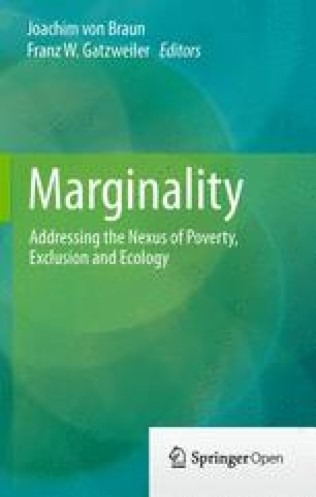
Marginality : Addressing the Nexus of poverty, exclusion and ecology
In this volume economists, ecology experts, geographers, agronomists, sociologist, and business experts come together to address marginality. The inter-disciplinary research offers conceptual innovations and presents the dimensions of marginality in developing countries. Economic, political, and environmental drivers are assessed and mapped globally and in detail for countries in Africa and Asia, especially Ethiopia, India, Bangladesh, China, Indonesia. Economic growth especially in rural areas remains and farming communities is central to poverty reduction but needs to be complemented with specific actions to reach those at the margins.
Macroeconomic Risk Management Against Natural Disasters : Analysis focussed on governments in developing countries
Natural disasters cause considerable economic damage. While developed countries usually are able to cope with the impacts of natural hazards, developing countries are faced with severe consequences for their resources. In order to prevent long-term macroeconomic repercussions, governments need a comprehensive disaster risk management strategy.Budgetary resources are allocated to pre-disaster risk management strategies to reduce the probability of financing gaps. The framework and model approach allows cross country comparisons as well as the assessment of financial vulnerability, macroeconomic risk, and risk management strategies.
Land Use and Soil Resources
Land-use change is one of the main drivers of many environmental change processes. It influences the basic resources of land use, including the soil. Its impact on soil often occurs so creepingly that land managers hardly contemplate initiating ameliorative or counterbalance measures. Poor land management has degraded vast amounts of land, reduced our ability to produce enough food, and is a major threat to rural livelihoods in many developing countries. To date, there has been no single unifying volume that addresses the multifaceted impacts of land use on soils. This book has responded to this challenge by bringing together renowned academics and policy experts to analyze the patterns, driving factors and proximate causes, and the socioeconomic impacts of soil degradation. Policy measures to prevent irreversible degradation and rehabilitate degraded soils are also identified.
Community Schools in Africa : Reaching the Unreached
Over the past decade, community schools similar to those supported by Save the Children have been established in many developing countries, and especially in sub-Saharan Africa. As large numbers of children attend schools started and managed by their own communities and/or by nongovernmental organizations, questions have come up about the impact of such schools at large scale: "Can village-based or community schools have a national impact on access to education, spur improved long-term development strategies and education policy, or achieve or influence Education for All? This book explores these and related questions, drawing on Save the Children’s experience with community-based schooling in four countries: Ethiopia, Malawi, Mali, and Uganda.
Climate prediction and agriculture : Advances and challenges
Improved adaptation of food production, particularly in areas where climate variability is large, holds the key to improving food security for human populations. Increasing climate knowledge and improved prediction capabilities facilitate the development of relevant climate information and prediction products for applications in agriculture to reduce the negative impacts due to climate variations and to enhance planning activities based on the developing capacity of climate science. This book, based on an International Workshop held in Geneva in 2005, reviews the advances made so far in seasonal climate predictions and their applications for management and decision-making in agriculture and identifies the challenges to be addressed in the next 5 to 10 years to further enhance operational applications of climate predictions in agriculture, especially in the developing countries.
