



الصفحة 2
الصفحة 2

Environmental Bioremediation Technologies
Environmental contamination from both natural and anthropogenic sources is, today, a major environmental concern due to pervasiveness and persistence of many toxicants. It is considered as an inevitable evil of our progress and modernization. To decontaminate the soils, sediments and waters, polluted by anthropogenic activities, the scientists and technologists have evolved different technologies over the years. Although we have to pay high cost for physical and chemical environmental technologies, but they are not eco-friendly and safe. Hence, it was deeply realized to develop viable technologies employing microbes and plants to remediate not only metallic residues and radionuclides, but also the xenobiotic compounds like PCBs, PAHs, PCPs, petroleum sludge and the military wastes. No doubt, the scientists have also got some success in this endeavour and as the result, many companies are in place today to promote the sale of plant or microbe-based technologies to deal with specific environmental contamination challenges. Besides, these technologies are se- driven and do not disturb the sites in cleaning process.

Environmental and Microbial Relationships
After the publication of Volume IV in 1997, the introduction of molecular methods into ecology led to significant new findings. Emphasizing these advances, the chapters for the second edition have been completely updated and revised. This volume provides insight into current research on fungal populations and communities. It focuses on fungal responses to the physical environment, interactions with other fungi, microorganisms and invertebrates, the role of fungi in ecosystem processes such as decomposition and nutrient cycling, and aspects of biogeography and conservation. Several chapters deal with various applications in, e.g. biological pest control, natural products discovery, and the degradation of toxic organic compounds. This is an invaluable source of information both for scientists who wish to update their knowledge of current progress and for graduate students interested in obtaining a first overview of this field of research.

Economics of Land Degradation and Improvement : A Global Assessment for Sustainable Development
This volume deals with land degradation, which is occurring in almost all terrestrial biomes and agro-ecologies, in both low and high income countries and is stretching to about 30% of the total global land area. About three billion people reside in these degraded lands. However, the impact of land degradation is especially severe on livelihoods of the poor who heavily depend on natural resources. The annual global cost of land degradation due to land use and cover change (LUCC) and lower cropland and rangeland productivity is estimated to be about 300 billion USD. Sub-Saharan Africa (SSA) accounts for the largest share (22%) of the total global cost of land degradation.

Eco-and ground bio-engineering : The use of vegetation to improve slope stability ; Proceedings of the 1st International Conference on Eco-Engineering 13-17 September 2004
In an era where climate change, natural catastrophes and land degradation are major issues, the conservation of soil and vegetation in mountainous or sloping regions has become an international priority. How to avoid substrate mass movement through landslides and erosion using sustainable and ecologically sound techniques is rapidly becoming a scientific domain where knowledge from many different fields is required. These proceedings bring together papers from geotechnical and civil engineers, biologists, ecologists and foresters, who discuss current problems in slope stability research, and how to address those problems using ground bio- and eco-engineering techniques.

Dislocation and Degradation of Proteins from the Endoplasmic Reticulum
The present volume of Current Topics in Microbiology and Immunology c- tains seven chapters that illuminate various aspects of a protein’s genesis and terminal fate in the endoplasmic reticulum (ER). Increased knowledge of the biosynthetic pathways of glycoproteins allowed the identi?cation of the ER as an important site where such quality control decisions were made.

Directory of microbicides for the protection of materials : A handbook
This edition is divided into two parts. In Part One 23 contributions of worldwide selected experts present extensively diversified information about: -Microbicides with regard to the relationship between chemical structure and mode of action and activity, -Research and development in consideration of registration procedures,Legislative aspects,The use of microbicides in the major application areas (18) which are described in detail.The Microbicide Data is organized into 21 substance classes (e.g. alcohols, aldehydes, acids, amides, etc.) and collected in Part Two.

Development of statin is a breakthrough therapy in Alzheimer’s prevention
Dementia is one of the diseases which had several stages and Alzheimer’s term was selected in respect for the first doctor Alzheimer who defined the first symptoms of this diseases in a woman whom was well treated by him. The fact that this is a type of a silent disease on which you have a long-term process of neurological degradation and suddenly gives symptoms which are most often irreversible, on clinical level likely we can consider it as a malignancy, one in terms of that it is sudden shocking irreversible and on the level of behavior and some mortality beside the lack of early detection tools for diagnosis...

Desertification in the Mediterranean Region : A security issue ; Proceedings of the NATO Mediterranean Dialogue Workshop, held in Valencia, Spain, 2-5 December 2003
This book focuses on two basic concepts: security and desertification in the Mediterranean Region and their linkages. Desertification is recognized as a process of land degradation in arid, semi-arid, and dry sub-humid areas of the world that is the result of natural phenomena (e.g. climate variation) and anthropogenic factors. The outcome of this type of degradation has typically been considered to be either a reduction or a loss of both biological and economic productivity. The scope of the book includes the identification of the physical processes of desertification specific to both the north and south Mediterranean Region. Additionally, it specifically questions how changing environmental conditions may potentially reduce stability and peace in the world and thus affect "environmental security."

Current Developments in Bioerosion
The book opens with papers on the evolutionary significance of bioerosion, and subsequently ventures out to explore the remarkable diversity of bioerosive biota. From microboring bacteria to grazing echinoids, the studies use a variety of techniques ranging from field observations to sophisticated micro-computed tomography to investigate the ecological and environmental role of these organisms, including symbiotic interactions and alteration of non-carbonate substrates.
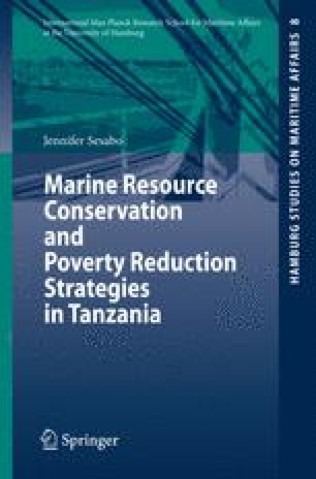
Marine Resource Conservation and Poverty Reduction Strategies in Tanzania
Despite the social, nutritional, economical and environmental importance of Tanzanian coastal areas, yet they are vulnerable to both over-exploitation and degradation of their habitats. Using the data from two coastal villages and econometric methods as well as Stochastic Production Frontier techniques, the book demonstrates the extent which various socio-economic dimensions of rural coastal households influence livelihood pathways, production efficiency and attitudes towards conservation initiatives. Thus, attention to differential patterns of rural coastal households presents more viable possibilities for coastal villages to have conservation-development policies/programs that lead to poverty reduction.
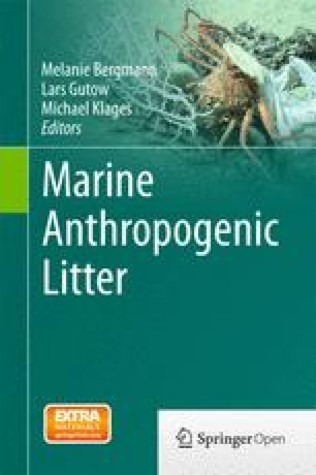
Marine Anthropogenic Litter
This book describes how man-made litter, primarily plastic, has spread into the remotest parts of the oceans and covers all aspects of this pollution problem from the impacts on wildlife and human health to socio-economic and political issues. Marine litter is a prime threat to marine wildlife, habitats and food webs worldwide. The book illustrates how advanced technologies from deep-sea research, microbiology and mathematic modelling as well as classic beach litter counts by volunteers contributed to the broad awareness of marine litter as a problem of global significance. The authors summarise more than five decades of marine litter research, which receives growing attention after the recent discovery of great oceanic garbage patches and the ubiquity of microscopic plastic particles in marine organisms and habitats.
Manual for Soil Analysis - Monitoring and Assessing Soil Bioremediation
Reliable methods for monitoring and assessing soil quality are a prerequisite for successful soil bioremediation projects. The fifth volume of Soil Biology presents detailed descriptions of selected methods for evaluating, monitoring and assessing bioremediation treatments of soils contaminated with organic pollutants or heavy metals.
Malaria: Drugs, Disease and Post-genomic Biology
This volume brings some of the worlds best investigators to describe recent advances in both the scientific and clinical aspects of malaria, and bridges between the two. The opening chapters discuss antimalarials and resistance to them in Africa and Asia. Then there are reviews of the different clinical manifestations of malaria, ranging from uncomplicated infections to severe disease and its complications.
Land Use and Soil Resources
Land-use change is one of the main drivers of many environmental change processes. It influences the basic resources of land use, including the soil. Its impact on soil often occurs so creepingly that land managers hardly contemplate initiating ameliorative or counterbalance measures. Poor land management has degraded vast amounts of land, reduced our ability to produce enough food, and is a major threat to rural livelihoods in many developing countries. To date, there has been no single unifying volume that addresses the multifaceted impacts of land use on soils. This book has responded to this challenge by bringing together renowned academics and policy experts to analyze the patterns, driving factors and proximate causes, and the socioeconomic impacts of soil degradation. Policy measures to prevent irreversible degradation and rehabilitate degraded soils are also identified.

Clinical evaluation of medical devices : Principles and case studies
It include the many innovations and clinical research methods that have developed since the first edition, as well as current information on the regulatory, legal, and reimbursement environment for medical devices. The book's deeply experienced authors summarize the key principles and approaches employed in medical device clinical trials and illustrate their uses in a revealing series of detailed, real-world case studies.
Climate and Land Degradation
In many parts of the world, climatic variations are recognized as one of the major factors contributing to land degradation impacting on agricultural systems performance and management. To accurately assess sustainable land management practices, the climate resources and the risk of climate-related or induced natural disasters in a region must be known. Only when climate resources are paired with management or development practices can the land degradation potential be assessed and appropriate mitigation technologies be developed. This book is based on an International Workshop held in Arusha, Tanzania and should be of interest to all organizations and agencies interested in sustainable land management to arrest land degradation.
Chromatography for Sustainable Polymeric Materials : Renewable, Degradable and Recyclable
This volume is a valuable contribution to sustainability research. … This interesting, well-written book provides the reader with an excellent resource on how to effectively use simple chromatographic techniques to aid in determining processing conditions, additive formulations, quality control, service life, degradation pathways, and more.
Characterization of Corrosion Products on Steel Surfaces
It is well known that corrosion products, i.e. rust, on iron and steel surfaces cannot be assigned a typical crystallographic structure with long-range order. In fact, the structure of rust is considered to be very complicated, and some forms of rust are assigned to the amorphous state for this reason. Accurate information about the atomic-scale structure of rust is important to shed light on corrosion mechanisms of metallic materials. And, since life of steel structures is often dominated by environmental degradation or corrosion of the surface, the structure of the rust formed on iron and steel surfaces during prolonged exposure to air is of great interest. This book describes the fundamental aspects of materials characterization for the ferric oxyhydroxides formed on steel surfaces.
Changing Forests : Collective Action, Common Property, and Coffee in Honduras
It merges political ecology, collective-action theories, and institutional analysis to study how the people and forests have changed through socioeconomic and political transitions. It studies the complex, often contradictory relationships between the people and their natural resources to understand why forest cover endures."Changing Forests" therefore encompasses three broad phases: (1) the premodern period, which considers historic perturbations in western Honduras from the period of colonialism into the middle of the twentieth century; (2) the period of state-led logging and intervention in La Campa, which caused major degradation in forest cover; and (3) the recent period in which export coffee production transformed property rights, and people’s perceptions of the forest gained new conservationist and economic dimensions. Each phase entails perspectives and experiences that influenced human use of forests, and shaped subsequent transformations.

Cell Cycle Regulation
The cell cycle is tightly regulated on many different levels to ensure properly controlled proliferation. Deregulation of cell cycle regulation is a hallmark of cancer. In this book, many aspects of cell cycle regulation are discussed, which include G1, S, M phase control, ubiquitin-mediated degradation, DNA damage response, mitotic spindle checkpoint, the centrosome cycle, Retinoblastoma protein family, the Myc oncogene, and mouse models for tumor suppressors, cyclin-dependent kinases, and meiosis. These chapters written by experts provide an updated view on how the cell cycle is regulated in vivo and about the involvement of cell cycle regulators in cancer.
