



الصفحة 2
الصفحة 2

Data science, AI, and machine learning in drug development
The confluence of big data, AI, and machine learning has led to a paradigm shift in how innovative medicines are developed and healthcare delivered. To fully capitalize on these technological advances, it is essential to systematically harness data from diverse sources and leverage digital technologies and advanced analytics to enable data-driven decisions. Data science stands at a unique moment of opportunity to lead such a transformative change. Intended to be a single source of information, Data Science, AI, and Machine Learning in Drug Research and Development covers a wide range of topics on the changing landscape of drug R&D, emerging applications of big data, AI and machine learning in drug development, and the build of robust data science organizations to drive biopharmaceutical digital transformations

Data science on the Google cloud platform : Implementing end-to-end real-time data pipelines : From ingest to machine learning
Learn how easy it is to apply sophisticated statistical and machine learning methods to real-world problems when you build using Google Cloud Platform (GCP). This hands-on guide shows data engineers and data scientists how to implement an end-to-end data pipeline with cloud native tools on GCP. You'll work through a sample business decision by employing a variety of data science approaches. Follow along by building a data pipeline in your own project on GCP, and discover how to solve data science problems in a transformative and more collaborative way. Employ best practices in building highly scalable data and ML pipelines on Google Cloud Automate and schedule data ingest using Cloud Run Create and populate a dashboard in Data Studio Build a real-time analytics pipeline using Pub/Sub, Dataflow, and BigQuery Conduct interactive data exploration with BigQuery Create a Bayesian model with Spark on Cloud Dataproc Forecast time series and do anomaly detection with BigQuery ML Aggregate within time windows with Dataflow Train explainable machine learning models with Vertex AI Operationalize ML with Vertex AI Pipelines

Data science in theory and practice : Techniques for big data analytics and complex data sets
Delivers a comprehensive treatment of the mathematical and statistical models useful for analyzing data sets arising in various disciplines, like banking, finance, health care, bioinformatics, security, education, and social services. Written in five parts, the book examines some of the most commonly used and fundamental mathematical and statistical concepts that form the basis of data science. The authors go on to analyze various data transformation techniques useful for extracting information from raw data, long memory behavior, and predictive modeling. Readers will also learn from topics like: Analyses of foundational theoretical subjects, including the history of data science, matrix algebra and random vectors, and multivariate analysis A comprehensive examination of time series forecasting, including the different components of time series and transformations to achieve stationarity Introductions to both the R and Python programming languages, including basic data types and sample manipulations for both languages An exploration of algorithms, including how to write one and how to perform an asymptotic analysis A comprehensive discussion of several techniques for analyzing and predicting complex data sets

Data science for economics and finance : Methodologies and applications
The book starts with an introduction on the use of data science technologies in economics and finance and is followed by thirteen chapters showing success stories of the application of specific data science methodologies, touching on particular topics related to novel big data sources and technologies for economic analysis (e.g. social media and news); big data models leveraging on supervised/unsupervised (deep) machine learning; natural language processing to build economic and financial indicators; and forecasting and nowcasting of economic variables through time series analysis.

Data Science for Civil Engineering : A Beginner's Guide
Explains use of data science-based techniques for modeling and providing optimal solutions to complex problems in civil engineering. It discusses civil engineering problems like air, water and land pollution, climate crisis, transportation infrastructures, traffic and travel modes, mobility services, and so forth. Divided into two sections, the first one deals with the basics of data science and essential mathematics while the second section covers pertinent applications in structural and environmental engineering, construction management, and transportation.

Data science and data analytics : Opportunities and challenges
Gives the concept of data science, tools, and algorithms that exist for many useful applications / Provides many challenges and opportunities in data science and data analytics that help researchers to identify research gaps or problems / Identifies many areas and uses of data science in the smart era / Applies data science to agriculture, healthcare, graph mining, education, security, etc.

Data Science and Classification
This volume provides new methodological developments in data analysis and classification. A wide range of topics is covered that includes the measurement of similarity and dissimilarity, methods for classification and clustering, network and graph analyses, analysis of symbolic data, and web mining. Apart from structural and theoretical results the book shows how to apply the proposed to a variety of problems, for example in medicine, microarray analysis, social network structures, and music. The combination of new methodological advances with the wide range of real applications collected in this volume is of special value for researchers when choosing the appropriate among newly developed analytical tools for their research problems in classification and data analysis.

Data science and analytics ; 5th International conference on recent developments in science, engineering and technology, REDSET 2019, Gurugram, India, November 15–16, 2019, Revised Selected Papers, Part II
This two-volume set (CCIS 1229 and CCIS 1230) constitutes the refereed proceedings of the 5th International Conference on Recent Developments in Science, Engineering and Technology, REDSET 2019, held in Gurugram, India, in November 2019. The 74 revised full papers presented were carefully reviewed and selected from total 353 submissions. The papers are organized in topical sections on data centric programming; next generation computing; social and web analytics; security in data science analytics; big data analytics

Data science and analytics ; 5th International conference on recent developments in science, engineering and technology, REDSET 2019, Gurugram, India, November 15–16, 2019, Revised Selected Papers, Part I
This two-volume set (CCIS 1229 and CCIS 1230) constitutes the refereed proceedings of the 5th International Conference on Recent Developments in Science, Engineering and Technology, REDSET 2019, held in Gurugram, India, in November 2019. The 74 revised full papers presented were carefully reviewed and selected from total 353 submissions. The papers are organized in topical sections on data centric programming; next generation computing; social and web analytics; security in data science analytics; big data analytics.

Data science ; 6th International Conference of Pioneering Computer Scientists, Engineers and Educators, ICPCSEE 2020, Taiyuan, China, September 18-21, 2020, Proceedings, Part II
This two volume set (CCIS 1257 and 1258) constitutes the refereed proceedings of the 6th International Conference of Pioneering Computer Scientists, Engineers and Educators, ICPCSEE 2020 held in Taiyuan, China, in September 2020. The 98 papers presented in these two volumes were carefully reviewed and selected from 392 submissions. The papers are organized in topical sections: database, machine learning, network, graphic images, system, natural language processing, security, algorithm, application, and education.
Data Science ; 6th International Conference of Pioneering Computer Scientists, Engineers and Educators, ICPCSEE 2020, Taiyuan, China, September 18-21, 2020, Proceedings, Part I
This two volume set (CCIS 1257 and 1258) constitutes the refereed proceedings of the 6th International Conference of Pioneering Computer Scientists, Engineers and Educators, ICPCSEE 2020 held in Taiyuan, China, in September 2020. The 98 papers presented in these two volumes were carefully reviewed and selected from 392 submissions. The papers are organized in topical sections: database, machine learning, network, graphic images, system, natural language processing, security, algorithm, application, and education.

Data Journeys in the Sciences
This groundbreaking, book analyses and compares data practices across several fields through the analysis of specific cases of data journeys. It brings together leading scholars in the philosophy, history and social studies of science to achieve two goals: tracking the travel of data across different spaces, times and domains of research practice; and documenting how such journeys affect the use of data as evidence and the knowledge being produced.

Data feminism
We have seen through many examples that data science and artificial intelligence can reinforce structural inequalities like sexism and racism. Data is power, and that power is distributed unequally. This book offers a vision for a feminist data science that can challenge power and work towards justice. This book takes a stand against a world that benefits some (including the authors, two white women) at the expense of others. It seeks to provide concrete steps for data scientists seeking to learn how feminism can help them work towards justice, and for feminists seeking to learn how their own work can carry over to the growing field of data science.

Data Driven Methods for Civil Structural Health Monitoring and Resilience : Latest Developments and Applications
Provides a comprehensive overview of data-driven methods for structural health monitoring (SHM) and resilience of civil engineering structures, mostly based on artificial intelligence or other advanced data science techniques. This allows existing structures to be turned into smart structures, thereby allowing them to provide intelligible information about their state of health and performance on a continuous, relatively real-time basis. Artificial-intelligence-based methodologies are becoming increasingly more attractive for civil engineering and SHM applications
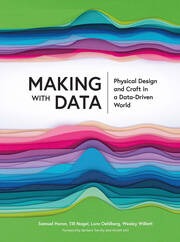
Making with data : Physical design and craft in a data-driven world
Making with Data: Physical Design and Craft in a Data-Driven World provides a snapshot of the diverse practices contemporary creators are using to produce objects, spaces, and experiences imbued with data. Across 25+ beautifully-illustrated chapters, international artists, designers, and scientists each explain the process of creating a specific data-driven piece—illustrating their practice with candid sketches, photos, and design artifacts from their own studios. Featuring influential voices in computer science, data science, graphic design, art, craft, and architecture, Making with Data is accessible and inspiring for enthusiasts and experts alike.

Machine Learning, Image Processing, Network Security and Data Sciences ; 2nd International conference, MIND 2020, Silchar, India, July 30 - 31, 2020, Proceedings, Part II
This two-volume set (CCIS 1240-1241) constitutes the refereed proceedings of the Second International Conference on Machine Learning, Image Processing, Network Security and Data Sciences, MIND 2020, held in Silchar, India. Due to the COVID-19 pandemic the conference has been postponed to July 2020. The 79 full papers and 4 short papers were thoroughly reviewed and selected from 219 submissions. The papers are organized according to the following topical sections: data science and big data; image processing and computer vision; machine learning and computational intelligence; network and cyber security.

Machine learning, image processing, network security and data sciences ; 2nd International conference, MIND 2020, Silchar, India, July 30 - 31, 2020, Proceedings, Part I
This two-volume set (CCIS 1240-1241) constitutes the refereed proceedings of the Second International Conference on Machine Learning, Image Processing, Network Security and Data Sciences, MIND 2020, held in Silchar, India. Due to the COVID-19 pandemic the conference has been postponed to July 2020. The 79 full papers and 4 short papers were thoroughly reviewed and selected from 219 submissions. The papers are organized according to the following topical sections: data science and big data; image processing and computer vision; machine learning and computational intelligence; network and cyber security.
Machine learning for brain disorders
Organized into five parts. Part One presents the fundamentals of ML. Part Two looks at the main types of data used to characterize brain disorders, including clinical assessments, neuroimaging, electro- and magnetoencephalography, genetics and omics data, electronic health records, mobile devices, connected objects and sensors. Part Three covers the core methodologies of ML in brain disorders and the latest techniques used to study them. Part Four is dedicated to validation and datasets, and Part Five discusses applications of ML to various neurological and psychiatric disorders.
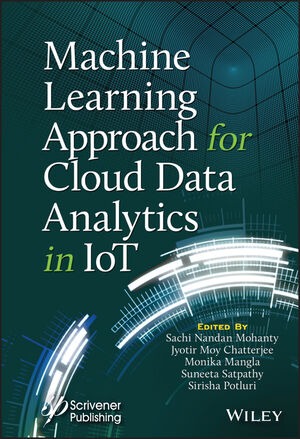
Machine learning approach for cloud data analytics in IoT
Covers the multidimensional perspective of machine learning through the perspective of cloud computing and Internet of Things ranging from fundamentals to advanced applications. Elucidates some of the best practices and their respective outcomes in cloud and fog computing environments. It focuses on all the various research issues related to big data storage and analysis, large-scale data processing, knowledge discovery and knowledge management, computational intelligence, data security and privacy, data representation and visualization, and data analytics. The featured technologies presented in the book optimizes various industry processes using business intelligence in engineering and technology. Light is also shed on cloud-based embedded software development practices to integrate complex machines so as to increase productivity and reduce operational costs. The various practices of data science and analytics which are used in all sectors to understand big data and analyze massive data patterns are also detailed in the book.
Machine Learning : The Basics
Approaches ML as the computational implementation of the scientific principle. This principle consists of continuously adapting a model of a given data-generating phenomenon by minimizing some form of loss incurred by its predictions. Trains readers to break down various ML applications and methods in terms of data, model, and loss, thus helping them to choose from the vast range of ready-made ML methods.
