



الصفحة 2
الصفحة 2

Data Integration in the Life Sciences ; Vol. 4075 ; 3rd International Workshop, DILS 2006, Hinxton, UK, July 20-22, 2006, Proceedings
Data management and data integration are fundamental problems in the life sciences. Advances in molecular biology and molecular medicine are almost u- versallyunderpinned by enormouse?orts in data management,data integration, automatic data quality assurance, and computational data analysis. Many hot topics in the life sciences, such as systems biology, personalized medicine, and pharmacogenomics, critically depend on integrating data sets and applications producedby di?erent experimentalmethods, in di?erent researchgroups,andat di?erent levels of granularity.

Data integration in the life sciences ; Vol. 3615 ; 2nd international workshop, DILS 2005, San Diego, CA, USA, July 20-22, 2005, Proceedings
Constitutes the refereed proceedings of the Second International Workshop on Data Integration in the Life Sciences, DILS 2005, held in San Diego, CA, USA in July 2005. The papers are organized in sections on user applications, ontologies, data integration, and others, and address the issues in data integration from the life science point of view.

Data Integration in the Life Sciences ; 5th International Workshop, DILS 2008, Evry, France, June 25-27, 2008. Proceedings
This book constitutes the refereed proceedings of the 5th International Workshop on Data Integration in the Life Sciences, DILS 2008, held in Evry, France in June 2008.

Data Integration in the Life Sciences ; 4th International Workshop, DILS 2007, Philadelphia, PA, USA, June 27-29, 2007, Proceedings
it cover a wide spectrum of theoretical and practical issues including scienti?c work?ows, - notation in data integration, mapping and matching techniques, and modeling of life science data. It presenting research on new models, methods, or algorithms and 6 papers presenting imp- mentation of systems or experience with systems in practice.
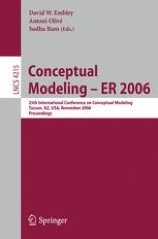
Conceptual Modeling - ER 2006 ; 25th International Conference on Conceptual Modeling, Tucson, AZ, USA, November 6-9, 2006, Proceedings
The International Conference on Conceptual Modeling provides the premiere - rum for presenting and discussing current research and applications in which the - jor emphasis is on conceptual modeling. Topics of interest span the entire spectrum of conceptual modeling including research and practice in areas such as theories of c- cepts and ontologies underlying conceptual modeling, methods and tools for devel- ing and communicating conceptual models, and techniques for transforming conc- tual models into effective implementations.

Computational Life Sciences ; Vol. 3695 ; 1st International Symposium, CompLife 2005, Konstanz, Germany, September 25-27, 2005, Proceedings
This book constitutes the refereed proceedings of the First International Symposium on Computational Life Sciences, CompLife 2005, held in Konstanz, Germany in September 2005. The integration of knowledge in the life sciences is continuing apace with ev- increasingimportancebeing placedoncomputer-basedmethodsofdata capture, analysis, and knowledge representation. Today, our many di?erent sciences are providing us with a sea of information: it is the handling of this in?ux that is becoming a key discovery and regulatory question. The solutions to these problems will result in advancements to all of the involved sciences and will be highly in?uential both in the selection of the areas scientists seek to investigate and also on their success. For this to happen, it is crucial to establish an open and lively exchange between computer scientists, biologists, and chemists. To encourage precisely this type of exchange, crossing the borders of the sciences, we organized the 1st Symposium on Computational Life Science in Konstanz, Germany(September 25 27,2005).

Machine learning and data mining for sports analytics ; 7th international workshop, MLSA 2020, Co-located with ECML/PKDD 2020, Ghent, Belgium, September 14–18, 2020, Proceedings
Constitutes the refereed post-conference proceedings of the 7th International Workshop on Machine Learning and Data Mining for Sports Analytics, MLSA 2020, colocated with ECML/PKDD 2020, in Ghent, Belgium, in September 2020. The 11 papers presented were carefully reviewed and selected from 22 submissions. The papers present a variety of topics within the area of sports analytics, including tactical analysis, outcome predictions, data acquisition, performance optimization, and player evaluation.
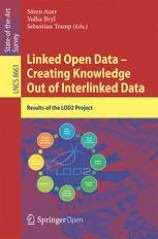
Linked Open Data -- Creating Knowledge Out of Interlinked Data : Results of the LOD2 Project
Linked Open Data (LOD) is a pragmatic approach for realizing the Semantic Web vision of making the Web a global, distributed, semantics-based information system. This book presents an overview on the results of the research project “LOD2 -- Creating Knowledge out of Interlinked Data”. LOD2 is a large-scale integrating project co-funded by the European Commission within the FP7 Information and Communication Technologies Work Program. Commencing in September 2010, this 4-year project comprised leading Linked Open Data research groups, companies, and service providers from across 11 European countries and South Korea.
Knowledge graphs and big data processing
This book is part of the LAMBDA Project (Learning, Applying, Multiplying Big Data Analytics), funded by the European Union, GA No. 809965. Data Analytics involves applying algorithmic processes to derive insights.

Knowledge Engineering : Practice and Patterns ; 16th International Conference, EKAW 2008, Acitrezza, Italy, September 29 - October 2, 2008. Proceedings
Constitutes the refereed proceedings of the 16th International Conference on Knowledge Engineering and Knowledge Management, EKAW 2008, held in Acitrezza, Sicily, Italy, in September/October 2008.The 17 revised full papers and 15 revised short papers presented together with 3 invited talks were carefully reviewed and selected from 102 submissions. The papers are organized in topical sections on knowledge patterns and knowledge representation, matching ontologies and data integration, natural language, knowledge acquisition and annotations, search, query and interaction, as well as ontologies.

Knowledge Discovery in Inductive Databases ; Vol.3377 : 3rd International Workshop, KDID 2004, Pisa, Italy, September 20, 2004, Revised Selected and Invited Papers
Cnstitutes the thoroughly refereed joint postproceedings of the Third International Workshop on Knowledge Discovery in Inductive Databases, KDID 2004, held in Pisa, Italy in September 2004 in association with ECML/PKDD. Inductive Databases support data mining and the knowledge discovery process in a natural way. In addition to usual data, an inductive database also contains inductive generalizations, like patterns and models extracted from the data. This book presents nine revised full papers selected from 23 submissions during two rounds of reviewing and improvement together with one invited paper. Various current topics in knowledge discovery and data mining in the framework of inductive databases are addressed.

Journal on Data Semantics XI
The LNCS Journal on Data Semantics is devoted to the presentation of notable work that, in one way or another, addresses research and development on issues related to data semantics. The scope of the journal ranges from theories supporting the formal definition of semantic content to innovative domain-specific applications of semantic knowledge. The journal addresses researchers and advanced practitioners working on the semantic web, interoperability, mobile information services, data warehousing, knowledge representation and reasoning, conceptual database modeling, ontologies, and artificial intelligence.

Journal on Data Semantics IV
• Semantics in data visualization • Semantic services for mobile users • Supporting tools • Applications of semantic-driven approaches These topics are to be understood as specifically related to semantic issues. Contributions submitted to the journal and dealing with semantics of data will be considered even if they are not within the topics in the list. While the physical appearance of the journal issues is like the books from the we- known Springer LNCS series, the mode of operation is that of a journal. Contributions can be freely submitted by authors and are reviewed by the Editorial Board. Contributions may also be invited, and nevertheless carefully reviewed, as in the case for issues that contain extended versions of the best papers from major conferences addressing data semantics issues. Special issues, focusing on a specific topic, are coordinated by guest editors once the proposal for a special issue is accepted by the Editorial Board. Finally, it is also possible that a journal issue be devoted to a single text.

Bioinformatics research and development ; 2nd International Conference, BIRD 2008 Vienna, Austria, July 7-9, 2008 Proceedings
This book constitutes the refereed proceedings of the Second International Bioinformatics Research and Development Conference, BIRD 2008, held in Vienna, Austria in July 2008.

Architectural graphics ; Vol.1 : Graphics for analysis
Reports on several advances in architectural graphics, with a special emphasis on education, training, and research. It gathers a selection of contributions to the 19th International Conference on Graphic Design in Architecture, EGA 2022, held on June 2–4, 2022, in Cartagena, Spain, with the motto: "Beyond drawings. The use of architectural graphics".
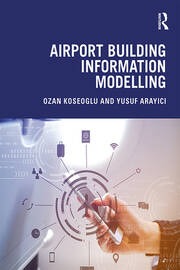
Airport Building Information Modelling
Details how Building Information Modelling is being successfully deployed in the planning, design, construction and future operation of the Istanbul New Airport, a mega-scale construction project incorporating a varying mix of infrastructures including terminals, runways, passenger gates, car parks, railways and roads. The book demonstrates how Airport Building Information Modelling (ABIM) is being used to: • facilitate collaboration, cooperation and integrated project delivery • manage subcontractors and eliminate cost over-runs • reduce waste on site and enhance overall quality • connect people in a virtual environment to encourage collaborative working • provide clients with an effective interface for lifecycle management including: design development, construction documentation, construction phases and BIM and Big Data Integration for future facilities management

Advances in web-age information management ; 2nd International Conference, WAIM 2001, Xi'an, China, July 9-11, 2001. Proceedings
This book constitutes the refereed proceedings of the Second International Conference on Web-Age Information Management, WAIM 2001, held in Xi'an, China, in July 2001.The 21 revised full papers and 12 short papers presented together with 4 research experience papers were carefully reviewed and selected for inclusion in the proceedings. The papers are organized in topical sections on multimedia databases and high-dimensional indexing, information retrieval and text indexing, data mining, semistructured data management, data warehousing and federated databases, Web information management and e-commerce, spatio-temporal and high-dimensional information management, data mining and constraint management, data integration and filtering, and workflow and adaptive systems.

Advances in databases and information systems ; 25th European Conference, ADBIS 2021, Tartu, Estonia, August 24–26, 2021, Proceedings
This book constitutes the proceedings of the 25th European Conference on Advances in Databases and Information Systems, ADBIS 2021, held in Tartu, Estonia, in August 2021. The 18 full papers presented together with 3 keynotes were carefully reviewed and selected from 70 submissions. The selected papers span a wide spectrum of topics in databases and related technologies, tackling challenging problems and presenting inventive and efficient solutions. They are organized in 5 sessions: patterns and events, social media and text mining, indexes, queries and constraints, high-dimensional data and data streams, and data integration.

Advances in conceptual modeling : Foundations and applications ; ER 2007 Workshops CMLSA, FP-UML, ONISW, QoIS, RIGiM, SeCoGIS, Auckland, New Zealand, November 5-9, 2007, Proceedings
Covering data warehouses, security, model transformation, state diagrams development and model quality.

3D Recording and Interpretation for Maritime Archaeology
Includes recording and analysis of maritime archaeology through emerging technologies, including both practical and theoretical contributions. Topics include photogrammetric recording, laser scanning, marine geophysical 3D survey techniques, virtual reality, 3D modelling and reconstruction, data integration and Geographic Information Systems. This convergence of digital technologies such as underwater photography and photogrammetry, 3D sonar, 3D virtual reality, and 3D printing has highlighted a pressing need for these new methodologies to be considered together, both in terms of defining the state-of-the-art and for consideration of future directions.
