



الصفحة 2
الصفحة 2

Micropropagation methods in temporary immersion systems
Presents vital techniques for the commercial micropropagation of plants. It explores numerous micropropagation protocols in different types of temporary immersion systems for plant species with agricultural, medicinal, ornamental, and forestry interest, detailing the type of bioreactor and the optimal parameters necessary to guarantee obtaining the largest number of commercial propagules. Written for the highly successful Methods in Molecular Biology series, chapters include introductions to their respective topics, lists of the necessary materials and reagents, step-by-step and readily reproducible laboratory protocols, and tips on troubleshooting and avoiding known pitfalls.
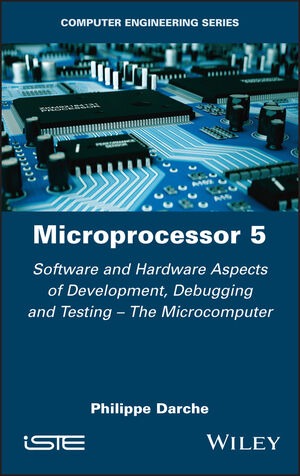
Microprocessor 5 : Software and hardware aspects of development, debugging and testing - the microcomputer
Focuses more particularly on the first two generations of microprocessors, those that handle 4- and 8- bit integers. Microprocessor 5 – the fifth and final volume of this series of books – first presents the hardware and software aspects of the development chain of a microprocessor-based digital system. Finally, to round up the series and offer a historical perspective, the architectures of the first microcomputers are detailed. A comprehensive approach is used, with examples drawn from current and past technologies that illustrate theoretical concepts, making them accessible.

Microprocessor 4 : Core concepts - software aspects
Addresses the software aspects of this component. Coding of an instruction, addressing modes and the main features of the Instruction Set Architecture (ISA) of a generic component are presented. Futhermore, two approaches are discussed for altering the flow of execution using mechanisms of subprogram and interrupt. A comprehensive approach is used, with examples drawn from current and past technologies that illustrate theoretical concepts, making them accessible.
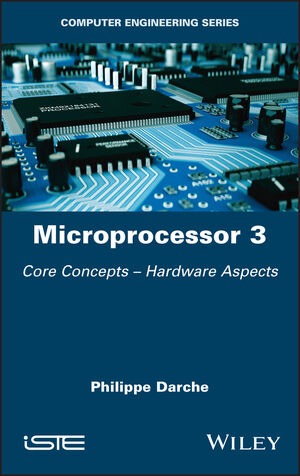
Microprocessor 3 : Core concepts - hardware aspects
Calculation is the main function of a computer. The central unit is responsible for executing the programs. The microprocessor is its integrated form. This component, since the announcement of its marketing in 1971, has not stopped breaking records in terms of computing power, price reduction and integration of functions (calculation of basic functions, storage with integrated controllers). It is present today in most electronic devices. Knowing its internal mechanisms and programming is essential for the electronics engineer and computer scientist to understand and master the operation of a computer and advanced concepts of programming.

Microprocessor 2 : Communication in a digital system
Focuses more particularly on the first generations of microprocessors, that is to say those that handle integers in 4 and 8-bit formats. The first chapter presents the calculation function and reminds the memory function. The following is devoted to notions of calculation model and architecture. The concept of bus is then presented. Chapters 4 and 5 can then address the internal organization and operation of the microprocessor first in hardware and then software. The mechanism of the function call, conventional and interrupted, is more particularly detailed in a separate chapter. The book ends with a presentation of architectures of the first microcomputers for a historical perspective. The knowledge is presented in the most exhaustive way possible with examples drawn from current and old technologies that illustrate and make accessible the theoretical concepts. Each chapter ends if necessary with corrected exercises and a bibliography. The list of acronyms used and an index are at the end of the book.

Microprocessor 1 : Prolegomena - calculation and storage functions - models of computation and computer architecture
Presents the computation function, recalls the memory function and clarifies the concepts of computational models and architecture. A comprehensive approach is used, with examples drawn from current and past technologies that illustrate theoretical concepts, making them accessible.

Microplastic in the Environment : Pattern and Process
This book examines global plastic pollution, an issue that has become a critical societal challenge with implications for environmental and public health. This volume provides a comprehensive, holistic analysis on the plastic cycle and its subsequent effects on biota, food security, and human exposure. Importantly, global environmental change and its associated, systems-level processes, including atmospheric deposition, ecosystem complexity, UV exposure, wind patterns, water stratification, ocean circulation, etc., are all important direct and indirect factors governing the fate, transport and biotic and abiotic processing of plastic particles across ecosystem types.

Microphone Array Signal Processing
Microphone arrays have attracted a lot of interest in the last two decades. The reason behind this is that they have the potential to solve many important problems in both human-machine and human-human interfaces for different kinds of communications. But before microphone arrays can be deployed broadly, there is a strong need for a deep understanding of the problems encountered in the real world and their clear formulation in order that useful algorithms can be developed to process the sensor signals.

Micronutrient Deficiencies in Global Crop Production
This book provides a valuable guide to the requirements of crops for plant micronutrients and the causes, occurrence and treatment of deficiencies. It is essential reading for many agronomy, plant nutrition and agricultural extension professionals.

Micromammals and Macroparasites : From Evolutionary Ecology to Management
Small mammals are among the most ubiquitous and important components of terrestrial ecosystems. They have coevolved, and now coexist, with a diverse array of parasites, such that not only are all aspects of their biology influenced by parasitism but they also play key roles in the transmission and maintenance of parasitic diseases. This book provides a comprehensive survey of the diversity and biology of metazoan parasites affecting small mammals, of their impact on host individuals and populations, and of the management implications of these parasites for conservation biology and human welfare. Designed for a broad, multidisciplinary audience, it will be an essential resource for researchers, students, and practitioners alike in the fields of parasitology, evolutionary ecology, wildlife management, and conservation biology.

Microbial Phosphate Solubilization
Last decade has seen a significantly increased knowledge about phosphate solubilizing microorganisms. Sixty specialists from thirteen countries met in Salamanca to discuss the problems of the high P-unavailability as a soil nutrient for crops, and the hazards of an increasing phosphate input to aquatic habitats from industrial and mining activities, sewage disposal, detergents, and other sources. Updated solutions to enhance P-uptake by plants, bioremediation potential in the rehabilitation of ecosystems, taxonomic characterization interactions with mycorrizae, the physiological and molecular basis of PSM, and possibilities of genetic modifications of rhizospheric microorganisms were among the contributions presented. Challenges in commercializing a phosphate solubilizing microorganism were also outlined by a relevant biotech company.

Michael Graves : Images of a grand tour
Michael Graves: Images of A Grand Tour collects for the first time the stunning artwork produced during this trip. Delicate pencil sketches, striking ink washes, and colorful photographs show the deep connection Graves had to the places he visited, from the Roman Forum to the Grecian Acropolis to Wiltshires Stonehenge. They also tell something of the education of an architect, bringing to light the classical buildings that caused Graves to reexamine his early devotion to modernism. A foreword by Graves reflects on these travels from the distance of forty years

Medicinal spice and condiment crops
Spices are used in small quantities to add flavor, aroma, color, and texture in food preparation. However, spices and condiments have also been recognized as having medicinal value. They have been used traditionally as curative and preventive agents, the bioactive compounds obtained from these plants are used in herbal drug formulations in modern times.

Mechanisms of Angiogenesis
Is it advisable to go back from bedside to the bench? During the last decade, few topics encountered such a broad interest in bio- gy and medicine as angiogenesis. The amazing ability of the body to restore blood flow by induction of blood vessel growth as part of an adaptive process has alarmed physicians dealing with diseases in which angiogenesis is either exaggerated (as in tumors) or too slow (as in ischemic diseases of heart and brain). Not surprisingly, pro- and antiangiogenic strategies have found their way into clinical trials. For instance, for the USA, the NIH website in early 2004 displayed 38 clinical studies involving either pro- or antiangiogenic th- apies. Given the expected overwhelming wealth of clinical data, the question may be asked whether further exploration of biological mechanisms is required or whether results from the bedside are instructive enough to proceed. This question depends also on the progress of pro- and antiangiogenic clinical trials. In the following, I give a short overview about some of the progress that has been made in this field. Since Judah Folkman proposed antiangiogenic tumor therapy thirty years ago, it has become increasingly evident that agents which interfere with blood vessel formation also block tumor progression. Accordingly, antiangiogenic therapy has gained much attention as a potential adjunct to conventional c- cer therapy.

Measuring Methane Production from Ruminants
The world’s livestock sector is amidst a major transformation, fuelled by high demand for meat and milk, which is likely to double over the next two decades in developing countries. The challenge is to enhance animal productivity without adversely affecting the environment. A key to this is reducing methane emissions from ruminants. The major limitation to ruminant production in many tropical regions of Africa, Asia and Latin America, where a large proportion of the global ruminant population is located, is poor nutrition. The productivity of animals is restricted by the low nitrogen and high fibre content of the native grasses and crop residues, which form the basis of the diets in these regions. Animals on these types of diets emit more methane than animals fed better quality temperate forages. These methane emissions represent a loss of digestible energy to the animal (up to 15%) as well as a threat to the environment.The challenge is to devise nutritional strategies and identify dietary components, particularly from locally available plant resources, that reduce methane emissions.

Measuring emission of agricultural greenhouse gases and developing mitigation options using nuclear and related Techniques : Applications of nuclear techniques for GHGs
This book is an outcome of the collaboration between the Soil and Water Management & Crop Nutrition Section, Joint FAO/IAEA Division of Nuclear Techniques in Food and Agriculture, Department of Nuclear Sciences and Applications, International Atomic Energy Agency (IAEA), Vienna, Austria, and the German Science Foundation research unit DASIM (Denitrification in Agricultural Soils: Integrated control and Modelling at various scales) and other institutes.

Iron Nutrition in Plants and Rhizospheric Microorganisms
This book uses an interdisciplinary approach to provide a comprehensive review on the status of iron nutrition in plants. International scientists discuss research on acquisition of iron by strategy I and strategy II plants. These reviews summarize a variety of plant species and include both laboratory and field observations. Topics covered in this book include: plants as a source of iron for animals and humans, iron translocation in the plants, iron-stimulated activities that influence crop yield and fruit tree productivity, iron uptake by plants as influenced by microorganisms (i.e. free living soil microorganisms, symbiotic nitrogen-fixing and pathogenic bacteria), the role of plant hormones in iron transport, iron-metal competition in phytoremediation, root zone activities involving interactions between minerals and organic matter, the role of microbial siderophores in rhizospheric iron cycling, iron storage as phytoferritin, proteomic and metabolic studies associated with iron stress response, methods for studying iron metabolism including stable isotopes, and the correction of iron deficiency through the use of synthetic or natural chelates.

Ion channels as targets in drug discovery
Built around ion channel research and, more specifically, ion channels as important therapeutic drug targets. Under the editorial leadership of Gary Stephens in academic research and Edward Stevens from industry, the aim is to bring these strands together to provide a cutting-edge translational reference on ion channel drug discovery. Exploiting our knowledge of ion channel structure and function has clear current and future potential to intervene and correct the pathophysiology associated with debilitating conditions, including cardiovascular disease, diabetes, cystic fibrosis, pain, epilepsy, and neurodegenerative disorders. Individual chapters have a disease focus, also providing a “case study story” that will also appeal to a clinical audience
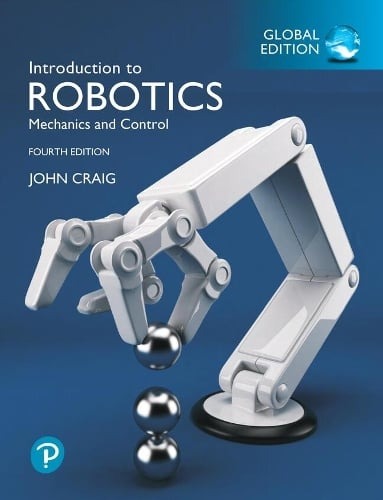
Introduction to robotics : Analysis, control, applications
Offers a guide to the fundamentals of robotics, robot components and subsystems and applications. The author—a noted expert on the topic—covers the mechanics and kinematics of serial and parallel robots, both with the Denavit-Hartenberg approach as well as screw-based mechanics. In addition, the text contains information on microprocessor applications, control systems, vision systems, sensors, and actuators.

Introduction to Ion Beam Biotechnology
It presents treatment of modern ion beam biotechnology and with respect to applications of ion beam bombardment of living cellular material in the hybrid field of ion beam physics and biology.Key Topics include: – Ion beam formation – Ion implantation fundamentals – Interaction between energetic ions and biological organisms – Reaction processes of ion implanted biological small molecules – Damage and repair of ion-bombarded DNA – Cell damage due to ion bombardment – Biological effects of ion implantation – Fundamentals of ion-bombardment-induced genetic variation – Ion beam mutation breeding of crops – Ion beam mutation breeding of microbes – Ion beam induced gene transfer – Ion beam induced synthesis of organic molecules – Single-ion bombardment mutation of cells
