



الصفحة 2
الصفحة 2

Fast Motions in Biomechanics and Robotics : Optimization and Feedback Control
In the past decades, much progress has been made in the field of walking robots. The current state of technology makes it possible to create humanoid robots that nearly walk like a human being, climb stairs, or avoid small - stacles. However, the dream of a robot running as fast and as elegantly as a human is still far from becoming reality. Control of such fast motions is still a big technological issue in robotics, and the maximum running speed of contemporary robots is still much smaller than that of human track runners. The conventional control approach that most of these robots are based on does not seem to be suitable to increase the running speeds up to a biological level.
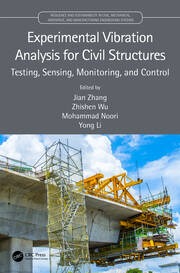
Experimental vibration analysis for civil structures : Testing, sensing, monitoring, and control
Covers a wide range of topics in the areas of vibration testing, instrumentation, and analysis of civil engineering and critical infrastructure. It explains how recent research, development, and applications in experimental vibration analysis of civil engineering structures have progressed significantly due to advancements in the fields of sensor and testing technologies, instrumentation, data acquisition systems, computer technology, computational modeling and simulation of large and complex civil infrastructure systems. The book also examines how cutting-edge artificial intelligence and data analytics can be applied to infrastructure systems.

Evolving Toolbox for Complex Project Management
Enhances learning about complex project management principles and practices through the introduction and discussion of a portfolio of tools presented as an evolving toolbox. Throughout the book, industry practitioners examine the toolsets that are part of the toolbox to develop a broader understanding of complex project management challenges and the available tools to address them.

Dynamic Modeling, Predictive Control and Performance Monitoring : A Data-driven Subspace Approach
A typical design procedure for model predictive control or control performance monitoring consists of: identification of a parametric or nonparametric model, derivation of the output predictor from the model and design of the control law or calculation of performance indices according to the predictor.

Distributed Embedded Control Systems : Improving Dependability with Coherent Design
Distributed Embedded Control Systems handles the domains encountered when designing a distributed embedded computer control system as an integrated whole. First to be discussed are some basic issues about real-time systems and their properties, specifically safety. Then, system and hardware architectures are dealt.

Dissipative Systems Analysis and Control : Theory and Applications
Dissipative Systems Analysis and Control (second edition) presents a fully revised and expanded treatment of dissipative systems theory, constituting a self-contained, advanced introduction for graduate students, researchers and practising engineers. It examines linear and nonlinear systems with examples of both in each chapter; some infinite-dimensional examples are also included. Throughout, emphasis is placed on the use of the dissipative properties of a system for the design of stable feedback control laws. The theory is substantiated by experimental results and by reference to its application in illustrative physical cases (Lagrangian and Hamiltonian systems and passivity-based and adaptive controllers are covered thoroughly).
Digital self-tuning controllers : Algorithms, implementation and applications
Digital Self-tuning Controllers presents you with a complete course in self-tuning control, beginning with a survey of adaptive control and the formulation of adaptive control problems. Modelling and identification are dealt with before passing on to algebraic design methods and particular PID and linear-quadratic forms of self-tuning control. Finally, laboratory verification and experimentation will show you how to ground your theoretical knowledge in real plant control.

Deep Learning, Machine Learning and IoT in Biomedical and Health Informatics : Techniques and Applications
Examines and demonstrates state-of-the-art approaches for IoT and Machine Learning based biomedical and health related applications. This book aims to provide computational methods for accumulating, updating and changing knowledge in intelligent systems and particularly learning mechanisms that help us to induce knowledge from the data. It is helpful in cases where direct algorithmic solutions are unavailable, there is lack of formal models, or the knowledge about the application domain is inadequately defined. In the future IoT has the impending capability to change the way we work and live. These computing methods also play a significant role in design and optimization in diverse engineering disciplines. With the influence and the development of the IoT concept, the need for AI (artificial intelligence) techniques has become more significant than ever.

Data Science for Civil Engineering : A Beginner's Guide
Explains use of data science-based techniques for modeling and providing optimal solutions to complex problems in civil engineering. It discusses civil engineering problems like air, water and land pollution, climate crisis, transportation infrastructures, traffic and travel modes, mobility services, and so forth. Divided into two sections, the first one deals with the basics of data science and essential mathematics while the second section covers pertinent applications in structural and environmental engineering, construction management, and transportation.

Cybernetical Physics : From Control of Chaos to Quantum Control
This book is, perhaps, the first attempt to present a unified exposition of the subject and methodology of cybernetical physics as well as solutions to some of its problems. Emphasis of the book is on the examination of fundamental limits on energy transformation by means of control procedures in both conservative and dissipative systems.

Creating Web-based Laboratories
Remote web-based experimentation, enabling students and researchers to access the laboratory anytime via the Internet, is becoming an increasingly attractive way to complement or even replace traditional laboratory sessions. Placing a video camera & microphone before the equipment and apparatus to capture what is actually happening in the laboratory allows the images and audio data to be streamed to the client side. Researchers in different countries can share equipment and conduct research cooperatively and remotely. The authors summarise their research and discuss the development of the 5 web-based laboratories launched from the National University of Singapore. The principles, structure, and technologies required for the creation of Internet remote experimentation systems are discussed with particular emphasis on the integration of hardware and software systems. Also highlighted is the design and development of interfaces and components for use in typical web-based laboratories or similar web-control applications.

Control Systems Design : A New Framework
This book will be of great interest to academics and institutional researchers in control system design and to those studying for higher degrees in this area

Control of Singular Systems with Abrupt Changes
In this book many problems like stochastic stability, stochastic stabilization using state feedback control and static output control, Hinfinity control, filtering, guaranteed cost control and mixed H2/Hinfinity control and their robustness are tackled.

Control Design Techniques in Power Electronics Devices
The book is introduced through the very important topic of modeling switched power electronics as controlled dynamical systems. Detailed circuit layouts, schematics and actual closed-loop control responses from a representative group of the plants under discussion and generated by applying the theory are included. The control theories which feature in the book are: sliding mode control and feedback control by means of approximate linearization (linear state feedback, static and dynamic proportional-integral-differential (PID control), output feedback trough observer design, Lyapunov-based control and passivity-based control). Nonlinear control design methods represented include: exact feedback linearization, input-output linearization, differential flatness, generalized PID control and, again, passivity-based control.

Construction and Building Automation : From Concepts to Implementation
Intended to be used as a textbook in undergraduate civil engineering and construction courses to introduce cutting edge mechanical, electrical and computer science topics that are needed for civil and construction engineers to collaborate in inter-disciplinary automation projects. Introduces hardware and software needed for automating engineering tasks ; Presents examples of applications in the control of building systems ; Illustrates of the use of automation for improving construction processes ; Provides a lucid introduction to advanced computing concepts, machine learning, artificial intelligence, and control algorithms to construction and engineering students.

Computational intelligence in time series forecasting : Theory and engineering applications
Deals with the power of intelligent technologies individually and in combination. This book includes examples of the particular systems and processes susceptible to each technique. It is suitable for industrial training purposes, as well as serving as a useful reference material for experimental researchers.
Mathematical Methods in Robust Control of Linear Stochastic Systems
Linear stochastic systems are successfully used to provide mathematical models for real processes in fields such as aerospace engineering, communications, manufacturing, finance and economy. This monograph presents a useful methodology for the control of such stochastic systems with a focus on robust stabilization in the mean square, linear quadratic control, the disturbance attenuation problem, and robust stabilization with respect to dynamic and parametric uncertainty.
Mathematical Methods for Robust and Nonlinear Control : EPSRC Summer School
The underlying theory on which much modern robust and nonlinear control is based can often be dif?cult for the student to grasp. In particular, the mathematical - pects can be problematic for students from a standard engineering background. The EPSRC sponsored Summer School which was held in Leicester in September 2006 attempted to “?ll the gap” in students’ appreciation the theory relevant to several important areas of control. This book is a collection of lecture notes which were p- sented at that workshop and consists of, broadly, two parts. The ?rst nine chapters are devoted to the theory behind several areas of robust and nonlinear control and are aimed at introducing fundamental concepts to the reader. The last six chapters contain detailed case studies which aim to demonstrate the use and effectiveness of these modern techniques in real engineering applications. It is hoped that this book will provide a useful introduction to many of the more common robust and nonlinear control techniques and serve as a valuable reference for the more adept practitioner.

Magnetic Control of Tokamak Plasmas
The main topic of Magnetic Control of Tokamak Plasmas is the design of feedback control systems guaranteeing the stability of plasma equilibrium inside a tokamak and the regulation of the plasma position and shape during plasma pulses. Modelling and control details are presented, allowing the non-expert to understand the control problem. Starting from equations of magneto-hydro-dynamics, all the steps needed for the derivation of plasma state-space models are enumerated. The basics of electromagnetics are frequently recalled. The control problem is then described beginning with control of current and position – vertical and radial – and progressing to the more challenging shape control. The solutions proposed vary from simple PIDs to more sophisticated MIMO controllers.
Complex-valued neural networks
This book is the first monograph ever on complex-valued neural networks, which lends itself to graduate and undergraduate courses in electrical engineering, informatics, control engineering, mechanics, robotics, bioengineering, and other relevant fields. It is useful for those beginning their studies, for instance, adaptive signal processing for highly functional sensing and imaging, control in unknown and changing environment, brainlike information processing, robotics inspired by human neural systems, and interdisciplinary studies to realize comfortable society. It is also helpful to those who carry out research and development regarding new products and services at companies.
