



الصفحة 2
الصفحة 2

Interactive storytelling ; 1st Joint International Conference on interactive digital storytelling, ICIDS 2008 Erfurt, Germany, November 26-29, 2008 Proceedings
This book constitutes the refereed proceedings of the First Joint International Conference on Interactive Digital Storytelling, ICIDS 2008, held in Erfurt, Germany, in November 2008.The 19 revised full papers, 5 revised short papers, and 5 poster papers presented together with 3 invited lectures and 8 demo papers were carefully reviewed and selected from 62 submission. The papers are organized in topical sections on future perspectives on interactive digital storytelling, interactive storytelling applications, virtual characters and agents, user experience and dramatic immersion, architectures for story generation, models for drama management and interacting with stories, as well as authoring and creation of interactive narrative.
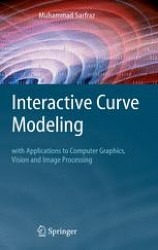
Interactive Curve Modeling : With Applications to Computer Graphics, Vision and Image Processing
Interactive curve modeling techniques and their applications are extremely useful in a number of academic and industrial settings, and specifically play a significant role in multidisciplinary problem solving, such as in font design, designing objects, CAD/CAM, medical operations, scientific data visualization, virtual reality, character recognition, and object recognition, etc. Various problems such as iris, fingerprint, and signature recognition, can also be intelligently solved and automated using curve techniques.

Intelligent robotics and applications ; 1st International Conference, ICIRA 2008 Wuhan, China, October 15-17, 2008 Proceedings, Part II
This two volumes constitute the refereed proceedings of the First International Conference on Intelligent Robotics and Applications, ICIRA 2008, held in Wuhan, China, in October 2008.The 265 revised full papers presented were thoroughly reviewed and selected from 552 submissions; they are devoted but not limited to robot motion planning and manipulation; robot control; cognitive robotics; rehabilitation robotics; health care and artificial limb; robot learning; robot vision; human-machine interaction & coordination; mobile robotics.
Integrated Graphic and Computer Modelling
Full colour throughout, the book explores programming language developments from machine code to more natural language forms, and the basic display operations and commands needed to create effective computer graphic systems. As the visual presentation of real and virtual environments becomes more and more the norm in application systems, a clear understanding of the theory that underpins these techniques is required of all students and practitioners studying and working on large computer systems.

Information visualization : Human-centered issues and perspectives
This book is the outcome of the Dagstuhl Seminar on "Information Visualization -- Human-Centered Issues in Visual Representation, Interaction, and Evaluation" held at Dagstuhl Castle, Germany, from May 28 to June 1, 2007.Information Visualization (InfoVis) is a relatively new research area, which focuses on the use of visualization techniques to help people understand and analyze data.This book documents and extends the findings and discussions of the various sessions in detail.

Information Retrieval for Music and Motion
The book then introduces a general and unified framework for motion analysis, retrieval, and classification, highlighting the design of suitable features, the notion of similarity used to compare data streams, and data organization.

Information Processing with Evolutionary Algorithms : From Industrial Applications to Academic Speculations
The last decade of the 20th century has witnessed a surge of interest in num- ical, computation-intensive approaches to information processing. The lines that draw the boundaries among statistics, optimization, arti cial intelligence and information processing are disappearing, and it is not uncommon to nd well-founded and sophisticated mathematical approaches in application - mains traditionally associated with ad-hoc programming. Heuristics has - come a branch of optimization and statistics. Clustering is applied to analyze soft data and to provide fast indexing in the World Wide Web. Non-trivial matrix algebra is at the heart of the last advances in computer vision. The breakthrough impulse was, apparently, due to the rise of the interest in arti cial neural networks, after its rediscovery in the late 1980s. Disguised as ANN, numerical and statistical methods made an appearance in the - formation processing scene, and others followed. A key component in many intelligent computational processing is the search for an optimal value of some function. Sometimes, this function is not evident and it must be made explicit in order to formulate the problem as an optimization problem. The search - ten takes place in high-dimensional spaces that can be either discrete, or c- tinuous or mixed. The shape of the high-dimensional surface that corresponds to the optimized function is usually very complex. Evolutionary algorithms are increasingly being applied to information processing applications that require any kind of optimization.
Image-Based Rendering
Image-based rendering (IBR) refers to a collection of techniques and representations that allows 3D scenes and objects to be visualized in a realistic way without full 3D model reconstruction. The potential for photorealistic visualization has tremendous appeal, especially for applications such as video games, virtual travel, and E-commerce, which stand to greatly benefit from this technology.

Image Processing : Dealing with Texture ; 2nd ed.
Updates the classic work on texture analysis theory and methods without abandoning the foundational essentials of this landmark work. Like the first, the new edition offers an analysis of texture in digital images that are essential to a diverse range of applications such as: robotics, defense, medicine and the geo-sciences. Designed to easily locate information on specific problems, the text is structured around a series of helpful questions and answers. Updated to include the most recent developments in the field, many chapters have been completely revised including: Fractals and Multifractals, Image Statistics, Texture Repair, Local Phase Features, Dual Tree Complex Wavelet Transform, Ridgelets and Curvelets and Deep Texture Features. The book takes a two-level mathematical approach: light math is covered in the main level of the book, with harder math identified in separate boxes.

Image and Signal Processing ; 3rd International Conference, ICISP 2008. Cherbourg-Octeville, France, July 1 - 3, 2008. Proceedings
This book constitutes the refereed proceedings of the Third International Conference on Image and Signal Processing, ICISP 2008, held in Cherbourg-Octeville, France, in July 2008.The 48 revised full papers and 22 revised poster papers presented were carefully reviewed and selected from 193 submissions. The papers are organized in topical sections on image filtering, image segmentation, computer vision, feature extraction, pattern recognition, graph-based representations, motion detection and estimation, new interfaces, document processing, and signal processing.
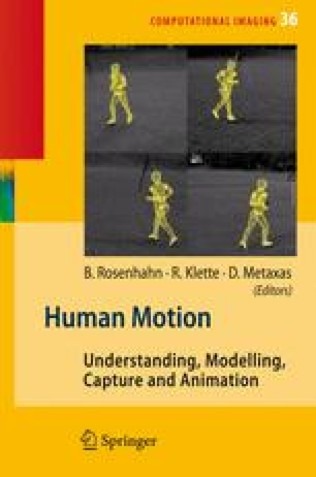
Human motion : Understanding, modeling, capture and animation
Edward Muybridge (1830–1904) is known as the pioneer in motion capt- ing with his famous experiments in 1887 called “Animal Locomotion”. Since then, the feld of animal or human motion analysis has grown in many dir- tions. However, research and results that involve human-like animation and the recovery of motion is still far from being satisfactory. Progress in human motion analysis depends on empirically anchored and grounded research in computer vision, computer graphics, and biomechanics. This book is based on a June 2006 workshop held in Dagstuhl, Germany. This workshop brought together for the frst time researchers from the afo- mentioned disciplines.
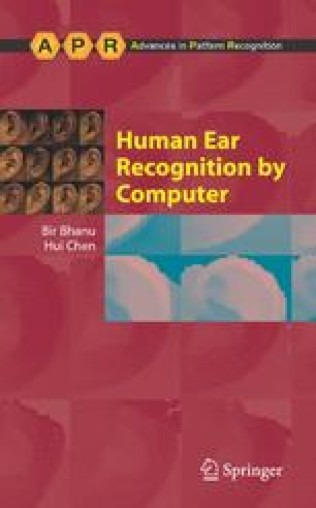
Human Ear Recognition by Computer
Human Ear Recognition by Computer is the first book on the automatic recognition of human ears. It presents an entire range of computational algorithms for recognition of humans by their ears. These algorithms have been tested and validated on the largest databases that are available today,This state-of-the-art research reference explores all aspects of 3D ear recognition, including representation, detection, recognition, indexing and performance prediction. It has been written for a professional audience of both researchers and practitioners within industry, and is also ideal as an informative text for graduate students in computer science and engineering.

High-Dynamic-Range (HDR) Vision : Microelectronics, Image Processing, Computer Graphics
This first comprehensive account of high-dynamic-range (HDR) vision focusses on HDR real-time, high-speed digital video recording and also systematically presents HDR video transmission and display. The power of the eye-like, logarithmic optoelectronic conversion concept is demonstrated in machine-vision, medical, automotive, surveillance and cinematic applications, and it is extended to HDR sub-retinal implants for the vision impaired. While the book conveys the overall picture of HDR vision, specific knowledge of microelectronics and image processing is not required. It provides a quantitative summary of the major issues to allow the assessment of the state of the art and a glimpse at future developments. Selected experts share their know-how and expectations in this rapidly evolving art related to the single most powerful of our senses.
HCI in games : Experience design and game mechanics ; Third International Conference, HCI-Games 2021, Held as Part of the 23rd HCI International Conference, HCII 2021, Virtual Event, July 24–29, 2021, Proceedings, Part I
This two-volume set LNCS 12789 and 12790 constitutes the refereed proceedings of the Third International Conference on HCI in Games, HCI-Games 2021, held as part of the 23rd International Conference, HCI International 2021, which took place in July 2021. Due to COVID-19 pandemic the conference was held virtually.The total of 1276 papers and 241 poster papers included in the 39 HCII 2021 proceedings volumes was carefully reviewed and selected from 5222 submissions. The regular papers of DAPI 2021, Distributed, Ambient and Pervasive Interactions, are organized in topical sections named: Experience Design in Games; User Engagement and Game Impact; Game Mechanics.

Handbook on Interactive Storytelling
You will find a comprehensive discussion of the latest research covering the creation of interactive narratives that allow users to experience a dramatically compelling story that responds directly to their actions and choices. Readers will also enjoy: A thorough introduction to interactive storytelling, including discussions of narrative, plot, story, interaction, and a history of the phenomenon, from improvisational theory to role-playing games A rigorous discussion of the background of storytelling, from Aristotle’s Poetics to Joseph Campbell and the hero’s journey Compelling explorations of different perspectives in the interactive storytelling space, including different platforms, designers, and interactors, as well as an explanation of storyworlds
Handbook of Geometric Computing : Applications in Pattern Recognition, Computer Vision, Neuralcomputing, and Robotics
Many computer scientists, engineers, applied mathematicians, and physicists use geometry theory and geometric computing methods in the design of perception-action systems, intelligent autonomous systems, and man-machine interfaces. This handbook brings together the most recent advances in the application of geometric computing for building such systems, with contributions from leading experts in the important fields of neuroscience, neural networks, image processing, pattern recognition, computer vision, uncertainty in geometric computations, conformal computational geometry, computer graphics and visualization, medical imagery, geometry and robotics, and reaching and motion planning. For the first time, the various methods are presented in a comprehensive, unified manner.

Handbook of biomedical image analysis ; Vol.2 : Segmentation models ; Part B
Handbook of Biomedical Image Analysis: Segmentation Models (Volume II) is dedicated to the segmentation of complex shapes from the field of imaging sciences using different mathematicaltechniques. This volume is aimed at researchers and educators in imaging sciences, radiological imaging, clinical and diagnostic imaging, physicists covering different medical imaging modalities, as well as researchers in biomedical engineering, applied mathematics, algorithmic development, computer vision, signal processing, computer graphics and multimedia in general, both in academia and industry.

Handbook of biomedical image analysis : Vol.3: Registration models
Handbook of Biomedical Image Analysis: Registration Models (Volume III) is dedicated to the algorithms for registration of medical images and volumes. This volume is aimed at researchers and educators in imaging sciences, radiological imaging, clinical and diagnostic imaging, biomedical engineering, physicists covering different medical imaging modalities and researchers in applied mathematics, algorithmic development, computer vision, signal processing, computer graphics and multimedia in general, both in academia and industry.

Handbook of biomedical image analysis : Vol.1 : Segmentation bodels ; Part A
Handbook of Biomedical Image Analysis: Segmentation Models (Volume I) is dedicated to the segmentation of complex shapes from the field of imaging sciences using different mathematical techniques. This volume is aimed at researchers and educators in imaging sciences, radiological imaging, clinical and diagnostic imaging, physicists covering different medical imaging modalities, as well as researchers in biomedical engineering, applied mathematics, algorithmic development, computer vision, signal processing, computer graphics and multimedia in general, both in academia and industry .

Graph-theoretic concepts in computer science ; 34th International Workshop, WG 2008, Durham, UK, June 30 – July 2, 2008. Revised Papers
This book constitutes the thoroughly refereed post-conference proceedings of the 34th International Workshop on Graph-Theoretic Concepts in Computer Science, WG 2008, held in Durham, UK, in June/July 2008.The 30 revised full papers presented together with 3 invited paper were carefully reviewed and selected from 76 submissions. The papers feature original results on all aspects of graph-theoretic concepts in Computer Science, e.g. structural graph theory, sequential, parallel, and distributed graph and network algorithms and their complexity, graph grammars and graph rewriting systems.
