



الصفحة 2
الصفحة 2

Essentials in Food Science
Knowledge of food science is applicable to all persons, in diverse college majors. This text is designed with a user-friendly approach to Food Science for the non-major. This text reviews an Introduction to Food Components – quality and water. Next it addresses carbohydrates – including starches, pectins and gums, breads and pasta, vegetables and fruits. Then proteins – meats, poultry, fish, beans, eggs, milk and milk products are presented. Following proteins are fats and emulsions. Then sugars and sweeteners, and baked products, the latter of which builds upon basic food component knowledge. Various aspects of Food Production are examined, including food safety, preservation and processing, food additives and packaging. Government regulation and labeling complete the chapter information.

Engineering and health in compressed air work : Proceedings of the 2nd International conference on engineering and health in compressed air Work held at St Catherine's College, Oxford, from 25th to 27th September, 2002
Presents the proceedings of theSecond International Conference on Engineering and Health in Compressed Air Work, Heald at St Catherine's College, Oxford from 25th to 27th September 2002. The 35 papers in this volume cover a range of subjects, including experience with oxygen decompressionnin the UK and research related tothe introduction of oxygen decompression, which will be of interest to everyone involved with the engineering, medical or regulatory aspects of compressed air working and all those with an interest in hyperbaric exposure.
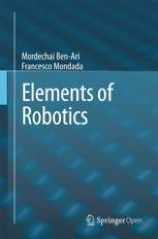
Elements of Robotics
Bridges the gap between playing with robots in school and studying robotics at the upper undergraduate and graduate levels to prepare for careers in industry and research. Robotic algorithms are presented formally, but using only mathematics known by high-school and first-year college students, such as calculus, matrices and probability. Concepts and algorithms are explained through detailed diagrams and calculations.

Electron Scattering : From Atoms, Molecules, Nuclei and Bulk Matter
There is a unity to physics; it is a discipline which provides the most fundamental understanding of the dynamics of matter and energy. To understand anything about a physical system you have to interact with it and one of the best ways to learn something is to use electrons as probes. This book is the result of a meeting, which took place in Magdalene College Cambridge in December 2001. Atomic, nuclear, cluster, soHd state, chemical and even bio- physicists got together to consider scattering electrons to explore matter in all its forms. Theory and experiment were represented in about equal measure. It was meeting marked by the most lively of discussions and the free exchange of ideas. We all learnt a lot. The Editors are grateful to EPSRC through its Collaborative Computational Project program (CCP2), lOPP, the Division of Atomic, Molecular, Optical and Plasma Physics (DAMOPP) and the Atomic Molecular Interactions group (AMIG) of the Institute of Physics for financial support. The smooth running of the meeting was enormously facilitated by the efficiency and helpfulness of the staff of Magdalene College, for which we are extremely grateful.

Educational change amongst English language college teachers in China : Transitioning from teaching for general to academic purposes
This book provides anthropological insights into the arduous yet rewarding journeys involved in selected TESOL teachers’ pedagogical transition to teaching English for Academic Purposes (EAP) at universities in Shanghai, the largest metropolitan area in China.
Education and the Public Interest : School Reform, Public Finance, and Access to Higher Education
Economic globalization has been accompanied by implementation of education reforms linked to accountability and public finance schemes that emphasize student choice in schools and student loans in higher education. In the U.S. these reforms are rationalized based on intermediate variables. the reforms rationalized based on this research are seldom evaluated in relation to outcomes . In Education and the Public Interest the editor re-examines the political rationales for these reforms.This volume undertakes a comparative study of the states in the U.S. to examine how education reforms influence student achievement, high school graduation, and college access; and finance schemes influence college access.

Dark Matter in Astro- and Particle Physics ; Proceedings of the International Conference DARK 2004, College Station, USA, 3-9 October, 2004
The search for dark matter in the universe has established itself as one of the most exciting and central fields of astrophysics, particle physics and cosmology. The lectures and talks in this book emphasize the experimental and theoretical status and future perspectives, stressing in particular the interplay between astro- and particle physics.

Cranbrook Architecture : A legacy of latitude
The renowned Cranbrook Academy of Art near Detroit, Michigan, has been described as the epicentre of American Modernism. When it opened in 1932 it combined a stunning Eliel Saarinen-designed campus with a radically open educational philosophy to attract and produce some of the most influential artists, designers and architects in US history, including Charles and Ray Eames, Fumihiko Maki, Florence Knoll and Edmund Bacon. Often compared to other experimental schools such as the Bauhaus, Black Mountain College and Taliesin, Cranbrook’s sustained purpose has been advancing a wide, interdisciplinary latitude and self-directed design research to expand and diversify its approaches to architectural practice.

Contemporary Reflections on Business Ethics
Ronald F. Duska, who began his career as a philosopher, has, over the last 30 years, established himself as one of the leading scholars in the field of business ethics. In the past decade, he has concentrated on ethics in the financial services industry because of his affiliation with The American College in Bryn Mawr, Pennsylvania, an institution that specializes in educating financial services professionals. This affiliation gives Duska regular interaction with producers, managers, and top executives in the financial services industry. This book includes a selection of the articles Duska has written throughout the years on ethics, business ethics, teaching ethics, agency theory, postmodernism, employee rights, and ethics in accounting and the financial services industry. The articles reflect Duska’s underlying philosophical concerns and their application to the real-world challenges of practitioners—an overarching method that might be called an Aristotelian common-sense approach to ethical decision making.

Conservation Biology : Foundations, Concepts, Applications
Fred Van Dyke’s new textbook, Conservation Biology: Foundations, Concepts, Applications, 2nd Edition represents a major new text for anyone interested in conservation. Drawing on his experience as a conservation biologist, college teacher, and successful textbook author, Van Dyke’s organizational clarity and readable style make this book an invaluable resource for students in conservation around the globe.Presenting key information and well-selected examples, this student-friendly volume carefully integrates the science of conservation biology with its implications for ethics, law, policy and economics. In addition to rigorous examination of the scientific theory supporting conservation biology and its applications, this unique book includes a number of features which set it apart from others. These include its chapters on aquatic conservation, landscape ecology, and ecosystem management, and its direct explanation and invitation to students on how to enter the work of conservation as a professional and personal vocation.
Mathematical Formulas for Economists
The present collection of formulas has been composed for students of economics or management science at universities, colleges and trade schools. It contains basic knowledge in mathematics, financial mathematics and statistics in a compact and clearly arranged form. This volume is meant to be a reference work to be used by students of undergraduate courses together with a textbook and by researchers in need of exact statements of mathematical results. People dealing with practical or applied problems will also find this collection to be an efficient and easy-to-use work of reference.
Mathematical Formulas for Economists
This collection of formulas constitutes a compendium of mathematics for eco nomics and business. It contains the most important formulas, statements and algorithms in this significant subfield of modern mathematics and addresses primarily students of economics or business at universities, colleges and trade schools. But people dealing with practical or applied problems will also find this collection to be an efiicient and easy-to-use work of reference. First the book treats mathematical symbols and constants, sets and state ments, number systems and their arithmetic as well as fundamentals of com binatorics. The chapter on sequences and series is followed by mathematics of finance, the representation of functions of one and several independent vari ables, their differential and integral calculus and by differential and difference equations. In each case special emphasis is placed on applications and models in economics. The chapter on linear algebra deals with matrices, vectors, determinants and systems of linear equations. This is followed by the representation of struc tures and algorithms of linear programming. Finally, the reader finds formu las on descriptive statistics (data analysis, ratios, inventory and time series analysis), on probability theory (events, probabilities, random variables and distributions) and on inductive statistics (point and interval estimates, tests). Some important tables complete the work.
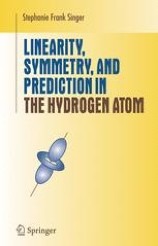
Linearity, Symmetry, and Prediction in the Hydrogen Atom
The predictive power of mathematics in quantum phenomena is one of the great intellectual successes of the 20th century. This textbook, aimed at undergraduate or graduate level students (depending on the college or university), concentrates on how to make predictions about the numbers of each kind of basic state of a quantum system from only two ingredients: the symmetry and the linear model of quantum mechanics. This method, involving the mathematical area of representation theory or group theory, combines three core mathematical subjects, namely, linear algebra, analysis and abstract algebra. Wide applications of this method occur in crystallography, atomic structure, classification of manifolds with symmetry, and other areas.
Linear Models for Optimal Test Design
Begins with a reflection on the history of test design--the core activity of all educational and psychological testing. It then presents a standard language for modeling test design problems as instances of multi-objective constrained optimization. The main portion of the book discusses test design models for a large variety of problems from the daily practice of testing, and illustrates their use with the help of numerous empirical examples. The presentation includes models for the assembly of tests to an absolute or relative target for their information functions, classical test assembly, test equating problems, item matching, test splitting, simultaneous assembly of multiple tests, tests with item sets, multidimensional tests, and adaptive test assembly. Two separate chapters are devoted to the questions of how to design item banks for optimal support of programs with fixed and adaptive tests. Linear Models for Optimal Test Design, which does not require any specific mathematical background, has been written to be a helpful resource on the desk of any test specialist.

Languages and Compilers for Parallel Computing ; Vol. 2481 : 15th Workshop, LCPC 2002, College Park, MD, USA, July 25-27, 2002, Revised Papers
LCPC 2002 brought together over 60 researchers from academia and research institutions from many countries. The program of 26 papers was selected from 32 submissions. Each paper was reviewed by at least three Program Committee members and sometimes by additional reviewers. Prior to the workshop, revised versions of accepted papers were informally published on the workshop’s website and in a paper proceedings that was distributed at the meeting. This year, the workshopwas organizedinto sessions of papers on related topics, and each session consisted of two to three 30-minute presentations.Based on feedback from the workshop,the papers were revised and submitted for inclusion in the formal proceedings published in this volume. Two papers were presented at the workshop but later withdrawn from the ?nal proceedings by their authors. We were very lucky to have Bill Carlson from the Department of Defense give the LCPC 2002 keynote speech on “UPC: A C Language for Shared M- ory Parallel Programming.” Bill gave an excellent overview of the features and programming model of the UPC parallel programming language.
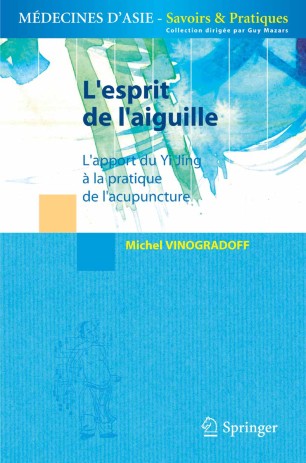
L’esprit de l’aiguille : L’apport du Yi Jing à la pratique de l’acupuncture = The Spirit of the Needle: The contribution of the Yi Jing to the practice of acupuncture
Acupuncture deciphers and heals human beings in all their mutations. The symbolism of Yi Jing joins the humanism of this Traditional Medicine for a dynamic reading of the changes and transformations at work in human beings. The double reflection generates a global vision of the human being and the approach to patients is changed. After an approach to the state of mind, encountered in these two fields, the author sets out to find the oldest roots of the notions of Yin and Yang. This allows him to identify the main strengths of the constitution of a human being and to deepen its symbolic construction. Three fields of application of this approach are then studied. The Extraordinary Meridians are viewed from a descriptive and behavioral perspective, which makes them extremely lively and familiar. Luo points, human being's relationship points with Reality, are also considered on a practical level using a symbolic reading of the links of Heaven, Earth and Man. Many examples shed light on these aspects. The last application is a detailed and comprehensive presentation of the fundamental and symbolic functions of the twelve main meridians through the hexagrams which correspond to their ancient Shu points. This original book is intended for any practitioner of traditional Chinese medicine curious to broaden their field of investigation. Dr M. Vinogradoff has been practicing acupuncture for 25 years. He is a member of the French Acupuncture Association, the French Acupuncture College and the Ricci Institute. After having published the complete translation of Yi Jing, in 2006 he published a novel, the action of which is set in Ancient China.

IUTAM Symposium on Impact Biomechanics: From Fundamental Insights to Applications
Contains the edited papers of the IUTAM Symposium on the Biomechanics of Impact, which was held in University College Dublin, Ireland in July 2005. These papers can be grouped into those that are concerned with the different causes of accidents, and the mechanics involved in accident analysis
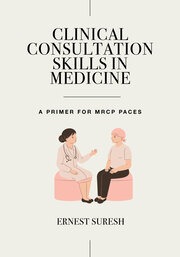
Clinical consultation skills in medicine : A primer for MRCP PACES
Follows the revised format of the Practical Assessment Clinical Examination Skills (PACES) exam conducted by the Royal College of Physicians in the UK, where ‘clinical consultation skills’ will be tested twice in two separate stations. Thus, coming closest to what doctors do in real life: obtain a structured history, perform a focussed examination and explain the problem to the patient in lay terms. This book takes readers through a rational approach to 63 common presenting symptoms or laboratory abnormalities in medicine. It is aimed at improving the clinical consultation skills of young doctors and preparing them for the new format of MRCP PACES
Biomedical EPR ; Part B : Methodology, Instrumentation, and Dynamics
Biomedical EPR – Part B focuses on applications of EPR techniques and instrumentation, with applications to dynamics. The book celebrates the 70th birthday of Prof. James S. Hyde, Medical College of Wisconsin, and his contributions to this field. Chapters are written to provide introductory material for new-comers to the field that lead into up-to-date reviews that provide perspective on the wide range of questions that can be addressed by EPR.
Biomedical EPR ; Part A : Free Radicals, Metals, Medicine and Physiology
Biomedical EPR – Part A focuses on applications of EPR spectroscopy in the areas of free radicals, metals, medicine, and physiology. The book celebrates the 70th birthday of Prof. James S. Hyde, Medical College of Wisconsin, and his contributions to this field. Chapters are written to provide introductory material for new-comers to the field which lead into up-to-date reviews that provide perspective on the wide range of questions that can be addressed by EPR.
