



الصفحة 2
الصفحة 2

Fractional order systems and applications in engineering
Covers the fundamentals of fractional calculus together with some analytical and numerical techniques, and provides MATLAB® codes for the simulation of fractional-order control (FOC) systems. The use of fractional calculus can improve and generalize well-established control methods and strategies. Many different FOC schemes are presented for control and dynamic systems problems. These extend to the challenging control engineering design problems of robust and nonlinear control. Practical material relating to a wide variety of applications including, among others, mechatronics, civil engineering, irrigation and water management, and biological systems is also provided.

Formal Approaches to Agent-Based Systems ; 3rd International Workshop, FAABS 2004, Greenbelt, MD, April 26-27, 2004, Revised Selected Papers
The 3rd Workshop on Formal Approaches to Agent-Based Systems (FAABS-III) was held at the Greenbelt Marriott Hotel (near NASA Goddard Space Flight Center) in April 2004 in conjunction with the IEEE Computer Society. The first FAABS workshop was help in April 2000 and the second in October 2002. Interest in agent-based systems continues to grow and this is seen in the wide range of conferences and journals that are addressing the research in this area as well as the prototype and developmental systems that are coming into use. Our third workshop, FAABS-III, was held in April, 2004. This volume contains the revised papers and posters presented at that workshop. The Organizing Committee was fortunate in having significant support in the planning and organization of these events, and were privileged to have wor- renowned keynote speakers Prof. J Moore (FAABS-I), Prof. Sir Roger Penrose (FAABS-II), and Prof. John McCarthy (FAABS-III), who spoke on the topic of se- aware computing systems, auguring perhaps a greater interest in autonomic computing as part of future FAABS events. We are grateful to all who attended the workshop, presented papers or posters, and participated in panel sessions and both formal and informal discussions to make the workshop a great success. Our thanks go to the NASA Goddard Space Flight Center, Codes 588 and 581 (Software Engineering Laboratory) for their financial support and to the IEEE Computer Society (Technical Committee on Complexity in Computing) for their sponsorship and organizational assistance.
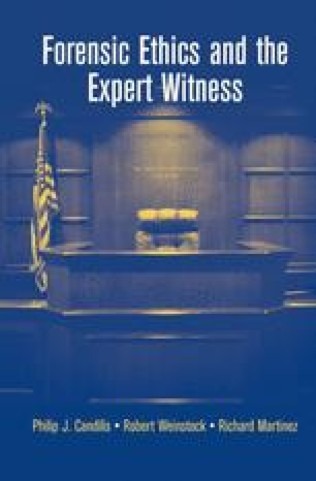
Forensic Ethics and the Expert Witness
The expert witness’ job is often described as a balancing act: duty to clients on the one hand, duty to society on the other. Forensic Ethics and the Expert Witness probes beyond this familiar conflict of interest framework to present a new, innovative model of professional ethics. Richly illustrated with cases from medicine, psychiatry, and law, this elegantly written volume examines the common moral ground that links these usually separate domains, and relates forensic ethics to larger concepts of morality and justice. In this integrative approach, the expert witness is redefined as one who can balance professional with societal and personal codes in what the authors call "robust professionalism."

Fire safety design for tall buildings
Provides structural engineers, architects, and students with a systematic introduction to fire safety design for tall buildings based on current analysis methods, design guidelines, and codes. It covers almost all aspects of fire safety design that an engineer or an architect might encounter—such as performance-based design and the basic principles of fire development and heat transfer.

Finite element methods : Parallel-sparse statics and Eigen-Solutions
FEM, and the associated computer software are widely recognized as some of the most effective tools for solutions of large-scale engineering applications. Efficient equation and eigen-solvers play critical roles in solving these problems. Sparse matrix technologies have evolved and are now mature enough that all popular and commercialized FEM codes have inserted sparse solvers into their software. So far, however, few books include detailed discussion and explanation of sparse equation-solvers and Lanczos domain decomposition (DD) or finite element formulation for parallel computing purposes. The material in Finite Element Methods: Parallel-Sparse Statics and Eigen-Solutions has evolved over the past several years from the author's research work and his graduate courses.

Finite element analysis and design of steel and steel–concrete composite bridges
The book’s eight chapters begin with an overview of the various forms of modern steel and steel-concrete composite bridges, current design codes (American, British, and Eurocodes), nonlinear material behavior of the bridge components, and applied loads and stability of steel and steel-concrete composite bridges. This is followed by self-contained chapters concerning design examples of steel and steel-concrete composite bridge components as well as finite element modeling of the bridges and their components. The final chapter focuses on finite element analysis and the design of composite highway bridges with profiled steel sheeting.

Fibre reinforced concrete : Improvements and innovations II : X rILEM-fib international symposium on fibre reinforced concrete (BEFIB) 2021
Highlights the latest advances, innovations, and applications in the field of fibre-reinforced concrete (FRC). It discusses a diverse range of topics concerning FRC: technological aspects, nanotechnologies related with FRC, mechanical properties, long-term properties, analytical and numerical models, structural design, codes and standards, quality control, case studies, Textile-Reinforced Concrete, Geopolymers.
Fast software encryption ; Vol. 4047 ; 13th international workshop, FSE 2006, Graz, Austria, March 15-17, 2006, Revised Selected Papers
Fast Software Encryption (FSE) 2006 is the 13th in a series of workshops on symmetric cryptography. It has been sponsored for the last ?ve years by the International Association for Cryptologic Research (IACR), and previous FSE workshops have been held around the world: 1993 Cambridge, UK 1994 Leuven, Belgium 1996 Cambridge, UK 1997 Haifa, Israel 1998 Paris, France 1999 Rome, Italy 2000 New York, USA 2001 Yokohama, Japan 2002 Leuven, Belgium 2003 Lund, Sweden 2004 New Delhi, India 2005 Paris, France The FSE workshop is devoted to research on fast and secure primitives for symmetric cryptography, including the design and analysis of block ciphers, stream ciphers, encryption schemes, analysis and evaluation tools, hash fu- tions, and message authentication codes.

Fast software encryption ; Vol. 3557 ; 12th International Workshop, FSE 2005, Paris, France, February 21-23, 2005, Revised Selected Papers
The Fast Software Encryption 2005 Workshop was the twelfth in a series of annual workshops on symmetric cryptography, sponsored for the fourth year by the International Association for Cryptologic Research (IACR). The workshop concentratedonallaspectsoffastprimitivesforsymmetriccryptology, including thedesign, cryptanalysisandimplementationofblockandstreamciphersaswell as hash functions and message authentication codes. The ?rst FSE workshop was held in Cambridge in 1993, followed by Leuven in 1994, Cambridge in 1996, Haifain1997, Parisin1998, Romein1999, NewYorkin2000, Yokohamain2001, Leuven in 2002, Lund in 2003, and New Delhi in 2004. This year, a total of 96 submissions were received. After an extensive review by the Program Committee, 30 submissions were accepted.

Failures in concrete structures : Case studies in reinforced and prestressed concrete
This selection of the author’s firsthand experience with incidents with RC and prestressed structures helps readers avoid the same errors—mistakes discovered at the design stage, or that led to failures or partial structure collapse. It focuses on misunderstanding of structures or codes of practice and specifics during construction.

Exploring C for Microcontrollers : A Hands on Approach
The market is flooded with numbers of good books on Embedded Systems designed especially with the most popular MCS51 family. These books are traditional in nature i.e. they start with the routine architectural features of 8051, description of registers, ports, interrupts etc. Most of these things are already covered in the device data sheet and application notes. In this book all such routine things are skipped. The focus is on programming microcontrollers, to be specific MCS-51 family in ‘C’ using Keil IDE. Exploring C for Microcontrollers presents seventeen live case studies apart from the many basic programs organized around every on-chip resource like port, time/counter, interrupt , serial I/O etc. Rather than introducing the underpinning theory or reproducing lengthy data sheets, our approach is "learning-through-doing" and one that appeals to busy electronics designers. The ‘C’ codes given are well supported by easy to understand comments wherever required.
Evolvable systems : From biology to hardware ; 8th International Conference, ICES 2008, Prague, Czech Republic, September 21-24, 2008. Proceedings
This book constitutes the refereed proceedings of the 8th International Conference on Evolvable Systems, ICES 2008, held in Prague, Czech Republic, in September 2008.The 28 revised full papers and 14 revised poster papers presented were carefully reviewed and selected from 52 submissions. The papers are organized in topical sections on evolution of analog circuits, evolution of digital circuits, hardware-software codesign and platforms for adaptive systems, evolutionary robotics, development, real-world applications, evolutionary networking, evolvable artificial neural networks, and transistor-level circuit evolution.

Ethics and Civil Drones : European Policies and Proposals for the Industry
Disseminates some of the results of the European H2020 AiRT Project (Technology transfer of RPAs for the creative industry).

Error-Correction Coding and Decoding : Bounds, Codes, Decoders, Analysis and Applications
This book discusses both the theory and practical applications of self-correcting data, commonly known as error-correcting codes. The applications included demonstrate the importance of these codes in a wide range of everyday technologies, from smartphones to secure communications and transactions. Written in a readily understandable style,This book is a valuable resource for anyone interested in error-correcting codes and their applications, ranging from non-experts to professionals at the forefront of research in their field.

Error-Correcting Linear Codes : Classification by Isometry and Applications
This text offers a thorough introduction to the mathematical concepts behind the theory of error-correcting linear codes. Care is taken to introduce the necessary algebraic concepts, for instance the theory of finite fields, the polynomial rings over such fields and the ubiquitous concept of group actions that allows the classification of codes by isometry. The book provides in-depth coverage of important topics like cyclic codes and the coding theory used in compact disc players. The final four chapters cover advanced and algorithmic topics like the classification of linear codes by isometry, the enumeration of isometry classes, random generation of codes, the use of lattice basis reduction to compute minimum distances, the explicit construction of codes with given parameters, as well as the systematic evaluation of representatives of all isometry classes of codes.

Error Correction Codes for Non-Volatile Memories
In ECC for Non-Volatile Memories the authors expose the basics of coding theory needed to understand the application to memories, as well as the relevant design topics, with reference to both NOR and NAND Flash architectures. A collection of software routines is also included for better understanding.

Ernst Equation and Riemann Surfaces : Analytical and Numerical Methods
Exact solutions to Einstein`s equations have been useful for the understanding of general relativity in many respects. They have led to physical concepts as black holes and event horizons and helped to visualize interesting features of the theory. In addition they have been used to test the quality of various approximation methods and numerical codes. The most powerful solution generation methods are due to the theory of Integrable Systems. In the case of axisymmetric stationary spacetimes the Einstein equations are equivalent to the completely integrable Ernst equation. In this volume the solutions to the Ernst equation associated to Riemann surfaces are studied in detail and physical and mathematical aspects of this class are discussed both analytically and numerically.

Equitable research partnerships : A global code of conduct to counter ethics dumping
This book offers insights into the development of the ground-breaking Global Code of Conduct for Research in Resource-Poor Settings (GCC) and the San Code of Research Ethics. Using a new, intuitive moral framework predicated on fairness, respect, care and honesty, both codes target ethics dumping – the export of unethical research practices from a high-income setting to a lower- or middle-income setting. The book is a rich resource of information and argument for any research stakeholder who opposes double standards in research. It will be indispensable for applicants to European Union framework programmes, as the GCC is now a mandatory reference document for EU funding.

Enhanced Radio Access Technologies for Next Generation Mobile Communication
Enhanced Radio Access Technologies for Next Generation Mobile Communication presents a comphrenhensive overview of the latest technology developments in the field Mobile Communications. This monograph focuses on the fundamentals of mobile communications technology and systems, including the history and service evolution of mobile communications and environments. Further to this, CDMA technology including spread spectrum, orthogonal and PN codes are introduced. Other important aspects include fundamentals of single carrier CDMA technologies, DS CDMA, Broadband CDMA with frequency domain equalizer, and multi-carrier CDMA technology for high speed data transmission including MC-DS/CDMA, MC-CDMA. Finally aspects of modern cellular systems such as cdma2000/1xEv-Do/1xEv-Dv and WCDMA/HSDPA are introduced and existing and developing wireless data services, such as Wi-Fi, Bluetooth, UWB, WiBro/Mobile WiMAX, and digital broadcasting services like DVB, DMB, ISDBT are described.

Enabling things to talk : Designing IoT solutions with the IoT architectural reference model
The Internet of Things (IoT) is an emerging network superstructure that will connect physical resources and actual users. It will support an ecosystem of smart applications and services bringing hyper-connectivity to our society by using augmented and rich interfaces. Whereas in the beginning IoT referred to the advent of barcodes and Radio Frequency Identification (RFID), which helped to automate inventory, tracking and basic identification, today IoT is characterized by a dynamic trend toward connecting smart sensors, objects, devices, data and applications. The next step will be “cognitive IoT,” facilitating object and data re-use across application domains and leveraging hyper-connectivity, interoperability solutions and semantically enriched information distribution.
