



الصفحة 2
الصفحة 2

Mix-Design and Application of Hydraulic Grouts for Masonry Strengthening
Provides guidance for the rational design and application of hydraulic grouts, based on a series of specific data (type of masonry, voids' width, targeted strength and durability level, available materials, etc.). To this end, the basic characteristics of a grout, i.e. its injectability (penetrability, fluidity and stability), its strength and durability, are taken into account by means of rational models and quantified expressions of all grout-design parameters. Thus, a holistic, rational mix design methodology for optimization of grout composition is given, permitting the preliminary design of grouts, without having to resort to multiple tests in advance.

Microearthquake Seismology and Seismotectonics of South Asia
This volume comprehensively deals with plate tectonics and seismic waves in general and earthquake monitoring by permanent and temporary networks for active fault mapping, aftershock, swarm and induced seismicity investigations in interplate collision and subduction zones and in intraplate shield region.

Methods of Measuring Moisture in Building Materials and Structures : State-of-the-Art Report of the RILEM Technical Committee 248-MMB
Provides the most recent overview of methods for measuring moisture Covers major applications in civil engineering Gives both the scientific background of methods and examples of their application

Metakaolin and Fly Ash as Mineral Admixtures for Concrete
Deals with modern theoretical concepts related to the impact of fly ash and metakaolin admixtures on structure formation processes of concrete. Results of the effect of fly ash, metakaolin and their composition on properties of self-compacting and self-leveling concrete are presented. Based on mathematical models, obtained using mathematical experiments planning methodology, the impact of the main factors and their combination on workability, strength and other properties that determine efficiency and durability of concrete are analyzed. Using calculated dependencies, a methodology for designing optimal compositions of concrete containing active mineral admixtures and superplasticizers is proposed. Features of industrial production of concrete for the proposed compositions are discussed. The book is intended for specialists working in the production of concrete and reinforced concrete products and elements. It can also be used by construction engineers to design compositions of cost-effective self-compacting and self-leveling concrete as well as to determine the rational direction of using technogenic raw materials like ash and metakaolin.

Metaheuristic Optimization Algorithms in Civil Engineering : New Applications
Discusses the application of metaheuristic algorithms in a number of important optimization problems in civil engineering. Advances in civil engineering technologies require greater accuracy, efficiency and speed in terms of the analysis and design of the corresponding systems. As such, it is not surprising that novel methods have been developed for the optimal design of real-world systems and models with complex configurations and large numbers of elements.

Mesoscale Analysis of Hydraulics
Presents a series of complicated hydraulic phenomena and related mechanism of high-speed flows in head-head dam. According to the basic hydraulic theory, detailed experiments and numerical simulations, microscopic scale analysis on cavitation bubbles, air bubbles, turbulent eddy vortices and sand grains are examined systemically. These investigations on microscopic fluid mechanics, including cavitation erosion, aeration protection, air–water flow, energy dissipation and river-bed scouring, allow a deep understanding of hydraulics in high-head dams. This book provides reference for designers and researchers in hydraulic engineering, environment engineering and fluid mechanics.

Mechanics of Structural Elements : Theory and Applications
The book systematically presents variational principles and methods of analysis for applied elasticity and structural mechanics. The variational approach is used consistently for both, constructing numerical procedures and deriving basic governing equations of applied mechanics of solids; it is the derivation of equations where this approach is most powerful and best grounded by mathematics. The book is oriented towards experts in civil engineering, researchers, developers of software for mechanical strength, stability, and oscillation analysis; it can be used by practical engineers who employ software tools to do their job and who want to know more about the theoretical background of the strength analysis. The book will be useful to senior and postgraduate students of engineering, to professors of structural analysis at civil or mechanical engineering departments of technical universities.
Mechanics of Materials
Provides a review of statics, covering the topics needed to begin the study of mechanics of materials including free-body diagrams, equilibrium, trusses, frames, centroids, and distributed loads. It presents the foundations and applications of mechanics of materials with emphasis on visual analysis, using sequences of figures to explain concepts and giving detailed explanations of the proper use of free-body diagrams. The Cauchy tetrahedron argument is included, which allows determination of the normal and shear stresses on an arbitrary plane for a general state of stress. An optional chapter discusses failure and modern fracture theory, including stress intensity factors and crack growth.

Mechanics of Elastic Structures with Inclined Members : Analysis of vibration, buckling and Bending of X-Braced Frames and Conical Shells
This monograph presents the mechanics of vibration, buckling and bending of elastic structures with inclined members such as x-braced high rise frames and conical shells. More than giving detailed derivations of basic equations.

Mechanics of Civil Engineering Structures
Presents the material needed by practicing engineers engaged in the design of civil engineering structures, and students of civil engineering. The book covers the fundamental principles of mechanics needed to understand the responses of structures to different types of load and provides the analytical and empirical tools for design. The title presents the mechanics of relevant structural elements—including columns, beams, frames, plates and shells—and the use of mechanical models for assessing design code application. Eleven chapters cover topics including stresses and strains; elastic beams and columns; inelastic and composite beams and columns; temperature and other kinematic loads; energy principles; stability and second-order effects for beams and columns; basics of vibration; indeterminate elastic-plastic structures; plates and shells.

Mechanics and Strength of Materials
This treatise contains topics on Solid Mechanics, the Theory of Slender Members and an Introduction to the Theory of Structures, usually taught in the disciplines of Strength of Materials of most Engineering courses, such as Civil, Mechanical and Aeronautical Engineering.
Mechanics and Physics of Fracture : Multiscale Modeling of the Failure Behavior of Solids
Provides a comprehensive understanding of the macroscopic failure behavior of solids from the description of the microscopic failure processes and their coupling with the microstructure. Several fundamental questions were addressed: the relation between the microstructural features of materials and their fracture properties and crack trajectories; the role of damage mechanisms and non-linear deformations near the crack tip on the failure behavior of solids; and finally the role of dynamic inertial effects during fast fracture was more briefly evoked.
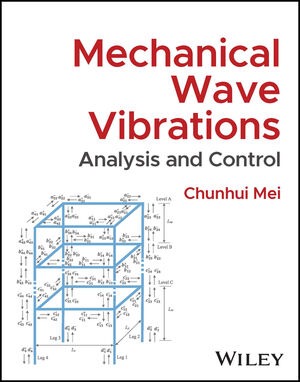
Mechanical Wave Vibrations: Analysis and Control
Delivers an expert discussion of the wave analysis approach (as opposed to the modal-based approach) to mechanical vibrations in structures. The book begins with deriving the equations of motion using the Newtonian approach based on various sign conventions before comprehensively covering the wave vibration analysis approach. It concludes by exploring passive and active feedback control of mechanical vibration waves in structures.

Mechanical Modelling and Computational Issues in Civil Engineering
In this edited book various novel approaches to problems of modern civil engineering are demonstrated. Experts associated within the Lagrange Laboratory present recent research results in civil engineering dealing both with modelling and computational aspects.

Mechanical Behavior of Materials : Fundamentals, Analysis, and Calculations
Provides a holistic understanding of mechanical behavior of materials, and enables critical thinking through mathematical modeling and problem solving.Each of the 15 chapters first introduces readers to the technologic importance of the topic and provides basic concepts with diagrammatic illustrations; and then its engineering analysis/mathematical modelling along with calculations are presented.

Investigation and management of soft rock cliffs
Cliff recession and coastal landsliding of soft rock cliffs present significant threats to land use and development. Investigation and management of soft rock cliffs presents state-of-the-art guidance on how eroding cliffs can best be managed, stressing the need to consider both structural and non-structural solutions to cliff recession problems. This authoritative text outlines the investigation approaches, measurement and monitoring techniques, and prediction methods available for obtaining the necessary cliff recession information.

Intumescent Coating and Fire Protection of Steel Structures
Introduced are the features and applications of intumescent coatings for protecting steel structures against fire. The constant effective thermal conductivity is defined and employed to simplify the quantification for the thermo-resistance of intumescent coatings. An experimental investigation into the hydrothermal aging effects on insulative properties of intumescent coatings is presented, as well as the influence of topcoat on insulation and aging of intumescent coatings. Also described is a practical method for calculating the temperature of the protected steel structures with intumescent coatings in order to evaluate the fire safety of a structure.

Introduction to Structural Analysis
Covers the principles of structural analysis without any requirement of prior knowledge of structures or equations. Beginning with basic principles of equilibrium of forces and moments, all other subsequent theories of structural analysis have been discussed logically. Divided into two major parts, this book discusses the basics of mechanics and principles of degrees of freedom upon which the entire paradigm rests, followed by analysis of determinate and indeterminate structures. The energy method of structural analysis is also included.

Introduction to materials science for engineers
Provides balanced, current treatment of the full spectrum of engineering materials, covering all the physical properties, applications and relevant properties associated with engineering materials. It explores all of the major categories of materials while also offering detailed examinations of a wide range of new materials with high-tech applications.
Introduction to Intelligent Construction Technology of Transportation Infrastructure
Expounds on the related technologies of intelligent transportation infrastructure construction. Based on the essential characteristics of intelligent construction, "perception, analysis, decision-making, and execution," the basic structure of intelligent construction technology (ICT) is established. With the integration of engineering construction technologies, the analyses of the essence of intelligent algorithms and the feasibility of Artificial Intelligence (AI) are provided. The book introduces the essential characteristics of Big Data and the Internet of Things and their relationship with engineering construction. On this basis, the feasibility and implementation plan of intelligent technology applications in design, construction, and maintenance are analyzed and demonstrated with engineering examples.
