



الصفحة 2
الصفحة 2

Innovation Capacity and the City : The Enabling Role of Design
This book represents one of the key milestones of DESIGNSCAPES: value creation through design-enabled innovation”. The book demonstrates that adopting design allows us to embed innovation within the city so as to arrive at feasible answers to complex global challenges. In this way, innovation can become disruptive, while also sparking a dynamic of gradual change in the “urbanscape” it acts within. To explore this potential, the book puts forward the concept of “design enabled innovation in urban environments” and examines the part that the city can play in promoting and facilitating the adoption of design among public and private sector innovators. This leads to a potential evaluation framework in which a given urbanscape is assessed both in terms of its capacity for generating innovation, and of the nature (more or less design-dependent or design-prone) of the innovative initiatives it hosts. This thread of reasoning holds many promising implications, including a possible “third way” between those who dream of an alternative economic model where revenues and growth are sacrificed on the altar of social and environmental respect, and the supporters of the traditional market-based view, who feel it is enough to add a touch of responsibility and concern to a system that should continue rewarding the profitability of innovations.

If ... then : Architectural speculations
he creates houses and other buildings that are snugly energy-ef?cient and sit lightly on the land. Introduction 10 Camera-Ready Green Design 11 Standards and Practices Introduction 12 A Very Short History Camera-Ready Green Design 13 A Movement’s Priorities Introduction 14 Camera-Ready Green Design 15 The Damage Done Introduction 16 Camera-Ready Green Design 17 city Cities have been around for more than six thousand years, drawing successive waves of new residents with their blend of commerce, culture, energy, and opportunity. The first city to surpass a population of one million was Baghdad, thirteen centuries ago. London topped ?ve million in 1825; New York exceeded ten million a hundred years later

Housing Market Dynamics in Africa
Utilizes new data to thoroughly analyze the main factors currently shaping the African housing market. Some of these factors include the supply and demand for housing finance, land tenure security issues, construction cost conundrum, infrastructure provision, and low-cost housing alternatives. Through detailed analysis, the authors investigate the political economy surrounding the continent’s housing market and the constraints that behind-the-scenes policy makers need to address in their attempts to provide affordable housing for the majority in need. With Africa’s urban population growing rapidly, this study highlights how broad demographic shifts and rapid urbanization are placing enormous pressure on the limited infrastructure in many cities and stretching the economic and social fabric of municipalities to their breaking point. But beyond providing a snapshot of the present conditions of the African housing market, the book offers recommendations and actionable measures for policy makers and other stakeholders on how best to provide affordable housing and alleviate Africa’s housing deficit.

Housing Estates in the Baltic Countries : The Legacy of Central Planning in Estonia, Latvia and Lithuania
This book focuses on the formation and later socio-spatial trajectories of large housing estates in the Baltic countries—Estonia, Latvia, and Lithuania. It also explores claims that a distinctly “westward-looking orientation” in their design produced housing estates that were superior in design to those produced elsewhere in the Soviet Union. The first two parts of the book provide contextual material to help readers understand the vision behind housing estates in Estonia, Latvia, and Lithuania. These sections present the background of housing estates in the Baltic Republics as well as challenges and debates concerning their formation, evolution, and present condition and importance.

Housing Estates in Europe : Poverty, Ethnic Segregation and Policy Challenges
Explores the formation and socio-spatial trajectories of large housing estates in Europe. Are these estates clustered or scattered? Which social groups originally had access to residential space in housing estates? What is the size, scale and geography of housing estates, their architectural and built environment composition, services and neighbourhood amenities, and metropolitan connectivity? How do housing estates contribute to the urban mosaic of neighborhoods by ethnic and socio-economic status? What types of policies and planning initiatives have been implemented in order to prevent the social downgrading of housing estates?The collection of chapters in this book addresses these questions from a new perspective previously unexplored in scholarly literature. The social aspects of housing estates are thoroughly investigated (including socio-demographic and economic characteristics of current and past inhabitants; ethnicity and segregation patterns; population dynamics; etc.), and the physical composition of housing estates is described in significant detail (including building materials; building form; architectural and landscape design; built environment characteristics; etc.).

Housing as Intervention : Architecture towards social equity
Across the world, the housing crisis is escalating. Mass migration to cities has led to rapid urbanisation on an unprecedented scale, while the withdrawal of public funding from social housing provision in Western countries, and widening income inequality, have further compounded the situation.

Hot Property : The Housing Market in Major Cities
This book discusses booming housing markets in cities around the globe, and the resulting challenges for policymakers and central banks. Cities are booming everywhere, leading to a growing demand for urban housing. In many cities this demand is out-pacing supply, which causes house prices to soar and increases the pressure on rental markets. These developments are posing major challenges for policymakers, central banks and other authorities responsible for ensuring financial stability, and economic well-being in general. This volume collects views from high-level policymakers and researchers, providing essential insights into these challenges, their impact on society, the economy and financial stability, and possible policy responses. The respective chapters address issues such as the popularity of cities, the question of a credit-fueled housing bubble, the role of housing supply frictions and potential policy solutions. Given its scope, the book offers a revealing read and valuable guide for everyone involved in practical policymaking for housing markets, mortgage credit and financial stability.

High-Velocity Clouds
On the occasion of the retirement of Ulrich Schwarz, a symposium was held in Groningen in May of 1996, celebrating his contributions to the study of the int- stellar medium, including his work on the high-velocity clouds. The coming together of many specialists in the latter ?eld prompted the idea of compiling a book c- taining their contributions, and summarizing the status of our understanding of the high-velocity cloud phenomenon. This seemed especially worthwhile at the time, since many exciting developments were taking place. After the discovery of some H i clouds with high velocities, about 40 years ago, the subject had been dominated by 21-cm observations of H i emission. Starting in the mid-1980s much progress was being made because of the availability of new instruments, such as large ground-based optical telescopes and UV observatories in space. The connections between the work on high-velocity clouds and other studies of the properties of the (hot) interstellar medium also became clearer.

High energy density laboratory astrophysics
During the past several years, research teams around the world have developed astrophysics-relevant utilizing high energy-density facilities such as intense lasers and z-pinches. Research is underway in many areas, such as compressible hydrodynamic mixing, strong shock phenomena, radiation flow, radiative shocks and jets, complex opacities, equations o fstat, and relativistic plasmas. Beyond this current research and the papers it is producing, plans are being made for the application, to astrophysics-relevant research, of the 2 MJ National Ignition Facility (NIF) laser at Lawrence Livermore National Laboratory; the 600 kj Ligne d'Intergration Laser (LIL) and the 2 MJ Laser Megajoule (LMJ) in Bordeaux, France; petawatt-range lasers now under construction around the world; and current and future Z pinches.

Hierarchy in Natural and Social Sciences
This book reviews ancient and modern representations and explanations of hierarchies, and compares their relevance in a variety of fields, such as language, societies, cities, and living species. It throws light on concepts and models such as scaling laws, fractals and self-organisation that are fundamental in the dynamics and morphology of complex systems.This book addresses a wide audience of biologists and social scientists, as well as managers and executives in a variety of institutions.

Hedonic Methods in Housing Markets : Pricing Environmental Amenities and Segregation
Cities are growing worldwide and their sprawl is increasingly challenged for its pressure on open spaces and environmental quality. Economic arguments can help to decide about the trade-off between preserving environmental quality and developing housing and business surfaces, provided the benefits of environmental quality are adequately quantified. To this end, this book focuses on the use and advancement of the "hedonic approach", an economic valuation technique that analyses and quantifies the sources of rent and property price differentials. Starting from theoretical foundations, the hedonic approach is applied to the valuation of natural land use preservation and noise abatement measures, as well as to residential segregation and discrimination, extending the analysis to the role of the buyers' and sellers' identity on housing market prices and to the issue of environmental justice.

Handbook of urban health : Populations, methods, and practice
As more people worldwide live in cities, increasingly we need to understand how cities and city living affect population health. Does city living negatively affect health? Conversely, can city living enhance population health and well-being? Over forty experts from around the world bring a depth of ideas to the Handbook of Urban Health, making the Handbook a focused resource for a range of health disciplines. A unique professional idea book, research resource, and teaching text, the Handbook of Urban Health challenges readers to consider the role that cities plays in shaping population health and to generate solutions that can make cities healthier places for all those who live there.

Handbook of smart cities
This Handbook presents a comprehensive and rigorous overview of the state-of-the-art on Smart Cities. It provides the reader with an authoritative, exhaustive one-stop reference on how the field has evolved and where the current and future challenges lie. From the foundations to the many overlapping dimensions (human, energy, technology, data, institutions, ethics etc.)

Handbook of Behavioral and Cognitive Therapies with Older Adults
The book enhances the professional’s understanding of the learning and self regulating capacities of older adults. Its consistent and easy-access format features empirical reviews, recommended cognitive and behavioral interventions specific to the problem, instructive case studies, and salient diversity issues. In their choice of topics, the editors have assembled the Handbook to fit the unique challenges of both older individuals and the practitioners working with them.

Groundwater Management in Asian Cities : Technology and Policy for Sustainability
The number of city dwellers who do not have access to piped water and rely on groundwater is also increasing. In many Asian cities, groundwater is not only the source of domestic water but also an important resource for industrial development, making better management of groundwater resources essential for sustainable development. Because groundwater is easier to access and costs less than water from piped systems, groundwater abstraction cannot be easily regulated. Policies for groundwater management adopted in Japan and other Asian countries are compared, and technologies for efficient use of groundwater are elucidated. Groundwater contamination is also a serious problem that exacerbates water scarcity in Asian cities. Case studies illustrate the cause and consequences of naturally occurring contaminants such as arsenic and fluoride, and groundwater contamination due to anthropogenic contaminants is described. Also discussed are technologies for treating contaminated groundwater to reduce the health risks of drinking contaminated groundwater.

Groundwater and Ecosystems
Groundwater Dependent Ecosystems (GDEs) frequently exhibit rich biological diversity and can provide enormous economic wealth. In recent years, GDEs in many industrialized countries have shown signs of serious degradation, primarily the result of groundwater abstraction and pollution. Many such systems, including a number of well documented cases in Eastern Europe, are no longer sustainable. As a consequence, the conservation and sustainable management of GDEs has emerged as one of the most urgent environmental research priorities of our time. A large percentage of the world’s population lives in cities and either depends on, or is affected in some way, by groundwater. Moreover, groundwater has become a very important and complex issue that attracts the interest of many diverse stakeholders. Many problems related to groundwater and ecosystems are shared by countries throughout the world and there is growing recognition that much can be gained by co-operation on an international scale.

Greening the Greyfields : New Models for Regenerating the Middle Suburbs of Low-Density Cities
This book outlines new concepts, development models, governance and implementation processes capable of addressing the challenges of transformative urban regeneration of cities at precinct scale.

Green land : Enviroment and health center
يحاكي المشروع مثال واضح للخطوط البسيطة والمريحة للناظر واندماجه بعنصر صريح لشكل النباتي مع مراعاة الحفاظ على هيكل الورقة الأساس ي وتكوين شكل يخدم التصميم وظيفيا وجماليا. ويهدف إلى: * وجود مرجع بيئي صحي متكامل ودمج الوظيفة والتعلم مع الترفيه و الفعاليات التي تناسب جميع الأفراد في مكان واحد. * مجاراة تطور حاجة العصر الحالي إلى المشاريع المشابهة للحاجات التي تستقطب الإهتمام من الأفراد

Graduate Attributes, Learning and Employability
In these complex and challenging times, students, teachers and employers are all interested in the development of generic abilities as these typically make the difference between good and indifferent employees, successful and unsuccessful learners. This book explains why generic capacities have become so important and argues that the process of acquiring them is both lifelong and developmental. By using case studies and theoretical analyses the authors collectively provide a comprehensive and contemporary coverage of the issues concerning generic abilities.
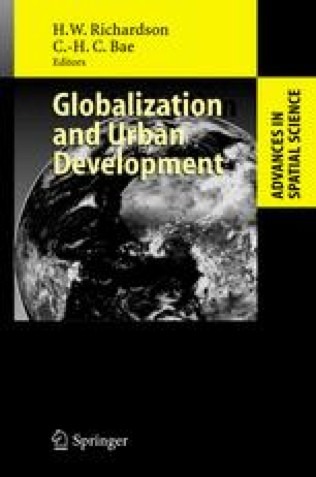
Globalization and Urban Development
Most research on globalization has focused on macroeconomic and economy-wide consequences. This book explores an under-researched area, the impacts of globalization on cities and national urban hierarchies, especially but not solely in developing countries. Most of the globalization-urban research has concentrated on the "global cities" (e.g. New York, London, Paris, Tokyo) that influence what happens in the rest of the world. In contrast, this research looks at the cities at the receiving end of the forces of globalization. The general finding is that large cities, on balance, benefit from globalization, although in some cases at the expense of widening spatial inequities.
