



الصفحة 2
الصفحة 2

Nanopharmaceuticals in regenerative medicine
A collective and comprehensive volume of the latest innovations in nanoscience technology for practical use in clinical, biomedicine and diagnostic arena. The term nanotechnology pops up in every segment of modern-day life. The primary aim of this book is to deliver the precise information to students, educators, technologists and researchers. A conglomerate of scientists from various research fields contributed to the chapters, giving detailed descriptions on the most recent developments of nanotechnology in the area of disease management. This book will also be useful for industrial research and development partners, start-up entrepreneurs, government policy makers and other professionals who are interested in nanomedicines.

Nanoparticle-Based Drug Delivery in Cancer Treatment
Discusses nanotechnological developments of interfering RNA-based nanoparticles, delivery vehicles, and validated therapeutic RNAi–molecular target interactions and explains the results of clinical and preclinical trials. The book also gives strategies for universal methods of constructing hybrid organic–inorganic nanomaterials that can be widely applied in the biomedical field. Focuses on : Recent advances of nanoparticle-mediated siRNA delivery systems and their application in clinical trials for cancer therapy Material platforms that establish NPs and both localized and controlled gene silencing The most promising systems for clinical application Surveys progress in nanoparticle-based nanomedicine in cancer treatment The most advanced of the nonviral nanocarriers for delivery of oligonucleotides to malignant blood cancer cells
Nanofillers : Fabrication, characterization and applications of organic nanofillers
Explores the modifying effects of various nanofillers on mechanical and physical properties of polymer nanocomposites. Looking at the four basic aspects of processing, characterization, properties, and applications, it analyzes how their features can allow for innovative multifunction within industry. Covering design, production, and manufacture, this book focuses on meeting end-use requirements and the fabrication of materials. The importance of mindful design and the use of an appropriate synthesis method is the primary lens through which theory and practice are discussed. This volume looks at the various synthesis methods available for organic nanofillers and what characterizes them. Properties including mechanical, thermal, electrical, and tribological are thoroughly examined, along with the various computational techniques used to determine them. With important sustainable properties, nanofillers are essential to meeting the increasing demand for biodegradable and environmentally friendly materials. This book details the role nanofillers have to play in sustainability, alongside economic factors such as efficient manufacturing processes.
Multimedia computing systems and virtual reality
Presents recent advancements in multimedia systems as they relate to various application areas such as healthcare services and agriculture-related industries. The authors also discuss human-machine interface design, graphics modelling, rendering/animation, image/graphics techniques/systems and visualization. They then go on to explore multimedia content adaptation for interoperable delivery. Finally, the book covers cultural heritage, philosophical/ethical/societal/international issues, standards-related virtual technology and multimedia uses. This book is intended for computer engineers and computer scientists developing applications for multimedia and virtual reality and professionals working in object design and visualization, transformation, modelling and animation of the real world.

Monographs in contact allergy ; Vol.4 : Systemic drugs
Presents : Identification section; Occupational allergic contact dermatitis; and Cutaneous adverse drug reactions from systemic drugs caused by type IV (delayed-type) hypersensitivity, as shown by positive patch tests (e.g. maculopapular eruption, acute generalized exanthematous pustulosis [AGEP], symmetrical drug-related intertriginous and flexural exanthema [SDRIFE], fixed drug eruption, drug reaction with eosinophilia and systemic symptoms [DRESS], and photosensitivity). Separate chapters present an overview of the spectrum of allergic cutaneous drug reactions, diagnostic tests, immediate contact reactions (contact urticaria), and systemic drugs that have acquired delayed-type hypersensitivity only by cross-reactivity.

Molecular recognition in pharmacology
Traces the behavior of the drug substance, starting from the initial pre-contact stage, and ending with the formation of the complex. Molecular recognition lies in the foundation of every life form and includes many mysteries. Currently, studies on this topic in pharmacology are limited to determining the properties of complexes of medicinal substances (drugs) with specific (complementary) biomolecules: receptors, enzymes, ion channels etc. The results present the mechanisms preventing drugs from such non-specific binding. This direction is very fruitful, although the phenomenon of molecular recognition is far wider.
Molecular genetics, structures, mechanisms, and functions : Principles of gene manipulation and genomics ; Vol.1
Provides an overview of the future of genetic engineering and delves into the role of biotechnology and its applications in genetic engineering. It discusses the tools of recombinant technology, which have brought about revolution in our understanding of various complex biological phenomena. Chapters cover mutagenesis, construction, and sequencing of DNA libraries along with applications of genetic engineering for improving health, preventing genetic diseases, enhancing food resources, managing environmental bioremediation, and more. Topics include genetic engineering tools for restriction enzymes and vectors, gene and cell division, mutation detection and screening in plants, population genetics, sexuality in bacteria, and more. Several chapters focus on the tools of recombinant technology, such as restriction enzymes, vectors, etc., that have paved the way for creating organisms of choice and opened new horizons in the field of medicine, agriculture, and industry for human welfare.

Molecular genetics, structures, mechanisms, and functions : Applications and exploring the nucleus ; Vol.2
Continues the coverage of generic engineering, dealing with the concept of genes, their relationship with chromosomes, and their functional manifestation to the benefit of organisms at large and for human in particular. Topics include Mendel’s Laws of Inheritance, which explains the inheritance of traits visible through generations; , genome diversity and evolution genetic protein synthesis, recombination and evolution of DNA, transposable elements in genetics, chromosomal aberrations, and more. The volume also addresses genetic engineering in agricultural science for increased crop yields, to reduce costs for food or drug production, to reduce the need for pesticides, to enhance crop quality, etc.

Molecular bio-sensors and the role of metal ions
Represents a milestone of contemporary progress and understanding of molecular bio-sensors for metal ions. It is bringing together the latest research in academia and industry, and it also emphasizes the spectrum of evolving regulations from regulatory bodies. This vibrant research area is covered by 31 internationally recognized experts. The impact of MILS-23 is manifested by more than 1300 references and close to 200 figures, more than 100 of them in color; further information is summarized in several tables. In conclusion, Volume 23 significantly advances our understanding of Molecular Bio-Sensors, it is therefore an essential resource for scientists working in the wide range from earth sciences, material sciences, physics, pharmacology, enzymology, analytical, organic, and inorganic biochemistry all the way through to medicine including the clinic.

Molecular biology : Structure and dynamics of genomes and proteomes
Illustrates the essential principles behind the transmission and expression of genetic information at the level of DNA, RNA, and proteins. Emphasis is on the experimental basis of discovery and the most recent advances in the field while presenting a rigorous, yet still concise, summary of the structural mechanisms of molecular biology. Topics new to this edition include the CRISPR-Cas gene editing system, Coronaviruses – structure, genome, vaccine and drug development, and newly recognized mechanisms for transcription termination.
Molecular analyses : Medical genomics and proteomics
Methods for extraction, manipulation, and characterization of nucleic acids, peptides, and proteins have been rapidly developed. Extraction from a variety of tissues and samples have become routine and automated. Next generation sequencing (NGS) methods have been developed. This book focuses on medically-focused methods

Modern medicine : biomedical devices, medical gases, radiopharmaceuticals, new drug discovery, Vol.2
Discusses the procedures of drug approval and regulatory requirements that must be met according to the United States Food and Drug Administration (FDA), the European Medical Agency (EMA), and the Central Drug Standard Control Organization (CDSCO). In the rapidly evolving landscape of modern medicine, groundbreaking innovations have emerged that are reshaping the way we approach healthcare. Modern Medicine delves into the cutting-edge realms of medical devices, medical gases, radiopharmaceuticals, and new drug discovery, offering a comprehensive exploration of these transformative fields that are revolutionizing patient care and medical practices.

Modern avenues in metal-nucleic acid chemistry
Provides a timely overview of selected relevant developments in a field which previously had a pronounced focus on fundamental chemistry aspects such as coordination principles, structural chemistry, and consequences for biological processes and disease-related medicinal issues. More recently, also as a consequence of the advent of supramolecular chemistry, advancements in nanochemistry, and new bio-analytical methods, novel aspects of this field have emerged. MILS-25 gives a state-of-the-art account on the present state of research in this field, addressing, among others, porous materials, non-covalent interactions, stimuli-responsive bioconjugates, DNA-templated metal arrays and nanoclusters, genotyping, guanine quadruplexes, and riboswitches.

Mobile and Wireless Communications with Practical Use-Case Scenarios
While wireless technologies had a spectacular evolution over the past years, the present trend is to adopt a global heterogeneous network of shared standards that enables the provisioning of Quality of Service and Quality of Experience to the end-user. To this end, enabling technologies like Machine Learning, Internet of Things, Digital Twins, are seen as promising solutions for next generation networks that will enable an intelligent adaptive interconnected environment with support for prediction and decision making so that the heterogeneous applications and users requirements can be highly satisfied. The aim of this textbook is to provide the readers with a comprehensive technical foundation of the mobile communication systems and wireless network design, operations and applications of various radio access technologies. Additionally, it also introduces the reader to the latest advancements in technologies in terms of Internet of Things ecosystem, Machine Learning and Digital Twins for IoT-enabled intelligent environments. Furthermore, this textbook also includes practical use-case scenarios using Altair WinProp Software as well as Phyton, TensorFlow and Jupiter as support for practice-based laboratory sessions"

Microwave Engineering : Concepts and Fundamentals
Covers everything from wave propagation to reflection and refraction, guided waves, and transmission lines, providing a comprehensive understanding of the underlying principles at the core of microwave engineering. This encyclopedic text not only encompasses nearly all facets of microwave engineering, but also gives all topics—including microwave generation, measurement, and processing—equal emphasis. Packed with illustrations to aid in comprehension. Describes the mathematical theory of waveguides and ferrite devices, devoting an entire chapter to the Smith chart and its applications Discusses different types of microwave components, antennas, tubes, transistors, diodes, and parametric devices Examines various attributes of cavity resonators, semiconductor and RF/microwave devices, and microwave integrated circuits

Micronutrients and macronutrients as nutraceuticals
Explains in detail the properties of micronutrients and macronutrients and their diverse uses as nutraceuticals for their beneficial properties, such as their antioxidant activity and immunity-boosting properties and how they can be incorporated into the human diet for optimum health, for growing beneficial bacteria in the gut, and inhibition of pathogens. Interestingly, the authors look at how disease-promoting habits often unfold in childhood, even prenatally, and employing nutrigenomics early on goes a long way toward curbing these chronic diseases later on in life.

Microbiomes and emerging applications
Covers a range of important topics and recent advances in metagenomics, microbiomes and their emerging applications, including microbiota transplantation and its health implications. It also discusses microbiome composition and development in humans. The contributors of this volume provide detailed information on prebiotics and probiotics for enhanced human health. They also introduce microbiomes as the next frontiers in medicine, agriculture, industry and environment. A chapter is presented that discusses probiotic research studies in Nigeria and Canada that led to the discovery of Lactobacillus pentosus KCA1. The book contains timely knowledge and will be useful reference material for scientists and researchers working in the fields of food and agricultural biotechnology, biopharmaceuticals and medical biotechnology, fermentation technology, environmental biotechnology, microbiomes and microbial biotechnology and health care.

Microbial bioprocessing of agri-food wastes : food ingredients
Food ingredients are important molecules of the most diverse chemical classes responsible for conferring nutrition, stability, color, flavor, rheological and sensorial characteristics, in addition to several other important uses in the food industry. In this way, the production routes of these ingredients have gained more and more attention from consumers and producing industries, who expect that, in addition to their technological properties, these ingredients are still obtained without synthetic means, with savings of natural resources and mainly with less environmental impact.
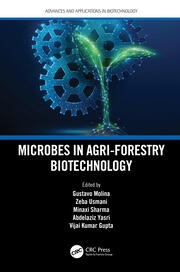
Microbes in agri-forestry biotechnology
Explores recent advances on the use of microbes for agri-forestry biotechnological applications. It provides technical concepts and discussions on the use of microorganisms for processes such as bioprocessing, bioremediation, soil enhancement, aquaponics advances, and plant-host symbiosis. The book provides an overview of the microbial approach to the tools and processes used in agriculture and forestry that make or modify products, improve plants for specific uses, and make use of livestock in agricultural systems. The authors discuss the main process conditions that enhance agri-forestry applications with the use of microbes and introduce the use of genetically modified (GM) microbes in agrobiotechnology. Finally, the authors explore the main technological advances in the production of secondary metabolites with potential applications in agri-forestry.

Metric Handbook : Planning and Design Data
A major handbook of planning and design data for architects and architecture students. Covering basic design data for all the major building types, it is the ideal starting point for any project. For each building type, the book gives the basic design requirements and all the principal dimensional data, and succinct guidance on how to use the information and what regulations the designer needs to be aware of.
