



الصفحة 2
الصفحة 2

Modern Mathematical Statistics with Applications
This book tries to strike a balance between mathematical foundations and statistical practice. The book provides a clear and current exposition of statistical concepts and methodology, including many examples and exercises based on real data gleaned from publicly available sources. The main focus of the book is on presenting and illustrating methods of inferential statistics used by investigators in a wide variety of disciplines, from actuarial science all the way to zoology. It begins with a chapter on descriptive statistics that immediately exposes the reader to the analysis of real data. The next six chapters develop the probability material that facilitates the transition from simply describing data to drawing formal conclusions based on inferential methodology. Point estimation, the use of statistical intervals, and hypothesis testing are the topics of the first three inferential chapters. The remainder of the book explores the use of these methods in a variety of more complex settings.

Modélisation et statistique spatiales = Spatial modeling and statistics
Spatial statistics are undergoing significant development due to their use in many fields: earth sciences, environment and climatology, epidemiology, econometrics, image analysis, etc. This book presents the main spatial models used as well as their statistics for the three types of data: geostatistics (observation on a continuous domain), data on a discrete network, point data. The objective is to present in a concise but mathematically complete way the most classical models (second order and variogram; software model and Gibbs-Markov field; point processes) as well as their simulation by MCMC algorithm. Then comes the presentation of statistical tools useful for their study.

Modeling with Itô Stochastic Differential Equations
This modeling procedure is thoroughly explained and illustrated for randomly varying systems in population biology, chemistry, physics, engineering, and finance. Introductory chapters present the fundamental concepts of random variables, stochastic processes, stochastic integration, and stochastic differential equations. These concepts are explained in a Hilbert space setting which unifies and simplifies the presentation. Computer programs, given throughout the text, are useful in solving representative stochastic problems. Analytical and computational exercises are provided in each chapter that complement the material in the text.

Modeling Uncertainty : An Examination of Stochastic Theory, Methods, and Applications
Modeling Uncertainty: An Examination of Stochastic Theory, Methods, and Applications, is a volume undertaken by the friends and colleagues of Sid Yakowitz in his honor. Fifty internationally known scholars have collectively contributed 30 papers on modeling uncertainty to this volume. Each of these papers was carefully reviewed and in the majority of cases the original submission was revised before being accepted for publication in the book. The papers cover a great variety of topics in probability, statistics, economics, stochastic optimization, control theory, regression analysis, simulation, stochastic programming, Markov decision process, application in the HIV context, and others. There are papers with a theoretical emphasis and others that focus on applications. A number of papers survey the work in a particular area and in a few papers the authors present their personal view of a topic. It is a book with a considerable number of expository articles, which are accessible to a nonexpert - a graduate student in mathematics, statistics, engineering, and economics departments, or just anyone with some mathematical background who is interested in a preliminary exposition of a particular topic. Many of the papers present the state of the art of a specific area or represent original contributions which advance the present state of knowledge. In sum.
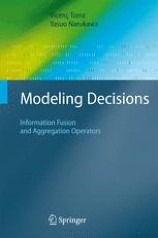
Modeling decisions : Information fusion and aggregation operators
This book covers the underlying science and application issues related to aggregation operators, focusing on tools used in practical applications that involve numerical information. Starting with detailed introductions to information fusion and integration, measurement and probability theory, fuzzy sets, and functional equations.

Modeling biological systems : Principles and applications
This extensively revised second edition of Modeling Biological Systems: Principles and Applications describes the essentials of creating and analyzing mathematical and computer simulation models for advanced undergraduates and graduate students. It offers a comprehensive understanding of the underlying principle, as well as details and equations applicable to a wide variety of biological systems and disciplines. Students will acquire from this text the tools necessary to produce their own models. The text contains two major sections: Principles and Applications. The first section discusses the principles of biological systems with a thorough description of the essential modeling activities of formulation, implementation, validation, and analysis. These activities are illustrated by a set of example models taken from recent and classical literature, chosen for their breadth of coverage and current timeliness. The new edition updates extensively many of these topics, especially quantitative model formulation, validation and model discrimination using information theory measures and Bayesian probability, and stability analysis and non-dimensionalization.

Mitral valve diseases
The heart is a pump consisting of 4 chambers:2 atria and 2 ventricles and 4 valves one of them is mitral valve which is located betweenthe left atrium and the left ventricle and prevents the backward flow of blood.Ithas several unique features: Mitral annulus, two leaflets, the chordae tendineaeand papillary muscles. The mitral valve may become stenotic or may regurgitate. Regurgitation(or leakage of the valve): When the valve (s) do not close completely. Stenosis (or narrowing of the valve): When the valve (s) opening becomes narrowed. Mitral stenosis is categorized as mild, moderate or severe it is typically causedby (Rheumatic fever, A congenital heart, Calcium deposits .....) and it caused severalsymptoms such as: dyspnea, hemoptysis, fatigue, Chest pain and others Where as the Signs and symptoms of mitral valve regurgitation, can include: Abnormal heart sound, Shortness of breath, Heart palpitations, Fatigue, edma, Coughing.

Micro-Tomographic Atlas of the Mouse Skeleton
Micro-Tomographic Atlas of the Mouse Skeleton serves as an essential guide containing unique systematic description of all calcified components of the mouse. This detailed atlas fulfils an emerging need for high resolution anatomical details as mice become a standard laboratory animal in skeletal research and the use of m CT technology is rapidly increasing as a key analytical tool in the study of bone.

MICAI 2008 : Advances in Artificial Intelligence ;7th Mexican International Conference on Artificial Intelligence, Atizapán de Zaragoza, Mexico, October 27-31, 2008 Proceedings
The 96 revised full papers presented together with 2 invited lectures were carefully reviewed and selected from 363 submissions. The papers are organized in topical sections on logic and reasoning, knowledge-based systems, knowledge representation and acquisition, ontologies, natural language processing, machine learning, pattern recognition, data mining, neural networks, genetic algorithms, hybrid intelligent systems, computer vision and image processing, robotics, planning and scheduling, uncertainty and probabilistic reasoning, fuzzy logic, intelligent tutoring systems, multi-agent systems and distributed ai, intelligent organizations, bioinformatics and medical applications, as well as applications.

Metric Structures for Riemannian and Non-Riemannian Spaces
The first stages of the new developments were presented in Gromov's course in Paris, which turned into the famous "Green Book" by Lafontaine and Pansu (1979). The present English translation of that work has been enriched and expanded with new material to reflect recent progress. Additionally, four appendices—by Gromov on Levy's inequality, by Pansu on "quasiconvex" domains, by Katz on systoles of Riemannian manifolds, and by Semmes overviewing analysis on metric spaces with measures—as well as an extensive bibliography and index round out this unique and beautiful book.

Metalliferous Sediments of the World Ocean : Fundamental Theory of Deep-Sea Hydrothermal Sedimentation
Dramatic advances in understanding global tectonics have been made in the last half century and the information and specific data acquired on the floor of the World Ocean by the scientific community probably has exc- ded that available in all previous time. With the benefit of new technology and advanced concepts in the earth sciences extensive exploration of the deep seabed became possible, and has been carried out in many parts of the world. Many features have been recognized and data recorded that are vital for understanding the fundamental processes that shape the earth=s surface and control the habitable environment. The data collected to date on the o- an floor and its physical environment greatly exceeds our understanding and appreciation of their fundamental importance in the earth sciences, and our ability to apply this knowledge effectively in improving our way of life.

Metabolome Analyses : Strategies for Systems Biology
Metabolome Analyses is intended as a follow-up to Metabolic Profiling: Its Role in Biomarker Discovery and Gene Function Analysis (Kluwer, 2003). That text offered guidelines to currently available technology, bioinformatics and databases. Evidence was presented showing metabolic profiling as a valuable addition to genomics and proteomics strategies devoted to drug discovery and development. This book focuses on how metabolic profiling is being more comprehensively integrated with the other "omics" technologies. It provides more practical applications of such "panomics" or "Systems Biology" approaches. The expanding use of mass spectrometry as a measurement technology in metabolic profiling is addressed through demonstrated applications. The integration of metabolic profiling and proteomics is probably most developed for plant-based studies, which was not addressed in Volume 1. Other areas related to metabolic profiling continue to show significant development. These include database strategies and an increased acceptance by the pharmaceutical industry of metabolic profiling. Also covered is the use of in silico metabolic networks. Again the focus is primarily on the pharmaceutical industry but the importance of metabolic profiling to studies on human nutrition (a burgeoning area) is discussed.

Media Theory : Interdisciplinary Applied Mathematics
The focus of this book is a mathematical structure modeling a physical or biological system that can be in any of a number of `states.' Each state is characterized by a set of binary features, and differs from some other neighbor state or states by just one of those feature. A simple example of a `state’ is a partial solution of a jigsaw puzzle, which can be transformed into another partial solution or into the final solution just by adding or removing a single adjoining piece. The evolution of such a system over time is considered. Such a structure is analyzed from algebraic and probabilistic (stochastic) standpoints.

Measurement Uncertainty : An Approach via the Mathematical Theory of Evidence
This text is the first to make full use of the mathematical theory of evidence to express the uncertainty in measurements. It gives an overview of the current standard, then pinpoints and constructively resolves its limitations through its unique approach. The text presents various tools for evaluating uncertainty, beginning with the probabilistic approach and concluding with the expression of uncertainty using random-fuzzy variables. The exposition is driven by numerous examples. The book is designed for immediate use and application in research and laboratory work.

Measure Theory and Probability Theory
The book can be used as a text for a two semester sequence of courses in measure theory and probability theory, with an option to include supplemental material on stochastic processes and special topics.Prerequisites are kept to the minimal level of an understanding of basic real analysis concepts such as limits, continuity, differentiability, Riemann integration, and convergence of sequences and series. A review of this material is included in the appendix. The book starts with an informal introduction that provides some heuristics into the abstract concepts of measure and integration theory, which are then rigorously developed. The first part of the book can be used for a standard real analysis course for both mathematics and statistics Ph.D. students as it provides full coverage of topics such as the construction of Lebesgue-Stieltjes measures on real line and Euclidean spaces, the basic convergence theorems, L^p spaces, signed measures, Radon-Nikodym theorem, Lebesgue's decomposition theorem and the fundamental theorem of Lebesgue integration on R, product spaces and product measures, and Fubini-Tonelli theorems. It also provides an elementary introduction to Banach and Hilbert spaces, convolutions, Fourier series and Fourier and Plancherel transforms.

Mathématiques de base pour économistes = Basic Mathematics for Economists
This book contains fundamental elements of mathematics and includes the following elements: notion of logic, propositions, theorems, sets, relations and functions; graphical representations of functions, economic applications of lines and functions, sequences, limits and first derivative, differential economic applications of derivatives; integrals: undefined and defined with economic applications; mathematical series; functions of several variables, partial derivatives, Lagrange multiplier with economic applications; linear algebra: matrix calculus, system of linear equations, vectors, differential calculus in matrix form.

Mathematics of Financial Markets
This book presents the mathematics that underpins pricing models for derivative securities, such as options, futures and swaps, in modern financial markets. The idealized continuous-time models built upon the famous Black-Scholes theory require sophisticated mathematical tools drawn from modern stochastic calculus. However, many of the underlying ideas can be explained more simply within a discrete-time framework. This is developed extensively in this substantially revised second edition to motivate the technically more demanding continuous-time theory, which includes a detailed analysis of the Black-Scholes model and its generalizations, American put options, term structure models and consumption-investment problems. The mathematics of martingales and stochastic calculus is developed where it is needed.

Mathematics and Democracy : Recent Advances in Voting Systems and Collective Choice
In this book, different quantitative approaches to the study of electoral systems have been developed: game-theoretic, decision-theoretic, statistical, probabilistic, combinatorial, geometric, and optimization ones. All the authors are prominent scholars from these disciplines. Quantitative approaches offer a powerful tool to detect inconsistencies or poor performance in actual systems. Applications to concrete settings such as EU, American Congress, regional, and committee voting are discussed.

Mathematical Statistics : Exercises and Solutions
This book consists of four hundred exercises in mathematical statistics and their solutions,this solutions to train students for their research ability in mathematical statistics and presents many additional results and examples that complement any text in mathematical statistics. To develop problem-solving skills, two solutions and/or notes of brief discussions accompany a few exercises.The exercises are grouped into seven chapters with titles matching those in the author's Mathematical Statistics.

Mathematical Morphology : 40 Years On ; Proceedings of the 7th International Symposium on Mathematical Morphology, April 18-20, 2005
Mathematical Morphology is a speciality in Image Processing and Analysis, which considers images as geometrical objects, to be analyzed through their interactions with other geometrical objects. It relies on several branches of mathematics, such as discrete geometry, topology, lattice theory, partial differential equations, integral geometry and geometrical probability. It has produced fast and efficient algorithms for computer analysis of images, and has found applications in bio-medical imaging, materials science, geoscience, remote sensing, quality control, document processing and data analysis. This book contains the 43 papers presented at the 7th International Symposium on Mathematical Morphology, held in Paris on April 18-20, 2005. It gives a lively state of the art of current research topics in this field. It also marks a milestone, the 40 years of uninterrupted development of this ever-expanding domain.
