



الصفحة 2
الصفحة 2

Global Climatology and Ecodynamics : Anthropogenic Changes to Planet Earth
The purpose of the book is to summarize existing information and assess the level of these uncertainties. We want to stimulate readers to think in the longer term about climate change and ecological damage that is being done to the planet Earth in the hope that it may remain fit for human habitation and a satisfying life style for future generations, not just the next generation or two.

Global Change and Integrated Coastal Management : The Asia-Pacific Region
Most of the world’s population lives close to the coast and is highly dependent on coastal resources, which are being exploited at unsustainable rates. These resources are being subject to further pressures associated with population increase and the globalization of coastal resource demand. This is particularly so for the Asia-Pacific region which contains almost two thirds of the world’s population and most of the world’s coastal megacities. The region has globally important atmospheric and oceanic phenomena, which affect world climate such as the Asian Monsoon and the El-Niño Southern Oscillation phenomena. The Asia-Pacific region also has highly significant marine diversity but over the last few decades, coastal resources such as mangroves, coral reefs and fisheries have experienced large-scale depletion.
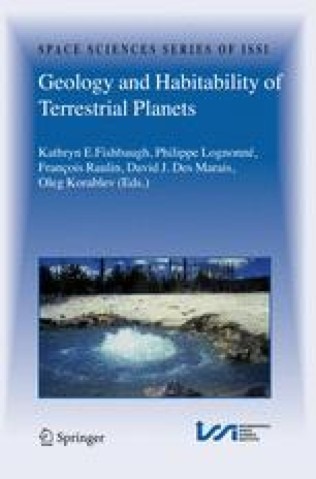
Geology and Habitability of Terrestrial Planets
This book has resulted from a workshop at the International Space Science Institute (ISSI) in Bern, Switzerland (5-9 September 2005) that brought together planetary geologists, geophysicists, atmospheric scientists, and biologists to discuss the multi-faceted problem of how the habitability of a planet co-evolves with the geology of the surface and interior, the atmosphere, and the magnetosphere.

From decoding turbulence to unveiling the fingerprint of climate change : Klaus Hasselmann—Nobel Prize Winner in Physics 2021
Serves as a reference for the key elements and their significance of Klaus Hasselmann's work on climate science and on ocean wave research, all based on a rigorous and deeply physical thinking. It summarizes the original articles (mostly from the 1970 and 1980s; some of which are hard to find nowadays) and brings them in a present-day context.
Famine Early Warning Systems and Remote Sensing Data
This book describes the interdisciplinary work of USAID’s Famine Early Warning System Network (FEWS NET) and its in uence on how food security crises are identi ed, documented and the kind of responses that result. The book describes FEWS NET’s systems and methods for using satellite remote sensing to identify and describe how biophysical hazards impact the lives and livelihoods of the po- lation where they occur. It presents several illustrative case studies that will dem- strate the integration of both physical and social science disciplines in its work. FEWS NET’s operational needs have driven science in biophysical remote sensing applications through its collaboration with the US Geological Survey, the National Aeronautics and Space Administration, National Oceanographic and Atmospheric Administration, and US Department of Agriculture, as well as methodologies in the social science domain through its support of the US Agency for International - velopment, UN World Food Program and numerous international non-governmental organizations such as Save the Children, Oxfam and others. Because FEWS NET is an organization that must provide a global picture of food insecurity to decision makers, the information it relies on are by necessity - servable and able to be documented.

Exercises in Environmental Physics
Exercises in Environmental Physics covers the essential topics in university courses in environmental physics including: Energy and the environment / Fluid mechanics / Evapotranspiration, soil physics and groundwater hydrology / Pollution / Ocean and atmospheric physics / The planet in space This is the first book specifically devoted to exercises on the application of physics to describe the environment including the human impact. It is a valuable tool for students to develop skills in the manipulation of physical concepts and methods while learning environmental science. The exercises are drawn from the author's teaching experience and the need for stimulating practice problems in various environmental physics courses. A chapter on mathematical methods used in the book supplements the material.

Environmental Simulation Chambers : Application to Atmospheric Chemical Processes
Atmospheric pollution has many different detrimental impacts on air quality at urban, regional and global scales. Large volume photoreactors (often referred to as smog or simulation chambers) have been used very effectively to investigate and understand many varied aspects of atmospheric chemistry related to air pollution problems. Photochemical smog formation, which was first observed around 1945 in Los Angeles, is now a major environmental problem for all industrialised and densely populated regions of the world. Over the years many different modelling and experimental tools have been developed to analyse and simulate the complex chemical processes associated with tropspheric photooxidant formation. Work in environmental chambers has played a key role in the development of our understanding of the atmospheric chemistry associated with pollution problems on local, regional and global scales.

Encyclopedia of Geomagnetism and Paleomagnetism
Consisting of more than 300 articles written by ca 200 leading experts, this authoritative reference encompasses the entire fields of Geomagnetism and Paleomagnetism in a single volume. It describes in fine detail at an assessable level the state of the current knowledge and provides an up-to-date synthesis of the most basic concepts. As such, it will be an indispensable working tool not only for geophysicists and geophysics students but also for geologists, physicists, atmospheric and environmental scientists, and engineers.

Emerging Environmental Technologies
This book exclusively focuses on the technologies that would be in the forefront in near to far future. Each and every article in the book discusses the current environmental challenges, the novel innovation and future directions. The topics covered in the book include microbial fuel cells, hybrid solar lighting, bacterial swimming for environmental remediation, cleaner engines, nanoparticles for effluent treatment, surface catalysis and proteins as gas hydrates inhibitors.

Ecotoxicology, Ecological Risk Assessment and Multiple Stressors
The science of ecotoxicology and the practice of ecological risk assessment are evolving rapidly. Ecotoxicology as a subject area came into prominence in the 1960s after the publication of Rachel Carson's book on the impact of pesticides on the environment. The rise of public and scientific concern for the effects of chemical pollutants on the environment in the 1960s and 1970s led to the development of the discipline of ecotoxicology, a science that takes into account the effects of chemicals in the context of ecology. Until the early 1980s, in spite of public concern and interest among scientists, the assessment of ecological risks associated with natural or synthetic pollutants was not considered a priority issue by most government. However, as the years passed, a better understanding of the importance of ecotoxicology emerged and with it, in some countries, the progressive formalization of an ecological risk assessment process.

Earth science satellite remote sensing ; Vol.1 : Science and instruments
Satellite remote sensing for Earth science data has been rapidly expanding during the last decade. Volume 1 of this two volume monograph covers missions/sensors, such as Sea-viewing Wide Field-of-view Sensor (SeaWiFS), Tropical Rainfall Measuring Mission (TRMM), Total Ozone Mapping Spectrometer (TOMS), Atmospheric Infrared Sounder (AIRS), and Advanced Microwave Sounding Unit (AMSU). It also discusses the NPOESS and NPP missions. Emphasis was placed on the recently launched Moderate Resolution Imaging Spectroradiometer (MODIS) on board of both Terra and Aqua. Some key MODIS science team members were invited to contribute several chapters. The core of this monograph arose from the workshop for Earth Science Satellite Remote Sensing held at George Mason University (GMU) in October 2002. Both volumes are designed to give scientists and graduate students with limited remote sensing background a thorough introduction to current and future NASA, NOAA and other Earth science remote sensing missions.

Earth Observation of Global Change : The Role of Satellite Remote Sensing in Monitoring the Global Environment
Global Change is increasingly considered a critical topic in environmental research. Remote sensing methods provide a relevant tool to monitor global variables, since they offer a systematic coverage of the Earth Surface, at different spatial, spectral and temporal resolutions. The data provided by Earth Observation Satellites are being operationally used for monitoring atmospheric conditions, ice sheets and glaciar movements, crop dynamism and land use changes, deforestation and desertification processes, as well as water conditions. The book includes an analysis of the leading missions in global Earth observation, and then reviews the main fields in which remote sensing methods are providing vital data for global change studies.

Dynamics of Mercury Pollution on Regional and Global Scales : Atmospheric Processes and Human Exposures Around the World
Dynamics of Mercury Pollution on Regional and Global Scales: Atmospheric Processes and Human Exposures Around the World provides a detailed overview of our current understanding of different dynamic patterns involved in the redistribution of mercury in the global environment, and its impact on human health and ecosystems

Differential Optical Absorption Spectroscopy : Principles and Applications
This book reviews the basics of atmospheric chemistry, radiation transport, and optical spectroscopy before detailing the principles underlying DOAS. The second part of the book describes the design and application of DOAS instruments as well as the evaluation and interpretation of spectra. The recent expansion of DOAS application to the imaging of trace gas distributions by ground, aircraft, and satellite-based instruments is also covered.

Demands of Expanding Populations and Development Planning : Clean Air, Safe Water, Fertile Soils
This book brings together three topics that interact to affect the quality of life on Earth. First, it examines expanding populations (and contracting ones) in regional and national contexts. Second, the book reviews the impacts of pollution on people, ecosystems and economic ventures.Third, the book asserts that well-planned development projects adhering to environmental laws and with best available technologies, will reduce ecosystem pollution yet yield strong profit margins.

Coupled Models for the Hydrological Cycle : Integrating Atmosphere, Biosphere and Pedosphere
Hydrologists, climatologists, soil scientists and environmental engineers are frequently asked to analyse complex environmental problems. It is becoming increasingly apparent that these problems usually involve feedbacks between atmospheric, ecological, and hydrological systems, as well as human society. It is often the feedbacks between systems that are of greatest interest because they may produce unanticipated responses. That is why coupling of different compartments of the Earth system has emerged as a general challenge to the modelling community. This book considers an array of state-of-the-art coupling and modelling concepts. First the relevant Earth system cycles are presented, followed by a discussion on scale issues and multiple equilibria. Inter- and intra-compartmental coupling is addressed, along with a debate on non-linearities and questions of parameterisation. Several applications are presented, where a focus is on cases where the hydrological cycle plays a central role.
Computational Methods in Transport ; Granlibakken 2004
Based on a series of lectures given in the Granlibakken workshop was devoted to providing a forum, where computational transport researchers could communicate their methods with their results. This book presents computational transport in mathematics, astrophysics, high energy density physics, atmospheric physics, oceanography, and plant canopies.

Computational Methods in Transport : Verification and Validation
The focus of this book deals with a cross cutting issue affecting all particle transport algorithms and applications; verification and validation (V&V). In other words, are the equations being solved correctly and are the correct equations being solved? Verification and validation assures a scientist, engineer or mathematician that a simulation code is a mirror of reality and not just an expensive computer game. In this book, we will learn what the astrophysicist, atmospheric scientist, mathematician or nuclear engineer do to assess the accuracy of their code. What convergence studies, what error analysis, what problems do each field use to benchmark and ascertain the accuracy of their transport simulations.
Cold Region Atmospheric and Hydrologic Studies. The Mackenzie GEWEX Experience: Vol.2: Hydrologic Processes
This book presents decade-long advances in atmospheric research in the Mackenzie River Basin in northern Canada, which encompasses environments representative of most cold areas on Earth. Collaborative efforts by a team of about 100 scientists and engineers have yielded knowledge entirely transferable to other high latitude regions in America, Europe and Asia. Emphases are placed on the investigation of processes (including storm genesis, precipitation, moisture and energy fluxes and frost), and the improvement and application of a suite of models and remote sensing to enhance the assessment of climate variability and water resources.

Cold Region Atmospheric and Hydrologic Studies : The Mackenzie GEWEX Experience ; Vol.1 : Atmospheric Dynamics
This book presents decade-long advances in atmospheric research in the Mackenzie River Basin in northern Canada, which encompasses environments representative of the coldest areas on Earth.
