



الصفحة 2
الصفحة 2

Golden gate cloning : Methods and protocols
Provides an overview of the latest protocols that cover the full range of in silico, in vitro, and in vivo approaches to help researchers plan, design, and perform Golden Gate cloning experiments. The chapters in this book cover topics such as Golden Gate cloning of standardized parts; modular DNA construct design for high-throughput Golden Gate Assembly; Golden Gate cloning of Synthetic CRISPR RNA spacer sequences; Golden Gate cloning in Actinobacteria; and YeastFab cloning of toxic genes and protein expression optimization in yeast.

Global optimization ; Vol. 85 : Scientific and engineering case studies
Optimization models based on a nonlinear systems description often possess multiple local optima. The objective of global optimization (GO) is to find the best possible solution of multiextremal problems. Global Optimization: Selected Case Studies illustrates the applicability of GO modeling techniques and solution strategies to real-world problems.The contributed chapters cover a broad range of applications from agroecosystem management, assembly line design, bioinformatics, biophysics, black box systems optimization, cellular mobile network design, chemical process optimization, chemical product design, composite structure design, computational modeling of atomic and molecular structures, controller design for induction motors, electrical engineering design, feeding strategies in animal husbandry, the inverse position problem in kinematics, laser design, learning in neural nets, mechanical engineering design, numerical solution of equations, radiotherapy planning, robot design, and satellite data analysis. The solution strategies discussed encompass a range of practically viable methods, including both theoretically rigorous and heuristic approaches.
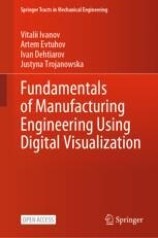
Fundamentals of manufacturing engineering using digital visualization
Offers a guide to core principles and practices of manufacturing engineering. It covers the design of, together with technological and measurement issues for, technical systems. Locating charts and setup schemes describing different machining processes are included. Concepts of product quality, with a focus on accuracy indicators, machining accuracy, roughness, and the impact of surface quality on exploitation properties are also explained. Furthermore, key machining methods, including turning, milling, hole machining, grinding, and gear machining, are analyzed in depth, covering their principles, applications, and techniques. The book is enriched by QR codes, linking to a mobile application presenting additional information about the content, for an interactive and extended learning experience. It also uses illustrations visualized with digital tools to promote a better understanding of the concepts.

Functional Molecular Nanostructures
in This book some recent advances in the structural design of nanoscale assemblies are shown, along with examples from the following areas: supramolecular catalysis, photoactive assemblies, molecular recognition and switches, and electroactive assemblies.The last decade has witnessed an unprecedented pursuit of discrete, nanoscale supramolecular aggregates, built by modern methods of self-assembly strategies. Several efficient new synthetic methods have been developed for engineering spectacular multicomponentsupramolecular aggregates.

Foodborne bacterial pathogens : Methods and protocols
This updated volume presents a compilation of various representative techniques and approaches currently used to study bacterial foodborne pathogens. Chapters guide the reader through bacterial pathogen detection and quantification in food, molecular, phenotypic, metabolic characterization of food pathogens, and ecology of foodborne bacterial pathogens. Written in the highly successful Methods in Molecular Biology series format, chapters include introductions to their respective topics, lists of the necessary materials and reagents, step-by-step, readily reproducible laboratory protocols, and key tips on troubleshooting and avoiding known pitfalls.

Flowing Matter
This book presents an introduction to selected research topics in the broad field of flowing matter, including the dynamics of fluids with a complex internal structure -from nematic fluids to soft glasses- as well as active matter and turbulent phenomena. Flowing matter is a subject at the crossroads between physics, mathematics, chemistry, engineering, biology and earth sciences, and relies on a multidisciplinary approach to describe the emergence of the macroscopic behaviours in a system from the coordinated dynamics of its microscopic constituents. Depending on the microscopic interactions, an assembly of molecules or of mesoscopic particles can flow like a simple Newtonian fluid, deform elastically like a solid or behave in a complex manner. When the internal constituents are active, as for biological entities, one generally observes complex large-scale collective motions. Phenomenology is further complicated by the invariable tendency of fluids to display chaos at the large scales or when stirred strongly enough. This volume presents several research topics that address these phenomena encompassing the traditional micro-, meso-, and macro-scales descriptions, and contributes to our understanding of the fundamentals of flowing matter.

Feasibility and Infeasibility in Optimization : Algorithms and Computational Methods
Feasibility and Infeasibility in Optimization is a timely expository book that summarizes the state of the art in both classical and recent algorithms related to feasibility and infeasibility in optimization, with a focus on practical methods. All model forms are covered, including linear, nonlinear, and mixed-integer programs. Connections to related work in constraint programming are shown. Part I of the book addresses algorithms for seeking feasibility quickly, including new methods for the difficult cases of nonlinear and mixed-integer programs. Part II provides algorithms for analyzing infeasibility by isolating minimal infeasible (or maximum feasible) subsets of constraints, or by finding the best repair for the infeasibility. Infeasibility analysis algorithms have arisen primarily over the last two decades, and the book covers these in depth and detail. Part III describes applications in numerous areas outside of direct infeasibility analysis such as finding decision trees for data classification, analyzing protein folding, radiation treatment planning, automated test assembly, etc.

Engineering self-organising systems ; Vol. 3464 : Methodologies and applications
Self-organisation, self-regulation, self-repair, and self-maintenance are promising conceptual approaches to deal with the ever increasing complexity of distributed interacting software and information handling systems. Self-organising applications are able to dynamically change their functionality and structure without direct user intervention to respond to changes in requirements and the environment. This book comprises revised and extended papers presented at the International Workshop on Engineering Self-Organising Applications, ESOA 2004, held in New York, NY, USA in July 2004 at AAMAS as well as invited papers from leading researchers. The papers are organized in topical sections on state of the art, synthesis and design methods, self-assembly and robots, stigmergy and related topics, and industrial applications.

Emergent Computation : Emphasizing Bioinformatics
Emergent Computation is concerned with recent applications of Mathematical Linguistics or Automata Theory. This subject has a primary focus upon ""Bioinformatics"" (the Genome and arising interest in the Proteome), but the closing chapter also examines applications in Biology, Medicine, Anthropology, etc. The book is composed of an organized examination of DNA, RNA, and the assembly of amino acids into proteins. Rather than examine these areas from a purely mathematical viewpoint (that excludes much of the biochemical reality), the author uses scientific papers written mostly by biochemists based upon their laboratory observations. Thus while DNA may exist in its double stranded form, triple stranded forms are not excluded. Similarly, while bases exist in Watson-Crick complements, mismatched bases and abasic pairs are not excluded, nor are Hoogsteen bonds. Just as there are four bases naturally found in DNA, the existence of additional bases is not ignored, nor amino acids in addition to the usual complement of 20. Can there be more than ""64"" possible codons? RNA is examined from the point of view of Nussinov plots.

Electronics Process Technology : Production Modelling, Simulation and Optimisation
Electronics Process Technology is a systemised presentation of new techniques and methods in electronics manufacture. Planning, preparation and execution are interlinked to achieve robust manufacturing processes that realise optimum quality, costs and quantities in the final product. Topics covered include: • modelling of manufacturing processes; • graph-theoretical approach to manufacturing planning; • process simulation and optimisation including cost optimisation; • quality assurance and statistical process analysis and control; • reliability models for electronic products and • assembly accuracy.
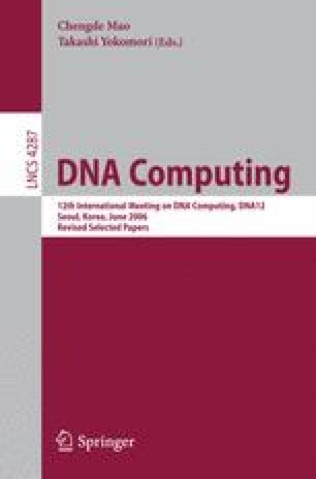
DNA Computing ; Vol. 4287 ; 12th International Meeting on DNA Computing, DNA12, Seoul, Korea, June 5-9, 2006, Revised Selected Papers
This book constitutes the thoroughly refereed postproceedings of the 12th International Meeting on DNA Computing, DNA12, held in Seoul, Korea in June 2006. The 34 revised full papers presented are organized in topical sections on molecular and membrane computing models, complexity analysis, sequence and tile designs and their properties, DNA tile self-assembly models, simulator and software for DNA computing, DNA computing algorithms and new applications, novel experimental approaches, and experimental solutions.

DNA and RNA origami : methods and protocols
Detials diverse methodological approaches on the assembly and applications of DNA origami assemblies. Chapters guide readers through different synthetic and computational methods, isolation and structural characterization of 2D and 3D DNA origami nanoarchitectures, nanophotonics, drug delivery, biophysics, and synthetic biology.Written in the successful Methods in Molecular Biology series format, chapters include introductions to their respective topics, lists of the necessary materials and reagents, step-by-step, readily reproducible protocols, and notes on troubleshooting and avoiding known pitfalls.

Digital workflows in architecture : Design - assembly - industry
The logics of digital processes in architecture have begun to structure the way that architects design, the way that builders build, and the way that industry is reorganizing. This book is a reference work on digital technologies as key factors in architectural design, fabrication and workflow organization. It presents essays and case studies from some of the leading voices on the topic.

Development and evaluation of setup strategies in printed circuit board assembly
The last decade has seen a rapid extension of electronic control devices for various types of technical products. In modern electronics manufacturing, highly automated assembly systems are used to mount the electronic components onto the printed circuit boards (PCBs). Maintaining high production flexibility in order to meet the desired product variety and, at the same time, achieving high utilization rates of the capital-intensive production equipment can only be achieved by applying highly sophisticated planning and control strategies for the operation of modern placement machines. Ihsan Onur Yilmaz develops a novel group setup strategy which integrates multiple problems of the PCB assembly, especially in a medium-variety production environment. At the core of his principle approach are the identification of similarities between different types of PCBs and the generation of PCB clusters upon which group setup strategies are based. The developed setup strategies are also innovative in the sense that they integrate the optimization of detailed machine operations. This integration has not been achieved in the classical approaches which primarily rely on statistical clustering techniques.

Construction and Analysis of Safe, Secure, and Interoperable Smart Devices ; Vol. 3956 ; Second International Workshop, CASSIS 2005, Nice, France, March 8-11, 2005, Revised Selected Papers
This book constitutes the refereed post-proceedings of the Second International Workshop on Construction and Analysis of Safe, Secure, and Interoperable Smart Devices, CASSIS 2005. The 9 revised full papers presented were carefully selected during two rounds of reviewing and improvement from about 30 workshop talks. The papers are organized in topical sections on research trends in smart devices, Web services, virtual machine technology, security, validation and formal methods, proof-carrying code, and embedded devices.

Conducting Polymers with Micro or Nanometer Structure
Conducting Polymers with Micro or Nanometer Structure describes a topic discovered by three winners of the Nobel Prize in Chemistry in 2000: Alan J. Heeger, University of California at Santa Barbara, Alan G. MacDiarmid at the University of Pennsylvania, and Hideki Shirakawa at the University of Tsukuba. Since then, the unique properties of conducting polymers have led to promising applications in functional materials and technologies. The book first briefly summarizes the main concepts of conducting polymers before introducing micro/nanostructured conducting polymers dealing with their synthesis, structural characterizations, formation mechanisms, physical and chemical properties, and potential applications in nanomaterials and nanotechnology. The book is intended for researchers in the related fields of chemistry, physics, materials, nanomaterials and nanodevices.

Computer organization and design, enhanced : The hardware / software interface ; 5th ed.
Contains new examples and material highlighting the emergence of mobile computing and the cloud. It explores this generational change with updated content featuring tablet computers, cloud infrastructure, and the ARM (mobile computing devices) and x86 (cloud computing) architectures. The book uses a MIPS processor core to present the fundamentals of hardware technologies, assembly language, computer arithmetic, pipelining, memory hierarchies and I/O.Because an understanding of modern hardware is essential to achieving good performance and energy efficiency, this edition adds a new concrete example, Going Faster, used throughout the text to demonstrate extremely effective optimization techniques. There is also a new discussion of the Eight Great Ideas of computer architecture.

Computational Electromagnetics
Computational Electromagnetics is a young and growing discipline, expanding as a result of the steadily increasing demand for software for the design and analysis of electrical devices. This book introduces three of the most popular numerical methods for simulating electromagnetic fields: the finite difference method, the finite element method and the method of moments. In particular it focuses on how these methods are used to obtain valid approximations to the solutions of Maxwell's equations, using, for example, "staggered grids" and "edge elements." The main goal of the book is to make the reader aware of different sources of errors in numerical computations, and also to provide the tools for assessing the accuracy of numerical methods and their solutions. To reach this goal, convergence analysis, extrapolation, von Neumann stability analysis, and dispersion analysis are introduced and used frequently throughout the book. Another major goal of the book is to provide students with enough practical understanding of the methods so they are able to write simple programs on their own. To achieve this, the book contains several MATLAB programs and detailed description of practical issues such as assembly of finite element matrices and handling of unstructured meshes.

Collagen : Primer in Structure, Processing and Assembly
This volume of Topics in Current Chemistry is an attempt to update and compile the biochemical, molecular knowledge of the still growing family of collagenous proteins. Its intention is to provide a comprehensive summary of all mechanisms known to be involved in synthesis, processing and deposition of collagen molecules, all of which are apparently shared by any known collagen type as part of a common biosynthetic route. From the intracellular initiation of protein translation to the extracellular deposition of mature molecules into the scaffold of the preformed tissue texture, collagen biosynthesis exhibits a profile of mechanisms absolutely unique when compared to other proteins
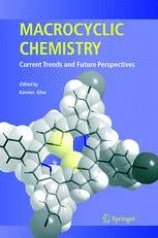
Macrocyclic Chemistry : Current Trends and Future Perspectives
Macrocyclic Chemistry: Current Trends and Future Perspectives illustrates essential concepts in this expanding research field covering both basic and applied studies. Written by well-known experts from around the world, the topics of the chapters range from new macrocyclic architectures with different functions and self-assembly processes through to the modeling and dynamics of such systems. The content also reflects on application possibilities in analytical chemistry, separation processes, material preparation and medicine. Thus this book serves as a creative source of research strategies and methodic tools.
