



الصفحة 2
الصفحة 2

Cultural heritage in a changing world
The central purpose of this collection of essays is to make a creative addition to the debates surrounding the cultural heritage domain. In the 21st century the world faces epochal changes which affect every part of society, including the arenas in which cultural heritage is made, held, collected, curated, exhibited, or simply exists. The book is about these changes; about the decentring of culture and cultural heritage away from institutional structures towards the individual; about the questions which the advent of digital technologies is demanding that we ask and answer in relation to how we understand, collect and make available Europe’s cultural heritage.

Confronting Scale in Archaeology : Issues of Theory and Practice
This book discusses the cultural, social and spatial aspects of scale and its impact on archaeology in practical and applicable cases. Each author takes one of the fundamental elements of archaeology - from the experience of time and space to the visualization of individuals, sites and landscapes to the intricacies of archaeological discourse - and shows how an awareness of scale can create new and exciting interpretations.

Collective Action in the Formation of Pre-Modern States
This book explores a collective action perspective on the formation of pre-modern states, but does not only promote a new mode of theoretical understanding. Rather, it subjects collective action theory to a methodologically rigorous evaluation using a systematic cross-cultural analysis of historical, ethnographic, and archaeological data drawn from a world-wide sample of societies. These data provide strong support for the theory while pointing the way to a more complex and nuanced approach to collective action, uniting theories of pre-modern and modern states.
Material Agency : Towards a Non-Anthropocentric Approach
This book is a groundbreaking attempt to address questions of non-human and material agency from a wide range of perspectives and disciplines: archaeology, anthropology, sociology, cognitive science, philosophy, and economics. The editors and authors demostrate that a distributed, relational approach to agency, incorporating both humans and artifacts, has important ramifications for how we understand material culture.
Maritime Archaeology and Social Relations : British Action in the Southern Hemisphere
This book goes beyond a descriptive analysis of wrecks by exploring them and their cargoes as embodiments of 18th century social relations. Maritime Archaeology and Social Relations challenges traditional maritime approaches providing a different perspective that emphasises the richness, diversity and complexity of British action.By applying the concept of praxis, British action is integrated in both land and maritime spaces. A closer look into the associated experienced landscapes enhances our understanding of how social identities were projected at local and global levels.
Maritime Archaeology : Australian Approaches
Subject areas discussed in this book include shipwrecks and abandoned vessels, The application of National and State legislation and management regimes to these underwater cultural heritage sites is also highlighted, together with the important role of avocational divers and training programs in raising the profile of underwater and maritime heritage sites.The book includes a comprehensive bibliography of work conducted both in Australia and by Australian maritime archaeologists in the Asia-Pacific region. This book will be of interest to students and practitioners of maritime and historical archaeology and cultural heritage managers throughout the world .
Landscapes Under Pressure : Theory and Practice of Cultural Heritage Research and Preservation
This book investigates the newly emerging scope of interests and project agendas to investigate and preserve cultural landscapes. It presents the historic, archaeological, ethnographic, and environmental traditions of cultural landscape study and the attempts to reconstruct and analyze the complex processes of cultural changes through prehistoric and historic times.The "guiding light" of the book is that the fullest understanding of a cultural landscape will materialize through interdisciplinary cooperation, which should involve an ecological approach with historical ecology as the guiding tool, applied archaeology, and environmental planning.
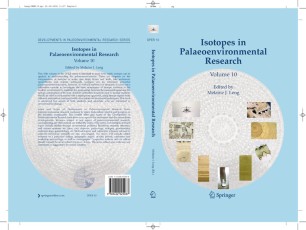
Isotopes in Palaeoenvironmental Research
This thorough reference shows how stable isotopes can be applied to understanding the palaeoenvironment, with chapters on the interpretation of isotopes in water, tree rings, bones and teeth, lake sediments, speleothems and marine sediments.

Case Studies in Environmental Archaeology
Environmental archaeology encompasses the application of biological and geological techniques to the study of human/environmental interactions. Each chapter is an original or revised work by internationally-recognized geoarchaeologists, human biologists, paleoethnobotanists, and zooarchaeologists. Each study demonstrates how and why the information obtained using environmental techniques is important to anthropologists instead of describing, critiquing, or advocating a method. These ethnographic, geological, and biological case studies successfully demonstrate the application of environmental science toward the resolution of questions related to human behavior in the past.
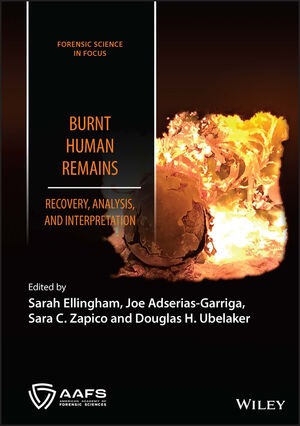
Burnt human remains : Recovery, analysis, and interpretation
Presents an in-depth multidisciplinary approach to the detection, recovery, analysis, and identification of thermally altered remains. Bridging the gap between research and practice, this invaluable one-stop reference provides detailed coverage of analytical techniques in forensic medicine and pathology, forensic anthropology, forensic odontology, and forensic chemistry and forensic biology.
Between dirt and discussion : Methods, methodology and interpretation in historical archaeology
The cases presented in this volume revisit old methods and previous scholarly approaches with new perspectives, along with incorporating the newest technologies available to understanding the past.
Atomic and Nuclear Analytical Methods : XRF, Mössbauer, XPS, NAA and Ion-Beam Spectroscopic Techniques
This book is a blend of analytical methods based on the phenomenon of atomic and nuclear physics. It comprises comprehensive presentations about X-ray Fluorescence (XRF), Mössbauer Spectroscopy (MS), X-ray Photoelectron Spectroscopy (XPS), Neutron- Activation Analysis (NAA), Particle Induced X-ray Emission Analysis (PIXE), Rutherford Backscattering Analysis (RBS), Elastic Recoil Detection (ERD), Nuclear Reaction Analysis (NRA), Particle Induced Gamma-ray Emission Analysis (PIGE), and Accelerator Mass Spectrometry (AMS). These techniques are commonly applied in the fields of medicine, biology, environmental studies, archaeology or geology et al. and pursued in major international research laboratories.
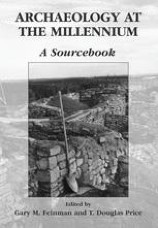
Archaeology at the millennium : A sourcebook
The sourcebook is divided into four substantive sections, each of which is introduced by a summary statement outlining the chapters in the section. Part I deals with the history of archaeology and the advance of archaeological theory. Part II ranges over the first four million years of our evolution as a cultural species and covers the first hominids to complex hunter-gatherers. Part III concerns the origins of agriculture and features discussions of such issues as craft production, the division of labor, warfare, and the rise of social inquality. Part IV analyzes the rise of states and empired in both the Old and New World; the archaeology of the classical Mediterranean states is also included in this section. A final chapter portends the future of archaeology.
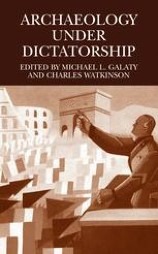
Archaelogy Under Dictatorship
This volume aims to provide a theoretical basis for understanding the specific effects of totalitarian dictatorship upon the practice of archaeology, both during and after the dictator's reign.
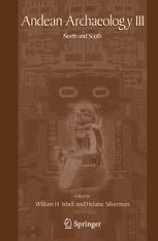
Andean Archaeology III : North and South
In this volume, the strong cultural differences between northern and southern regions of the Central Andes are examined and the conditions under which these differences evolved are explored.

Ancient monuments and modern identities : A critical history of archaeology in 19th and 20th century Greece
Sets out to examine the role of archaeology in the creation of ethnic, national and social identities in 19th and 20th century Greece. The essays included in this volume examine the development of interpretative and methodological principles guiding the recovery, protection and interpretation of material remains and their presentation to the public. The role of archaeology is examined alongside prevailing perceptions of the past, and is thereby situated in its political and ideological context. The book is organized chronologically and follows the changing attitudes to the past during the formation, expansion and consolidation of the Modern Greek State. The aim of this volume is to examine the premises of the archaeological discipline, and to apply reflection and critique to contemporary archaeological theory and practice.
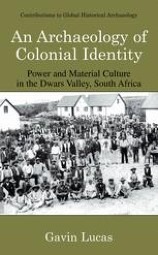
An Archaeology of Colonial Identity : Power and Material Culture in the Dwars Valley, South Africa
This book is the based on the work of many people, and while I discuss many of them in the general context of this book in Chapter 1. The backbone of the book is based on a project, 'Farm Lives' conducted between 1999 and 2002, funded exclusively by the McDonald Institute for Archaeolog-ical Research at the University of Cambridge.
An Archaeological Evolution
An Archaeological Evolution is a personal recounting of his life as it is played out among some of the most important debates and movements in archaeology starting in the 1960's up to the 21st century.This seminal volume will be of interest to archaeologists (both professional and academic), anthropologists, historians, and conservators in or studying the United States but also, wherever archaeology is taught and practiced.
A Space of Their Own : The Archaeology of Nineteenth Century Lunatic Asylums in Britain, South Australia and Tasmania
The history of lunatic asylums – what do we really know about them? Films and television programs have portrayed them as places of horror where the patients are restrained and left to listen to the cries of their fellow inmates in despair. But what was the world of nineteenth century lunatic asylums really like? Are these images true? This book will explore this world using the techniques of historical archaeology and history.

A Dictionary of World History
This wide-ranging dictionary contains a wealth of information on all aspects of history, from prehistory right up to the present day. Accessible, clear, and concise entries include biographies of key figures in world history (living and dead), separate entries for every country in the world (summarising key historical events), and in-depth entries on religious and political movements, international organizations, and major conflicts and events and their after-effects.
