



الصفحة 2
الصفحة 2

Future data and security engineering : Big data, security and privacy, smart city and industry 4.0 applications ; 7th International Conference, FDSE 2020, Quy Nhon, Vietnam, November 25–27, 2020, Proceedings
This book constitutes the proceedings of the 7th International Conference on Future Data and Security Engineering, FDSE 2020, held in Quy Nhon, Vietnam, in November 2020.* The 29 full papers and 8 short were carefully reviewed and selected from 161 submissions. The selected papers are organized into the following topical headings: big data analytics and distributed systems; security and privacy engineering; industry 4.0 and smart city: data analytics and security; data analytics and healthcare systems; machine learning-based big data processing; emerging data management systems and applications; and short papers: security and data engineering.

Fundamentals of Clinical Data Science
This book comprehensively covers the fundamentals of clinical data science, focusing on data collection, modelling and clinical applications. Topics covered in the first section on data collection include: data sources, data at scale (big data), data stewardship (FAIR data) and related privacy concerns. Aspects of predictive modelling using techniques such as classification, regression or clustering, and prediction model validation will be covered in the second section. The third section covers aspects of (mobile) clinical decision support systems, operational excellence and value-based healthcare.

Financial Controlling
Provides an introduction to the fundamentals of operational and strategic controlling. It conveys the central tasks and functions that controlling has in the company and shows the challenges that this cross-sectional position entails. In addition, it addresses trends and developments in controlling that will have a significant impact on the work of controllers in the coming years.
Fashion marketing in emerging economies ; Vol.1 : Brand, consumer and sustainability perspectives
Chapters explore core topics such as brand management, sustainability, digital marketing, analytics and data science. Covering a wide range of emerging markets, chapters provide case studies from China, India, Ethiopia, Romania, Turkey, Brazil and Nigeria, among others.

Facebook API Developers Guide
The Facebook API allows web developers to create Facebook applications and access Facebook data from other applications. Facebook API Developers Guide covers the use and implementation of the Facebook API—what the key features are and how you can access them. You will learn, through practical examples, the main features of the Facebook API including an introduction to the API–specific languages FQL and FBML. These examples are further supported by the introduction of other technologies like language libraries, relational database management systems, and XML. Covers all key features of the Facebook API Explains the API languages FQL and FBML Teaches by example, with useful code and tips you can use in your own applications

Exploratory Analysis of Spatial and Temporal Data : A Systematic Approach
Exploratory data analysis (EDA) is about detecting and describing patterns, trends, and relations in data, motivated by certain purposes of investigation. As something relevant is detected in data, new questions arise, causing specific parts to be viewed in more detail. So EDA has a significant appeal: it involves hypothesis generation rather than mere hypothesis testing.

Experimental vibration analysis for civil structures : Testing, sensing, monitoring, and control
Covers a wide range of topics in the areas of vibration testing, instrumentation, and analysis of civil engineering and critical infrastructure. It explains how recent research, development, and applications in experimental vibration analysis of civil engineering structures have progressed significantly due to advancements in the fields of sensor and testing technologies, instrumentation, data acquisition systems, computer technology, computational modeling and simulation of large and complex civil infrastructure systems. The book also examines how cutting-edge artificial intelligence and data analytics can be applied to infrastructure systems.

Euro-Par 2020 : Parallel Processing ; 26th International Conference on Parallel and Distributed Computing, Warsaw, Poland, August 24–28, 2020, Proceedings
This book constitutes the proceedings of the 26th International Conference on Parallel and Distributed Computing, Euro-Par 2020, held in Warsaw, Poland, in August 2020. The conference was held virtually due to the coronavirus pandemic. The 39 full papers presented in this volume were carefully reviewed and selected from 158 submissions. They deal with parallel and distributed computing in general, focusing on support tools and environments; performance and power modeling, prediction and evaluation; scheduling and load balancing; high performance architectures and compilers; data management, analytics and machine learning; cluster, cloud and edge computing; theory and algorithms for parallel and distributed processing; parallel and distributed programming, interfaces, and languages; multicore and manycore parallelism; parallel numerical methods and applications; and accelerator computing.

Essentials of Excel VBA, Python, and R Vol. I : Financial statistics and portfolio analysis
Teaches statistical analyses and research methods utilizing business case studies and financial data, with the applications of Excel VBA, Python and R. Each chapter engages the reader with sample data drawn from individual stocks, stock indices, options, and futures. Now in its second edition, it has been expanded into two volumes, each of which is devoted to specific parts of the business analytics curriculum. To reflect the current age of data science and machine learning, the used applications have been updated from Minitab and SAS to Python and R.

Enterprise Management with SAP SEM™
In order to make strategy happen there is a need for powerful management information systems. SAP focuses on the application of modern business administration concepts, e.g. Value Based Management, the Balanced Scorecard, the Management Cockpit or flexible planning methods. The book describes the methodology and implementation of a powerful tool for enterprise management. Practical examples show how SAP Strategic Enterprise Management/Business Analytics (SAP SEM/BA) can help to improve cross functional planning, reporting and analyzing. SAP SEM/BA is a leading edge IT-solution for top management and related departments in large enterprises and groups. It demonstrates the state of the art of modern management information and decision support systems.
Emerging Technologies in Computing ; 3rd EAI International Conference, iCETiC 2020, London, UK, August 19–20, 2020, Proceedings
This book constitutes the refereed conference proceedings of the Third International Conference on Emerging Technologies in Computing, iCEtiC 2020, held in London, UK, in August 2020. Due to VOVID-19 pandemic the conference was helt virtually.The 25 revised full papers were reviewed and selected from 65 submissions and are organized in topical sections covering blockchain and cloud computing; security, wireless sensor networks and IoT; AI, big data and data analytics; emerging technologies in engineering, education and sustainable development.

Earth Observation Open Science and Innovation
The digital transformation is revolutionizing our ability to monitor our planet and transforming the way we access, process and exploit Earth Observation data from satellites.This book reviews these megatrends and their implications for the Earth Observation community as well as the wider data economy. It provides insight into new paradigms of Open Science and Innovation applied to space data, which are characterized by openness, access to large volume of complex data, wide availability of new community tools, new techniques for big data analytics such as Artificial Intelligence, unprecedented level of computing power, and new types of collaboration among researchers, innovators, entrepreneurs and citizen scientists. In addition, this book aims to provide readers with some reflections on the future of Earth Observation, highlighting through a series of use cases not just the new opportunities created by the New Space revolution, but also the new challenges that must be addressed in order to make the most of the large volume of complex and diverse data delivered by the new generation of satellites.

Dr.phone
Dr phone is a software system that helps in talking with the doctor automatically and easily without the need to go to the doctor's clinic to diagnose the patient's condition. our application presents an available platform to make a video call between the doctor and the patient according to the patient’s needs. The system accepts the patient’s request after choosing an available doctor andthen waits for the doctor to accept his request, if there is no doctor available, the system performs an AI chatbot to the patient's need to give him the appropriate diagnosis. when the call finished the doctor represents medical record including the medicine and the analytics and record the next appointment if it’s needed then send them to the patient's email, the patient also can see the nearest pharmacies or labs according to his location, and finally the patient rates the doctor after the call is finished then payment by his available wallet.

Disrupting Finance : FinTech and Strategy in the 21st Century
This Pivot demonstrates how a variety of technologies act as innovation catalysts within the banking and financial services sector. Traditional banks and financial services are under increasing competition from global IT companies such as Google, Apple, Amazon and PayPal whilst facing pressure from investors to reduce costs, increase agility and improve customer retention. Technologies such as blockchain, cloud computing, mobile technologies, big data analytics and social media therefore have perhaps more potential in this industry and area of business than any other. This book defines a fintech ecosystem for the 21st century, providing a state-of-the art review of current literature, suggesting avenues for new research and offering perspectives from business, technology and industry.

Digitization of the management accounting function : A case study analysis on manufacturing companies
Analyzes the impact of digitization on management accounting in five manufacturing companies. It is one of the first in-depth empirical studies on the intersection of management accounting and digitization. The study suggests that there are two archetypes of digitization of the management accounting function. The first archetype emphasizes top-down-driven changes that aim to enhance efficiency, such as conducting tasks with a higher degree of automation in a leaner structure with fewer resources. The second archetype is strongly driven and initiated by employees in the management accounting function (bottom-up). The focus is on improving the use of data by applying innovative analytics methods, integrating additional sources of data, and benefiting from new technologies like artificial intelligence. The results of the study also indicate that digitization of the management accounting function is mostly in line with the overall company strategy.

Digital analytics for marketing
Provides students with a comprehensive overview of the tools needed to measure digital activity and implement best practices when using data to inform marketing strategy. It is the first text of its kind to introduce students to analytics platforms from a practical marketing perspective. Also demonstrates how to integrate large amounts of data from web, digital, social, and search platforms, this helpful guide offers actionable insights into data analysis, explaining how to "connect the dots" and "humanize" information to make effective marketing decisions. It overs timely topics, such as social media, web analytics, marketing analytics challenges, and dashboards, helping students to make sense of business measurement challenges, extract insights, and take effective actions. The book’s experiential approach, combined with chapter objectives, summaries, and review questions, will engage readers, deepening their learning by helping them to think outside the box.

Designing Digital Work : Concepts and Methods for Human-centered Digitization
This book could well be the most comprehensive collection to date of integrated ideas on the elicitation, representation, integration and digitization of work processes and collaboration. The authors take a heavily human-centered approach while never losing sight of engineering aspects involved. Rooted in relevant theories, they present a set of practice-oriented tools and methods that will help bring work and work support into the hyper connected, data-driven era we are now entering.
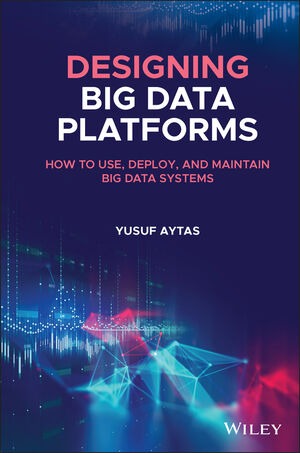
Designing big data platforms : How to use, deploy, and maintain big data systems
Provides expert guidance and valuable insights on getting the most out of Big Data systems. Helps readers understand how to process large amounts of data with well-known Linux tools and database solutions, use effective techniques to collect and manage data from multiple sources, transform data into meaningful business insights, and much more. Author Yusuf Aytas, a software engineer with a vast amount of big data experience, discusses the design of the ideal Big Data platform: one that meets the needs of data analysts, data engineers, data scientists, software engineers, and a spectrum of other stakeholders across an organization. Detailed yet accessible chapters cover key topics such as stream data processing, data analytics, data science, data discovery, and data security. This real-world manual for Big Data technologies: Provides up-to-date coverage of the tools currently used in Big Data processing and management / Offers step-by-step guidance on building a data pipeline, from basic scripting to distributed systems / Highlights and explains how data is processed at scale / Includes an introduction to the foundation of a modern data platform

Deep Learning-Based Face Analytics
Provides an overview of different deep learning-based methods for face recognition and related problems. Specifically, the authors present methods based on autoencoders, restricted Boltzmann machines, and deep convolutional neural networks for face detection, localization, tracking, recognition, etc. The authors also discuss merits and drawbacks of available approaches and identifies promising avenues of research in this rapidly evolving field.

Deep fake detection
Deep learning has been successfully applied to solve various complex problems ranging from big data analytics to computer vision and human-level control. Deep learning advances however have also been employed to create software that can cause threats to privacy, democracy and national security. One of those deep learning-powered applications recently emerged is “deepfake”. Deepfake algorithms can create fake images and videos that humans cannot distinguish them from authentic ones. The proposal of technologies that can automatically detect and assess the integrity of digital visual media is therefore indispensable.
