



الصفحة 199
الصفحة 199
Basic Notions of Algebra
Aims to present a general survey of algebra, of its basic notions and main branches.Those parts of the book devoted to the systematic treatment of notions and results of algebra make very limited demands on the reader: we presuppose only that the reader knows calculus, analytic geometry and linear algebra in the form taught in many high schools and colleges. The extent of the prerequisites required in our treatment of examples is harder to state; an acquaintance with projective space, topological spaces, differentiable and complex analytic manifolds and the basic theory of functions of a complex variable is desirable, but the reader should bear in mind that difficulties arising in the treatment of some specific example are likely to be purely local in nature, and not to affect the understanding of the rest of the book.
Basic methods for the biochemical lab
Covers : quantitative methods (proteins, nucleic acids, phospholipids and carbohydrates), electrophoresis (several polyacrylamide and agarose systems, 2D-PAGE, detection methods and affinity electrophoresis), chromatographic protocols (thin-layer chromatography, GPC, IEC, affinity chromatography, HPLC), immunochemical protocols (hapten-carrier and enzyme conjugation, immunization and antibody purification, immune affinity chromatography, ELISA), centrifugation (differential and density gradient centrifugation for cells and cellular fractions), radioactivity (labeling and counting), buffers (buffer properties and compositions).

Basic immunology : Functions and disorders of the immune system
Includes recent important advances in our understanding and knowledge of the immune system. A student favorite through six outstanding editions, this new edition uses full-color illustrations and clinical images, useful tables, and practical features such as Summary Point boxes, end-of-chapter review questions, glossary terms, and clinical cases—all designed to help you master this complex topic in the most efficient, effective manner possible.
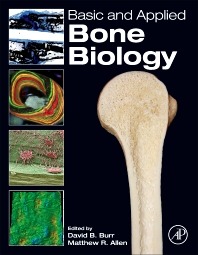
Basic and Applied Bone Biology
Provides an overview of skeletal biology from the molecular level to the organ level, including cellular control, interaction and response; adaptive responses to various external stimuli; the interaction of the skeletal system with other metabolic processes in the body; and the effect of various disease processes on the skeleton.

Basic Algebra
Basic Algebra and Advanced Algebra systematically develop concepts and tools in algebra that are vital to every mathematician, whether pure or applied, aspiring or established. Together, the two books give the reader a global view of algebra and its role in mathematics as a whole.Basic Algebra presents the subject matter in a forward-looking way that takes into account its historical development. It is suitable as a text in a two-semester advanced undergraduate or first-year graduate sequence in algebra, possibly supplemented by some material from Advanced Algebra at the graduate level. It requires of the reader only familiarity with matrix algebra, an understanding of the geometry and reduction of linear equations, and an acquaintance with proofs.
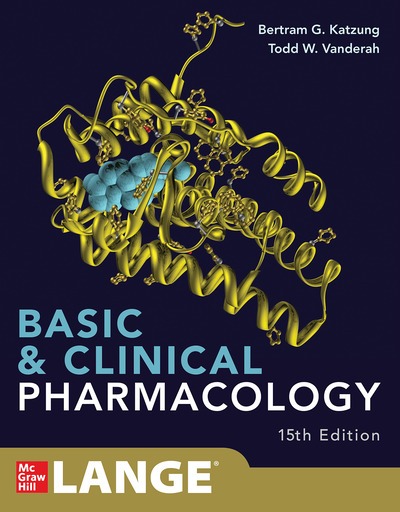
Basic & Clinical Pharmacology
Covers the important concepts students need to know about the science of pharmacology and its application to clinical practice. This edition has been extensively updated to provide expanded coverage of transporters, pharmacogenomics, and new drugs Delivers the knowledge and insight needed to excel in every facet of pharmacology!. Encompasses all aspects of medical pharmacology, including botanicals and over-the-counter drugs Major revisions of the chapters on immunopharmacology, antiseizure, antipsychotic, antidepressant, antidiabetic, anti-inflammatory, and antiviral drugs, prostaglandins, and central nervous system neurotransmitters New chapter on the increasingly relevant topic of cannabis pharmacology Each chapter opens with a case study, covers drug groups and prototypes, and closes with summary tables and diagrams that encapsulate important information Revised full-color illustrations provide more information about drug mechanisms and effects and help clarify important concepts Trade Name/Generic Name tables are provided at end of each chapter for easy reference when writing a chart order or prescription Includes descriptions of important new drugs released through May 2019 New and updated coverage of general concepts relating to recently discovered receptors, receptor mechanisms, and drug transporters

Barile's clinical toxicology : Principles and mechanisms ; 3rd ed.
Examines the complex interactions associated with clinical toxicological events as a result of therapeutic drug administration or chemical exposure. Special emphasis is placed on signs and symptoms of diseases and pathology caused by toxins and clinical drugs. Includes the source, pharmacological and toxicological mechanism of action, detection and identification in body fluids, and treatment of exposure. An overview of protocols for managing various toxic ingestions, and the antidotes and treatments associated with their pathology, are discussed. In addition, effect of toxins on a limited number of body systems and drug-induced adverse drug reactions are also covered

Balancing Agility and Formalism in Software Engineering ; 2nd IFIP TC 2 Central and East European Conference on Software Engineering Techniques, CEE-SET 2007, Poznan, Poland, October 10-12, 2007, Revised Selected Papers
This book constitutes the thoroughly refereed post-conference proceedings of the Second IFIP TC 2 Central and East Conference on Software Engineering Techniques, CEE-SET 2007, held in Poznan, Poland, in October 2007.
Baculovirus : Methods and protocols
Provides up-to-date guidance on techniques used to work with baculoviruses and insect cells. The book provides basic methods to create recombinant baculoviruses, to improve productivity, to produce a variety of products, to purify products, to quantify baculovirus stocks or to quantify product produced, and it concludes with alternative uses of either baculovirus or insect cells as tools. Written for the highly successful Methods in Molecular Biology series, chapters include introductions to their respective topics, lists of the necessary materials and reagents, step-by-step and readily reproducible laboratory protocols, and tips on troubleshooting and avoiding known pitfalls.
Bacteriocins : Ecology and Evolution
Microbes produce an extraordinary array of defense systems. These include bacteriocins, a class of antimicrobial molecules with narrow killing spectra, produced by bacteria. The book describes the diversity and ecological role of bacteriocins of Gram-positive and Gram-negative bacteria, presenting a new classification scheme for the former and a state-of-the-art look at the role of bacteriocins in bacterial communication. It discusses the molecular evolution of colicins and colicin-like bacteriocins, and provides a contemporary overview of archaeocins, bacteriocin-like antimicrobials produced by archaebacteria. Furthermore, various modeling (in silico) studies elucidate the role of bacteriocins in microbial community dynamics and fitness, delving into rock-paper-scissors competition and the counter-intuitive survival of the weakest. The book makes compelling reading for a multi-faceted scientific audience, including those working in the fields of biodiversity and biotechnology, notably in the human and animal health domain.
Bacterial signal transduction : Networks and drug targets
Interactions among different TCSs enable one system to respond to multiple signals, which is important for bacteria to minutely adjust themselves to complex environmental changes. Such interactions are found or predicted in various bacteria in this book. Over the past decade, a vast amount of exciting new information on the signal transduction pathway in bacteria has been brought to light. Reports on these develop› ments have been put together in this book, Bacterial Signal Transduction: Networks andDrug Targets. This book Offers an incentive for graduate students, academic scientists, and researchers in the pharmaceutical industry to further elucidate the TCS networks and apply them in the search for novel drugs.

Bacterial secretion systems : Methods and protocols
Cover techniques used to study secretion systems. Chapters focus on identifying and localizing the different subunits, defining interactions within subunits, monitoring conformational changes, purifying and imaging of large complexes, defining the assembly pathway by fluorescence microscopy and the role of energy during assembly and/or secretion, identifying secreted effectors as well as using reporters to follow effector transport. Written in the highly

B 2007 : Formal Specification and Development in B ; 7th International Conference of B Users, Besancon, France, January 7-19, 2007, Proceedings
These proceedingsrecordthe papers presented at the Seventh InternationalC- ference of B Users (B 2007), held in the city of Besan¸ con in the east of France. All the submitted papers in these proceedings were peer reviewed by at least three reviewers drawn from the B committee, depending on the subject matter of the paper. The authorsof the papersforB 2007werefrom Australia,Canada, Finland, Germany, France, Switzerland, and the UK. The conference featured a rangeof contributions by distinguished invited speakers drawn from both ind- try and academia.
Axon growth and guidance
The complexarchitectureofneuronal networks togetherwith the extraordinary associated functions make the nervous system a fascinating biological structure. The considerable work performed to explore this cellular machinery is nowadays successfulbecause the mysteryofnervous system developmentisbeing unravelled. As described in their outstanding review published 10 years ago in Science.' Marc Tessier-Lavigne and Corey Goodman-the pioneers of the molecular era of axon guidance-summarized the assembly of nervous system connections as a subtle game of attraction and repulsion of neuronal growth cones. The cellular ballet ensuring the formation of billions of synapses, which ultimately gives rise to the highest cognitive functions, is primarily orchestrated by a step-by-step mechanism of growth driven by multiple molecular cues. While our general concept of axon guidance remains identical, a profound evolution ofour knowledge ofthe molecular identityofthe guidance cues together with their interactions and signalling pathways occurred over the past ten years.
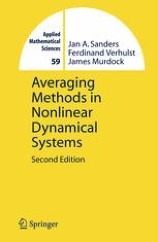
Averaging Methods in Nonlinear Dynamical Systems
The authors have presented an extensive revision of the first edition of the Averaging Methods in Nonlinear Dynamical Systems book. There are many changes, corrections and updates in chapters on Basic Material and Asymptotics, Averaging, and Attraction.

Average-Cost Control of Stochastic Manufacturing Systems
This book is concerned with hierarchical control of manufacturing systems under uncertainty. It focuses on system performance measured in long-run average cost criteria, exploring the relationship between control problems with a discounted cost and that with a long-run average cost in connection with hierarchical control. A new theory is articulated that shows that hierarchical decision making in the context of a goal-seeking manufacturing system can lead to a near optimization of its objective. The approach in the book considers manufacturing systems in which events occur at different time scales.

Autotuning of PID Controllers : A Relay Feedback Approach
Recognising the benefits of improved control, the second edition of Autotuning of PID Controllers provides simple yet effective methods for improving PID controller performance. The practical issues of controller tuning are examined using numerous worked examples and case studies in association with specially written autotuning MATLAB® programs to bridge the gap between conventional tuning practice and novel autotuning methods. Autotuning of PID Controllers is more than just a monograph, it is an independent learning tool applicable to the work of academic control engineers and of their counterparts in industry looking for more effective process control and automation.

Autonomy oriented computing : From problem solving to complex systems modeling
Autonomy Oriented Computing explores the important theoretical and practical issues in AOC, by analyzing methodologies and presenting experimental case studies. The book serves as a comprehensive reference source for researchers, scientists, engineers, and professionals in all fields concerned with this promising new development in computer science. It can also be used as a main or supplementary text in graduate and undergraduate programs across a broad range of computer-related disciplines, including Robotics and Automation, Amorphous Computing, Image Processing and Computer Vision, Programming Paradigms, Computational Biology, and many others. The first part of the book, Fundamentals, describes the basic concepts and characteristics of an AOC system, and then it enumerates the critical design and engineering issues faced in AOC system development. The second part of the book, AOC in Depth, provides a detailed analysis of methodologies and case studies to evaluate the use of AOC in problem solving and complex system modeling. The final chapter reviews the essential features of the AOC paradigm and outlines a number of possibilities for future research and development.
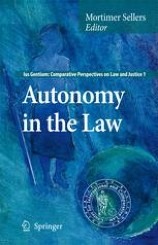
Autonomy : In the Law
Autonomy in the Law considers one of the most important benefits of the rule of law. Juxtaposing European and American conceptions of autonomy in the law of families, capital punishment and, criminal trials reveals the common values that justify all legal systems. Law protects the autonomy of individuals and associations by defending the boundaries of their own self-rule. This book illuminates the fundamental purpose of law by examining how European and American lawyers, judges and citizens do and should apply legal autonomy to the practical circumstances of litigation, legislation and the law.
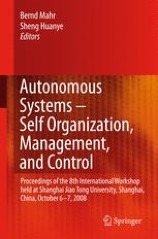
Autonomous Systems - Self-Organization, Management, and Contro ; Proceedings of the 8th International Workshop held at Shanghai Jiao Tong University, Shanghai, China, October 6–7, 2008
The International Workshop on "Autonomous Systems - Self-Organization, Management, and Control " is the eighth in a successful series of workshops that were established by Shanghai Jiao Tong University and Technische Universitat Berlin. The goal of these workshops is to bring together researchers from both universities in order to present research results to an international community.
