



الصفحة 192
الصفحة 192

Blast Cleaning Technology
Blast cleaning is one of the most frequently utilised surface treatment-method in modern industry. The book is the first comprehensive monograph in this subject. It provides a practical and comprehensive review of the technology. This book systematically and critically reviews the theory behind the technology, the state of current blast cleaning, surface quality aspects and the effects of blast cleaning on the performance of applied coatings.

Blameworthy Belief : A Study in Epistemic Deontologism
Believing the wrong thing may sometimes have drastic consequences. The question as to when a person is not only ill-guided, but genuinely at fault for holding a particular belief is an important one: It touches upon the roots of our understanding of such notions as criminal negligence and moral responsibility. The answer to this question may influence the extent to which we are willing to submit each other to punishments ranging from mild resentment to harsh prison terms. This book presents an extensive effort to shed light on the conditions under which we may appropriately deem someone blameworthy for holding a particular belief. It regiments and unifies several debates within contemporary epistemology, ethics and legal scholarship. Finally, the book brings a new philosophical look on issues like our power to control beliefs and the extent and nature of foresight.
Biotechnology for the Future
One area that has attracted much attention is the use of cell factories for the production of a wide range of chemicals. This area illustrates very well the definition of biochemical engineering , and it has therefore been chosen as the focus of this volume. The use of cell factories for production of chemicals dates back to the production of penicillin, ethanol, acetone–butanol, glycerol and further to enzymes and other antibiotics. All these products were traditionally produced by cell factories that naturally produce these compounds. With the introduction of genetic engineering it has,This volume therefore contains chapters on concepts of metabolic engineering on detailed modeling of cellular systems

Biotechnology for Odor and Air Pollution Control
An international board of authors from universities, research institutes, and industries describe various biotechnological methods ranging from laboratory, to pilot evaluation and to full-scale process implementation. Topics include bioprocesses for the treatment of odors and air pollutants in wastewater treatment plants, rendering plants, chemical production facilities, and food and flavor manufacturing facilities. In addition to the basic microbiological and engineering aspects, the design, modeling and control of bioreactors are also presented.
Biotechnological applications of photosynthetic proteins : Biochips, biosensors and biodevices
Biotechnological Applications of Photosynthetic Proteins: Biochips, Biosensors and Biodevices provides an overview of the recent photosystem II research and the systems available for the bioassay of pollutants using biosensors that are based on the photochemical activity. The data presented in this book serves as a basis for the development of a commercial biosensor for use in rapid pre-screening analyses of photosystem II pollutants, minimising costly and time-consuming laboratory analyses.

Biosurveillance and biosecurity ; International Workshop, BioSecure 2008, Raleigh, NC, USA, December 2, 2008. Proceedings
This book constitutes the refereed proceedings of the International Workshop on Biosurveillance and Biosecurity, BioSecure 2008, held in Raleigh, NC, USA, in December 2008.
Biostatistics and microbiology : A survival manual
This book presents a step-by-step manner that eliminates the greatest obstacle to the learner, which is applying the many processes that comprise a statistical method. The author counters the fear of statistical methods by describing early in the book a step-by-step procedure to perform a statistical method - a process that we will term "the six-step procedure." All of the testing will be performed adhering to six well-defined steps, which will greatly simplify the statistical process. Each step in the sequence must be completed before moving on to the next step.
Biostatistica in radiologia : Progettare, realizzare e scrivere un lavoro scientifico radiologico = Biostatistics in Radiology: Designing, creating and writing a radiological scientific work
The progressive affirmation of evidence-based medicine requires radiology to make a qualitative leap: from demonstrating the ability to see more and better to demonstrating a significant improvement in the health or quality of life of patients.

Biosphere Origin and Evolution
The book covers notions by scientists of various branches on the evolutionary relationship between the biosphere and geosphere, evolution features at various levels of living matter organization, and problems of prebiotic evolution and life origin. The data were collected in the course of the RAS program "Biosphere origin and evolution" (subprogram II) in 2003–2006. The objectives of this subprogram were (1) generalization of data related to problems of biosphere origin and evolution accumulated by geneticists, molecular biologists, zoologists, botanists, paleontologists, microbiologists, geologists, chemists, and archaeologists; (2) search for new interdisciplinary approaches to biosphere origin and evolution; (3) development of a "lingua franca" understandable by experts in various fields, which would allow apprehension of results concerning the topic obtained in allied sciences

Biosaline Agriculture and High Salinity Tolerance
this book reviews the current state of knowledge in biosaline agriculture and high salinity tolerance in plants. It mainly focuses on the biotic approach to economically utilize the stress-prone areas by growing resistant plants.This volume comprises three sections: physiology and biochemistry, ecology, and molecular biology. Thus, a systematic approach has been adopted to uncover plant responses to various ecological factors at physiological and molecular levels.

Biorthogonal Systems in Banach Spaces
The main theme of this book is the relation between the global structure of Banach spaces and the various types of generalized "coordinate systems" - or "bases" - they possess. In this book, the authors systematically investigate the concepts of Markushevich bases, fundamental systems, total systems and their variants.

Bioremediation of Soils Contaminated with Aromatic Compounds
Environmental biotechnology, which was in its infancy in the early 80's, has evolved thanks to the revolution brought about by molecular biology. Multiple successes in the biological cleanup of civil and industrial wastewater and of hydrocarbon soil pollution, demonstrate the vast power of clean technologies. In addition, the buildup of information on the activities of microorganisms as catalysts in all sorts of natural, industrial and animal environments has flourished. There is a continuing realization of the critical role of microbial processes in biological, industrial and geological systems. Since environmental biotechnology has matured, it is ready to tackle bigger challenges: the scaling up of many bioremediation systems still in progress, the search for novel biocatalysts for industrial applications, the continuing effort against common human life-threatening processes such as antibiotic resistance, the accumulation of hormone-mimicking substances (endocrine disrupters), the deposition of air-borne pesticides in the environment and, the degradation of recalcitrant contaminants. These endeavors will help prevent the contamination of food chains, protect human life and allow for human activity and economic development that do not compromise environmental sustainabijity.

Biophotonics and Coherent Systems in Biology
Biophotonics and Coherent Systems in Biology offers a timely research volume derived from papers submitted at the 3rd International Alexander Gurwitsch Conference. Biophotonics and Coherent Systems in Biology covers the major aspects of modern biophotonics and related biological and biophysical problems of interest to researchers today.Key topics include: Coherency of biophoton emission and its related physical and biological properties , Biological effects of microwaves, Photon emission from living samples, starting from human bodies up to cell cultures, Fundamental role of water in bioenergetics and the influence of electromagnetic fields upon hydrophobic-hydrophilic balance
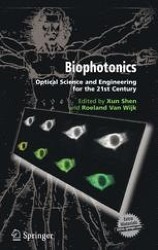
Biophotonics ; Optical science and engineering for the 21st century
Biophotonics: Optical Science and Engineering in the 21st Century serves as an ideal aid to the research and development of these areas integrating light, photonics, and biological systems.Key topics include: Fluctuation Correlation Spectroscopy in Cells: Determination of Molecular Aggregation ,Using GFP and FRET Technologies for Studying Signaling Mechanisms of Apoptosis in a Single Living Cell, Study on Protein-Protein Interaction in Single Living Cells, Functional Optical Coherence Tomography: Simultaneous In Vivo Imaging of Tissue Structure and Physiology, Imaging –Photo- and Sonodynamic Diagnosis of Cancer Mediated by Chemiluminescence Probes, Biophotonic Analysis of Spontaneous Self-Organizing Oxidative Processes in Aqueous Systems, Biophoton Emission and Defense Systems in Plants
Biopharmaceutical manufacturing progress, trends and challenges
Source of the latest innovative research and technical development in biomanufacturing systems. It is organised into 2 parts: 1) Manufacturing of recombinant therapeutic proteins (e.g. therapeutic antibodies, biosimilars/biogenerics) and 2) Manufacturing aspects of cell and gene therapy. Each with selected chapters on the following topics for both up- and downstream, such as: Advanced process strategies, especially continuous manufacturing, Advanced culture techniques, especially single-use systems, Process transfer, scale-up/scale-down models, Processing advances/Manufacturing productivity/efficiency, Model-assisted process understanding and development/Digital Twins, Process controls and analytics, Quality control, Quality by design, Facility design and full-scale commercial systems, manufacturing technology innovation.

Biopharmaceutical drug design and development
Biopharmaceutical Drug Design and Development, Second Edition, updates the widely successful first edition, published in 1999. This new, expanded edition investigates the dozens of new biopharmaceutical drugs that have become available since the publication of the first edition. Among the drugs discussed are ones in the categories of monoclonal antibodies for in-vivo use, cytokines, growth factors, enzymes, immunomodulators, thrombolytics, and immonotherapies including vaccines. Additionally, the volume examines new and emerging technologies, such as bioinformatics, DNA microarrays, transgenics, therapeutic gene delivery, stem cells, nucleic acid-based therapeutics, and macromolecular drug delivery. Authors also study pharmacogenetics in the clinic and changes in biologic drug approval at the FDA. Biopharmaceutical Drug Design and Development, Second Edition, is a worthy sequel in the discussion on the dynamic, exciting field of biotechnology.
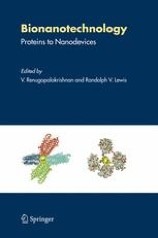
Bionanotechnology : Proteins to Nanodevices
Bionanotechnology is the key integrative technology of the 21st century and aims to use the knowledge, gathered from the natural construction of cellular systems, for the advancement of science and engineering. Investigating the topology and communication processes of cell parts can lead to invention of novel biological devices with exciting applications. Though microscale to nanoscale research offers an excellent space for the development of futuristic technologies, a number of challenges must be overcome. Due to paucity of a dedicated literature on the protein based nanodevices we bring you this monograph that combines collective research works of scientists probing into this fascinating universe of bionanotechnology. The monograph has been written with an aim of surveying engineering design principles of biomolecular nanodevices, prototype nanodevices based on redox proteins, bacteriorhodopsins and natural fibers, and touching upon the future developments in the field.
BioNanoFluidic MEMS
BioNanoFluidic MEMS explains nanofabrication and nanomaterials synthesis suitable for the development of biosensors. The fundamentals initiate an awareness for engineers and scientists who would like to develop and implement novel biosensors for various applications. In addition, the material covered includes: BioNanoFluidic MEMS connection between the interdisciplinary nature of BioNanoFluidics and MEMS BioNanoFluidics and sensor technology including Micro-Mechanical Sensors and Chemical Sensor Technologies ands-on steps for implementation of biosensor fabrication including a discussion of the clean room lithography process and etching, microsensor systems lamination, PDMS moulding, parylene deposition, and others Interconnection between the interdisciplinary nature of BioNanoFluidics and MEMS BioNanoFluidics and sensor technology including Micro-Mechanical Sensors and Chemical Sensor Technologies
Biomineralization II : Mineralization Using Synthetic Polymers and Templates
In nature, biological organisms produce mineralized tissues such as bone, teeth, diatoms, and shells. Biomineralization is the sophisticated process of production of these inorganic minerals by living organisms. Construction of organic–inorganic hybrid materials with controlled mineralization analogous to those produced by nature has recently received much attention because it can aid in understanding the mechanisms of the biomineralization process and development of biomimetic materials processing. The biomineralization processes use aqueous solutions at temperatures below 100 ◦C and no toxic intermediates are produced in these systems. This series presents critical reviews of the present position and future trends in modern chemical research. The short and concise reports on chemistry are each written by world renowned experts. This series is still valid and useful after 5 or 10 years.
Biomimicry for Optimization, Control, and Automation
In this book, we focus onhowtousebiomimicryof the functionaloperationofthe “hardwareandso- ware” of biological systems for the development of optimization algorithms and feedbackcontrolsystemsthatextendourcapabilitiestoimplementsophisticated levels of automation. The primary focus is not on the modeling, emulation, or analysis of some biological system. The focus is on using “bio-inspiration” to inject new ideas, techniques, and perspective into the engineering of complex automation systems. There are many biological processes that, at some level of abstraction, can berepresentedasoptimizationprocesses,manyofwhichhaveasa basicpurpose automatic control, decision making, or automation.
