



الصفحة 190
الصفحة 190
Biogeochemical cycles in globalization and sustainable development
This valuable study of environmental subsystems functioning under various climatic and anthropogenic conditions provides a unique insight into the social context of global changes in biogeochemical cycles and demonstrates current understanding of globalization and sustainable development.
Biofuels, Solar and Wind as Renewable Energy Systems : Benefits and Risks
With shortages of fossil energy, especially oil and natural gas, and heavy biomass energy use occurring in both developed and developing countries, a major focus has developed worldwide on renewable energy systems. Renewable energy systems include wind power, biomass, photovoltaics, hydropower, solar thermal, thermal ponds, and biogas. Currently, a heavy focus is on biofuels made from crops, such as corn, sugarcane, and soybeans, for use as renewable energy sources. Wood and crop residues also are being used as fuel. Though it may seem beneficial to use renewable plant materials for biofuel, the use of crop residues and other biomass for biofuels raises many concerns about major environmental problems, including food shortages and serious destruction of vital soil resources.

Bio-fillers
Aims to systematically examine the preparation on biofillers, the core constituents of biofillers, elucidating their mechanism of action and contribution to tissue repair and regeneration and biofillers applications in aesthetic and regenerative medicine
Bioenergetics : Energy conservation and conversion
The present book addresses fundamental questions of biological energy transformation and conservation, with a focus on those processes which can now be understood on a structural basis.Current knowledge of selected examples of the biological energy conservation machinery such as cellular oxygen respiration, light-driven energy converters, and fermentation is reviewed. The machinery is highly variable, particularly that within microorganisms, but all of these devices universally rely on one unique underlying physico-chemical principle. The book is a rich source for specialists interested in recent developments in bioenergetics research and novices in the field alike.

Bioeconomic modelling and valuation of exploited marine ecosystems
This book offers an environmental-economic analysis of exploited ecosystems with a clear policy orientation. The study tries to move beyond traditional economic fishery analysis in two respects. First, several theoretical and numerical models are offered that combine economic and ecological descriptions of fisheries. These models give special attention to spatial processes as well as to combining exploitation and conservation objectives. Second, valuation and stakeholder concerns are addressed in empirical analyses employing both qualitative and quantitative approaches. The latter is done by using advanced methods of monetary valuation. In addition, the first part of the book presents short, introductory overviews of integrated assessment, economic modeling of fishery management, and incorporating uncertainty in fisheries analysis.
Biodiversity-health-sustainability Nexus in socio-ecological production landscapes and seascapes (SEPLS)
It is a compilation of case studies that provide useful knowledge and lessons that derive from on-the-ground activities and contribute to policy recommendations, focusing on the interlinkages between biodiversity and multiple dimensions of health (e.g., physical, mental, and spiritual) in managing socio-ecological production landscapes and seascapes (SEPLS). This book provides insights on how SEPLS approaches can contribute to more sustainable management of natural resources, achieving global biodiversity and sustainable development goals, and good health for all. It is also expected to offer useful knowledge and information for an upcoming three-year thematic assessment of “the interlinkages among biodiversity, water, food, and health” (the so-called “nexus assessment”) by the Intergovernmental Science-Policy Platform on Biodiversity and Ecosystem Services (IPBES). The book begins with an introductory chapter followed by eleven case study chapters demonstrating the nexus between biodiversity, health, and sustainable development, and then a synthesis chapter clarifying the relevance of the case study findings to policy and academic discussions. It will be of interest to scholars, policymakers, and professionals in the field related to sustainable development.
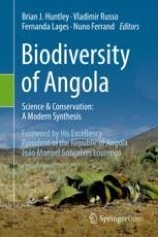
Biodiversity of angola : Science & conservation : A modern synthesis
The book identifies Angola as one of the most biologically diverse countries in Africa, but notes that its fauna, flora, habitats and the processes that drive the dynamics of its ecosystems.
Biodiversity in Enclosed Seas and Artificial Marine Habitats ; Proceedings of the 39th European Marine Biology Symposium, held in Genoa, Italy, 21-24 July 2004
The main themes of the Symposium were biodiversity in enclosed and semi-enclosed seas and artificial habitats, and the restoration of degraded systems. These themes are highly relevant today both from a basic scientific point of view and from an applied approach. The papers dealing with the first theme represent current research and concerns about marine biodiversity in enclosed seas and will have wide appeal to all those interested in understanding and preserving the biodiversity of the seas and in particular of the Mediterranean and Black Seas. The papers in the second theme represent a synthesis of up-to-date knowledge on artificial habitats and how they can contribute to protection of coastal marine ecosystems, to enhancement of species diversity and biological resources and to restoration of degraded marine environments.
Biodiversity Conservation and Phylogenetic Systematics : Preserving our evolutionary heritage in an extinction crisis
This book brings an updated state of the art of phylogenetic diversity in conservation biology. Nineteen chapters written by scientists from research institutions of fourteen countries demonstrate that approaches for preserving the evolutionary heritage are now very tuned into human impacts and sustainability issues. The questions, methods and applications around which it is organized show the importance of phylogenetic diversity in avoiding biodiversity losses in the present extinction crisis. They touch important points such as the way we value phylogenetic diversity, the importance of thinking at a much wider sample of the Tree of Life, the choice of adequate measures. In methods section, new solutions, such as dealing with abundances, sampling effort, or with information coming from conflicting phylogenetic trees are provided. Application section includes study cases of different groups of organi
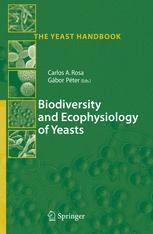
Biodiversity and Ecophysiology of Yeasts
In the last few decades more and more yeast habitats that were not investigated earlier, spanning cold climates to tropical regions and dry deserts to rainforests, have been explored. As a result, a large body of ecological data has been accumulated and the number of known yeast species has increased rapidly. This book provides an overview of the biodiversity of yeasts in different habitats. The recent advances achieved by the application of molecular biological methods in the field of yeast taxonomy and ecology are also incorporated in the book. Wherever possible, the interaction between yeasts and the surrounding environment is discussed.
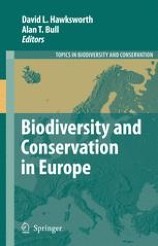
Biodiversity and Conservation in Europe
This book brings together a selection of original studies submitted to Biodiversity and Conservation that address biodiversity and conservation in Europe. Europe is certainly the most intensively inventoried region of the world; detailed maps are available for species distributions while action plans are being drawn up for species under threat. At the same time, the wildlife of Europe has been subject to enormous human pressures, with limited ‘wilderness’ sites remaining in most countries. Europe consequently presents a case-study of what the human impact on biodiversity has been, and also what can be done to improve the situation.
Biochemistry and cell biology of ageing ; Part III : Biomedical science
Covering interesting and significant biomedical ageing topics not included in the earlier volumes. Comprehensive and cutting-edge, this book is a valuable resource for experienced researchers and early career scientist alike, who are interested in learning more about the fascinating and challenging question of why and how our cells age.
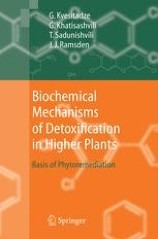
Biochemical Mechanisms of Detoxification in Higher Plants : Basis of Phytoremediation
Plants play a key role in purifying the biosphere of the toxic effects of industrial activity. This book shows how systematic application of the results of investigations into the metabolism of xenobiotics (foreign, often toxic substances) in plants could make a vastly increased contribution to planetary well-being. Deep physiological knowledge gained from an accumulation of experimental data enables the great differences between the detoxifying abilities of different plants for compounds of different chemical nature to be optimally exploited. Hence planting could be far more systematically adapted to actual environmental needs than is actually the case at present.
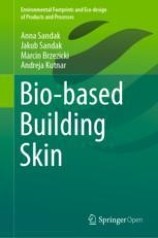
Bio-based Building Skin
This book provides a compendium of material properties, demonstrates several successful examples of bio-based materials’ application in building facades, and offers ideas for new designs and novel solutions. It features a state-of-the-art review, addresses the latest trends in material selection, assembling systems, and innovative functions of facades in detail. Selected case studies on buildings from diverse locations are subsequently presented to demonstrate the successful implementation of various biomaterial solutions, which defines unique architectural styles and building functions. The structures, morphologies and aesthetic impressions related to bio-based building facades are discussed from the perspective of art and innovation; essential factors influencing the performance of materials with respect to functionality and safety are also presented. Special emphasis is placed on assessing the performance of a given facade throughout the service life of a building, and after its end.
Bio-Applications of Nanoparticles
In this edited book, we highlight the central players in the Bionanotechnology field, which are the nanostructures and biomolecules. The book starts by describing how nanostructures are synthesized and by describing the wide variety of nanostructures available for biological research and applications. Also shown are the techniques used to synthesize a wide variety of biological molecules. Next, there is a focus on the assembly of nanostructures with biological molecules, which could lead to the design of multi-functional nanosystems. In the following chapters, examples of the unique properties of nanostructures are provided along with the current applications of these nanostructures in biology and medicine. Some applications include the use of gold nanoparticles in diagnostic applications, quantum dots and silica nanoparticles for imaging, and liposomes for drug delivery. In the final chapters of the book, the toxicity of nanostructures are described. This book provides broad examples of current developments in Bionanotechnology research and would be an excellent introduction to the field.
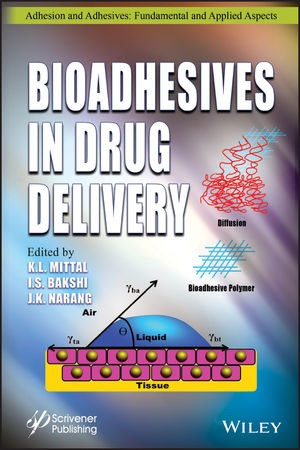
Bioadhesives in Drug Delivery
The topics covered include: Theories and mechanisms of bioadhesion; bioadhesive polymers for drug delivery applications; methods for characterization of bioadhesiveness of drug delivery systems; bioadhesive films and drug delivery applications; bioadhesive nanoparticles; and bioadhesive hydrogels and applications ocular biodhesive drug delivery systems; buccal bioadhesive drug delivery systems; gastrointestinal bioadhesive drug delivery systems ; nasal bioadhesive drug delivery systems; vaginal drug delivery systems; pulmonary bioadhesive drug delivery systems.
Bioactive Materials in Dentistry : Remineralization and Biomineralization
Addresses the use of different bioactive materials in dentistry, considering the performance of these biomaterials in the hard tissues of the tooth, and the response of the dental pulp, as well as the influence of the composition of these materials and of the individual’s systemic alterations in bioactivity and in antimicrobial activity. The several in vivo and in vitro tests to evaluate the bioactivity of a biomaterial will also be addressed.
Bioactive components of milk
Of all food products dairy foods have the most potential concerning functional foods. Therefore, there is a tremendous amount of interest in value-added milk products and the identification of components in food which have health benefits. Bioactive Components of Milk provides an overview of these derived components and their diverse activities including: the stimulation of beneficial microflora, alerting the immune system to the presence of potential pathogens and allergens, binding and eliminating toxins, etc. The book is divided into four parts. The first part focuses on bioactive milk lipid components, which very widely among mammalian species. The second part describes different aspects of biological active colostrums and milk proteins and their derivatives, with special concern on species specific effects. The third part reviews the production of recombinant human proteins in the milk of livestock animals - including ethical issues - and the aims of altering milk composition for the benefit of both the animals themselves and the consumers. The final part focuses on the influence of ruminants nutrition on the biological activity of milk.

BIM for design firms : Data rich architecture at small and medium scales
Expands on Building Information Modeling, showing its applicability to a range of design-oriented projects. It emphasizes the full impact that a data modeling tool has on design processes, systems, and the high level of collaboration required across the design team. It also explains the quantitative analysis opportunities that BIM affords for sustainable design and for balancing competing design agendas, while highlighting the benefits BIM offers to designing in 3D for construction. The book concludes with a deep look at the possible future of BIM and digitally-enhanced design.

Bilinear integrable systems : From classical to quantum, continuous to discrete ; Proceedings of the NATO Advanced Research Workshop on Bilinear Integrable Systems: From Classical to Quantum, Continuous to Discrete St. Petersburg, Russia, 15-19 September 2002
Trained as a physicistin his home university Kyushu University, Professor Hirota earned his PhD in’61 at Northwestern University with Professor Siegert in the field of “QuantumStatistical mechanics”. He wrote a widely appreciated Doctoral dissertation on“Functional Integral representation of the grand partition function”. As a youngresearcher, he entered the RCA Company in Tokyo to do research on semi-conductor plasmas. Professor Hirota was led to model the Toda lattice as a non-linear networkof ladder-type LC circuits. The self-dual case led to equations very reminiscentof the Sine-Gordon equation, with much the same features (existence of onesoliton, soliton-soliton interaction, etc)
