



الصفحة 190
الصفحة 190
Bioactive Heterocycles IV
This volume contains nine more contributions from expert researchers of the?eld, providing readers with in depth and current research results regarding therespective topics. In the?rst chapter, Flemming et al. review the chemistry, biosynthesis, metabolism and biological activities of tetrahydrocannabinol and its deri- tives. Hansch and Verma contribute to the quantitative structure-activity re- tionship (QSAR) analysis of heterocyclic topoisomerase I and II inhibitors. These inhibitors, knowntoinhibit either enzyme, actasantitumoragentsand are currently used in chemotherapy and in clinicaltrials. In the third chapter, Khan reviews some aspects of molecular modeling studies on biologically active alkaloids.
Bioactive Heterocycles II
As part of the series Topics in Heterocyclic Chemistry, this volume titled Bio- tive Heterocycles II presents comprehensive and up-to-date reviews on selected topics regarding synthetic as well as naturally occurring bioactive heterocycles. The frst chapter, "High Pressure Synthesis of Heterocycles Related to Bio- tive Molecules" by Kiyoshi Matsumoto, presents a unique high-pressure s- thetic methodology in heterocyclic chemistry. Basic principles and fruitful examples for pericyclic reactions, such as Diels-Alder reactions, 1,3-dipolar reactions, and also for ionic reactions, such as S and addition reactions, are N discussed.
Bioactive Confirmation II
Specific binding of a ligand to a receptor is a key step in a variety of biol- ical processes, such as immune reactions, enzyme cascades, or intracellular transport processes. The ligand-receptor terminology implies that the rec- tor molecule is signi?cantly larger than the ligand, and the term "bioactive conformation" usually characterizes the conformation of a ligand when it is bound to a receptor. In a more general sense, bioactive conformation applies toanymoleculeinabiologicallyrelevantboundstateregardlessofsizecons- erations. Mostofthecontributions tothisbookaddressligandsthat aremuch smaller than their receptors. X-ray crystallography and high resolution NMR spectroscopy are the two main experimental techniques used to study bioactive conformations. The- fore, the twovolumes ofthisbookcover approachesthat use either ofthetwo techniques, or a combination thereof.
Bioactive components of milk
Of all food products dairy foods have the most potential concerning functional foods. Therefore, there is a tremendous amount of interest in value-added milk products and the identification of components in food which have health benefits. Bioactive Components of Milk provides an overview of these derived components and their diverse activities including: the stimulation of beneficial microflora, alerting the immune system to the presence of potential pathogens and allergens, binding and eliminating toxins, etc. The book is divided into four parts. The first part focuses on bioactive milk lipid components, which very widely among mammalian species. The second part describes different aspects of biological active colostrums and milk proteins and their derivatives, with special concern on species specific effects. The third part reviews the production of recombinant human proteins in the milk of livestock animals - including ethical issues - and the aims of altering milk composition for the benefit of both the animals themselves and the consumers. The final part focuses on the influence of ruminants nutrition on the biological activity of milk.

Bioactive and therapeutic dental materials
Special attention has been given to bioactive materials developed to induce cells differentiation/stimulation, hard tissue formation and exert antimicrobial actions. New innovations are necessary to continue to help reinforcing existing technologies and to introduce new paradigms for treating dental disease and restoring teeth seriously compromised by caries lesions via biomimetic and more biological operative approaches. Dental bioactive materials is arguably the latest research area in dentistry and thus the amount of new research is overwhelming. However, in this day and age of evidence based practice it important for this new information to be distilled into a practical and understandable format.
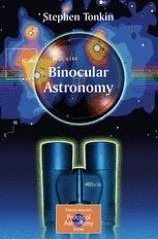
Binocular astronomy
Anyone who has used a binocular telescope or even wide-field binoculars to look at the night sky will know just how breathtakingly beautiful the view can be when you observe with both eyes. Observing galaxies and nebulae with ‘regular’ prismatic binoculars is just a beginning. Binocular eyepieces and adapters can be added to almost any commercially-made astronomical telescope, and of course specialized astronomical binoculars can be assembled or purchased complete. These range from modest instruments to giants that are basically two large telescopes mounted together. Binocular Astronomy contains everything you’ll need to know about this exciting branch of astronomical observing.

BIM in small practices : Illustrated case studies
Full of practical tips and hard-won experience, and includes pithy contributions from industry experts who identify and explore the important issues for small practices including how to get your practice started with BIM, and how it aligns to the new Plan of Work. This landmark publication will motivate small practices who are considering taking those first steps towards implementing BIM.

Bigel : An innovative drug delivery system
Bigel is a promising drug delivery system that modifies the pharmacotherapeutic characteristics of knowing active pharmaceutical ingredient (API).It is a mix between hydrogel and organogel (oleogel). The objective of the present work demonstrates the ability of bigel to overcome the disadvan- tages of both types of gels, including the limited ability to cross lipophilic barriers of the skin for hydrogels and the low patient compliance for organogels due to their stickiness and oily residues. Materials andmethods : Carbomer934, PolyvinylpyrrolidoneK 90 and Castor oil where mixed in a high shear mixer using diferent weight percentages of each. Hence,13 for mulations (BG1 to BG13) prepared by simplex mixture design modelis used to study the inuenceofafore- mentioned ingredients on appearance, dynamicviscosity, pH, stability, microscopicstructure of bigel and to understand the chemical interactions between bigel components, Fouriertrans- form infrared (FTIR) analysis will bereported.
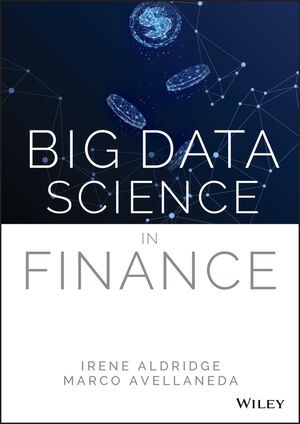
Big Data Science in Finance
Explains the mathematics, theory, and methods of Big Data as applied to finance and investing Examines the mathematics, theory, and practical use of the revolutionary techniques that are transforming the industry. Designed for mathematically-advanced students and discerning financial practitioners alike, this energizing book presents new, cutting-edge content based on world-class research taught in the leading Financial Mathematics and Engineering programs in the world. Marco Avellaneda, a leader in quantitative finance, and quantitative methodology author Irene Aldridge help readers harness the power of Big Data. Provides a complete account of Big Data that includes proofs, step-by-step applications, and code samples Explains the difference between Principal Component Analysis (PCA) and Singular Value Decomposition (SVD) Covers vital topics in the field in a clear, straightforward manner Compares, contrasts, and discusses Big Data and Small Data Includes Cornell University-tested educational materials such as lesson plans, end-of-chapter questions, and downloadable lecture slides
Big Data in Energy Economics
Combines energy economics and big data modeling analysis in energy conversion and management and comprehensively introduces the relevant theories, key technologies, and application examples of the smart energy economy. With the help of time series big data modeling results, energy economy managers develop reasonable and feasible pricing mechanisms of electricity price and improve the absorption capacity of the power grid. In addition, they also carry out scientific power equipment scheduling and cost–benefit analysis according to the results of data mining, so as to avoid the loss caused by accidental damage of equipment. Energy users adjust their power consumption behavior through the modeling results provided and achieve the effect of energy saving and emission reduction while reasonably reducing the electricity expenditure.
Big Data in Context : Legal, Social and Technological Insights
Sheds new light on a selection of big data scenarios from an interdisciplinary perspective. It features legal, sociological and economic approaches to fundamental big data topics such as privacy, data quality and the ECJ’s Safe Harbor decision on the one hand, and practical applications such as smart cars, wearables and web tracking on the other. Addressing the interests of researchers and practitioners alike, it provides a comprehensive overview of and introduction to the emerging challenges regarding big data.All contributions are based on papers submitted in connection with ABIDA (Assessing Big Data), an interdisciplinary research project exploring the societal aspects of big data and funded by the German Federal Ministry of Education and Research.
Big Data and Global Trade Law
Explores the relevance of global trade law for data, big data and cross-border data flows. Contributing authors from different disciplines including law, economics and political science analyze developments at the World Trade Organization and in preferential trade venues by asking what future-oriented models for data governance are available and viable in the area of trade law and policy. The collection paints the broad picture of the interaction between digital technologies and trade regulation as well as provides in-depth analyses of critical to the data-driven economy issues, such as privacy and AI, and different countries' perspectives.
Big Data : An Art of Decision Making
Manipulating and processing masses of digital data is never a purely technical activity. It requires an interpretative and exploratory outlook - already well known in the social sciences and the humanities - to convey intelligible results from data analysis algorithms and create new knowledge. Big Data is based on an inquiry of several years within Proxem, a software publisher specializing in big data processing. The book examines how data scientists explore, interpret and visualize our digital traces to make sense of them, and to produce new knowledge. Grounded in epistemology and science and technology studies, Big Data offers a reflection on data in general, and on how they help us to better understand reality and decide on our daily actions.
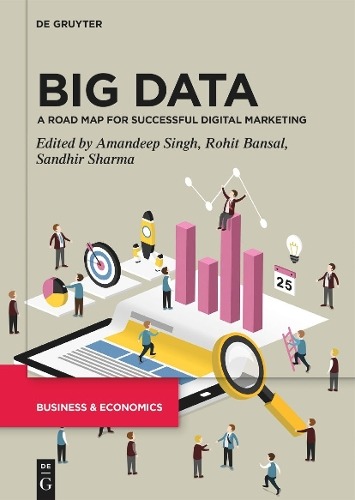
Big Data : A Road Map for Successful Digital Marketing
Explores recent trends in the use of big data to predict consumer behavior, strategies to engage online customers, integration of big data with other data sources, and its applications in social media analytics, mobile marketing, search engine optimization and customer relationship management.

BGA International conference on foundations : Innovations, observations, design and practice ; Proceedings of the international conference organised by British Geotechnical Association and held in Dundee, Scotland on 2 – 5th September 2003
Although foundation engineering is recognised as a mature discipline with geotechnics, the diversity of applications and studies evident in this book demonstrates that the field is still developing and will continue to provide challenges for engineers for many years.
Beyond the limits to growth : New ideas for sustainability from Japan
This book offers an optimistic view of the future and provides a road map for societies to get there. Drawing upon extensive research and many years as a thought leader in environmental and sustainability issues in Japan and internationally, Hiroshi Komiyama analyzes the most pressing challenges to the attainment of sustainability of economically advanced nations and argues forcefully for Japan to lead them out of the present dilemma through active promotion of creative consumer and societal demand. He shows how an active industry–government–academic partnership can provide the environment needed to promote such new creative demand and illustrates its potential through presentation of a Platinum Society Network that was launched on a regional basis in Japan in 2010 to facilitate the solution of common issues through the exchange of information and ideas.

Beyond the apparent Banality of the mathematics classroom
New research in mathematics education deals with the complexity of the mathematics’ classroom. The classroom teaching situation constitutes a pertinent unit of analysis for research into the ternary didactic relationship which binds teachers, students and mathematical knowledge. The classroom is considered as a complex didactic system, which offers the researcher an opportunity to gauge the boundaries of the freedom that is left with regard to choices about the knowledge to be taught and the ways of organizing the students’ learning, while giveing rise to the study of interrelations between three main elements of the teaching process the: mathematical content to be taught and learned, management of the various time dimensions, and activity of the teacher who prepares and manages the class, to the benefit of the students' knowledge and the teachers' own experience.

Beyond Safety Training : Embedding Safety in Professional Skills
Investigates why, despite more and more resources devoted to safety training, expectations are not entirely met, particularly in the industrial sectors that have already achieved a high safety level. It not only reflects the most precious viewpoints of experts from different disciplines, different countries, with experiences in various industrial fields at the cutting edge of theories and practices in terms of safety, professionalization and their relationships. It also consolidates the positioning of the Foundation for an Industrial Safety Culture, highlighting what is currently considered at stake in terms of safety training, taking into account the system of constraints the different stakeholders are submitted to. It reports some success stories as well as elements which could explain the observed plateau in terms of outcome. It identifies some levers for evolution for at-risk industry and outlines a possible research agenda to go further with experimental solutions.

Beyond Kyoto : A new global climate certificate system : Continuing Kyoto commitsments or a global ´Cap and Trade´ scheme for a sustainable climate policy?
This book shows how humankind can ‘prevent dangerous interference with the c- mate system’ without dangerous interference with the global economic system. In the two underlying studies on behalf of the Ministry of Environment and Transport of i the German federal state of Baden-Württemberg, the results have been elaborated through scientific evaluation of different climate protection systems and intensive developmental work on an efficient climate protection system. The results will be presented in nine chapters according to the following nine basic R&D steps: 1. Quantifying the ‘ultimate climate objective’ of the world community in order ‘to prevent dangerous interference with the climate system,’ thus achieving climate sustainability; 2. Development of a comprehensive standard system for evaluating the prospect of success for different climate protection systems; 3. Based on this scientific standard system, evaluation of the current Kyoto system and of the most important proposals for ‘incremental regime evolution’ of the Kyoto system. Unfortunately, it must be noted that these systems are incapable of achi- ing climate sustainability; 4. Evaluating three proposals for ‘structural regime change’ of the Kyoto system. Following this objective evaluation process and numeric comparison of the diff- ent proposals, 5. Description of the eight basic elements of GCCS and its in-depth ‘critical asse- ment;’ 6.

Beyond global food supply chains : Crisis, disruption, regeneration
Through a set of incisive essays, this incredibly timely book shows how much the COVID-19 pandemic has exposed both vulnerabilities and opportunities - for (racial) capitalism and its discontents alike to intervene in food supply chains. A most welcome publication! This book takes the upheaval of the global COVID-19 pandemic as a springboard from which to interrogate a larger set of structural, environmental and political fault lines running through the global food system. In a context in which disruptions to the production, distribution, and consumption of food are figured as exceptions to the smooth, just-in-time efficiencies of global supply chains, these essays reveal the global food system as one that is inherently disruptive of human lives and flourishing, and of relationships between people, places, and environments. The pandemic thus represents a particular, acute moment of disruption, offering a lens on a deeper, longer set of systemic processes, and shining new light on transformational possibilities.
