



الصفحة 19
الصفحة 19
Artificial neural networks : Formal Models and Their Applications – ICANN 2005 ; 15th International Conference, Warsaw, Poland, September 11-15, 2005, Proceedings, Part II
The second volume contains 162 contributions related to Formal Models and their Applications and deals with new neural network models, supervised learning algorithms, ensemble-based learning, unsupervised learning, recurent neural networks, reinforcement learning, bayesian approaches to learning, learning theory, artificial neural networks for system modeling, decision making, optimalization and control, knowledge extraction from neural networks, temporal data analysis, prediction and forecasting, support vector machines and kernel-based methods, soft computing methods for data representation, analysis and processing, data fusion for industrial, medical and environmental applications, non-linear predictive models for speech processing, intelligent multimedia and semantics, applications to natural language processing, various applications, computational intelligence in games, and issues in hardware implementation.

Artificial neural networks – ICANN 2007 ; 17th International Conference, Porto, Portugal, September 9-13, 2007, Proceedings, Part I
This book contains learning theory, advances in neural network learning methods, ensemble learning, spiking neural networks, advances in neural network architectures neural network technologies, neural dynamics and complex systems, data analysis, estimation, spatial and spatio-temporal learning, evolutionary computing, meta learning, agents learning, complex-valued neural networks, as well as temporal synchronization and nonlinear dynamics in neural networks.
Artificial life models in software
Artificial Life Models in Software presents software tools, environments and realities dealing with creation, imitation and analysis of artefactual, virtual and living forms, written by those who personally design and produce software, hardware and art installations in artificial life, simulated complex systems and virtual worlds. This timely volume offers a nearly exhaustive overview and original analysis of major non-profit artificial life software packages. The carefully selected topics include: · simulation of real and imaginary life forms and their evolution · self-organization · emergent behaviours · swarm intelligence · evolutionary robotics · agent-based simulations · adaptive, complex and biologically inspired ecosystems · creative computer art There has long been a need within the academic and research community for an informal introduction and guidance to modern software tools for modelling and simulation of life-like phenomena – Artificial Life Models in Software fills this gap and provides invaluable information to both professional and amateur readers, offering detailed reviews of contemporary software for artificial life.

Artificial intelligence in medicine ; 10th conference on artificial intelligence in medicine, AIME 2005, Aberdeen, UK, July 23-27, 2005, Proceedings
This book constitutes the refereed proceedings of the 10th Conference on Artificial Intelligence in Medicine in Europe, AIME 2005, held in Aberdeen, UK in July 2005. The 35 revised full papers and 34 revised short papers presented together with 2 invited contributions were carefully reviewed and selected from 148 submissions. The papers are organized in topical sections on temporal representation and reasoning, decision support systems, clinical guidelines and protocols, ontology and terminology, case-based reasoning, signal interpretation, visual mining, computer vision and imaging, knowledge management, machine learning, knowledge discovery, and data mining.
Arthropod Diversity and Conservation
Despite their enormous bulk and complexity of architecture, plants make up only around a quarter of a million of the 8 million or so species on Earth. The major components of biodiversity, instead, are the smaller, largely unseen, silent majority of invertebrates – most of which are arthropods. Vertebrates, a mere blip on the biotic horizon, are elevated in importance in the bigger scheme of things only by the human psyche. This collection of more than 30 peer-reviewed papers focuses on the diversity and conservation of arthropods, whose species inhabit virtually every recess and plane – and feature somewhere in virtually every food web – on the planet. Highlighting issues ranging from large-scale disturbance to local management, and from spatial heterogeneity to temporal patterns, these papers reflect some of the most exciting new research taking place today – and in some of the most biodiverse corners of the planet.
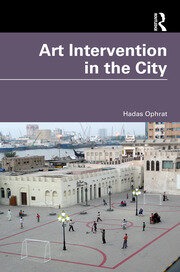
Art Intervention in the City
This book focuses on the phenomenon of art intervention—an expression of local initiatives by artists, collectives, and art centers wishing to influence the design of the space or make a change in its lifestyle.
Arnheim, Gestalt and Art : A Psychological Theory
The book discovers an unappreciated unity to Arnheim’s thinking. Not content to simply summarize Arnheim’s theory, however, Arnheim, Art, and Gestalt goes on to enrich (and occasionally question) Arnheim’s findings with the contemporary results of gestalt-theoretical research from around the world, but especially in Italy and Germany. The result is a workable overview of the psychology of art with bridges built to contemporary research, making Arnheim’s approach living and sustainable.
Arguing on the Toulmin model : New essays in argument analysis and evaluation
In The Uses of Argument Stephen Toulmin proposed a new model for the layout of arguments, with six components: claim, data, warrant, qualifier, rebuttal, backing. Toulmin’s model has been appropriated, adapted and extended by researchers in the fields of speech communications, philosophy and artificial intelligence. The volume aims to bring together the best contemporary reflection in these fields on the Toulmin model and its current appropriation.
Arctic Alpine ecosystems and people in a changing environment
This book addresses the significant environmental changes experienced by high latitude and high altitude ecosystems at the beginning of the 21st c- tury. Increased temperatures and precipitation, reduction in sea ice and glacier ice, the increased levels of UV-radiation and the long-range tra- ported contaminants in arctic and alpine regions are stress factors that challenge terrestrial and aquatic ecosystems. The large natural variation in the physical parameters of these extreme environments is a key factor in structuring the biodiversity and biotic productivity, and the effect of the new stress factors can be critical for the population structures and the - teraction between species. These changes may also have socio-economic effects if the changes affect the bio-production, which form the basis for the marine and terrestrial food chains. The book is uniquely multidisciplinary and provides examples of va- ous aspects of contemporary environmental change in arctic and alpine - gions. The 21 chapters of the book are organised under the fields of •Climate change and ecosystem response, •Long range transport of poll- ants and ecological impacts, and •UV radiation and biological effects, each also including aspects of the •Socio-economic effects of environmental change. The introductory chapter presents and explains the internal c- nection and integration of all chapters.
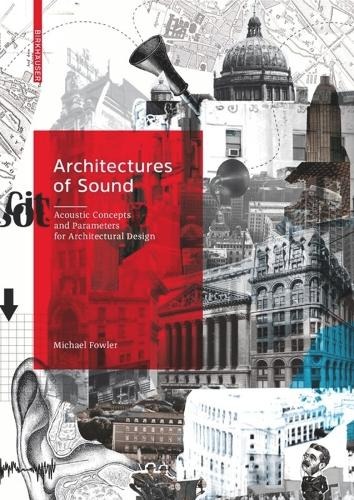
Architectures of sound
Architects are used to designing visually. In order to expand their basic design tools, this book explores the interactions between sound, space, hearing, and architecture. To this end, the author uses contemporary and historic buildings and projects, but also fictional, philosophical, and theoretical approaches – the idea is not only to define sound as a source, but also as an instrument of architectural space.
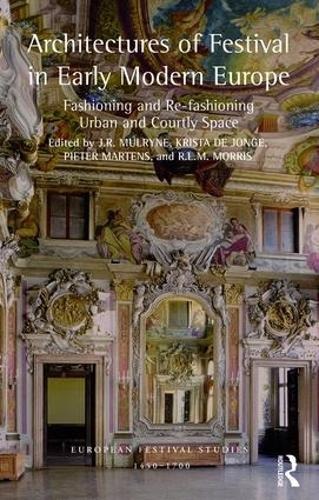
Architectures of festival in early modern Europe : Fashioning and re-fashioning urban and courtly space
Draws on up-to-date research by a Europe-wide group of academic scholars and museum and gallery curators to provide a unique, intellectually-stimulating and beautifully-illustrated account of temporary architecture created for festivals of the sixteenth and seventeenth centuries, together with permanent architecture pressed into service for festival occasions across major European locations including Italian, French, Austrian, Scottish and German.
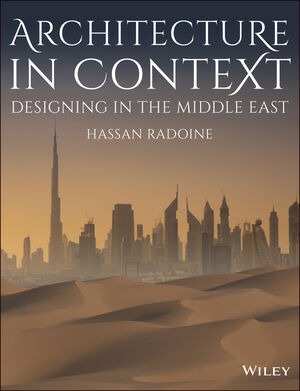
Architecture in context : Designing in the Middle East
Provides a foundation for understanding the critical context of architecture and design in this region. It does this by: presenting a practical overview of architectural know-how in the Middle East, and its potential for cultivating a sense of place introducing local architectural vocabularies and styles, and how they can still be reactivated in contemporary design exploring the cultural and contextual meaning of forms as references that may influence contemporary architecture discussing important discourses and trends in architecture that allow a rethinking of the current global/local dichotomy.
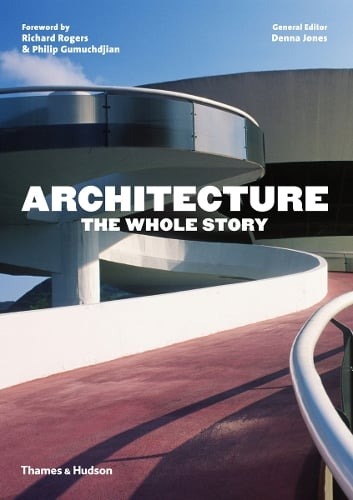
Architecture : the whole story
From ancient and classical masterpieces to contemporary, cutting-edge buildings, architecture has defined our world throughout history. Drawing its examples from all around the globe, Architecture: The Whole Story is a richly illustrated and comprehensive account of the architects, plans, designs and constructions that over the centuries have most engaged our minds, inspired our imaginations and raised our spirits. For everyone who has ever wished for greater insight into the art of building design, Architecture: The Whole Story provides the analytical tools to appreciate to the fullest the variety of architectural achievement and the built environment in the world.
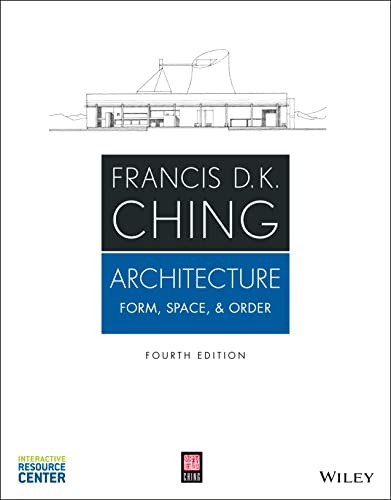
Architecture : Form, Space, and Order ; 4th ed.
The revered architectural reference, updated with contemporary examples and interactive 3D modelsAn access card with redemption code for the online Interactive Resource Center is included with all new, print copies or can be purchased separately.
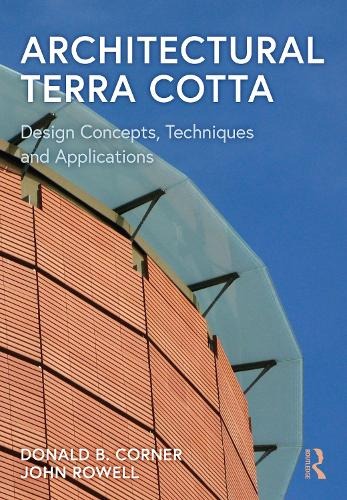
Architectural Terra Cotta : Design concepts, techniques and applications
Examines the evolution of terra cotta and prepares architects and builders to make new, creative uses of the timeless material. Terra cotta is among the oldest of manufactured building products, yet it has once again become a material of choice in contemporary façade design. From the walls of Babylon to high performance rainscreens, terra cotta claddings have repeatedly proven to be technically superior and aesthetically triumphant. Understanding the evolution of terra cotta prepares architects to add new, creative chapters to a rich history.

Architectural styles : A visual guide
A guide to architectural styles across the centuries and around the world. Modeled after an architect's plein air sketchbook, the volume features hundreds of detailed drawings by esteemed architectural illustrator Robbie Polley alongside incisive and informative descriptions. This unique guidebook takes readers from Europe and the Americas to Egypt, China, and India. It covers a host of historical and contemporary architectural styles, from ancient and classical to Pre-Columbian, Romanesque, Renaissance, Palladian, art nouveau, Brutalist, and biomorphic. It describes the histories and characteristics of the building traditions of each era and region of the world, and looks at key architectural elements such as buttresses, spandrels, curtain walls, and oculi. The book also includes a section on building parts-from domes and columns to towers, arches, roofs, and vaulting-along with a detailed glossary and bibliography. Comprehensive and authoritative, 'Architectural Styles' is an essential resource for architects and designers and a must-have illustrated guide for anyone interested in architecture or drawing.
Architectural scale models in the digital age : Design, representation and manufacturing
Complex geometric forms generated using virtual media can be tested and validated only by means of physical models, which also make it possible to assess their practical application. The complexity of contemporary architectural design requires the mastery of new methods of producing scale models, which opens a new chapter in the field of modeling, and is the focus of this book. Along with the traditional methods that provide the basis for modeling, this book presents the principles of digital NURBS modeling, parametric modeling, digital modeling support, and model creation, complete with a number of tutorials, practical advice and examples found in architectural practice today.
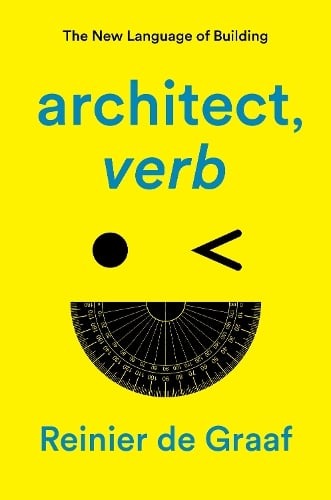
Architect, verb : the new language of building
Leading architect Reinier de Graaf De Graaf punctures the myths behind the debates on what contemporary architecture is, with wit and devastating honesty. Architecture, it seems, has become too important to leave to architects. No longer does it suffice to judge a building solely by its appearance, it must be measured, and certified. When architects talk about "Excellence," "Sustainability," "Well-being," "Liveability," "Placemaking," "Creativity," "Beauty" and "Innovation" what do they actually mean? In Architect, Verb, De Graff dryly skewers the doublespeak and hot air of an industry in search of an identity in the 21st century
Approaches to Metaphysics
Today, when systematic philosophy - and reason itself - are challenged both outside of and within philosophy, is it still possible to do metaphysics? This volume provides a broad perspective on contemporary approaches to the nature and the fundamental questions of metaphysics. Drawing on scholars from continental Europe, Asia, Canada, the United States, and Great Britain, and representing a variety of philosophical cultures and traditions, this volume surveys and extends work in metaphysics and its implications for broader philosophical concerns (e.g., in ethics and social philosophy, in mathematics and logic, and in epistemology). It also addresses such questions as the role of history and historicity in undertaking metaphysics, the nature of metaphysics, the priority of metaphysics over epistemology, and the challenges of empiricism and postmodernism.

Antimicrobial Resistance and Implications for the Twenty-First Century
This new volume of the Emerging Infectious Diseases of the 21st Century series is a collection of chapters by leading world authorities on antimicrobial resistance of common, important bacterial, viral and fungal pathogens. This unique book should be in the possession of anyone interested in the field of infectious diseases, microbiology, infection control & public health. The chapters, which are written by reknown experts, provide a wealth of contemporary information on microbiology, molecular mechanisms, epidemiology, clinical relevance, treatment, and prevention
