



الصفحة 19
الصفحة 19

Mouse Models of Human Blood Cancers : Basic Research and Pre-clinical Applications
Although it remains an open question among some people whether mice and humans are similar in disease development, the laboratory mouse has emerged as the preeminent animal model for human diseases. This is underscored by the recently completed mouse and human genome projects, which have revealed that mice and humans share the vast majority of their genes, and thus get many of the same diseases, and for the same reasons. Emphasizing why mouse models are valuable in vivo systems for understanding disease mechanisms and developing therapeutic strategies for human blood cancers, "Mouse Models of Human Blood Cancers: Basic Research and Pre-clinical Applications," edited by Shaoguang Li, aims on presenting thorough analyses of the pathological features and the molecular bases of several major types of blood cancer and to describe translational research using mouse cancer models.
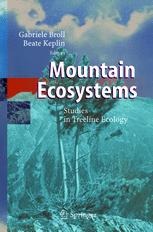
Mountain Ecosystems : Studies in Treeline Ecology
This volume focuses on interaction between vegetation, relief, climate, soil and fauna in the treeline ecotone, and the effects of climate change and land use in North America and Europe.

Motion in Games ; 1st International Workshop, MIG 2008, Utrecht, The Netherlands, June 14-17, 2008. Revised Papers
This book constitutes the thoroughly refereed post-workshop proceedings of the First International Workshop on Motion in Games, held in Utrecht, The Netherlands, during June 14-17, 2008, in collaboration with the NLGD Festival of Games.The 24 revised papers presented during the workshop cover topics on crowd simulation; virtual humans; motion synthesis; interfaces; navigation and steering; and facial and behavioral animation.

Mortality and Maldevelopment : Part I : Congenital cardiovascular malformations
The most frequent of them all are the many types of malformations of the cardiovascular system, the heart and its blood vessels.Study of these conditions during the twentieth century took many forms, revolving about examination and analysis of their causes, genetic, nongenetic, and complex. To aid in unraveling the complexities of this causation, various influences on their frequency are considered, among them social conditions, maternal health, birthweight, newborn maturity. And of course the known and possible environmental bases of their occurrence are fully described.

Morphology, Molecules, Evolution and Phylogeny in Polychaeta and Related Taxa; Proceedings of two ISSI Workshops, 18–22 October 1999 and 15–19 May 2000, Bern, Switzerland
Recently, evidence has been accumulated which shows that some of the groups formerly regarded as independent "phyla" such as Pogonophora (now recognized as Siboglinidae), Echiura, Myzostomida and perhaps Sipuncula, are most probably nothing else than greatly modified Annelida. The extreme morphological diversity found especially in Polychaeta displays the plasticity of a simple segmented organisation that basically is nothing else but a serial repetition of identical units. Thus, annelids are highly important to our understanding of fundamental questions about morphological and adaptive diversity, as well as clarifying evolutionary changes and phylogenetic relationships. The book aims to summarize our knowledge on Polychaetes polychaetes and their allies and gives an overview of recent advances gained by studies that employed conventional and modern methods plus, increasingly and importantly, the use of molecular markers and computer-assisted kinship analyses. It also reflects the state of art in polychaete sciences and presents new questions and controversies. As such it will significantly influence the direction of research on Polychaeta and their related taxa.

More Joel on software : Further toughts on diverse and occasionally related matters that will prove of interest to software developers, designers, and managers, and to those who, whether by good fortune or III Luck, work with them in some capacity
Joel Spolsky started his weblog in March 2000 in order to offer his insights, based on years of experience, on how to improve the world of programming. This weblog has become infamous among the programming world, and is linked to more than 600 other web sites and translated into 30+ languages! Spolsky's extraordinary writing skills, technical knowledge, and caustic wit have made him a programming guru. With the success of Joel on Software, there has been a strong demand for additional gems and advice, and this book is the answer to those requests. Containing a collection of all–new articles from the original, More Joel on Software has even more of an edge than the original, and the tips for running a business or managing people have far broader application than the software industry.

MooTools Essentials : The Official MooTools Reference for JavaScript™ and Ajax Development
Mootools is a light, modular JavaScript framework that makes adding Ajax, animations, and interactive elements to your site a breeze. But it's more than fancy effects and shortcuts; Mootools enhances the JavaScript language and makes writing clean, object–oriented code almost pleasant. Unlocking the power of Mootools, and therefore JavaScript, isn't that hard, but knowing where to start can be.

Monographs in contact allergy ; Vol.4 : Systemic drugs
Presents : Identification section; Occupational allergic contact dermatitis; and Cutaneous adverse drug reactions from systemic drugs caused by type IV (delayed-type) hypersensitivity, as shown by positive patch tests (e.g. maculopapular eruption, acute generalized exanthematous pustulosis [AGEP], symmetrical drug-related intertriginous and flexural exanthema [SDRIFE], fixed drug eruption, drug reaction with eosinophilia and systemic symptoms [DRESS], and photosensitivity). Separate chapters present an overview of the spectrum of allergic cutaneous drug reactions, diagnostic tests, immediate contact reactions (contact urticaria), and systemic drugs that have acquired delayed-type hypersensitivity only by cross-reactivity.

Monograph of the Urostyloidea (Ciliophora, Hypotricha)
This monograph is the second of a series treating the hypotrichs, a major part of the spirotrichous ciliates. The urostyloids are characterised by a zigzag-arrangement of the ventral cirri. Like the first part of the series, the Oxytrichidae, it summarises the morphological, morphogenetic, faunistic, and ecological data from the past 230 years, scattered in more than 1300 references from all over the world. Dichotomous keys lead to 36 genera and subgenera comprising 153 species illustrated by more than 2100 figures, including original ones. The treatise offers taxonomists, cell biologists, and ecologists a thorough and up-to-date revision because for each species a detailed list of synonyms, a discussion of the nomenclature and systematics, and an extensive description of the morphology and ecology, including almost all published faunistic records, are provided. With the monographs of the Urostyloidea and the Oxytrichidae the interested scientist can identify more than 320 species of hypotrichs, which are an important component of the eukaryotic microbial life in limnetic, marine, and terrestrial habitats.

Monoaminergic modulation of cortical excitability
Monoaminergic Modulation of Cortical Excitability serves as an integrative and comprehensive comparison of the diverse and complex modulatory action of dopamine, noradrenaline, and serotonin receptors in the cortex. The volume is organized into several sections offering a broad spectrum of opinions on how the monoamine systems affect cortical function from a cellular/sub-cellular level to a system level. The complexity of these interactions are discussed in light of recent data showing how disruption of these systems dramatically affects the memory formation and information processing in the cortex.

Monitors of Organic Chemicals in the Environment : Semipermeable Membrane Devices
Modern, industrialized societies depend on a wide range of chemical substances such as fuels, plastics, biocides, pharmaceuticals and detergents for maintaining the high quality lifestyle to which we aspire. The challenge is to ensure that while we enjoy the benetsof thes esubstances,theirinevitablereleaseintoourbiosphere does not result in unwanted human and ecosystem exposures, and the risk of - verse effects. One response to this challenge has been the extensive effort to detect and analyze or monitor a multitude of chemicals in a variety of environmental media, especially toxic organic compounds in air, water, soils and biota. An extensive literature on these traditional techniques has evolved over the years.

Monitoring, Security, and Rescue Techniques in Multiagent Systems
This volume contains extended and improved versions of selected contributions presented at the International Workshop "Monitoring, Security and Rescue Techniques in Multiagent Systems".

Monitoring and Modelling Lakes and Coastal Environments
Habitat environments of lakes and coastal wetlands are deteriorating due to their exploitative use and improper management. As rapid development and population growth continue in coastal areas, environmental degradation and over exploitation will further erode the biodiversity and undermine the productivity of these unique ecosystems. An earnest attempt has been made in the present book to find ways for restoration, conservation and management of lakes and coastal wetlands.

Money, Banking, and Financial Markets : A Modern Introduction to Macroeconomics
Introduction to money, banking, and financial markets, with a special emphasis on the importance of confidence and trust in the macroeconomic system. It also presents the theory of endogenous money creation, in contrast to the standard money multiplier and fractional reserve explanation found in other textbooks. The U.S. economy and financial institutions are used to explain the theoretical and practical framework, with international examples weaved in throughout the text. It covers key topics including monetary policy, fiscal policy, accounting principles, credit creation, central banks, and government treasuries. Additionally, the book considers the international economy, including exchange rates, the Eurozone, Chinese monetary policy, and reserve currencies. Taking a broad look at the financial system, it also looks at banking regulation, cryptocurrencies, real estate, and the oil and gold commodity markets. Students are supported with chapter objectives, key terms, and problems.

Money and debt : The public role of banks
This book from the Netherlands Scientific Council for Government Policy explains how money creation and banking works, describes the main problems of the current monetary and financial system and discusses several reform options. This book systematically evaluates proposals for fundamental monetary reform, including ideas to separate money and credit by breaking up banks, introducing a central bank digital currency, and introducing public payment banks. By drawing on these plans, the authors suggest several concrete reforms to the current banking system with the aim to ensure that the monetary system remains stable, contributes to the Dutch economy, fairly distributes benefits, costs and risks, and enjoys public legitimacy. This systematic approach, and the accessible way in which the book is written, allows specialized and non-specialised readers to understand the intricacies of money, banking, monetary reform and financial innovation, far beyond the Dutch context.
Molecular Techniques in the Microbial Ecology of Fermented Foods
Molecular Methods and Microbial Ecology of Fermented Foods presents the latest findings in microbial ecology as determined by the application of molecular methods, reports the most recent advances in the field, and offers details on primers and protocols most suitable for studying specific food ecosystems. It provides analytical details and suggestions useful in research, as well as evaluation of the criticism of using novel approaches in food fermentation microbiology. This book also discusses new insights drawn from the use of bio-molecular techniques in the microbial ecology of fermented foods.

Molecular Targeting in Oncology
In Molecular Targeting in Oncology, authors present an overview of the development of targeted therapies for the treatment of cancer with an emphasis on clinical application. The volume covers the complexity of the rapidly developing area of targeted therapies for the treatment of patients with cancer and is structured in a way so readers may begin with chapters that most interest them and work through the rest of the chapters in the order of their choice. The volume is divided into five sections that cover the most important elements of drug development. The first section focuses on approaches using targeted therapies to inhibit cell growth. The second section describes how clinicians are evaluating targeted therapies in specific organ systems. The third section illustrates how various classes of pharmacologic and immunologic agents are developed for individual molecular targets. The fourth section details new drugs that have novel mechanisms of action. The final section looks to the future of targeted therapeutics and includes chapters on appropriate patient selection, use of combination therapy, dealing with tumor cell resistance, and more. Comprehensive and cutting-edge, Molecular Targeting in Oncology is an essential reference for those working in the field.
Molecular Sensors for Cardiovascular Homeostasis
This book reveals state-of-the-science of several newly discovered ion channel families and their role in the pathogenesis of cardiovascular diseases.It offers comprehensive and up-to-date information for a deeper understanding of the relationship between macro- and micro-environments, ion channels, and pathophysiological responses, and for developing novel therapies for treating devastating cardiovascular illnesses.

Molecular Neurosurgery with Targeted Toxins
Focuses on the highly successful use of the immunotoxins, 192 IgG-saporin and ME20.4-saporin, to lesion the cholinergic basal forebrain in order to model the behavior, anatomy, physiology, and pharmacology of Alzheimer's disease in animals. Also discussed are the uses of anti-DBH-saporin immunotoxin to make remarkably selective lesions of catecholaminergic neurons, hypocretin-saporin that can produce narcoleptic animals, and other saporin conjugates, such as neuropeptide-saporin conjugates for pain research and cholera toxin B chain-saporin to produce a model of central nervous system demyelination. Overview perspectives and, in some cases, more practical details are provided that allow the reader to appreciate exactly what is involved in using these agents. Both practical and theoretical, Molecular Neurosurgery With Targeted Toxins provides readers with not only the background to understand these techniques, but also numerous real-life examples that can be readily adapted to new purposes and an ever-increasing number of new targeted toxins.
Molecular Mechanisms of Plant and Microbe Coexistence
Molecular Mechanisms of Plant and Microbe Coexistence presents studies on the complex and manifold interactions of plants and microbes at the population, genomics and proteomics level. The role of soil microbial diversity in enhancing plant health and plant microbe beneficial symbioses is discussed. Microbial communities are shown in the light of evolution. Main topics include genome coexistence and the functional genomics and proteomics of plant-associated microbes, which could form the basis for new environmentally benign strategies to combat infectious plant diseases and regulate plant growth. Further chapters focus on the role of signaling during the different stages of plant microbe coexistence, in symbiotic or pathogenic relationships, in quorum sensing and plant viral infections. Methods for studying the interactions in the root zone complement the book, which will certainly be of relevance in the practical application to agriculture, food security and for maintaining the balance of our ecosystems.
