



الصفحة 19
الصفحة 19

KI 2007: Advances in Artificial Intelligence ; 30th Annual German Conference on AI, KI 2007, Osnabrück, Germany, September 10-13, 2007, Proceedings
The 30th Annual German Conference on Artifcial Intelligence (KI-2007) took place in the University of Osnabru ¨ck, September 10–13, 2007. Some topic clusters are apparent in the overall conference program, which re?ect recent trends in AI research, convolved with foci of work in Germany and Europe.
KI 2006 ; 29th Annual German Conference on AI, KI 2006, Bremen, Germany, June 14-17, 2006, Proceedings
Constitutes the thoroughly refereed post-proceedings of the 29th Annual German Conference on Artificial Intelligence, KI 2006, held in Bremen, Germany, in June 2006. This was co-located with RoboCup 2006, the innovative robot soccer world championship, and with ACTUATOR 2006, the 10th International Conference on New Actuators.

KI 2005 : Advances in Artificial Intelligence ; 28th Annual German Conference on AI, KI 2005, Koblenz, Germany, September 11-14, 2005, Proceedings
Constitutes the refereed proceedings of the 28th Annual German Conference on Artificial Intelligence, KI 2005, held in Germany. This work presents papers organized in topical sections on knowledge representation and reasoning, machine learning, diagnosis, neural networks, planning, robotics, and cognitive modeling, philosophy, natural language.
Kernel Methods for Machine Learning with Math and Python: 100 Exercises for Building Logic
Addresses the fundamentals of kernel methods for machine learning by considering relevant math problems and building Python programs. The book’s main features are as follows: Includes 100 exercises, which have been carefully selected and refined. As their solutions are provided in the main text, readers can solve all of the exercises by reading the book. / The mathematical premises of kernels are proven and the correct conclusions are provided, helping readers to understand the nature of kernels. / Source programs and running examples are presented to help readers acquire a deeper understanding of the mathematics used. / Once readers have a basic understanding of the functional analysis topics covered in Chapter 2, the applications are discussed in the subsequent chapters. Here, no prior knowledge of mathematics is assumed. / Considers both the kernel for reproducing kernel Hilbert space (RKHS) and the kernel for the Gaussian process; a clear distinction is made between the two.
Kernel Based Algorithms for Mining Huge Data Sets : Supervised, Semi-supervised, and Unsupervised Learning
"Kernel Based Algorithms for Mining Huge Data Sets" is the first book treating the fields of supervised, semi-supervised and unsupervised machine learning collectively. The book presents both the theory and the algorithms for mining huge data sets by using support vector machines (SVMs) in an iterative way. It demonstrates how kernel based SVMs can be used for dimensionality reduction (feature elimination) and shows the similarities and differences between the two most popular unsupervised techniques, the principal component analysis (PCA) and the independent component analysis (ICA).

Computational and Ambient Intelligence ; 9th International Work-Conference on Artificial Neural Networks, IWANN 2007, San Sebastián, Spain, June 20-22, 2007, Proceedings
This biennial meeting focuses on the foundations, theory, models and applications of systems inspired by nature (neural networks, fuzzy logic and evo- tionary systems).These new computational techniques are used in applications that try to bring a new situation of well-being to the user. The conjunction of a more and more miniaturized hardware together with the growing computational intelligence embodied in this hardware leads us towards fully integrated embedded systems-on- chip and opens the door for truly ubiquitous electronics.
Classification and Modeling with Linguistic Information Granules : Advanced Approaches to Linguistic Data Mining
Many approaches have already been proposed for classification and modeling in the literature. These approaches are usually based on mathematical mod els. Computer systems can easily handle mathematical models even when they are complicated and nonlinear (e.g., neural networks). On the other hand, it is not always easy for human users to intuitively understand mathe matical models even when they are simple and linear. This is because human information processing is based mainly on linguistic knowledge while com puter systems are designed to handle symbolic and numerical information. A large part of our daily communication is based on words. We learn from various media such as books, newspapers, magazines, TV, and the Inter net through words. We also communicate with others through words. While words play a central role in human information processing, linguistic models are not often used in the fields of classification and modeling. If there is no goal other than the maximization of accuracy in classification and modeling, mathematical models may always be preferred to linguistic models. On the other hand, linguistic models may be chosen if emphasis is placed on interpretability.
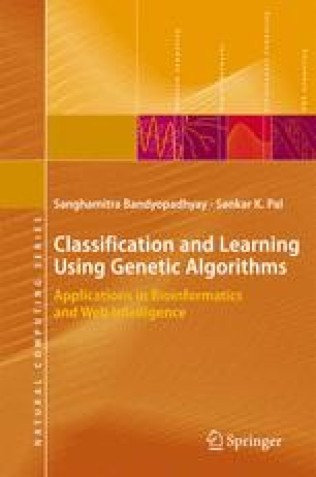
Classification and Learning Using Genetic Algorithms : Applications in Bioinformatics and Web Intelligence
This book provides a unified framework that describes how genetic learning can be used to design pattern recognition and learning systems. The book is unique in the sense of describing how a search technique, the genetic algorithm, can be used for pattern classification mainly through approximating decision boundaries, and it demonstrates the effectiveness of the genetic classifiers vis-à-vis several widely used classifiers, including neural networks. It provides a balanced mixture of theories, algorithms and applications, and in particular results from the bioinformatics and Web intelligence domains.

Chinese Computational Linguistics ; 19th China National Conference, CCL 2020, Hainan, China, October 30 – November 1, 2020, Proceedings
This book constitutes the proceedings of the 19th China National Conference on Computational Linguistics, CCL 2020, held in Hainan, China, in October/November 2020. The 32 full and 2 short papers presented in this volume were carefully reviewed and selected from 99 submissions. They were organized in topical sections named: fundamental theory and methods of computational linguistics; information retrieval, dialogue and question answering; text generation and summarization; knowledge graph and information extraction; machine translation and multilingual information processing; minority language information processing; language resource and evaluation; social computing and sentiment analysis; and NLP applications.
Chemoinformatics : Theory, Practice, & Products
Chemoinformatics: Theory, Practice & Products covers theory, commercially available packages and applications of Chemoinformatics. Chemoinformatics is broadly defined as the use of information technology to assist in the acquisition, analysis and management of data and information relating to chemical compounds and their properties.The book also provides a summary of currently available, state-of-the-art, commercial Chemoinformatics products, with a specific focus on databases, toolkits, and modelling technologies designed for drug discovery.
Challenges and Solutions for Sustainable Smart City Development
Discusses advances in smart and sustainable development of smart environments. The authors discuss the challenges faced in developing sustainable smart applications and provide potential solutions. The solutions are aimed at improving reliability and security with the goal of affordability, safety, and durability. Topics include health care applications, sustainable smart transportation systems, intelligent sustainable wearable electronics, and sustainable smart building and alert systems. Authors are from both industry and academia and present research from around the world. Addresses problems and solutions for sustainable development of smart cities; Includes applications such as healthcare, transportation, wearables, security, and more ; Relevant for scientist and researchers working on real time smart city development.

Case-Based Reasoning Research and Development ; 7th International Conference on Case-Based Reasoning, ICCBR 2007 Belfast Northern Ireland, UK, August 13-16, 2007 Proceedings
It presented along with three invited talks. The sections address all aspects of case-based reasoning, featuring original theoretical research, applied research, and applications with practical, social, environmental, and economic significance.
CADD and informatics in drug discovery
Updates knowledge on recent advances in computational and bioinformatics tools/techniques and their practical applications in modern drug design and discovery programme. Also it encompasses fundamental principles, advanced methodologies and applications of various CADD approaches including several cutting-edge areas / presenting recent developments covering ongoing trends in the field of computer-aided drug discovery. Having contributions by a global team of experts, the book is expected to be an ideal resource for drug discovery scientists, medicinal chemists, pharmacologists, toxicologists, phytochemists, biochemists, biologists, RandD personnel, researchers, students, teachers and those working in the field of drug discovery. It will fill the knowledge gaps that exist in the current CADD approaches and methodologies/ protocols being widely used in both academic and research practices. Further, a special focus on current status of various computational drug design approaches (SBDD, LBDD, De-novo drug design, Pharmacophore-based search), bioinformatics tools and databases, computational screening and modeling of phytochemicals/natural products, artificial intelligence and machine learning, and network pharmacology and system biology would certainly guide researchers, students or readers to conduct their research in the emerging area(s) of interest. It is also expected to be highly beneficial to different stakeholders working in the pharmaceutical and biotechnology industries (RandD), the academic as well as research sectors. .
Brainlesion: Glioma, Multiple Sclerosis, Stroke and Traumatic Brain Injuries ; 7th International Workshop, BrainLes 2021, Held in Conjunction with MICCAI 2021, Virtual Event, September 27, 2021, Revised Selected Papers, Part I
The content of thebook covers the current state-of-the-art literature on federated learning applications for cancer research and Vclinical oncology analysis, as well as an overview of the deep learning approaches improving the current standard of care for brain lesions and current neuroimaging challenges. It is also focusing on the accepted BrainLes workshop submissions, is to provide an overview of new advances of medical image analysis in all the aforementioned brain pathologies. It brings together researchers from the medical image analysis domain, neurologists, and radiologists working on at least one of these diseases. The aim is to consider neuroimaging biomarkers used for one disease applied to the other diseases.
Brain-inspired computing ; 4th International Workshop, BrainComp 2019, Cetraro, Italy, July 15–19, 2019, Revised Selected Papers
The 11 papers presented in this volume were carefully reviewed and selected for inclusion in this book. They deal with research on brain atlasing, multi-scale models and simulation, HPC and data infra-structures for neuroscience as well as artificial and natural neural architectures.

Bone remodeling and osseointegration of implants
Provides an insight into the latest advances in bone fracture healing and remodeling algorithm and their incorporation into patient-specific finite element models and the use of machine learning and artificial intelligence to predict the bone regeneration and osseointegration process with a certain degree of accuracy. It also examines the applications of numerical models to simulate the fracture healing process, which may prove to be advantageous in determining the optimal mechanical-based treatment or reconstruction after an accident or illness.
Body Sensor Networks
While the problems of long-term stability and biocompatibility are being addressed, several promising prototypes are starting to emerge for managing patients with acute diabetes, for treatment of epilepsy and other debilitating neurological disorders and for monitoring of patients with chronic cardiac diseases. Despite the technological developments in sensing and monitoring devices, issues related to system integration, sensor miniaturization, low-power sensor interface circuitry design, wireless telemetric links and signal processing still have to be investigated.

Blockchains For Network Security : Principles, technologies and applications
Blockchain technology is a powerful, cost-effective method for network security. Essentially, it is a decentralized ledger for storing all committed transactions in trustless environments by integrating several core technologies such as cryptographic hash, digital signature and distributed consensus mechanisms. Over the past few years, blockchain technology has been used in a variety of network interaction systems such as smart contracts, public services, Internet of Things (IoT), social networks, reputation systems and security and financial services. With its widespread adoption, there has been increased focus on utilizing blockchain technologies to address network security concerns and vulnerabilities as well as understanding real-world security implications.

Blockchain and Other Emerging Technologies for Digital Business Strategies
Aims to explore the aspects of strategic leadership in a digital context together with the cyber-physical relationships whilst performing business activities. Furthermore, this book looks to investigate the interactions from both the organization strategy including the cross-functional actors/stakeholders whom are operating within the organization and the various characteristics of operating in a cyber secure ecosystem.
Biological and artificial intelligence environments
The book reports the proceedings of the 15th Italian workshop on neural networks issued by the Italian Society on Neural Networks SIREN. The longevity recipe of this conference stands in three main points that normally renders the reading of these proceedings so interesting as appealing. 1. The topics of the neural networks is considered an attraction pole for a set of researches centered on the inherent paradigm of the neural networks, rather than on a specific tool exclusively. Thus, the subsymbolic management of the data information content constitutes the key feature of papers in various fields such as Pattern Recognition, Stochastic Optimization, Learning, Granular Computing, and so on, with a special bias toward bioinformatics operational applications. An excerpt of all these matters may be found in the book. 2. Though managed at domestic level, the conference attracts contributions from foreign researchers as well, so that in the book the reader may capture the flavor of the state of the art in the international community. 3. The conference is a meeting of friends as well. Thus the papers generally reflect a relaxed atmosphere where researchers meet to generously exchange their thought and explain their actual results in view of a common cultural growing of the community.
