



الصفحة 19
الصفحة 19

Contact Dermatitis
Covers various aspects of the modern-day management of contact dermatitis. This title also covers irritant and allergic contact dermatitis with an emphasis being given to immunological mechanisms, molecular aspects of sensitizers, atypical clinical forms, reactions to medicaments, and occupational and environmental aspects.

Congenital infections : Toxoplasmosis and rubella
Torch syndrome is caused by a uterine infection with one of the factors that cause Torch syndrome, which disrupts the development of the fetus. Torch syndrome can be prevented by treating the infected pregnant woman, and thus preventing transmission of the infection to the fetus. And some of the factors that cause Torch Syndrome can give the mother permanent immunity, preventing the arrival of the disease and thus fetal malformations. They include a group of symptoms caused by a congenital infection such as toxoplasmosis, rubella, CMV and herpes, or due to other organisms such as syphilis, small viruses, and varicella zoster virus. The Toxoplasma parasite and the rubella virus can provide lasting immunity if the mother was infected before pregnancy in both or if she was vaccinated before pregnancy in Rubella.

Conducting Polymers with Micro or Nanometer Structure
Conducting Polymers with Micro or Nanometer Structure describes a topic discovered by three winners of the Nobel Prize in Chemistry in 2000: Alan J. Heeger, University of California at Santa Barbara, Alan G. MacDiarmid at the University of Pennsylvania, and Hideki Shirakawa at the University of Tsukuba. Since then, the unique properties of conducting polymers have led to promising applications in functional materials and technologies. The book first briefly summarizes the main concepts of conducting polymers before introducing micro/nanostructured conducting polymers dealing with their synthesis, structural characterizations, formation mechanisms, physical and chemical properties, and potential applications in nanomaterials and nanotechnology. The book is intended for researchers in the related fields of chemistry, physics, materials, nanomaterials and nanodevices.

Conditional Mutagenesis : An Approach to Disease Models
Leading experts provide timely and comprehensive information on methods for conditional mutagenesis in the mouse (part 1) and their application to model human physiology and pathophysiology (part 2). It illustrates how sophisticated genetic manipulations of the mouse genome are employed to model human diseases and to identify underlying molecular mechanisms. Finally the book considers the development of new drugs to treat them.

Conceptual Ecology and Invasion Biology : Reciprocal Approaches to Nature
In this edited volume, global experts in ecology and evolutionary biology explore how theories in ecology elucidate the invasion processes while also examining how specific invasions informs ecological theory. This reciprocal benefit is highlighted in a number of scales of organization: population, community and biogeographic, while employing example invaders in all major groups of organisms and from a number of regions around the globe. The chapters in this volume utilize many of the cutting edge observational, experimental, analytical and computational methods used in modern ecology. Through merging conceptual ecology and invasion biology we can obtain a better understanding of the invasion process while also developing a better understanding of how ecological systems function.

Computer supported cooperative work and social computing ; 15th CCF Conference, ChineseCSCW 2020, Shenzhen, China, November 7–9, 2020, Revised Selected Papers
This book constitutes the refereed post-conference proceedings of the 15th CCF Conference on Computer Supported Cooperative Work and Social Computing, ChineseCSCW 2020, held in Shenzhen, China, in November 2020. The 40 revised full papers and 15 revised short papers were carefully reviewed and selected from 137 submissions. The papers of this volume are organized in topical sections on: crowdsourcing, crowd intelligence, and crowd cooperative computing; domain-specific collaborative applications; collaborative mechanisms, models, approaches, algorithms, and systems; social media and online communities; and short papers.

Computer Security – ESORICS 2006 ; 11th European Symposium on Research in Computer Security, Hamburg, Germany, September 18-20, 2006, Proceedings
This book constitutes the refereed proceedings of the 11th European Symposium on Research in Computer Security, ESORICS 2006. it presents original research contributions, case studies and implementation experiences addressing any aspect of computer security - in theory, mechanisms, applications, or practical experience.

Computational methods in systems biology ; Vol. 3082 ; International Conference CMSB 2004, Paris, France, May 26-28, 2004, Revised Selected Papers
present CMBSlib, a library of Computational Models of Biological Systems. It is aimed at providing a list of test problems for formalisms, modeling issues and implementation issues in systems biology. The main motivation for CMBSlib is to stimulate research on the formal modeling of biological systems, by facilitating the exchange of formal models between researchers, and by providing a forum of comparison and validation of not only models, but also modeling formalisms and implementations. Unlike a standardization effort, CMBSlib welcomes the most exotic formalisms and models provided they attack the modeling of well documented biological systems. Models of biological systems written in any referenced formalism can be submitted to CMBSlib. No special format or standard is required. We discuss the advantages of and problems encountered in building such a library, give an example of typical entry in the library, and most of all we invite the community to become active contributors to CMBSlib.

Computational methods in systems biology ; 18th International Conference, CMSB 2020, Konstanz, Germany, September 23–25, 2020, Proceedings
This book constitutes the refereed proceedings of the 18th International Conference on Computational Methods in Systems Biology, CMSB 2020, held in Konstanz, Germany, in September 2020.* The 17 full papers and 5 tool papers were carefully reviewed and selected from 30 submissions. In addition 3 abstracts of invited talks and 2 tutorials have been included in this volume. Topics of interest include formalisms for modeling biological processes; models and their biological applications; frameworks for model verification, validation, analysis, and simulation of biological systems; high-performance computational systems biology and parallel implementations; model inference from experimental data; model integration from biological databases; multi-scale modeling and analysis methods; computational approaches for synthetic biology; and case studies in systems and synthetic biology.

Computational Mechanics of the Classical Guitar
This book performs a state-of-the-art finite-difference calculation of the complete geometry of the classical guitar as a time-stepping application. It provides insight into the overall behaviour as well as the finite structure mechanisms of this musical instrument. Fundamental problems of coupling, nonlinearities, noise or time reversion, complex modelling solutions, and modern signal processing tools are discussed. Also musicologists, musicians or instrument builders can find explanations and may also be inspired by aspects of musical timbre, the sounding and time-dependent qualities of the different guitar parts. The work helps to suggest new geometrical and timbral solutions in modern guitar performance.
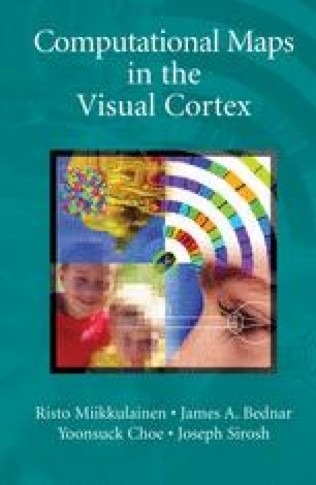
Computational Maps in the Visual Cortex
For more than 30 years, the visual cortex has been the source of new theories and ideas about how the brain processes information. Understanding the computations in the visual cortex is therefore an important step toward a general theory of computational brain theory
Computational linguistics and intelligent text processing ; 8th International Conference, CICLing 2007, Mexico City, Mexico, February 18-24, 2007, Proceedings
This book cover all current issues in computational linguistics research and present intelligent text processing applications. The papers are organized in topical sections on: lexical resources, corpus-based knowledge acquisition, morphology and part-of-speech tagging, named entity recognition, temporal expression treatment, word segmentation, sentence splitting, chunking, grammar formalisms and syntax, word sense disambiguation and discrimination and semantics.

Computational Discovery of Scientific Knowledge : Introduction, Techniques, and Applications in Environmental and Life Sciences
Advances in technology have enabled the collection of data from scientific observations, simulations, and experiments at an ever-increasing pace. For the scientist and engineer to benefit from these enhanced data collecting capabilities, it is becoming clear that semi-automated data analysis techniques must be applied to find the useful information in the data. Computational scientific discovery methods can be used to this end: they focus on applying computational methods to automate scientific activities, such as finding laws from observational data. In contrast to mining scientific data, which focuses on building highly predictive models, computational scientific discovery puts a strong emphasis on discovering knowledge represented in formalisms used by scientists and engineers, such as numeric equations and reaction pathways. This state-of-the-art survey provides an introduction to computational approaches to the discovery of scientific knowledge and gives an overview of recent advances in this area, including techniques and applications in environmental and life sciences.

Combustion : Physical and Chemical Fundamentals, Modeling and Simulation, Experiments, Pollutant Formation
The actual fourth edition presents a completely restructured book: Mathematical Formulae and derivations as well as the space-consuming reaction mechanisms have been replaced from the text to appendix. A new chapter discusses the impact of combustion processes on the earth’s atmosphere, the chapter on auto-ignition is extended to combustion in Otto- and Diesel-engines, and the chapters on heterogeneous combustion and on soot formation appear heavily revised.

Combating Antibiotic Resistance : Report to the President and National Strategy
Antibiotics, in particular, have saved millions of lives. This book discusses combating antibiotic resistance and provides reports to the presidents and national strategies.

Color Atlas of Infective Endocarditis
This book presents the clinical manifestations – both cardiac and extracardiac, the diagnostic techniques currently used in clinical practice, the range of microorganisms that are responsible and the clinical scenarios that are often associated with initiating bacteremia. The guidelines are presented in detail, while the indications, timing and outcome of cardiac surgical intervention and prognosis are discussed extensively.

Collapsing Structures and Public Mismanagement
This book demonstrates how accidents happen, how social processes are fundamental to their occurrence, and how learning and inference about their causes is a core public management function. Along the way, Seibel masterfully musters evidence from a multitude of sources to painstakingly document both bridge and building failures and the organizational pathologies that accompany them. This is a must-read for those who want to better understand such 'black swan' events and the search for resilience.

Collagen: Structure and Mechanics
Collagen: Structure and Mechanics provides a cohesive introduction to collagen-rich tissues, such as tendon, bone, cornea or arterials walls. Written in a clear and didactic manner, this volume reviews current knowledge on hierarchical structure, mechanical properties, deformation and strengthening mechanisms, and discusses many applications in biomaterials and tissue engineering.

Collagen : Primer in Structure, Processing and Assembly
This volume of Topics in Current Chemistry is an attempt to update and compile the biochemical, molecular knowledge of the still growing family of collagenous proteins. Its intention is to provide a comprehensive summary of all mechanisms known to be involved in synthesis, processing and deposition of collagen molecules, all of which are apparently shared by any known collagen type as part of a common biosynthetic route. From the intracellular initiation of protein translation to the extracellular deposition of mature molecules into the scaffold of the preformed tissue texture, collagen biosynthesis exhibits a profile of mechanisms absolutely unique when compared to other proteins

Cold atmospheric plasma (CAP)
Plasma medicine is an innovative research field combining plasma physics, life science, and clinical medicine. It is mainly focused on the application cold atmospheric plasma (CAP) in therapeutic settings. Based on its ability to inactivate microorganisms but also to stimulate tissue regeneration, current medical applications are focused on the treatment of wounds and skin diseases. Since CAP is also able to inactivate cancer cells, its use in cancer therapy is expected to be the next field of clinical plasma application. Other promising applications are expected in oral medicine and ophthalmology
