



الصفحة 19
الصفحة 19
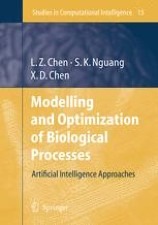
Modelling and Optimization of Biotechnological Processes : Artificial Intelligence Approaches
The book begins with a historical introduction to the field of bioprocess control based on artificial intelligence approaches, followed by two chapters covering the optimization of fed-batch culture using genetic algorithms. Online biomass soft-sensors are constructed in Chapter 4 using recurrent neural networks. The bioprocess is then modelled in Chapter 5 by cascading two soft-sensor neural networks. Optimization and validation of the final product are detailed in Chapters 6 and 7. The general conclusions are drawn in Chapter 8.

Modelling and Control of Dynamical Systems : Numerical Implementation in a Behavioral Framework
This book reviews known topics of the Behavioral Approach and offers new theoretic results with the advantage of including control algorithms implemented numerically in the computer. In addition, issues of numerical analysis are also included. The programs and algorithms are MATLAB based.

Modelli Matematici in Biologia = Mathematical Models in Biology
This text is addressed first of all to the students of the Specialist Degrees in Biology of the Universities, but it will also be of interest to students of Natural Sciences and Medicine. The topics covered include the most classic mathematical models of biological phenomena (population dynamics, spread of infectious diseases, simple physiology models), but a relevant part of the text is dedicated to the mathematical approach to the theory of natural evolution. The only prerequisites required of the reader are those provided by the basic courses of Mathematics of the Bachelor's Degree in Biology, Natural Sciences or Medicine.

Modelli Dinamici Discreti = Discrete Dynamic Models
Discrete mathematical modeling is one of the driving factors in modern mathematics research, and has played a role of synthesis between different disciplines, becoming a tool for qualitative and quantitative analysis in applied sciences. This volume provides an introduction to the analysis of discrete dynamic systems, following a modeling approach. An examination of a wide range of examples, models, and motivations drawn from Biology, Demography, Engineering and Economics, is followed by the presentation of the tools for the study of linear and non-linear scalar dynamical systems, with particular attention to stability analysis. The linear difference equations are studied in detail and an elementary introduction to the Z and DFT transforms is provided. One chapter is devoted to the study of bifurcations and chaotic dynamics. One-step vector dynamical systems and the applications of Markov chains are the subject of three chapters.

Modeling Uncertainty : An Examination of Stochastic Theory, Methods, and Applications
Modeling Uncertainty: An Examination of Stochastic Theory, Methods, and Applications, is a volume undertaken by the friends and colleagues of Sid Yakowitz in his honor. Fifty internationally known scholars have collectively contributed 30 papers on modeling uncertainty to this volume. Each of these papers was carefully reviewed and in the majority of cases the original submission was revised before being accepted for publication in the book. The papers cover a great variety of topics in probability, statistics, economics, stochastic optimization, control theory, regression analysis, simulation, stochastic programming, Markov decision process, application in the HIV context, and others. There are papers with a theoretical emphasis and others that focus on applications. A number of papers survey the work in a particular area and in a few papers the authors present their personal view of a topic. It is a book with a considerable number of expository articles, which are accessible to a nonexpert - a graduate student in mathematics, statistics, engineering, and economics departments, or just anyone with some mathematical background who is interested in a preliminary exposition of a particular topic. Many of the papers present the state of the art of a specific area or represent original contributions which advance the present state of knowledge. In sum.
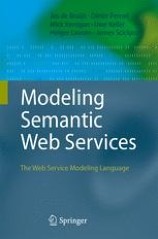
Modeling Semantic Web Services : The Web Service Modeling Language
In this book, Jos de Bruijn and his coauthors lay the foundations for understanding the requirements that shape the description of the various aspects related to Semantic Web services, such as the static background knowledge in the form of ontologies, the functional description of the service, and the behavioral description of the service. They introduce the Web Service Modeling Language (WSML), which provides means for describing the functionality and behavior of Web services, as well as the underlying business knowledge, in the form of ontologies, with a conceptual grounding in the Web Service Modeling Ontology.

Modeling Marvels : Computational Anticipation of Novel Molecules
The aim of this book is to survey a number of chemical compounds that chemists, both theoretical and experimental, find fascinating. Some of these compounds, like planar carbon species or oxirene, offer no obvious practical applications; nitrogen oligomers and polymers, in contrast, have been touted as possible high-energy-density materials. What unites this otherwise eclectic collection is that these substances are unknown and offer a challenge to theory and to synthesis.
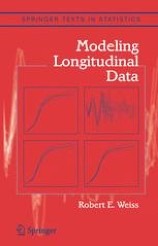
Modeling Longitudinal Data
This book teaches the art and statistical science of modern longitudinal data analysis. The author emphasizes specifying, understanding, and interpreting longitudinal data models. He inspects the longitudinal data graphically, analyzes the time trend and covariates, models the covariance matrix, and then draws conclusions. The book has many figures and tables illustrating longitudinal data and numerous homework problems. The associated web site contains many longitudinal data sets, examples of computer code, and labs to re-enforce the material.

Modeling in Biopharmaceutics, Pharmacokinetics and Pharmacodynamics : Homogeneous and Heterogeneous Approaches
The state of the art in Biopharmaceutics, Pharmacokinetics, and Pharmacodynamics Modeling is presented in this book. It shows how advanced physical and mathematical methods can expand classical models in order to cover heterogeneous drug-biological processes and therapeutic effects in the body. The book is divided into four parts; the first deals with the fundamental principles of fractals, diffusion and nonlinear dynamics; the second with drug dissolution, release, and absorption; the third with empirical, compartmental, and stochastic pharmacokinetic models, and the fourth mainly with nonclassical aspects of pharmacodynamics. The classical models that have relevance and application to these sciences are also considered throughout. Many examples are used to illustrate the intrinsic complexity of drug administration related phenomena in the human, justifying the use of advanced modeling methods.

Modeling Complex Living Systems : A Kinetic Theory and Stochastic Game Approach
Using tools from mathematical kinetic theory and stochastic game theory, this work deals with the modeling of large complex systems in the applied sciences, particularly those comprised of several interacting individuals whose dynamics follow rules determined by some organized, or even "intelligent" ability. Traditionally, methods of mathematical kinetic theory have been applied to model the evolution of large systems of interacting classical or quantum particles. This book, on the other hand, examines the modeling of living systems as opposed to inert systems.

Modeling Communication with Robots and Virtual Humans ; Second ZiF Research Group International Workshop on Embodied Communication in Humans and Machines, Bielefeld, Germany, April 5-8, 2006, Revised Selected Papers
The 17 articles in this state-of-the-art survey address artificial intelligence research on communicative agents and also provide an interdisciplinary perspective from linguistics, behavioral research, theoretical biology, philosophy, communication psychology, and computational neuroscience. The topics include studies on human multimodal communication; the modeling of feedback signals, facial expression, eye contact, and deception; the recognition and comprehension of hand gestures and head movements; communication interfaces for humanoid robots; the evolution of cognition and language; emotion and social appraisal in nonverbal communication; dialogue models and methodologies; theory of mind and intentionality; complex systems, dynamic field theory, and connectionist modeling.
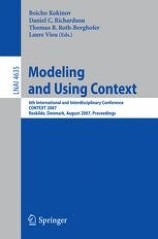
Modeling and using context ; 6th International and interdisciplinary Conference, CONTEXT 2007, Roskilde, Denmark, August 20-24, 2007, Proceedings
This volume contains the papers presented at CONTEXT 2007, the Sixth International and Interdisciplinary Conference on Modeling and Using Context. We believe that the papers of this volume represent a snapshot of current work and contribute to both theoretical and applied aspects of research.

Modeling and computations in electromagnetics ; A volume dedicated to Jean-Claude Nédélec
Modeling and computations in electromagnetics is a quite novel and growing discipline, expanding as a result of the steadily increasing demand for designing electrical devices, modeling electromagnetic materials, and simulating electromagnetic fields in nanoscale structures. The aim of this volume is to bring together prominent worldwide experts to review state-of-the-art developments and future trends of modeling and computations in electromagnetics. This volume is devoted to merging the expertise of scientists working in this dynamic discipline, and to raising interest for challenging issues. The most significant advances in computational techniques have been made only in the last few years, and several challenging technological applications are presented in this volume.

Modeling and Analysis of Transient Processes in Open Resonant Structures : New Methods and Techniques
The principal goal of the book is to describe new accurate and robust algorithms for open resonant structures with substantially increased efficiency. The book presents a systematic approach to the study of electromagnetic waves scattering which can be introduced in undergraduate/postgraduate education in theoretical and applied radiophysics and different advanced engineering courses on antenna and wave-guide technology.
Model-driven architecture in practice ; A Software Production Environment Based on Conceptual Modeling
This book introduces all the relevant information required to understand and put Model Driven Architecture (MDA) into industrial practice. The book combines a sound theoretical approach based on more than 10 years' research.

Model-Driven Architecture - Foundations and Applications ; 2nd European Conference, ECMDA-FA 2006, Bilbao, Spain, July 10-13, 2006, Proceedings
The goal of the European Conference on Model-Driven Architecture — Foundations and Applications (ECMDA-FA) is to bring together industry and academia to tackle the problems in model-driven development. This volume includes 18 foundation papers and 12 application papers, which is a fine balance between both worlds. ECMDA-FA 2006 also hosted six workshops on both theoretical and practical aspects of MDA. Furthermore, the keynote speakers, David Frankel and Bran Selic, from some of the world’s largest IT companies proved that industry is very much involved in MDA. This second ECMDA-FA conference is the result of the work of the authors who submitted a total of 78 papers, the Program Committee members who took the effort to review the papers, the people organizing the workshops, and of course the Steering Committee. All in all, several hundreds of people have worked hard to make this conference a success.
Model-Based Software and Data Integration ; 1st International Workshop, MBSDI 2008, Berlin, Germany, April 1-3, 2008. Proceedings
The First International Workshop on Model-Based Software and Data Integ- tion (MBSDI 2008), was ourfrst event of this kind in a forthcoming series of activities at TU Berlin, where a scientifc discussion and exchange forum was provided for both academic and industrial researchers. We aimed at researchers, engineersand practitionerswho focus onadvanced, model-basedsolutions inthe area of software and information integration and interoperability. As withevery beginning, the resonanceonour callsin today's overfoodingof workshops was somewhat unpredictable, and we did not really know how many paper submissions to expect. We were nicely surprised, considering the rather short lead time to organize the meeting and the very specialized and focused topic.

Model-based Geostatistics
Geostatistics is concerned with estimation and prediction problems for spatially continuous phenomena, using data obtained at a limited number of spatial locations. The name reflects its origins in mineral exploration, but the methods are now used in a wide range of settings including public health and the physical and environmental sciences. Model-based geostatistics refers to the application of general statistical principles of modeling and inference to geostatistical problems. This volume is the first book-length treatment of model-based geostatistics. The authors have written an expository text, emphasizing statistical methods and applications rather than the underlying mathematical theory. Analyses of datasets from a range of scientific contexts feature prominently, and simulations are used to illustrate theoretical results. Readers can reproduce most of the computational results in the book by using the authors' R-based software package, geoR, whose usage is illustrated in a computation section at the end of each chapter.

Model-Based Demography: Essays on Integrating Data, Technique and Theory
This book shows how demography can build a strong theoretical edifice on its broad and deep empirical foundation by adoption of the model-based approach to science. But the full-fruits of this approach will require demographers to make greater use of computer modeling [both macro- and micro-simulation], in the statement and manipulation of theoretical ideas, as well as for numerical computation.

Model Reduction and Coarse-Graining Approaches for Multiscale Phenomena
Model reduction and coarse-graining are important in many areas of science and engineering. How does a system with many degrees of freedom become one with fewer? How can a reversible micro-description be adapted to the dissipative macroscopic model? These crucial questions, as well as many other related problems, are discussed in this book. Specific areas of study include dynamical systems, non-equilibrium statistical mechanics, kinetic theory, hydrodynamics and mechanics of continuous media, (bio)chemical kinetics, nonlinear dynamics, nonlinear control, nonlinear estimation, and particulate systems from various branches of engineering. The generic nature and the power of the pertinent conceptual, analytical and computational frameworks helps eliminate some of the traditional language barriers, which often unnecessarily impede scientific progress and the interaction of researchers between disciplines such as physics, chemistry, biology, applied mathematics and engineering. All contributions are authored by experts, whose specialities span a wide range of fields within science and engineering.
