



الصفحة 19
الصفحة 19
Biologically Inspired Algorithms for Financial Modelling
Then Part I provides a thorough guide to the various bioinspired methodologies – neural networks, evolutionary computing (particularly genetic algorithms and grammatical evolution), particle swarm and ant colony optimization, and immune systems. Part II brings the reader through the development of market trading systems. Finally, Part III examines real-world case studies where BIA methodologies are employed to construct trading systems in equity and foreign exchange markets, and for the prediction of corporate bond ratings and corporate failures.
Bioeconomy and Global Inequalities Socio-Ecological Perspectives on Biomass Sourcing and Production
This book explores bioeconomy and bioenergy policies across South America, Asia and Europe. It discusses how a transition away from a fossil and towards a bio-based economic order alters, reinforces and challenges socio-ecological inequalities. A series of conceptual discussions and case studies with a multidisciplinary background in the Social Science illuminate how the deployment of biomass sources from the agricultural and forestry sectors affect societal changes concerning knowledge production, land and labour relations, political participation and international trade
Biodiversity-health-sustainability Nexus in socio-ecological production landscapes and seascapes (SEPLS)
It is a compilation of case studies that provide useful knowledge and lessons that derive from on-the-ground activities and contribute to policy recommendations, focusing on the interlinkages between biodiversity and multiple dimensions of health (e.g., physical, mental, and spiritual) in managing socio-ecological production landscapes and seascapes (SEPLS). This book provides insights on how SEPLS approaches can contribute to more sustainable management of natural resources, achieving global biodiversity and sustainable development goals, and good health for all. It is also expected to offer useful knowledge and information for an upcoming three-year thematic assessment of “the interlinkages among biodiversity, water, food, and health” (the so-called “nexus assessment”) by the Intergovernmental Science-Policy Platform on Biodiversity and Ecosystem Services (IPBES). The book begins with an introductory chapter followed by eleven case study chapters demonstrating the nexus between biodiversity, health, and sustainable development, and then a synthesis chapter clarifying the relevance of the case study findings to policy and academic discussions. It will be of interest to scholars, policymakers, and professionals in the field related to sustainable development.
Bio-based Building Skin
This book provides a compendium of material properties, demonstrates several successful examples of bio-based materials’ application in building facades, and offers ideas for new designs and novel solutions. It features a state-of-the-art review, addresses the latest trends in material selection, assembling systems, and innovative functions of facades in detail. Selected case studies on buildings from diverse locations are subsequently presented to demonstrate the successful implementation of various biomaterial solutions, which defines unique architectural styles and building functions. The structures, morphologies and aesthetic impressions related to bio-based building facades are discussed from the perspective of art and innovation; essential factors influencing the performance of materials with respect to functionality and safety are also presented. Special emphasis is placed on assessing the performance of a given facade throughout the service life of a building, and after its end.

BIM in small practices : Illustrated case studies
Full of practical tips and hard-won experience, and includes pithy contributions from industry experts who identify and explore the important issues for small practices including how to get your practice started with BIM, and how it aligns to the new Plan of Work. This landmark publication will motivate small practices who are considering taking those first steps towards implementing BIM.

BIM for design firms : Data rich architecture at small and medium scales
Expands on Building Information Modeling, showing its applicability to a range of design-oriented projects. It emphasizes the full impact that a data modeling tool has on design processes, systems, and the high level of collaboration required across the design team. It also explains the quantitative analysis opportunities that BIM affords for sustainable design and for balancing competing design agendas, while highlighting the benefits BIM offers to designing in 3D for construction. The book concludes with a deep look at the possible future of BIM and digitally-enhanced design.
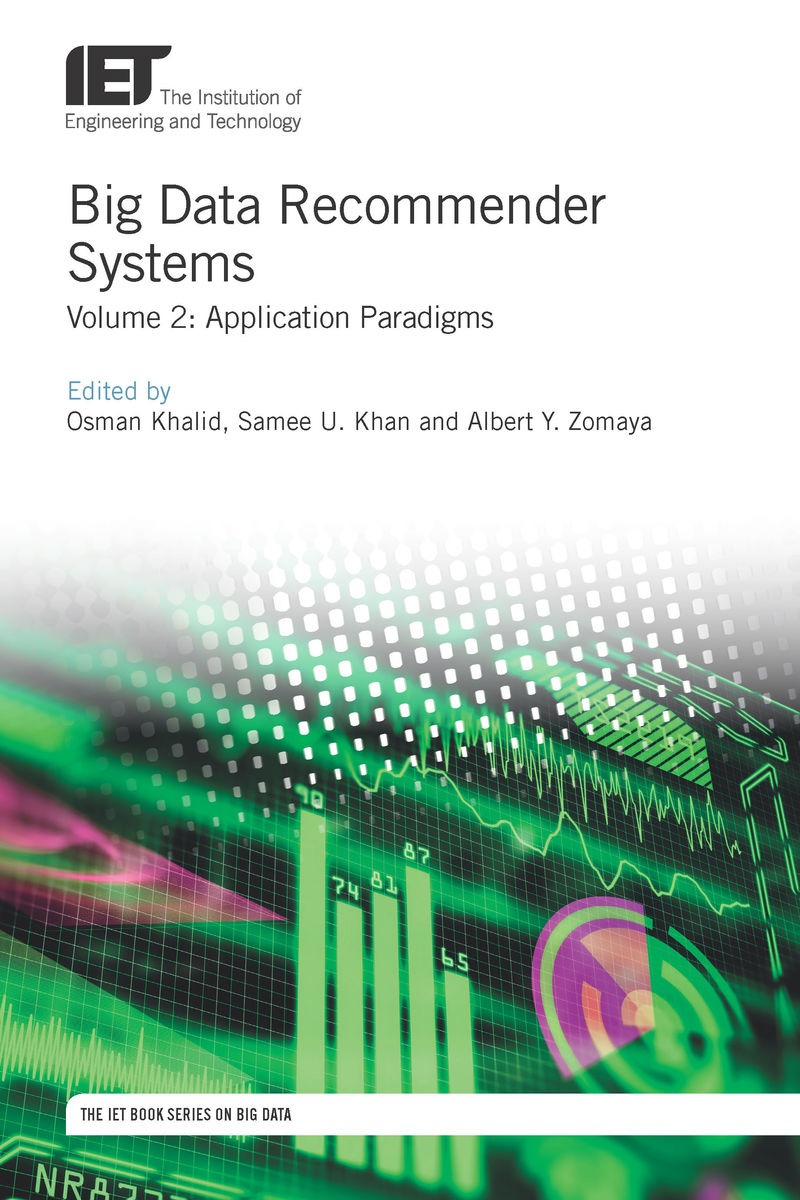
Big Data Recommender Systems ; Vol.2 : Application Paradigms
Combines experimental and theoretical research on big data recommender systems to help computer scientists develop new concepts and methodologies for complex applications. It includes original scientific contributions in the form of theoretical foundations, comparative analysis, surveys, case studies, techniques and tools. First designed to generate personalized recommendations to users in the 90s, recommender systems apply knowledge discovery techniques to users’ data to suggest information, products, and services that best match their preferences. In recent decades, we have seen an exponential increase in the volumes of data, which has introduced many new challenges. recommender systems. Volume 2 covers a broad range of application paradigms for recommender systems over 22 chapters
Big Data Recommender Systems ; Vol.1 : Algorithms, Architectures, Big Data, Security and Trust
Combines experimental and theoretical research on big data recommender systems to help computer scientists develop new concepts and methodologies for complex applications. It includes original scientific contributions in the form of theoretical foundations, comparative analysis, surveys, case studies, techniques and tools.
Big Data Intelligence for Smart Applications
Presents the latest discoveries in the field of machine intelligence and big data Proposes many case studies and applications of computational and Big data Combines theory and practice so that readers of the few books (beginners or experts)

Best of Detail : Fassaden / Facades : Architectural highlights from DETAIL on the topic 'Facades' - best of DETAIL
The facade serves as the building's public face, allowing rapid assessment of its architecture. 'Best of Detail: Facades' explores this topic with theoretical discussions and an in-depth look at a range of selected projects, which, besides showcasing suitable materials and designs, give the reader a detailed look behind the scenes. It turns out that quality architecture can only result from a coherency between the facade, structure, internal organisation and building services design elements that interact directly with each other. This presents the architect with enormous challenges, particularly as the unity between the exterior and interior is no longer a given, as today's range of materials and design possibilities offer nearly limitless creativity.
Basic knowledge of pharmacology
Concise and up-to-date coverage of the most important drugs Integration of experimental and clinical pharmacology with focus on diseases Discusses the most important drugs (400) in the context of relevant diseases. Summary tables and schemes, MCQ exam questions, case studies and a list of drugs aid memorization of the material before an exam. All chapters are written in the same concise style and use a modern and precise pharmacological nomenclature. After reading of the book, the student will be able to critically assess the proper use of the most important drugs and advise patients properly. The didactic concept of the book has been developed on the author’s own pharmacology courses for which he has received numerous teaching awards. The book takes advantage of the learning spiral, in which material is presented repeatedly from various angles.
Autotuning of PID Controllers : A Relay Feedback Approach
Recognising the benefits of improved control, the second edition of Autotuning of PID Controllers provides simple yet effective methods for improving PID controller performance. The practical issues of controller tuning are examined using numerous worked examples and case studies in association with specially written autotuning MATLAB® programs to bridge the gap between conventional tuning practice and novel autotuning methods. Autotuning of PID Controllers is more than just a monograph, it is an independent learning tool applicable to the work of academic control engineers and of their counterparts in industry looking for more effective process control and automation.

Autonomy oriented computing : From problem solving to complex systems modeling
Autonomy Oriented Computing explores the important theoretical and practical issues in AOC, by analyzing methodologies and presenting experimental case studies. The book serves as a comprehensive reference source for researchers, scientists, engineers, and professionals in all fields concerned with this promising new development in computer science. It can also be used as a main or supplementary text in graduate and undergraduate programs across a broad range of computer-related disciplines, including Robotics and Automation, Amorphous Computing, Image Processing and Computer Vision, Programming Paradigms, Computational Biology, and many others. The first part of the book, Fundamentals, describes the basic concepts and characteristics of an AOC system, and then it enumerates the critical design and engineering issues faced in AOC system development. The second part of the book, AOC in Depth, provides a detailed analysis of methodologies and case studies to evaluate the use of AOC in problem solving and complex system modeling. The final chapter reviews the essential features of the AOC paradigm and outlines a number of possibilities for future research and development.
Autonomous intelligent systems : Agents and data mining ; International workshop, AIS-ADM 2005
This book constitutes the refereed proceedings of the International Workshop on Autonomous Intelligent Systems: Agents and Data Mining, AIS-ADM 2005, held in St. Petersburg, Russia in June 2005. The 17 revised full papers presented together with 5 invited papers and the abstract of an invited talk were carefully reviewed and selected from 29 submissions. The papers are organized in topical sections on agent-based data mining issues, ontologies and Web mining, and applications and case studies.

Atlas of orthodontic case reviews
Offers a comprehensive resource to the treatment of orthodontic malocclusions with a case-based approach. Discusses and illustrates the treatment of orthodontic malocclusions using actual clinical casesPresents more than 800 clinical photographs showing the stages of each treatment, to act as a visual referenceIncludes a description of each malocclusion, an explanation of the desired treatment outcomes, an account of the changes, and review questions for each case
Assessing and Managing Earthquake Risk : Geo-scientific and Engineering Knowledge for Earthquake Risk Mitigation: developments, tools, techniques
This book points out the need of a multidisciplinary approach in the field of risk assessment and management. It provides an overview of the problems, approaches and common practices directly related to earthquake risk mitigation and, in particular, to the preparation of earthquake emergency plans. Written by a team of specialists from different disciplines, the authors worked together extensively in order to create unity and continuity in the text as a whole. Each topic is illustrated with examples of actual applications taken from the bibliography – including websites with available relevant information. Case studies and information on some relevant international projects are given.
Artificial intelligence in higher education : A practical approach
Highlights the broad field of artificial intelligence applications in education, regarding any type of artificial intelligence that is correlated with education. It discusses learning methodologies, intelligent tutoring systems, intelligent student guidance and assessments, intelligent education chatbots, and artificial tutors and presents the practicality and applicability implications of AI in education. The book offers new and current research along with case studies showing the latest techniques and educational activities. Will find interest with academicians which includes teachers, students of various disciplines, higher education policymakers who believe in transforming the education industry, research scholars who are pursuing their Ph.D. or Post Doc. in the field of Education Technology, Education, and Learning, etc. and those working in the area of Education Technology and Artificial Intelligence such as industry professionals in education management and e-learning companies

Artificial Intelligence : Applications and innovations
It's about the science of artificial intelligence (AI). AI is the study of the design of intelligent computational agents. This book provides a valuable resource for researchers, scientists, professionals, academicians and students dealing with the new challenges and advances in the areas of AI and innovations. This book also covers a wide range of applications of machine learning such as fire detection, structural health and pollution monitoring and control. Provides insight into prospective research and application areas related to industry and technology / Discusses industry- based inputs on success stories of technology adoption / Discusses technology applications from a research perspective in the field of AI / Provides a hands- on approach and case studies for readers of the book to practice and assimilate learning
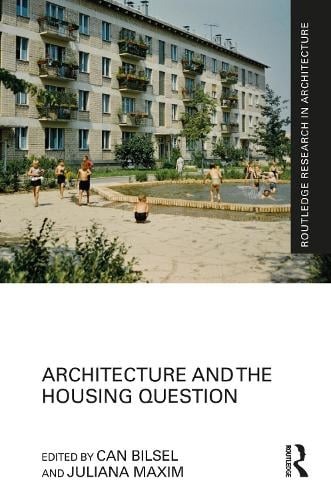
Architecture and the housing question
Examines how the design and provision of housing around the world have become central both to competing political projects and to the architecture profession. How have architects acting as housing experts helped alleviate or enforce class, race, and gender inequality? What are the disciplinary implications of taking on shelter for the multitude as an architectural assignment and responsibility? The book features essays in the historiography of architecture and the housing question, and a collection of historical case studies from Belgium, China, France, Ghana, the Netherlands, Kenya, the Soviet Union, Turkey, and the United States.
Architecture and agriculture : A rural design guide
Presents architectural guidelines for buildings designed and constructed in rural landscapes by emphasizing their connections with function, culture, climate, and place. Following on from the author’s first book Rural Design, the book discusses in detail the buildings that humans construct in support of agriculture. By examining case studies from around the world including Australia, China, Japan, Norway, Poland, Japan, Portugal, North America, Africa and the Southeast Asia it informs readers about the potentials, opportunities, and values of rural architecture, and how they have been developed to create sustainable landscapes and sustainable buildings for rapidly changing rural futures.
