



الصفحة 19
الصفحة 19

Essentials of Urban Design
Explains the fundamental concepts of urban design, providing the understanding and tools needed to achieve better design outcomes. It is equally useful for designing places and evaluating designs.

Essentials of Computer Organization and Architecture
Addresses all necessary organization and architecture topics, but concise enough to be appropriate for a single-term course. Its focus on real-world examples and practical applications encourages students to develop a “big-picture” understanding of how essential organization and architecture concepts are applied in the computing world. In addition to direct correlation with the ACM/IEEE guidelines for computer organization and architecture, the text exposes readers to the inner workings of a modern digital computer through an integrated presentation of fundamental concepts and principles.

Essential Urban Design : A Handbook for Architects, Designers and Planners
Shaping our cities, streets and public spaces, urban design informs the places we live. It is a complex multi-disciplinary process, requiring the input of a wide variety of stakeholders and design and construction professionals. Each urban project invariably throws up a new set of problems and strategic decisions for the design team. This guide distils the essential information required for the expert direction of the day-to-day work of urban design, from strategic design to masterplanning through to character assessment and collaboration. Compact and accessible with over 250 hand-drawn figures and plans, it's the perfect everyday companion for junior practitioners and experienced heads alike across the built environment.
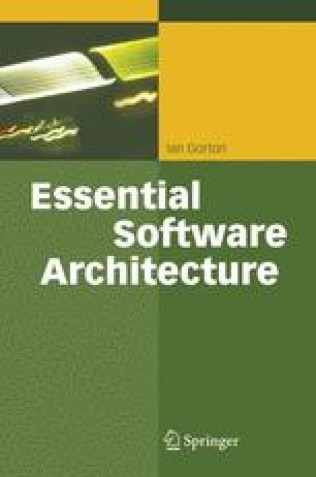
Essential Software Architecture
Job titles like "Technical Architect" and "Chief Architect" nowadays abound in the software industry, yet many people suspect that "architecture" is one of the most overused and least understood terms in professional software development. Gorton's book helps resolve this predicament. It concisely describes the essential elements of knowledge and key skills required to be a software architect. The explanations encompass the essentials of architecture thinking, practices, and supporting technologies.

Error Correction Codes for Non-Volatile Memories
In ECC for Non-Volatile Memories the authors expose the basics of coding theory needed to understand the application to memories, as well as the relevant design topics, with reference to both NOR and NAND Flash architectures. A collection of software routines is also included for better understanding.

Equestrain and Horse Care Club = نادي الفروسية و رعاية الخيول
يهدف المشروع إلى تصميم وإنشاء نادٍ متكامل للفروسية يُعنى برعاية الخيول وتدريبها وفق أعلى المعايير الحديثة. يوفر النادي بيئة مناسبة لمحبَي رياضة الفروسية، حيث يجمع بين الجانب الرياضي والترفيهي والتعليمي. يتضمن المشروع دراسة متكاملة لتخطيط المساحات، تصميم الإسطبلات، الميادين التدريبية، مرافق الرعاية البيطرية، والمناطق الخصصة للزوار. كما يهدف إلى تعزيز ثقافة الفروسية في المجتمع، والمحافظة على الخيل العربي الأصيل، وتوفير تجربة آمنة وممتعة للمشتركين والزوار. يعتمد المشروع على معايير الاستدامة في التصميم والمواد المستخدمة بما يحقق التوازن بين الجمال والوظيفة. تمت دراسة احتياجات الخيول من حيث التغدية، الإيواء، والنظافة بما يضمن سلامتها وصحتها الجسدية والنفسية، مع تخصيص مرافق بيطرية مجهزة بأحدث الأدوات لخدمتها على مدار الساعة. كما تم الآخد بعين الاعتبار تطبيق معايير الأمان للخيول والفرسان على حدٍ سواء. ويعد المشروع نموذجاً متكاملاً يجمع بين الجمال المعماري والوظائف العملية، مسهماً في دعم السياحة الداخلية وتطوير البيئة التحتية الرياضية في المنطقة، إضافةً إلى خلق فرص تدريب وتشغيل ضمن قطاع الفروسية في المجتمع المحلي.

Environments for Multi-Agent Systems III ; 3rd International Workshop, E4MAS 2006, Hakodate, Japan, May 8, 2006, Selected Revised and Invited Papers
This book are organized in topical sections on models, architecture, and design, mediated interaction and stigmery, governing environment, and applications.

Environmental Challenges in Civil Engineering II
Rports on findings concerning structural material behavior, and new methods and technologies in constructions. A special emphasis is given to sustainable constructions practices, including material recycling and reuse, renovation and restoration of historical building and to those fostering sustainable development of cities and rural areas, and a better integration of buildings with the environment. Offering a good balance of theory and practice, and covering both technical and organizational aspects in civil engineering and architectural projects, this book offers extensive information on solutions and current challenges in construction projects and structural interventions in the context of environmental protection and earthquake prevention.

Entertainment computing - ICEC 2006 ; 5th International Conference, Cambridge, UK, September 20-22, 2006, Proceeding
ICEC 2006 attracted 47 full paper submissions, 48 short paper submissions in total 95 technical papers. Based on a thorough review and selection process by 85 international experts from academia and industry as members of the Program Committee, a high-quality program was compiled. The International Program Committee consisted of experts from all over the world As a result, 17 full papers and 17 short papers were accepted as submitted or with minor revisions. For the remaining submissions, 28 were recommended to change according to the reviews and were submitted as posters. This proceedings volume presents 62 technical contributions which are from many different countries.

Enterprise service oriented architectures : Concepts, challenges, recommendations
Enterprise Service Oriented Architectures helps readers solve this challenge in making different applications communicate in a loosely coupled manner. This classic handbook leverages the experiences of thought leaders functioning in multiple industry verticals and provides a wealth of knowledge for creating the agile enterprise.

Enterprise ontology : Theory and methodology
Such a theory and a matching methodology, which has passed the test of practical experience, constitute the contents of this book. The enterprise ontology, as developed by Dietz, is the starting point for profoundly understanding the organization of an enterprise and subsequently for analyzing, (re)designing, and (re)engineering it. The approach covers numerous issues in an integrated way: business processes, in- and outsourcing, information systems, management control, staffing etc.

Enterprise Knowledge Infrastructures
Success of an organization is increasingly dependent on its capability to create an environment to improve the productivity of knowledge work. This book focuses on the concepts, models and technologies that are used to design and implement such an environment. It develops the vision of a modular, yet highly integrated enterprise knowledge infrastructure and presents an ideal architecture replete with current technologies and systems. The most important streams of technological development that are covered in the book are computer-supported cooperative work, document and content management, e-learning, enterprise portals, information life cycle management, knowledge management, mobile computing, and the Semantic Web. It includes learning goals, exercises and case examples that help the reader to easily understand and practice the concepts.

Enterprise interoperability III : New challenges and industrial approaches
This book provides knowledge for cost savings and business improvement as well as new technical solutions. Composed of over 50 papers, Enterprise Interoperability III ranges from academic research through case studies to industrial and administrative experience of interoperability.

Enterprise interoperability II : New challenges and approaches
Interoperability: the ability of a system or a product to work with other systems or products without special effort from the user is a key issue in manufacturing and industrial enterprise generally. It is fundamental to the production of goods and services quickly and at low cost at the same time as maintaining levels of quality and customisation. Interoperability is achieved if internal and external collaborators can interact on at least three levels: data, applications and business enterprise (through the architecture of an enterprise model and making allowance for the semantics of both partners). Not only a problem of software and IT technologies, it implies support for communication and transactions between different organisations that must be based on shared business references. Today, a new and important consideration must be taken into account – economic business evaluation and the definition of dissemination policy.

Enterprise interoperability : New challenges and approaches
Interoperability: the ability of a system or a product to work with other systems or products without special effort from the user is a key issue in manufacturing and industrial enterprise generally. It is fundamental to the production of goods and services quickly and at low cost at the same time as maintaining levels of quality and customisation. Interoperability is achieved if internal and external collaborators can interact on at least three levels: data, applications and business enterprise (through the architecture of an enterprise model and making allowance for the semantics of both partners). Not only a problem of software and IT technologies, it implies support for communication and transactions between different organisations that must be based on shared business references. Today, a new and important consideration must be taken into account – economic business evaluation and the definition of dissemination policy.

Enterprise Architecture for Strategic : Management of Modern IT Solutions
Enterprise Architecture for strategic Management of Modern IT Solutions provides guidance on how to employ EA in deploying and managing IT solutions from pragmatic and implementable perspectives. Until now, implementation and practice of EA have been slow, despite its growing popularity and interest from all sectors. This book employs sociotechnical theories such as actor-network theory (ANT) and structuration theory (ST) as lenses to examine and explain why and how challenges and complexities exist and derail the implementation or practice of EA in organisations.

Enterprise architecture at work : Modelling, communication and analysis
n enterprise architecture tries to describe and control an organisation’s structure, processes, applications, systems and techniques in an integrated way. The unambiguous specification and description of components and their relationships in such an architecture requires a coherent architecture modelling language.Since an architecture model is useful not only for providing insight into the current or future situation but can also be used to evaluate the transition from ‘as-is’ to ‘to-be’, the authors also describe analysis methods for assessing both the qualitative impact of changes to an architecture and the quantitative aspects of architectures, such as performance and cost issues. The modelling language and the other techniques presented have been proven in practice in many real-life case studies. So this book is an ideal companion for enterprise IT or business architects in industry as well as for computer or management science students studying the field of enterprise architecture.

Enterprise Applications and Services in the Finance Industry ; 3rd International Workshop, FinanceCom 2007, Montreal, Canada, December 8, 2007. Revised Papers
This book constitutes the proceedings of the 4th International Workshop on Enterprise Applications and Services in the Finance Industry, FinanceCom2008, held in Paris, France, on December 13, 2008. The workshop spans multiple disciplines, including technical, economic, sociological and behavioral sciences. The guiding theme of this workshop was concerned with innovations in the financial services industry, driven by either new business models or changed regulations.

Enhanced Living Environments : Algorithms, Architectures, Platforms, and Systems
Ambient Assisted Living (AAL) is an area of research based on Information and Communication Technologies (ICT), medical research, and sociological research. AAL is based on the notion that technology and science can provide improvements in the quality of life for people in their homes, and that it can reduce the financial burden on the budgets of the healthcare providers. The concept of Enhanced Living Environments (ELE) refers to the AAL area that is more related with ICT. Effective ELE solutions require appropriate ICT algorithms, architectures, platforms, and systems, having in view the advance of science in this area and the development of new and innovative solutions. The aim of this book is to become a state-of-the-art reference, discussing progress made, as well as prompting future directions on theories, practices, standards, and strategies related to the ELE area.

Engineering theories of software intensive systems : Theory, algorithms, software, and applications
Software engineering has over the years been applied in many different fields, ranging from telecommunications to embedded systems in car and aircraft industry as well as in production engineering and computer networks. Foundations in software technology lie in models allowing to capture application domains, detailed requirements, but also to understand the structure and working of software systems like software architectures and programs. These models have to be expressed in techniques based on discrete mathematics, algebra and logics. However, according to the very specific needs in applications of software technology, formal methods have to serve the needs and the quality of advanced software engineering methods, especially taking into account security aspects in Information Technology. This book presents mathematical foundations of software engineering and state-of-the-art engineering methods in their theoretical substance in the step towards practical applications to examine software engineering techniques and foundations used for industrial tasks.
