


تحسين النتائح
ترتيب حسب
من
الى


For this book, the editors invited and called for contributions from indispensable research areas relevant to "chance discovery," which has been defined as the discovery of events significant for making a decision, and studied since 2000. From respective research areas as artificial intelligence, mathematics, cognitive science, medical science, risk management, methodologies for design and communication, the invited and selected authors in this book present their particular approaches to chance discovery. The chapters here show contributions to identifying rare or hidden events and explaining their significance, predicting future trends, communications for scenario development in marketing and design, identification effects and side-effects of medicines, etc.

There is much ambivalence in women’s experience of the academy as teachers and students. Although today many more women follow academic careers than in the past, they do not find the welcome that they had hoped for and expected. Additionally, women students find that whilst they can now enter through the doors of universities, academic space remains embedded in structures and cultures of gender and social class. This book is a clear and accessible exploration of lifelong learning and educational opportunities for women in higher education. It has been developed from work undertaken by members of the Women in Higher Education Network with chapters organised in three thematic sections: Ambivalent Positions in the Academy / Process and Pedagogy at Work / Career – Identity – Home
Ceramic and Glass Materials: Structure, Properties and Processing is a concise and comprehensive guide to the key ceramic and glass materials used in modern technology. Each chapter focuses on the structure-property relationships for these important materials and expands the reader’s understanding of their nature by simultaneously discussing the technology of their processing methods. In each case, the resulting understanding of the contemporary applications of the materials provides insights as to their future roles in twenty first century engineering and technology. Organized to be a practical and comprehensive resource, each chapter is dedicated to a specific material such as: alumina, mullite, sillimanite minerals, aluminates, quartz and silicas, refractory oxides, clays, concrete and cement, lead compounds, and zirconia.

Many times all of us could hear from mass media that an asteroid approached and swept past the Earth. Such an asteroid or comet will inevitably strike the planet some day. This volume considers hazards due to collisions with cosmic objects, particularly in light of recent investigations of impacts by the authors. Each chapter written by an expert contains an overview of an aspect and new findings in the field. The main hazardous effects – cratering, shock, aerial and seismic waves, fires, ejection of dust and soot, tsunami are described and numerically estimated. Numerical simulations of impacts and impact consequences have received much attention in the book. Fairly small impacting objects 50 -100 m in diameter pose a real threat to humanity and their influence on the atmosphere and ionosphere is emphasized.

One principal need in petroleum recovery from carbonate reservoirs is the description of the three-dimensional distribution of petrophysical properties in order to improve performance predictions by means of fluid-flow computer simulations. The book focuses on a rock based approach for the integration of geological, petrophysical, and geostatistical methods to construct a reservoir model suitable to input into flow simulation programs. This second edition includes a new chapter on model construction and new examples of limestone, dolostone, and touching-vug reservoir models as well as improved chapters on basic petrophysical properties, rock-fabric/petrophysical relationships, calibration of wireline logs, and sequence stratigraphy.
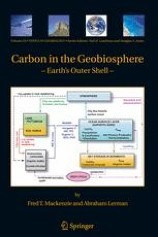
Carbon and carbon dioxide always played an important role in the geobiosphere that is part of the Earth’s outer shell and surface environment. The book’s eleven chapters cover the fundamentals of the biogeochemical behavior of carbon near the Earth’s surface, in the atmosphere, minerals, waters, air-sea exchange, and inorganic and biological processes fractionating the carbon isotopes, and its role in the evolution of inorganic and biogenic sediments, ocean water, the coupling to nutrient nitrogen and phosphorus cycles, and the future of the carbon cycle in the Anthropocene. This book is mainly a reference text for Earth and environmental scientists; it presents an overview of the origins and behavior of the carbon cycle and atmospheric carbon dioxide, and the human effects on them. The book can also be used for a one-semester course at an intermediate to advanced level addressing the behavior of the carbon and related cycles.

The last decade has seen a dramatic shift in anticancer drug research towards agents that aim to target selectively key regulatory and signaling processes known to drive tumorigenesis. A number of these newer agents have now been introduced into clinical practice. This volume reviews advances in cancer chemotherapy research over the last 10 years and will be of interest to scientists engaged in drug research in the pharmaceutical industry, biotechnology and startup companies, academia and government institutions. Chapters written by leading experts in their field reflect a range of current medicinal chemistry approaches to small molecule drugs, including anti-hormonal therapy, growth factor inhibition, survival signaling, cell cycle inhibition, anti-angiogenics and anti-nvasives. Each chapter aims to cover the drug target and biological rationale, chemotypes, clinical status and future prospects in this rapidly developing area of drug research.
The present monograph gives a short and concise introduction to classical and quantum mechanics on two-point homogenous Riemannian spaces, with empahsis on spaces with constant curvature. Chapter 1-4 provide the basic notations from differential geometry for studying two-body dynamics in these spaces. Chapter 5 deals with the problem of finding explicitly invariant expressions for the two-body quantum Hamiltonian. Chapter 6 addresses one-body problems in a central potential. Chapter 7 studies the classical counterpart of the quantum system of chapter 5. Chapter 8 investigates some applications in the quantum realm, namely for the coulomb and oscillator potentials.
Bulk Metallic Glasses explores an emerging field of materials known as bulk metallic glasses. It summarizes the rapid development of these materials over the last decade and includes documentation on diverse applications of bulk metallic glasses; from structural applications to microcomponents. Some of the applications covered are pressure sensors, microgears for motors, magnetic cores for power supplies, and nano-dies for replacing next generation DVDs. The chapters cover current theories and recent research including an atomistic theory of local topological fluctuations, atomistic simulations, and unique microstructures of these amorphous materials. Other topics include glass formation, glass forming ability, and the underlying mechanisms and physical insights of these criteria. The mechanical deformation of bulk metallic glasses, fatigue, fracture, and corrosion behaviors of these materials are also reviewed.
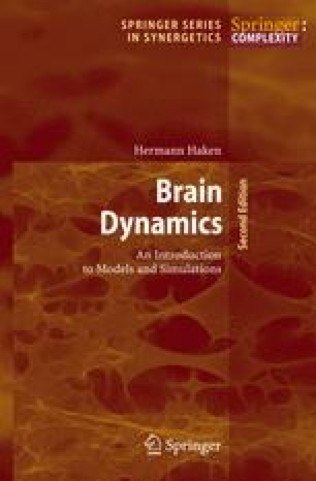
Brain Dynamics serves to introduce graduate students and nonspecialists from various backgrounds to the field of mathematical and computational neurosciences. Some of the advanced chapters will also be of interest to the specialists. The book approaches the subject through pulse-coupled neural networks, with at their core the lighthouse and integrate-and-fire models, which allow for the highly flexible modelling of realistic synaptic activity, synchronization and spatio-temporal pattern formation. Topics also include pulse-averaged equations and their application to movement coordination. The book closes with a short analysis of models versus the real neurophysiological system.

This is the first book to provide a cutting edge reference to the fascinating topic of blind source separation (BSS) for convolved speech mixtures. Through contributions by the foremost experts on the subject, the book provides an up-to-date account of research findings, explains the underlying theory, and discusses potential applications. The individual chapters are designed to be tutorial in nature with specific emphasis on an in-depth treatment of state of the art techniques. Blind Speech Separation is divided into three parts:Part 1 presents overdetermined or critically determined BSS. Here the main technology is independent component analysis (ICA). ICA is a statistical method for extracting mutually independent sources from their mixtures. Part 2 addresses underdetermined BSS, where there are fewer microphones than source signals. Here, the sparseness of speech sources is very useful; we can utilize time-frequency diversity, where sources are active in different regions of the time-frequency plane.Part 3 presents monaural BSS where there is only one microphone. Here, we can separate a mixture by using the harmonicity and temporal structure of the sources. We can build a probabilistic framework by assuming a source model, and separate a mixture by maximizing the a posteriori probability of the sources.
One area that has attracted much attention is the use of cell factories for the production of a wide range of chemicals. This area illustrates very well the definition of biochemical engineering , and it has therefore been chosen as the focus of this volume. The use of cell factories for production of chemicals dates back to the production of penicillin, ethanol, acetone–butanol, glycerol and further to enzymes and other antibiotics. All these products were traditionally produced by cell factories that naturally produce these compounds. With the introduction of genetic engineering it has,This volume therefore contains chapters on concepts of metabolic engineering on detailed modeling of cellular systems
More profound understanding of the nature of light and light-matter interactions in biology has enabled many applications in the biology and medical fields. So a new discipline is born, namely biophotonics. The aim of this book is to review the current state-of-the-art of the field by means of authoritative chapters written by the world leaders of the respective fields. Biosensors, biochips, optical tomography, optical microsurgery, photodynamics therapy, bioactivation of gene, photobiology of skin, and nanobiophotonics are each introduced and recent advances presented. This book will be useful not only to physicians, biologists, physicists, chemists, materials scientists, and engineers but also to graduate students who are interested in these rapidly developing fields.
The five chapters of Biomineralization, volume 1, provide a bridge between the mineralogy and the organic substrates that enable the mineral formation by organisms in nature and under laboratory conditions. The book is a most useful reference for all concerned with biomineralization and biogenic minerals.In nature, biological organisms produce mineralized tissues such as bone, teeth, diatoms, and shells. Biomineralization is the sophisticated process of production of these inorganic minerals by living organisms. Construction of organic–inorganic hybrid materials with controlled mineralization analogous to those produced by nature has recently received much attention because it can aid in understanding the mechanisms of the biomineralization process and development of biomimetic materials processing.
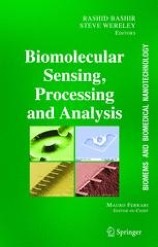
This volume contains 18 chapters focused on ‘Biomolecular Sensing, Processing and Analysis’, written by experts in the field of BioMEMS and biomedical nanotechnology. The chapters are groups into three broad categories of Sensors and Materials, Processing and Integrated Systems, and Microfluidics.Prof. Taun Vo-Dinh from Oakridge National Labs begins the Sensors and Materials section by providing a review of biosensors and biochips. This review is followed by an example of mechanical cantilever sensor work described by Prof. Arun Majumdar’s group at UC Berkeley and Prof. Tom Thundat at Oakridge National Laboratory.
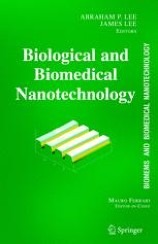
Abe Lee has been working on micro/ and nanotechnology for biomedical and biotech applications since 1992. His recent research focuses on the development of integrated micro and nano fluidic chip processors for the following applications: point-of-care diagnostics, "smart" nanomedicine for early detection and treatment, stem cell biology and therapeutics, the synthesis of novel and pure materials, and biosensors to detect environmental and terrorism threats. Jim Lee's research interest includes BioMEMS/NEMS, and polymer micro/nanotechnology. In the last 4 years, he has over 20 refereed journal publications, 2 book chapters, and 5 patents in these areas. He is now leading an NSF Nanoscale Science and Engineering Center for Affordable Nanoengineering of Polymer Biomedical Devices at OSU.

Biology and Mechanics of Blood Flows presents the basic knowledge and state-of-the-art techniques necessary to carry out investigations of the cardiovascular system using modeling and simulation. Part II of this two-volume sequence, Mechanics and Medical Aspects, refers to the extraction of input data at the macroscopic scale for modeling the cardiovascular system, and complements Part I, which focuses on nanoscopic and microscopic components and processes. This volume contains chapters on anatomy, physiology, continuum mechanics, as well as pathological changes in the vasculature walls including the heart and their treatments. Methods of numerical simulations are given and illustrated in particular by application to wall diseases. This authoritative book will appeal to any biologist, chemist, physicist, or applied mathematician interested in the functioning of the cardiovascular system.
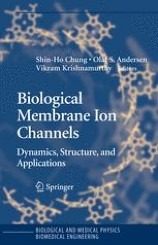
Ion channels are biological nanotubes that are formed by membrane proteins. Because ion channels regulate all electrical activities in living cells, understanding their mechanisms at a molecular level is a fundamental problem in biology. This book deals with recent breakthroughs in ion-channel research that have been brought about by the combined effort of experimental biophysicists and computational physicists, who together are beginning to unravel the story of these exquisitely designed biomolecules. With chapters by leading experts.
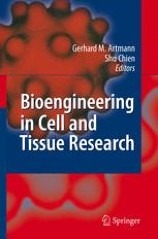
This book reviews the latest technological developments of bioengineering approaches in cell and tissue research. It is meant to have life and spirit, and to become a pioneer in technology and sciences, especially the life science. The chapters are written by excellent scientists on advanced, frontier technology and address scientific questions that need considerable thinking in terms of engineering.

Plants play a key role in purifying the biosphere of the toxic effects of industrial activity. This book shows how systematic application of the results of investigations into the metabolism of xenobiotics (foreign, often toxic substances) in plants could make a vastly increased contribution to planetary well-being. Deep physiological knowledge gained from an accumulation of experimental data enables the great differences between the detoxifying abilities of different plants for compounds of different chemical nature to be optimally exploited. Hence planting could be far more systematically adapted to actual environmental needs than is actually the case at present.

سوريا - اتستراد درعا - غباغب
+963-15 2050 - 15 860 380 /1/2/3 - 11 662 3900