



الصفحة 189
الصفحة 189

Engineering theories of software intensive systems : Theory, algorithms, software, and applications
Software engineering has over the years been applied in many different fields, ranging from telecommunications to embedded systems in car and aircraft industry as well as in production engineering and computer networks. Foundations in software technology lie in models allowing to capture application domains, detailed requirements, but also to understand the structure and working of software systems like software architectures and programs. These models have to be expressed in techniques based on discrete mathematics, algebra and logics. However, according to the very specific needs in applications of software technology, formal methods have to serve the needs and the quality of advanced software engineering methods, especially taking into account security aspects in Information Technology. This book presents mathematical foundations of software engineering and state-of-the-art engineering methods in their theoretical substance in the step towards practical applications to examine software engineering techniques and foundations used for industrial tasks.

Engineering societies in the agents world V : 5th international workshop, ESAW 2004, Toulouse, France, October 20-22, 2004 : revised selected and invited papers
The ?rst workshop “Engineering Societies in the Agents World” (ESAW) was held in August 2000, in conjunction with the 14th European Conference on Arti?cial Intelligence (ECAI 2000) in Berlin. It was launched by a group of - searchers who thought that the design and development of MASs (multi-agent systems) not only needed adequate theoretical foundations but also a call for new techniques, methodologies and infrastructures to develop MASs as arti?cial societies. The second ESAW was co-located with the European Agent Summer School (ACAI 2001) in Prague, and mostly focused on logics and languages, middleware, infrastructures and applications. In Madrid, the third ESAW c- centrated on models and methodologies and took place with the “Cooperative Information Agents” workshop (CIA 2002). The fourth ESAW in London was the ?rst one that ran as a stand-alone event: apart from the usual works on methodologies and models, it also stressed the issues of applications and m- tidisciplinary models. Based on the success of previous ESAWs, and also given that the di?cult challenges in the construction of arti?cial societies are not yet fully addressed, the ?fth ESAW workshop was organized in the same spirit as its predecessors.

Engineering self-organising systems Vol. 3910 ; 3rd International Workshop, ESOA 2005, Utrecht, The Netherlands, July 25, 2005, Revised Selected Papers
This book contains recent work from a broad range of areas with the common theme of utilising self-organisation productively. As distributed information infrastructures continue to spread (such as the Internet, wireless and mobile systems), new challenges have arisen demanding robust and scalable solutions. In these new challenging environments the - signers and engineers of global applications and services can seldom rely on centralised control or management, high reliability of devices, or secure en- ronments. At the other end of the scale, ad-hoc sensor networks and ubiquitous computing devices are making it possible to embed millions of smart computing agents into the local environment.

Engineering self-organising systems ; Vol. 3464 : Methodologies and applications
Self-organisation, self-regulation, self-repair, and self-maintenance are promising conceptual approaches to deal with the ever increasing complexity of distributed interacting software and information handling systems. Self-organising applications are able to dynamically change their functionality and structure without direct user intervention to respond to changes in requirements and the environment. This book comprises revised and extended papers presented at the International Workshop on Engineering Self-Organising Applications, ESOA 2004, held in New York, NY, USA in July 2004 at AAMAS as well as invited papers from leading researchers. The papers are organized in topical sections on state of the art, synthesis and design methods, self-assembly and robots, stigmergy and related topics, and industrial applications.
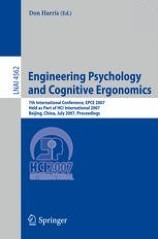
Engineering psychology and cognitive ergonomics ; 7th International Conference, EPCE 2007, Held as Part of HCI International 2007, Beijing, China, July 22-27, 2007, Proceedings
This book address the latest research and development efforts and highlight the human aspects of design and use of computing systems. It cover the entire field of Human-Computer Interaction, addressing major - vances in knowledge and effective use of computers in a variety of application areas. This volume contains papers in the thematic area of En- neering Psychology and Cognitive Ergonomics, addressing the following major topics: Cognitive and Affective Issues in User Interface Design, Cognitive Workload and Human Performance, Cognitive Modeling and Measuring, Safety Critical Applications and Systems

Engineering of Functional Skeletal Tissues
This volume discusses current knowledge of bone replacement. It is designed to integrate biological and engineering knowledge. The biology of stem cells and cell signals, knowledge needed to make stem cell engineered bone tissue a reality and how to prevent bone allograft infection is discussed. In addition, non-degradable and biodegradable scaffolds, necessary implants to attract bone cells and to build suitable bone replacements follows. Other topics include motion and bone degeneration analysis and how mechanical factors affect bone healing, implants and how they have become a major tool in reparative dentistry and the application of computational modeling to prosthesis design.

Engineering Knowledge in the Age of the Semantic Web ; 15th International Conference, EKAW 2006, Podebrady, Czech Republic, October 6-10, 2006, Proceedings
The 15th International Conference on Knowledge Engineering and Knowledge Management (2006), held on October 6-10, 2006 in Pod? ebrady,Czech Republic, followed a long tradition of European Knowledge Acquisition Workshops (from 1987),whicheventuallyacquiredtheformatofconference(in2000)whilekeeping their open-minded and interactive spirit. During the nearly 20 year lifespan of the series, the discipline of knowledge engineering (KE) evolved greatly. While knowledge acquisition (KA) techniques dominated in the very ?rst years, formal approaches to knowledge-based inf- ence and variousnew streamssuch as knowledgediscoveryfrom data/textslater cameinto play. During thelate1990sandafterwards,EKAWbecamea founding community for ontology and Semantic Web Research, which was also re?ected in the sub-titles of the 2002 and 2004 editions: “Ontologies and the Semantic Web” and “Engineering Knowledge in the Age of the Semantic Web,” resp- tively.

Engineering Interactive Systems ; EIS 2007 Joint Working Conferences, EHCI 2007, DSV-IS 2007, HCSE 2007, Salamanca, Spain, March 22-24, 2007. Selected Papers
This book constitutes the post-conference proceedings of the WG2.7/13.4 10th Conference on Engineering Human Computer Interaction (EHCI 2007), the WG 13.2 First Conference on Human Centred Software Engineering (HCSE 2007), and the 14th Conference on Design Specification and Verification of Interactive Systems (DSV-IS 2007); jointly held as EIS 2007, the international event on Engineering Interactive Systems, in Salamanca, Spain, in March 2007 - under the auspices of IFIP.

Engineering Interactive Systems ; 2nd Conference on Human-Centered Software Engineering, HCSE 2008, and 7th International Workshop on Task Models and Diagrams, TAMODIA 2008, Pisa, Italy, September 25-26, 2008. Proceedings
This book constitutes the combined proceedings of the second working conference on Human-Centred Software Engineering (HCSE 2008) and the 6th International Workshop on TAsk MOdels and DIAgrams (TAMODIA 2008); jointly held as EIS 2008, the international event on Engineering Interactive Systems, in Pisa, Italy, in September 2008.
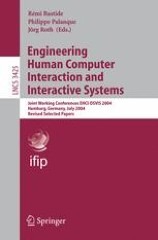
Engineering human computer interaction and interactive systems ; Joint Working Conferences EHCI-DSVIS 2004, Hamburg, Germany, July 11-13, 2004, Revised Selected Papers
As its name suggests, the EHCI-DSVIS conference has been a special event, merging two different, although overlapping, research communities: EHCI (Engineering for Human-Computer Interaction) is a conference organized by the IFIP 2.7/13.4 working group, started in 1974 and held every three years since 1989. The group’s activity is the scientific investigation of the relationships among the human factors in computing and software engineering. DSVIS (Design, Specification and Verification of Interactive Systems) is an annual conference started in 1994, and dedicated to the use of formal methods for the design of interactive systems. Of course these two research domains have a lot in common, and are informed by each other’s results.

Engineering Geology for Underground Rocks
This book clearly and systematically explains underground engineering geology principles, methods, theories and case studies, depicts engineering problems in underground rock engineering and how to study and solve them. It specially emphasizes mechanical and hydraulic couplings in rock engineering for wellbore stability, mining near aquifers and other underground structures where inflow is a problem. Using the methods and models given in this book, the reader is able to analyse underground geological engineering problems and also for the design of underground structures.

Engineering Asset Management ; Proceedings of the First World Congress on Engineering Asset Management (WCEAM) 2006
This text represents state-of-the-art trends and developments in the emerging field of engineering asset management as presented at the First World Congress on Engineering Asset Management (WCEAM) held in Australia in July 2006.

Engineering and Managing Software Requirements
This book provides an exploration of key issues in requirements engineering, the book is organized in three parts. Part 1 presents surveys of state-of-the art requirements engineering process research along with critical assessments of existing models, frameworks and techniques. Part 2 addresses key areas in requirements engineering, such as market-driven requirements engineering, goal modeling, requirements ambiguity, and others. Part 3 concludes the book with articles that present empirical evidence and experiences from practices in industrial projects. Its broader perspective gives this book its distinct appeal and makes it of interest to both researchers and practitioners, not only in software engineering but also in other disciplines such as business process engineering and management science.

Energy-efficient and semi-automated truck platooning : Research and evaluation
This book presents research and evaluation results of the Austrian flagship project “Connecting Austria,” illustrating the wide range of research needs and questions that arise when semi-automated truck platooning is deployed in Austria. The work presented is introduced in the context of work in similar research areas around the world. This interdisciplinary research effort considers aspects of engineering, road-vehicle and infrastructure technologies, traffic management and optimization, traffic safety, and psychology, as well as potential economic effects.

Energy transition and energy democracy in East Asia
Provides down-to-earth information on what kind of actions are being taken by the Government, Local community, Businesses, Researchers, NGOs on the energy transition in this region. It gives an updated picture of the energy transition in the East Asian countries, where the economic growth, as well as CO2 emission growth, is significant.

Energy Resources in East Africa: Opportunities and Challenges
East African states have historically shared several resources including energy and common heritage of its people. This book provides information on available sources of energy in the region and how the energy suppliers can exploit them in an integrated form to produce the right blend of energy for various applications e.g., industrial, domestic and recreational uses. We provide an in-depth analysis of the advantages and disadvantages of different energy sources in-terms of environmental, industrialization, distribution costs and impacts. We hope that the book will contribute towards a sustainable exploitation of energy resources for the improvement of the people’s quality of life.

Energy Poverty : (Dis)Assembling Europe's Infrastructural Divide
Aims to consolidate and advance debates on European and global energy poverty by exploring the political and infrastructural drivers and implications of the condition across a variety of spatial scales. It highlights the need for a geographical conceptualization of the different ways in which household-level energy deprivation both influences and is contingent upon disparities occurring at a wider range of spatial scales. There is a strong focus on the relationships among energy transformation, institutional change and place-based factors in determining the nature and location of energy-related injustices. The book also explores how patterns and structures of energy poverty have changed over time, as evidenced by some of the common measures used to describe the condition. In part, this means investigating the makeup of energy poor demographics across various social and spatial cleavages. More broadly, it also argues that energy sector reconfigurations are both reflected in and shaped by various domains of social and political organization, especially in terms of creating poverty-relevant outcomes.

Energy minimization methods in computer vision and pattern recognition ; 6th International Conference, EMMCVPR 2007, Ezhou, China, August 27-29, 2007, Proceedings
Contains critical issues of representation, learning, and inference. Important new themes include pr- abilistic grammars, image parsing, and the use of datasets with ground-truth to act as benchmarks for evaluating algorithms and as a way to train learning algorithms. Other themes include the development of efficient inference algorithms using advanced techniques from statistics, computer science, and applied mathematics. This book makes no distinction between oral and poster papers. It also contiants sections on al- rithms, applications, image parsing, image processing, motion, shape, and thr- dimensional processing.

Energy methods in structural mechanics : A comprehencive introduction to matrix and finite element methods of analysis
Provides a basic and clear introduction to the principles underlying finite elements and the computer based methods of the analysis of structures commonly used in industry. There can be a danger that, without such an understanding, engineers will use these computer based analysis tools as black boxes and accept results without being aware of the real significance of the information obtained.

Energy Metabolism and Obesity : Research and Clinical Applications
Elucidate the most important aspects of genetic background, neuropeptide secretion and action, neuronal pathways, adipokines, gut hormones, and environmental influences (physical activity, pharmacologic agents, and surgical alteration of the gastrointestinal tract), as well as the complex interactions among them.
