



الصفحة 181
الصفحة 181
Appropriate Dose Selection - How to Optimize Clinical Drug Development
Optimal dose individualization has become more important in improving clinical efficacy and safety, given the variability in drug response, e.g., due to concurrent illnesses or co-medications. Therefore, the role of optimal dose finding in early clinical drug development so as to maximize successful clinical use is emphasized. The continued use of biomarkers – based on the (known) pharmacology of the drug and/or biology of the underlying disease – along with exposure–response evaluation throughout all phases of drug development can quantitatively integrate clinical pharmacology knowledge, provide early proof of concept, and help in rational dose selection and rational drug product labeling for clinical use.

Applying the Kaizen in Africa : A New Avenue for Industrial Development
At present, how to develop industries is a burning issue in Africa, where population growth remains high and economic development has thus far failed to provide sufficient jobs for many, especially young people and women. The creation of productive jobs through industrial development ought to be a central issue in steering economic activity across the continent.The authors of this book, consisting of two development economists and five practitioners, argue that the adoption of Kaizen management practices, which originated in Japan and have become widely used by manufacturers in advanced and emerging economies, is decisively the most effective first step for industrial development in Africa.This open access book discusses what Kaizen management is, why it is applicable to Africa, and why it can provide Africa with a springboard for sustainable economic growth and employment generation.
Applied Stochastic Control of Jump Diffusions
The main purpose of the book is to give a rigorous, yet mostly nontechnical, introduction to the most important and useful solution methods of various types of stochastic control problems for jump diffusions and its applications.
Applied Stochastic Control of Jump Diffusions
The main purpose of the book is to give a rigorous, yet mostly nontechnical, introduction to the most important and useful solution methods of various types of stochastic control problems for jump diffusionsThe types of control problems covered include classical stochastic control, optimal stopping, impulse control and singular control. Both the dynamic programming method and the maximum principle method are discussed, as well as the relation between them. Corresponding verification theorems involving the Hamilton-Jacobi Bellman equation and/or (quasi-)variational inequalities are formulated. There are also chapters on the viscosity solution formulation and numerical methods.The text emphasises applications, mostly to finance. All the main results are illustrated by examples and exercises appear at the end of each chapter with complete solutions. This will help the reader understand the theory and see how to apply it.The book assumes some basic knowledge of stochastic analysis, measure theory and partial differential equations.
Applied Remote Sensing for Urban Planning, Governance and Sustainability
Despite the promising and exciting possibilities presented by new and fast-developing remote sensing technologies applied to urban areas, there is still a gap perceived between the generally academic and research-focused spectrum of results offered by the “urban remote sensing” community and the application of these data and products by the local governmental bodies of urban cities and regions. While there is no end of interesting science questions that we can ask about cities, sometimes these questions don't match well with what the operational problems and concerns of a given city are. The authors present data from six urban regions from all over the world. They explain what the important questions are, and how one can use data and scientific skills to help answer them.
Applied Probability and Statistics
This text is designed for a one-semester course on Probability and Statistics. The exposition unfolds systematically from an introductory chapter to such topics as random variables and vectors, stochastic processes, estimation, testing and regression. The topics are well chosen and the presentation is enriched by many examples from real life. Following every chapter, the reader will find many original, solved and unsolved problems and hundreds of multiple choice questions, enabling those unfamiliar with the topics to master them. Additionally appealing are the interesting historical notes on the mathematicians mentioned throughout and a useful bibliography. A distinguishing character of the book is the thorough and succinct handling of the various topics.

Applied Physical Pharmacy
Presents an introduction to physical pharmacy. This book begins with a review of key biopharmaceutics concepts of drug liberation, absorption, distribution, metabolism, and excretion

Applied pharmacology for the dental hygienist ; 8th ed.
Provides you with an in-depth understanding of the pharmacologic principles needed for safe and effective dental treatment and oral health care. It discusses drug properties and mechanisms of action, dosages, intended effects, interactions, and adverse reactions - both for the medications a patient may already be taking and for the drugs prescribed by the dentist. This new edition has been updated throughout to give you a firm foundation in pharmacology in order to assess and educate patients so they can maintain optimal oral health!
Applied Pedagogies for Higher Education : Real World Learning and Innovation across the Curriculum
This book critiques real world learning across both the curriculum and extracurricular activities. Drawing on disciplines as diverse as business, health, fashion, sociology and geography, the editors and authors employ a cross-disciplinary approach to examine how this concept is being applied in higher education.
Applied Parallel Computing ; State of the Art in Scientific Computing
Introduction The PARA workshops in the past were devoted to parallel computing methods in science and technology. There have been seven PARA meetings to date: PARA’94, PARA’95 and PARA’96 in Lyngby, Denmark, PARA’98 in Umea, ? Sweden, PARA 2000 in Bergen, N- way, PARA 2002 in Espoo, Finland, and PARA 2004 again in Lyngby, Denmark. The ?rst six meetings featured lectures in modern numerical algorithms, computer science, en- neering, and industrial applications, all in the context of scienti?c parallel computing. This meeting in the series, the PARA 2004 Workshop with the title “State of the Art in Scienti?c Computing.
Applied Parallel Computing ; 6th International Conference, PARA 2002, Espoo, Finland, June 15-18, 2002. Proceeding
These proceedings contain the papers presented at PARA 2002, the Sixth In-ternational Conference on Applied Parallel Computing. PARA 2002 was held inEspoo, Finland, June 15–18, 2002, and hosted by CSC, the Finnish informationtechnology center for science. The general theme of the conference was advancedscientific computing.The conference demonstrated the ability of advanced scientific computing tosolve real-world problems, and highlighted methods, instruments, and trends infuture scientific computing. The conference began with a one-day tutorial sessionon Grid programming.The conference focused on an application-oriented, multi-disciplinary, andmulti-scale approach. A wide variety of scientific computing applications wereintroduced, from semiconductor processing and behavior of the human body tooceanic and atmospheric phenomena.
Applied Mathematical Demography
it focus on applications of demographic models, while extending its scope to matrix models for stage-classified populations.first introduce the life table to describe age-specific mortality, and then use it to develop theory for stable populations and the rate of population increase. This theory is then revisited in the context of matrix models, for stage-classified as well as age-classified populations. Reproductive value and the stable equivalent population are introduced in both contexts, and Markov chain methods are presented to describe the movement of individuals through the life cycle. Applications of mathematical demography to population projection and forecasting, kinship, microdemography, heterogeneity, and multi-state models are considered.
Applied Linguistics and Language Teacher Education
Applied Linguistics and Language Teacher Education is aimed at applied linguists who are interested in understanding more about the learning of novice teachers in their classes. The 21 studies in this volume provide information on the complexity of novice teachers’ learning and use of knowledge in a variety of applied linguistics classes such as SLA, Syntax, Pragmatics, Sociolinguistics, Phonetics and Phonology, L2 Reading and Writing, Testing, and Content Based Instruction. These studies were conducted in a variety of contexts, from North and South America to Europe, Asia and Australia, and look at the preparation of teachers of English, Spanish and Chinese.
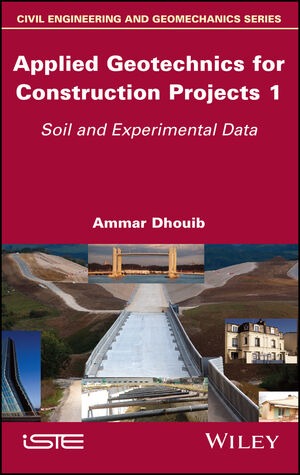
Applied geotechnics for construction projects ; Vol. 1 : Soil and Experimental Data
Applied Geotechnics for Construction Projects 1 first defines, identifies and classifies soils, exploring their complexities and weaknesses, and then outlines the basic principles of stresses and strains that establish and develop within soils. The third chapter of the book introduces and develops methods of soil investigation in order to experimentally determine the geotechnical parameters that are useful in the design stage of construction projects.
Applied Geometry for Computer Graphics and CAD
Focusing on the manipulation and representation of geometrical objects, this book explores the application of geometry to computer graphics and computer-aided design (CAD). An introduction to transformations of the plane and three-dimensional space describes how objects can be constructed from geometric primitives and manipulated. This leads into a treatment of projections and the method of rendering objects on a computer screen by application of the complete viewing operation. Subsequently, the emphasis is on the two principal curve and surface representations, namely, Bézier and B-spline (including NURBS).
Applied Fuzzy Arithmetic : An Introduction with Engineering Applications
Applied Fuzzy Arithmetic provides a well-structured compendium that offers both a deeper knowledge about the theory of fuzzy arithmetic and an extensive view on its applications in the engineering sciences, making it a resource for students, researchers, and practical engineers. The first part of the book gives an introduction to the theory of fuzzy arithmetic, which aims to present the subject in a well-organized and comprehensible form. The derivation of fuzzy arithmetic from the original fuzzy set theory and its evolution towards a successful implementation is presented with existing formulations of fuzzy arithmetic included and integrated in the overall context. The second part of the book presents a diversified exposition of the application of fuzzy arithmetic, addressing different areas of the engineering sciences, such as mechanical, geotechnical, biomedical, and control engineering.
Applied Electromagnetism and Materials
Topics range from the spectroscopy and characterization of dielectrics and semiconductors, to non-linear effects and electromagnetic cavities, to ion-beam applications in materials science.
Applied Econometrics with R
This is the first book on applied econometrics using the R system for statistical computing and graphics. It presents hands-on examples for a wide range of econometric models, from classical linear regression models for cross-section, time series or panel data and the common non-linear models of microeconometrics such as logit, probit and tobit models, to recent semiparametric extensions. In addition, it provides a chapter on programming, including simulations, optimization, and an introduction to R tools enabling reproducible econometric research.
Applied Demography in the 21st Century : Selected Papers from the Biennial Conference on Applied Demography, San Antonio, Texas, January 7–9, 2007
The work contains chapters on several major topical areas that are central to applied demography including works on data Use and measurement, including detailed analysis of the American Community Survey and Master Address File, population estimation and projection, applied demography and health, and surveys examples of applied demographic analysis in such diverse areas as urban planning, educational planning, church selection, and private-sector marketing. The work also contains a section on the process of educating applied demographers delineating the types of skills needed by the applied demographer and providing examples of a program designed to meet such needs.

Applied Charged Particle Optics
Authored by a pioneer of the field, this overview of charged particle optics provides a solid introduction to the field for all physicists wishing to design their own apparatus or better understand the instruments with which they work. Applied Charged Particle Optics begins by introducing electrostatic lenses and fields used for acceleration, focussing and deflection of ions or electrons. Subsequent chapters give detailed descriptions of electrostatic deflection elements, uniform and non-uniform magnetic sector fields, image aberrations, and, finally, fringe field confinement. A chapter on applications is added.
