



الصفحة 18
الصفحة 18

Molluscs : From Chemo-ecological Study to Biotechnological Application
Marine molluscs are very promising candidates for a wide range of biotechnological applications. For example, they possess analgesic drugs more potent than morphine and very effective anticancer agents. The present book gives an up-to-date overview of the main classes of bioactive compounds from molluscs, moving from ecological observations, to chemical characterization, to biosynthesis, to large-scale synthesis, and to pharmacological applications. A truly outstanding international panel of experts from all continents provides complete coverage of the most stimulating topics related to molluscs. This knowledge of their history and current studies provides an open door to the future.

Molecules in Superfluid Helium Nanodroplets : Spectroscopy, Structure, and Dynamics
This book covers recent advances in experiments using the ultra-cold, very weakly perturbing superfluid environment provided by helium nanodroplets for high resolution spectroscopic, structural and dynamic studies of molecules and synthetic clusters. The recent infra-red, UV-Vis studies of radicals, molecules, clusters, ions and biomolecules, as well as laser dynamical and laser orientational studies, are reviewed. The Coulomb explosion studies of the uniquely quantum structures of small helium clusters, X-ray imaging of large droplets and electron diffraction of embedded molecules are also described. Particular emphasis is given to the synthesis and detection of new species by mass spectrometry and deposition electron microscopy.

Molecular Wires : From Design to Properties
In the emerging field of nanoscience the desire to construct objects which in the molecular scale can resemble and act as macroscopic devices is a constant trend. Amongst the simplest but also most attractive functional component molecular wires are surely the most investigated. The reason for such interest is quite obvious since wires, in today world, are used all around us and are the most indispensable unit to assemble any type of electronic devices.In this issue the synthesis and characterization of molecular wires based on organic or metal complexes components, their properties and some theoretical background will be illustrated.

Molecular Techniques in the Microbial Ecology of Fermented Foods
Molecular Methods and Microbial Ecology of Fermented Foods presents the latest findings in microbial ecology as determined by the application of molecular methods, reports the most recent advances in the field, and offers details on primers and protocols most suitable for studying specific food ecosystems. It provides analytical details and suggestions useful in research, as well as evaluation of the criticism of using novel approaches in food fermentation microbiology. This book also discusses new insights drawn from the use of bio-molecular techniques in the microbial ecology of fermented foods.

Molecular recognition in pharmacology
Traces the behavior of the drug substance, starting from the initial pre-contact stage, and ending with the formation of the complex. Molecular recognition lies in the foundation of every life form and includes many mysteries. Currently, studies on this topic in pharmacology are limited to determining the properties of complexes of medicinal substances (drugs) with specific (complementary) biomolecules: receptors, enzymes, ion channels etc. The results present the mechanisms preventing drugs from such non-specific binding. This direction is very fruitful, although the phenomenon of molecular recognition is far wider.

Molecular Mechanisms of Synaptogenesis
Molecular Mechanisms of Synaptogenesis is a compilation of recent exciting findings that summarizes the ever-expanding knowledge of how neuronal contacts develop in the normal brain and how their functions are affected in mental disorders. In the last decade, advances in molecular and cellular biology, combined with the development of sophisticated fluorescence microscopy tools to visualize synapses in live neurons, have revealed many intriguing and unexpected findings regarding the dynamics of synapse formation. Studies by a number of researchers have identified several critical protein components of synapses and shown the time course of their arrival at the synapse. Several molecules serve to hold the synaptic contacts between nerve cells and regulate their function.

Molecular Mechanisms of Parasite Invasion
All of the parasitic organisms highlighted in this new book represent medically important human pathogens that contribute significantly to the global burden of disease. As such there is intense interest in understanding the molecular basis of infection by these pathogens—not only with regard to their clinical relevance but also the fascinating biology they reveal. For most of the parasites discussed here the ability to penetrate biological barriers and/or to establish intracellular residence is critical to survival of the pathogen in the mammalian hosts. For other parasites, a tissue invasive phenotype is a key virulence determinant. In the ensuing 18 chapters, select members of this diverse set of protozoan parasites, as well as some examples of the extremely reduced fungal parasites classified as Microsporidia, are discussed within the context of the fascinating molecular strategies employed by these organisms to migrate across biological barriers and to establish residence within target host cells.

Molecular mechanisms in nutritional epigenetics
The field of nutritional epigenetics/nutri-epigenetics has expanded significantly, shedding light on how environmentally-driven epigenetic pathways can be modulated through nutrition and eating habits. The book provides a comprehensive introduction to the various epigenetic mechanisms affected by dietary compounds and focuses on specific topics such as the relationship between diet and the gut microbiome, the impact of diet on cardiovascular disease and psychopathology and the role of diet in pregnancy.

Molecular Materials with Specific Interactions - Modeling and Design
One of the first requirements to initiate the molecular modeling of molecular materials is an accurate and realistic description of the electronic structure, intermolecular interactions and chemical reactions at microscopic and macroscopic scale. Therefore the first four chapters contain an extensive introduction into the latest theories of intermolecular interactions, functional density techniques, microscopic and mezoscopic modeling techniques as well as first-principle molecular dynamics.In the following chapters, techniques bridging microscopic and mezoscopic modeling scales are presented. The authors then illustrate various successful applications of molecular design of new materials, drugs, biocatalysts, etc. before presenting challenging topics in molecular materials design.

Molecular Markers of Brain Tumor Cells : Implications for Diagnosis, Prognosis and Anti-Neoplastic Biological Therapy
Childhood brain tumors are a diverse group of diseases characterized by the abnormal growth of tissue contained within the skull. Other than leukemia and lymphoma, brain tumors are the most common type of neoplasms that occur in children. The leading cause of death from childhood neoplasms among persons up to 19 years is brain tumors. As such, this book is a review of the most recent molecular biological research concerning brain tumors with references and comparisons to a variety of neoplastic disorders. The book then uses this information to foreshadow the direction that future anti-neoplastic therapies will take. Because of the wide spectrum of the objectives of the book, any individual involved in cancer research will greatly benefit from the work. Histopathologists, neuropathologists, clinical and research oncologists, and medical students will find this book to be an invaluable resource as a reference guide. Patients and their families will also find the book useful as it offers a comprehensive update on new, non-classical therapeutic modality options and contains a detailed description and analysis of brain tumors. Such an endeavor has yet to be undertaken by any other book and may prove to be the most comprehensive book on brain tumors thus far.

Molecular Marker Systems in Plant Breeding and Crop Improvement
Successful release of new and better crop varieties increasingly requires genomics and molecular biology. This volume presents basic information on plant molecular marker techniques from marker location up to gene cloning. The text includes a description of technical approaches in genome analysis such as comparison of marker systems, positional cloning, and array techniques in 19 crop plants. A special section focuses on converting this knowledge into general and specific breeding strategies, particularly in relation to biotic stress. Theory and practice of marker assisted selection for QTL, gene pyramiding and the future of MAS are summarized and discussed for maize, wheat, and soybean. Furthermore, approaches in silviculture on the examples of Fagus, Populus, Eucalyptus, Picea and Abies are presented. The volume ends with a comprehensive review of the patents relevant for using molecular markers and marker assisted selection.

Molecular Genetics of Recombination
Genetic recombination is an important process involved in shaping the genetic make up of progeny. Increasingly, it has become evident that recombination is a DNA repair pathway crucial during DNA replication in vegetatively growing cells.
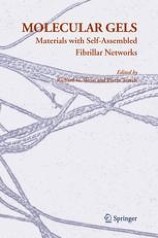
Molecular Gels : Materials with Self-Assembled Fibrillar Networks
Molecular gels and fibrillar networks – a comprehensive guide to experiment and theory Molecular Gels: Materials with Self-Assembled Fibrillar Networks provides a comprehensive treatise on gelators, especially low molecular-mass gelators (LMOGs), and the properties of their gels. The structures and modes of formation of the self-assembled fibrillar networks (SAFINs) that immobilize the liquid components of the gels are discussed experimentally and theoretically. The spectroscopic, rheological, and structural features of the different classes of LMOGs are also presented. Many examples of the application of the principal analytical techniques for investigation of molecular gels (including SANS, SAXS, WAXS, UV-vis absorption, fluorescence and CD spectroscopies, scanning electron, transmission electron and optical microscopies, and molecular modeling) are presented didactically and in-depth, as are several of the theories of the stages of aggregation of individual LMOG molecules leading to SAFINs. Several actual and potential applications of molecular gels in disparate fields (from silicate replication of nanostructures to art conservation) are described. Special emphasis is placed on perspectives for future developments.

Molecular Gas Dynamics : Theory, Techniques, and Applications
This self-contained work is an up-to-date treatment of the basic theory of molecular gas dynamics and its various applications. Recent progress in the field has greatly enhanced the original theory and stimulated interesting and critical gas dynamic phenomena and problems. This book, unique in the literature, presents working knowledge, theory, techniques, and typical phenomena in rarefied gases for theoretical development and applications.

Molecular Electronics Materials, Devices and Applications
another goal of Molecular Electronics Materials, Devices and Applications is also to promote a practical approach. As a starting point for future developments, a pragmatic methodology for VHDL-AMS device modelling and circuit design based on experimental data is then proposed. It includes an original fault tolerant memory architecture based on molecular electronics.
Molecular Diagnostic PCR Handbook
PREFACE The Joint FAO/IAEA Division of Nuclear Techniques in Food and Agriculture is involved in agricultural research and development and assists Member States of FAO and IAEA in improving strategies to ensure food security through the use of nuclear techniques and related biotechnologies, where such techniques have a valuable and often unique role. In particular, molecular diagnostic methods have rapidly evolved in the past twenty years, since the advent of the Polymerase Chain Reaction (PCR). They are used in a wide range of agricultural areas such as, improving soil and water management; producing better crop varieties; diagnosing plant and animal diseases; controlling insect pests and improving food quality and safety. The uses of nucleic acid-directed methods have increased significantly in the past five years and have made important contributions to disease control country programmes for improving national and international trade. These developments include the more routine use of PCR as a diagnostic tool in veterinary diagnostic laboratories. However, there are many problems associated with the transfer and particularly, the application of this technology. These include lack of consideration of: the establishment of quality-assured procedures, the required set-up of the laboratory and the proper training of staff. This can lead to a situation where results are not assured. This book gives a comprehensive account of the practical aspects of PCR and strong consideration is given to ensure its optimal use in a laboratory environment. This includes the setting-up of a PCR laboratory; Good Laboratory Practice and standardised of PCR protocols.

Molecular Building Blocks for Nanotechnology : From Diamondoids to Nanoscale Materials and Applications
This book contains a variety of subjects covering computational, dry and wet nanotechnology. The state-of-the-art subject matters presented here provide the reader with the latest developments on ongoing nanoscience and nanotechnology research from the bottom-up approach.

Molecular Biology of Human Cancers: An Advanced Student's Textbook
Presents many of the molecules and mechanisms generally important in human cancers. Following an overview on the cancer problem, individual chapters deal with cancer genetics and epigenetics, DNA damage and repair, oncogenes, tumor suppressors, regulatory pathways in cancer, apoptosis, cellular senescence, tumor invasion, and metastasis. A consensus is emerging that while these common mechanisms and molecules are all relevant to human cancers, in each cancer type (or even subtype) a selection of them are extremely important. For selected cancers, the route from genetic and epigenetic changes to their biological and clinical behavior can already be traced. Part II of the book presents a broad, but exemplary selection of cancers that serve as paradigms to illustrate this point. In fact, cancer research has now reached a critical stage, in which the accumulated knowledge on molecular mechanisms is gradually translated into improved prevention, diagnosis, and treatment. The state, pitfalls, and potential of these efforts are summarized in Part III. More than ever, cancer research is now an interdisciplinary effort which requires a basic knowledge of commonly used terms, facts, issues, and concepts. The aim of this book is to provide advanced students and practitioners of different disciplines with this basis, bridging the gap between standard textbooks of molecular biology, pathology, and oncology on the one hand and the specialized cancer literature on the other.
Molecular Biology in Plant Pathogenesis and Disease Management : Microbial Plant Pathogens ; Vol.1
Studies on molecular biology of pathogens, infection process and disease resistance, have provided information essentially required to understand the vulnerable stages at which the pathogens can be tackled effectively and to adopt novel strategies to incorporate disease resistance genes from diverse sources and /or to induce resistance of cultivars with desirable agronomic attributes using biotic or abiotic agents. The nature of interaction between the gene products of the pathogen and plant appears to determine the outcome of the interaction resulting in either disease progression or suppression. Transgenic plants with engineered genes show promise for effective exploitation of this approach for practical application. Research efforts during the recent years to sequence the whole genomes of the pathogens and plants may lead to development of better ways of manipulating disease resistance mechanisms enabling the grower to achieve higher production levels and the consumer to enjoy safer food and agricultural products. Experimental protocols included in appropriate chapters will be useful for researchers and graduate students.

Molecular Basis of Thyroid Cancer
Molecular Basis of thyroid Cancer brings together top-flight experts from across the globe to consider present state of the art treatment and techniques and what the future holds. The product of this effort is invaluable to endocrinologists, particularly those with an interest in the thyroid, molecular oncologists, nuclear medicine physicians and those in biotechnology intent on devising innovative therapies for cancer. "Significant advances in our understanding of thyroid cancer have occurred over the previous decade. This text discusses the molecular alterations and pathologic manifestations seen in this disease. Distinguished investigators address both the basic biology and clinical issues pertinent to our understanding and management of patients with thyroid cancer."
