



الصفحة 18
الصفحة 18

Evolving Connectionist Systems : The Knowledge Engineering Approach
Evolving Connectionist Systems is aimed at all those interested in developing and using intelligent computational models and systems to solve challenging real world problems in computer science, engineering, bioinformatics and neuroinformatics. The book challenges scientists and practitioners with open questions about future creation of new information models inspired by Nature. This edition includes new methods for adaptive, knowledge-based learning, such as online incremental feature selection, spiking neural networks, transductive neuro-fuzzy inference, adaptive data and model integration, cellular automata and artificial life systems, particle swarm optimisation, ensembles of evolving systems, and quantum inspired neural networks. New applications to gene and protein interaction modelling, brain data analysis and brain model creation, computational neuro-genetic modelling, adaptive speech, image and multimodal recognition, language modelling, adaptive robotics, modelling dynamic financial and socio-economic systems, and ecological modelling, are covered. An important new feature of the book is the attempt to connect different structural and functional levels of a complex, intelligent system, looking for inspiration from functional relationships in natural systems, such as the genetic and the brain activity.

Evidence-based decision making in dentistry : Multidisciplinary management of the natural dentition
Covers all aspects of the evidence-based decision making process in multidisciplinary management of the natural dentition. Individual chapters focus specifically, and in detail, on endodontic, periodontal, and prosthetic considerations, identifying aspects that need to be integrated into decision making and treatment planning. Evidence-based decision making with regard to preservation of the natural tooth versus extraction and implant placement is then discussed, and a concluding chapter examines likely future trends in dentistry and how they may affect clinical decision making.
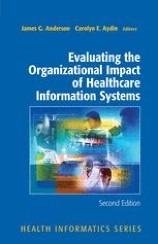
Evaluating the organizational impact of health care information systems
Evaluating the Organizational Impact of Health Care Information Systems, Second Edition, is heavily updated and revised from its First Edition, which is entitled Evaluating Health Care Information Systems: Methods and Applications. The much-needed Second Edition is a guide for evaluating the organizational impacts of computer systems in health care institutions. It provides a practical guide for determining the appropriate questions to ask based on underlying models of change and the most effective methods available. An introduction to various methods is provided, as well as appendices containing survey instruments usable in research and evaluation, computer programs for data analyses, and other evaluation resources. The book provides a critical overview of current research and evaluation to date with numerous bibliographic references from health care and other fields. The methods and instruments described are applicable to a wide variety of other organizations that utilize information technology and they emphasize the importance of clearly specifying the purpose of the evaluation, recognizing assumptions about organizational change and using a multi-method approach to system evaluation. The material presented is drawn from a variety of social and health science disciplines in order to integrate the study of information system with social science theory and methods. Chapter highlights include Cognitive Approaches to Evaluation, Computer Simulation as an Evaluation Tool, and Research and Evaluation: Future Directions.

European Variations as a Key to Cooperation
This book offers a novel view on the benefits of a lasting variation between the member states in the EU. In order to bring together thirty very different European states and their citizens, the EU will have to offer more scope for variation. Unlike the existing differentiation by means of opt-outs and deviations, variation is not a concession intended to resolve impasses in negotiations; it is, rather, a different structuring principle. It takes differences in needs and in democratically supported convictions seriously

European Oncology Leaders : The CancerFutures Collection 2001-2004
CancerFutures was launched in 2001 with the aim of increasing knowledge about the complex world of cancer care through people and facts. Cover Story and Masterpiece are two key sections of the magazine that have featured in-depth interviews with some of Europe’s most influential oncology leaders – people who have been pioneers of the art and science of oncology over the past 30 years. These interviews comprise a unique collection of stories that give insight into the many personal and professional challenges these leaders have faced in building their careers and pushing forward the boundaries of oncology practice. The European School of Oncology is pleased to launch the CancerFutures Collection which will be of interest to all members of the European oncology community, both today and in the future. This collection acknowledges the tremendous contribution that these leaders have made to cancer care and pays tribute to their dedication and drive. It will provide encouragement for all those confronted with difficulties in building their careers, and will give some inspiration for future leaders.

European Higher Education Area: The Impact of Past and Future Policies
Sketches a vivid picture of the state of higher education in Europe almost 30 years after the fall of the Berlin Wall. The emphasis is on the role of the Bologna Process, The authors document long-term transformations and recent cracks in the established higher education pathways and the broader policy narratives that supported them for the last 20-30 years.Are we witnessing the advent of a new era? If so, that raises questions regarding the future of higher education, some of which are addressed in this volume. How will this new historical situation influence higher education? What can be done in higher education, building on what has been already achieved in these past years, including the Bologna Process itself, to benefit citizens, institutions, countries, and Europe as a whole?

European Higher Education Area : Challenges for a New Decade
This book highlights the major outcomes of the fourth edition of the Future of Higher Education – Bologna Process Researchers Conference (January 2020), which has already established itself as a landmark in the European higher education environment.

European Energy Futures 2030 : Technology and Social Visions from the European Energy Delphi Survey
The book summarizes the results of the first Europe-wide Delphi study on future developments in the energy sector. With a time horizon of 2030, this expert survey not only provides a useful perspective on long-term developments of energy technologies, but also evaluates these technologies against different sets of social values or "visions". In the comprehensive analysis following the Delphi survey itself, special attention was given to faithfully translating the trends and needs identified by the survey participants into recommendations for R&D and energy policies.

EU Accession - Financial Sector Opportunities and Challenges for Southeast Europe
A distinguished international group of central bankers, commercial bankers, entrepreneurs, academic advisors, policymakers, and representatives of development finance organizations and donor agencies, brought together by KfW, examines in this book the future of financial sector development in Southeast Europe. They explore ways to strengthen the banking sector in Southeast Europe, further promote SMEs, and improve access to financial services in the region. Experts and decision-makers assess the opportunities and challenges presented by the EU accession process and Basel II, and offer candid insight into the expanding role of the private sector in developing the financial landscape. The perspectives presented in this book will prompt discussion and intellectual exchange that will serve as a new starting point for further successful cooperative initiatives.

Ethnopharmacology of Medicinal Plants : Asia and the Pacific
This book presents several aspects of the pharmacology, chemistry, botany and folkloric use of selected medicinal plants that can be found in Asia and the Pacific. It is generously illustrated with line drawings for many of the plants under discussion, as well as examples of chemical structures.

Ethics and Intersex
The book begins with introductory chapters on the etiology of intersex conditions, conceptual clarification, legal issues, and reflections about the inherent characteristics of medical care that have led up to the issues we face today and explain the resistance to change in traditional practices. Researchers provide recent data on gender identity, surgical outcomes, and appropriate clinical care. Issues never having been addressed are introduced. The significance of intersexuality for Christianity and for philosophical concerns with authenticity add further depth to the collection. The final chapters deal with future possibilities in the treatment of intersex and for intersex advocacy.

Estuaries
Aspects of the biogeochemistry of estuaries from a variety of environments, from the tropics to the Arctic, are discussed. In most cases the courses of these rivers have been altered by dams or diversions; the results of these changes on the nature of the estuary are also discussed, where such data is available. In the case of the Tasmanian rivers, the estuary of the Huon, a largely untouched river, is contrasted with that of the Derwent, a river heavily influenced by industry. The future state of all of these estuaries may be a sensitive indicator of shifts in global weather patterns.

Essentials of Excel VBA, Python, and R Vol. I : Financial statistics and portfolio analysis
Teaches statistical analyses and research methods utilizing business case studies and financial data, with the applications of Excel VBA, Python and R. Each chapter engages the reader with sample data drawn from individual stocks, stock indices, options, and futures. Now in its second edition, it has been expanded into two volumes, each of which is devoted to specific parts of the business analytics curriculum. To reflect the current age of data science and machine learning, the used applications have been updated from Minitab and SAS to Python and R.

Epiduroscopy : Spinal Endoscopy
Endoscopy of the spinal canal – epiduroscopy (EDS) – has proven to be a safe, efficient and future-oriented interventional endoscopic procedure for everyday clinical use in diagnosing and managing pain syndromes.

Epidemiology of Drug Abuse
As the drug abuse epidemic evolves, so do the tools needed to understand and treat it. Accordingly, Epidemiology of Drug Abuse takes the long view, cogently outlining what the book calls "the natural history of drug abuse" and redefining its complex phenomena to reflect our present-day knowledge. Twenty-six eminent contributors discuss the state and future of the field, balancing the practical concerns involved in gathering drug abuse data with the ethics of using the information.

Environmental security and environmental management : The role of risk assessment ; Proceedings of the NATO Advanced Research Workhop on The Role of Risk Assessment in Environmental Security and Emergency Preparedness in the Mediterranean Region, held in Eilat, Israel, April 15-18, 2004
The concept of “environmental security” has emerged as one basis for understanding international conflicts. This phrase can mean a variety of things. It can signify security issues stemming from environmental concerns or conflicting needs, or it can mean that the environment is treated as a resource for the long term, and the question is what should be done today to preserve the quality of the environment in the future. In the same way that energy security is about ensuring access to energy for the long run, it can also mean that pressing environmental concerns create a situation where different countries and communities are forced to collaboratively design a unified response, even if cooperation is not generally in the logic of their relations. Over the last several years, the authors of this book and their colleagues have tried to demonstrate the power of risk assessment and decision analysis as valuable tools that decision makers should use for a broad range of environmental problems, including environmental security. Risk analysis is almost more a state of mind or a way of looking at problems than it is a kind of algorithm or a set of recipes. It projects a kind of rationality on problems and forces a certain degree of quantitative rigor, as opposed to the all too common tendency of making environmental recommendations based on anecdotal evidence.

Environmental Policy Analyses : Learning from the Past for the Future - 25 Years of Research
The criteria used to select the fifteen contributions in this book were their impact on the scientific debate at the time of their publication, their validity for p- sent conceptualizations of policy analysis in the field of the environment, and their contribution to the development of policy analysis as a whole . Moreover, the selected contributions mainly focus on empirical appli- tions in the field of environmental policies or the interface between en- ronmental and non-environmental policies. Some have led to concrete p- icy recommendations of which most have been partly implemented since, This research also sometimes addressed regional political administrative arrangements leading to administrative reforms and new strategic directions of implementing agencies.

Entrepreneurship in the U.S. : The Future is Now
This important book enhances understanding of entrepreneurial dynamics, providing the first analysis of changes in US entrepreneurial activity. It examines adult participation in new firm creation and differences in regional firm creation activity.

Entity-Oriented Search
This open access book covers all facets of entity-oriented search—where “search” can be interpreted in the broadest sense of information access—from a unified point of view, and provides a coherent and comprehensive overview of the state of the art. It represents the first synthesis of research in this broad and rapidly developing area. Selected topics are discussed in-depth, the goal being to establish fundamental techniques and methods as a basis for future research and development. Additional topics are treated at a survey level only, containing numerous pointers to the relevant literature. A roadmap for future research, based on open issues and challenges identified along the way, rounds out the book.

Enterprise Information Systems V
ICEIS focuses on real world applications and aims at bringing together researchers, engineers and practitioners interested in the advances and business applications of information systems. As in previous years, ICEIS’2003 held four simultaneous tracks covering different aspects of enterprise computing: Databases and Information Systems Integration, Artificial Intelligence and Decision Support Systems, Information Systems Analysis and Specification and Software Agents and Internet Computing. Although ICEIS’2003 received 546 paper submissions from over 50 countries, only 80 were accepted as full papers and presented in 30-minutes oral presentations. With an acceptance rate of 15%, these numbers demonstrate the intention of preserving a high quality forum for future editions of this conference. From the articles accepted as long papers for the conference, only 32 were selected for inclusion in this book Additional keynote lectures, tutorials and industrial sessions were also held during ICEIS’2003, and, for the first time this year, the 1st Doctoral Consortium on Enterprise Information Systems gave PhD students an opportunity to present their work to an international audience of experts in the field of information systems.
