



الصفحة 18
الصفحة 18

Nanoparticle-Based Drug Delivery in Cancer Treatment
Discusses nanotechnological developments of interfering RNA-based nanoparticles, delivery vehicles, and validated therapeutic RNAi–molecular target interactions and explains the results of clinical and preclinical trials. The book also gives strategies for universal methods of constructing hybrid organic–inorganic nanomaterials that can be widely applied in the biomedical field. Focuses on : Recent advances of nanoparticle-mediated siRNA delivery systems and their application in clinical trials for cancer therapy Material platforms that establish NPs and both localized and controlled gene silencing The most promising systems for clinical application Surveys progress in nanoparticle-based nanomedicine in cancer treatment The most advanced of the nonviral nanocarriers for delivery of oligonucleotides to malignant blood cancer cells

Nanoparticle-based cancer vaccines
Reviews the fundamentals of cancer vaccines, explores the role of nanotechnology in improving vaccine design and delivery, and evaluates current clinical applications, challenges, and regulatory considerations, highlighting the potential of nanoparticle-based cancer vaccines in future cancer treatment.

Nanometer technology designs high-quality delay tests
Nanometer Technology Designs: High-Quality Delay Tests discusses these challenges in detail and proposes new techniques and methodologies to improve the overall quality of the delay test for nanotechnology designs

Nanomedicine : Innovations, applications, and breakthroughs in the quest for health and medicine's future
Revolutionizing healthcare, by providing innovative solutions to some of the most challenging issues in medicine. This book provides an in-depth overview of nanoscale materials and devices that are advancing diagnostics, therapeutics, and personalized care in medical field. It focuses on nanomedicine’s impact on vaccine efficacy as well as innovative diagnosis and therapy for various type of cancer while addressing concerns about safety and toxicity. It examines how nanotechnology is enhancing drug delivery by precisely targeting medicines to specific cells or tissues, thereby increasing treatment efficacy with reduced side effects. Explores how nanoparticles are advancing medical imaging for earlier and more accurate disease detection, and how nanosensors allow real-time biomarker monitoring for faster and more reliable diagnoses. Additionally, it explores nanomedicine's role in managing cardiovascular diseases, improving bone health through nano-extracellular vesicles, and regenerative medicine, including ongoing clinical trials and ethical considerations.

Nanomaterials for Application in Medicine and Biology
This volume contains research reports presented during the NATO Advanced Research Workshop (ARW) “Materials for Application in Medicine and Biology” held in Bonn, Germany, from October 4 to 6, 2006 at the center of advanced european studies and research (caesar). The application of nanomaterials in medicine and biology can be understood as the gathering and use of our current knowledge on nanoscale features of b- logical systems in order to learn how to design nanodevices for biomedical uses.

Nanomaterials and nanotechnology in medicine
The use of nanotechnology and nanomaterials more generally is an emerging field that has generated a lot of interest in the last few years. To this point, there have been few books that deal with the recent advances in nanomaterials or nanocomposites in the medical discipline. Intended as a one-stop reference, Nanomaterials and Nanotechnology in Medicine provides the reader with the most-up-to-date and comprehensive exploration of the field of nanomedicine. The scope of the topic is huge, with nano applications in every medical specialization—from diagnostics to pharmaceuticals, from biological therapies to surgical devices, and from regenerative therapies to gene therapy. As such, this volume provides the most comprehensive coverage of this intriguing field of study.
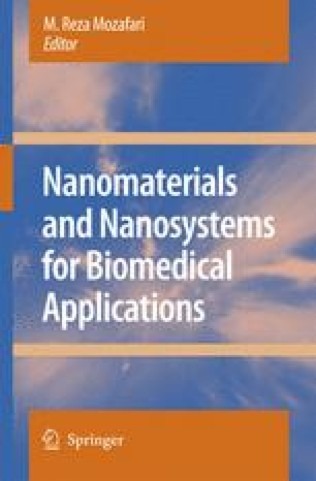
Nanomaterials and Nanosystems for Biomedical Applications
The book includes expert reviews on the advances and current problems associated with the implants and nanodevices along with their applications in medicine, pharmaceutics, cancer therapy, gene transfer and drug delivery. The editor, M. R. Mozafari (PhD), has been working in the field of nanobiotechnology for the past 14 years and has produced more than 60 publications.

Nanoinformatics
Brings out the state of the art on how informatics-based tools are used and expected to be used in nanomaterials research. There has been great progress in the area in which “big-data” generated by experiments or computations are fully utilized to accelerate discovery of new materials, key factors, and design rules. Data-intensive approaches play indispensable roles in advanced materials characterization. "Materials informatics" is the central paradigm in the new trend. "Nanoinformatics" is its essential subset, which focuses on nanostructures of materials such as surfaces, interfaces, dopants, and point defects, playing a critical role in determining materials properties. There have been significant advances in experimental and computational techniques to characterize individual atoms in nanostructures and to gain quantitative information. The collaboration of researchers in materials science and information science is growing actively and is creating a new trend in materials science and engineering.

Nanoformulations in Human Health: Challenges and Approaches
This book is an amalgamation of knowledge, experience, and expertise in various aspects of nanotechnology, by experts who are proficient in designing novel nanoformulations that are used in the treatment of various challenging and prevalent diseases. It is an exhaustive compilation of the multi-faceted arena of nanoformulations and the healthcare system that caters to the needs of academicians, scholars, researchers, etc. The most important aspect of the book covers various types of nanoformulations and their applications in the treatment of communicable and non-communicable diseases. Each chapter focuses on a particular nanoformulation as well as a disease including the pathophysiology of the disease, the current treatment modalities of diseases, the role of nanoformulation in treatment and other future aspects and directions for further work. Coverage includes neuropathic pain, colon targeting, nose-to-brain drug delivery, cancer, arthritis and tuberculosis.
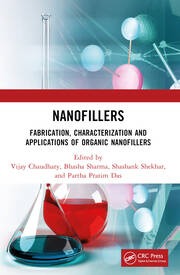
Nanofillers : Fabrication, characterization and applications of organic nanofillers
Explores the modifying effects of various nanofillers on mechanical and physical properties of polymer nanocomposites. Looking at the four basic aspects of processing, characterization, properties, and applications, it analyzes how their features can allow for innovative multifunction within industry. Covering design, production, and manufacture, this book focuses on meeting end-use requirements and the fabrication of materials. The importance of mindful design and the use of an appropriate synthesis method is the primary lens through which theory and practice are discussed. This volume looks at the various synthesis methods available for organic nanofillers and what characterizes them. Properties including mechanical, thermal, electrical, and tribological are thoroughly examined, along with the various computational techniques used to determine them. With important sustainable properties, nanofillers are essential to meeting the increasing demand for biodegradable and environmentally friendly materials. This book details the role nanofillers have to play in sustainability, alongside economic factors such as efficient manufacturing processes.

Nanoelectronics and Photonics : From Atoms to Materials, Devices, and Architectures
Nanoelectronics and Photonics: From Atoms to Materials, Devices, and Architectures provides a description of the core elements and challenges of advanced and future information technology. By linking the materials physics and chemistry at the atomic scale with device and circuit design and performance requirements, tutorial chapters from leaders in the field present a coherent picture of theoretical and experimental research efforts and technology development in this highly interdisciplinary area.

Nanocatalysis
Nanocatalysis is one of the most exciting subfields to have emerged from nanoscience. Its central aim is the control of chemical reactions by changing the size, dimensionality, chemical composition and morphology of the reaction center and by changing the kinetics using nanopatterning of the reaction centers. This approach opens up new avenues for atom-by-atom design of nanocatalysts with distinct and tunable chemical activity, specificity, and selectivity. This book is intended to give a pedagogical and methodological overview of this exciting and growing field and to highlight specific examples of current research. In this way, it serves both as an instructive introduction for graduate students who plan to enter the field and as a reference work for scientists already active in this and related areas.
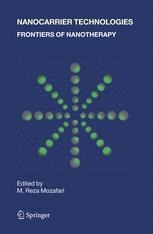
Nanocarrier Technologies : Frontiers of Nanotherapy
Nanobiotechnology is one of the key technologies of the 21st century. It is a combination of nanoscience and biotechnology and covers areas ranging from gene transfer and nanoencapsulation to food technology. Nanocarriers are a leading nanobiotechnology tool with the ability to provide protection, site-specific delivery, enhanced bioavailability and controlled release of pharmaceuticals, genetic material, imaging agents, nutraceuticals and cosmetics to name a few. For this reason, the study of nanocarriers, their properties and applications has attracted a great deal of interest over recent years. Designed as an advanced survey of the field, this book describes the key research parameters of nanocarrier technologies including their preparation methods, evaluation of their safety and efficiency, their interaction with biologicals and their application in biotechnology, drug delivery, gene therapy and food technology areas.

Nanobiotechnology of Biomimetic Membranes
Nanobiotechnology of Biomimetic Membranes focuses on biomimetic membranes. The application of nanotechnology principles and methodology to problems in biotechnology provides an exciting new discipline that will generate a revolution of novel applications, across many disciplines. This valuable new title offers an international perspective on the development of biotechnology applications.

NanoBiotechnology : BioInspired Devices and Materials of the Future
NanoBioTechnology: BioInspired Devices and Materials of the Future is a groundbreaking text that will assist scientists and students in learning the fundamentals and cutting-edge nature of this new and emerging science. Focusing on materials and building blocks for nanotechnology, leading scientists from around the world share their knowledge and expertise in this authoritative volume. The volume is broken into five sections. The first section presents an overview of nanotechnology and describes the many aspects of the field. Section 2 details biological materials serving as nanotemplates for bottom-up fabrication. Section 3 covers the use of biological macromolecules for electron transfer and computation. Section 4 presents a brief overview of the extensive and rapidly growing field of nanomedicine. Finally, Section 5 details de-novo designed structures and the various approaches different scientific groups take with molecular level training and language

Nanobiosensors : From design to applications
Nanobiosensors - From Design to Applications covers several aspects of biosensors beginning from the basic concepts to advanced level research. It will help to bridge the gap between various aspects of biosensors development technology and applications. It covers biosensors related material in broad spectrum such as basic concepts, biosensors & their classification, biomarkers & their role in biosensors, nanostructures-based biosensors, applications of biosensors in human diseases, drug detection, toxins, and smart phone based biosensors.

Nano physical pharmaceutics
Nanomedicine is an emerging and rapidly evolving field, which could significantly help in early disease diagnosis, therapeutic improvement, novel therapeutic modality development, and medical expenditure reduction. The challenge remains, however, that the specially designed and carefully synthesized nanomedicines function poorly in animal verification despite great performance in vitro. A deeper understanding of the physicochemical properties of nanomedicine is the key. This book applies physical theories and models to determine the parameters for controlling the physicochemical properties of nanomedicines, including micelles, liposomes, and inorganic nanoparticles. Qualitative and quantitative relationships are established to provide guidance for nanomedicine design, characterization, and analysis. The text also compiles cutting-edge research in nanomedicine from the interdisciplinary team of the Department of Nanomedicine at Naval Medical University, China, which is currently establishing the characteristic discipline called Nano Physical Pharmaceutics. Edited by Wei Li, a prominent nanotechnology researcher, this book will appeal to anyone involved in nanotechnology, medicine, macromolecular science, biology, chemistry, and especially those with an interest in drug delivery or cancer therapy.

Nano- and Micromaterials
The future focus of nanotechnology will be on realizing new functions over greater scales. This book describes the creation of nano- and microscale structures and functions by controlling temperature, light, pressure, or carrier injections. It covers novel nano-integration technologies such as quantum-well devices possilbe by utilizing, for example, the self-organization of surface nanostructures and optically or pressure-induced phase transitions, micro machines using microstereolithography, as well as new techniques of laser spectroscopy and new computational methods for estimating atomic and electronic structures and their functions on the nano- and microscales.

N4-Macrocyclic Metal Complexes
The study of nanoparticles is anchored in Colloid Science. Colloid Science as we consider it today was nucleated by Wolfgang Ostwald and initiated by his biological studies. The strong connection between biology and Colloid Science lost attractiveness in the last decades. The revival of this interdisciplinary science is now noted and we hope that a signal will start from the Potsdam conference. "This is an excellent and detailed book of 14 chapters that is timely in its reviews of the electrochemical and electrocatalytic properties of the porphyrinoids and is written by a range of experts in the different fields covered.

Mysteries of English Grammar : A Guide to complexities of the English Language
Despite a history of hundreds of years of research analysing aspects of English grammar, there are still open problems which continue to baffle language researchers today. Such ‘grammar mysteries’ arise for a number of reasons: because the language is changing; because different speakers of the language adhere to distinct norms and thus introduce and maintain variation in the system; because there are differences between the grammar of spoken and written English.
