



الصفحة 18
الصفحة 18

Governance of Communication Networks : Connecting Societies and Markets with IT
The articles collected in this book shed light on several aspects that are crucial for the success of global communication networks: they range from an appropriate framework for regulation and suitable strategies of firms that act as international players, to the inclusion of customers in defining product and service strategies, and from problems of access to advanced technology and networks for all groups in society regardless of their social status or geographical location to the role of new technologies in facilitating universal communication.
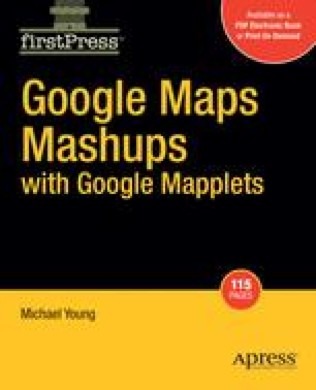
Google Maps Mashups with Google Mapplets
Have a Google Maps mashup that you'd like to expose to millions of users on maps.google.com? New to the mapping craze, but have an idea for a killer map–based application? Want to learn how to create GeoRSS and KML feeds with your geotagged content, exposing your customer to new ways of exploring and navigating your content? Google Maps Mashups with Google Mapplets Is the first book to cover Google's Mapplet technology Shows you how to create Google Maps–based applications and publish to maps.google.com Provides a single–source resource and practical guide to Mapplets and mashups Teaches you how to mash up Mapplets using location–specific data

Google Guice : Agile Lightweight Dependency Injection Framework
Guice (pronounced “Juice”) is the Jolt Award-winning, 100% Java icing on the cake of Java dependency injection. Unlike other popular dependency injection frameworks such as Spring, Guice fully embraces modern Java language features and combines simplicity with stunning performance and developer–friendliness. Google Guice: Agile Lightweight Dependency Injection Framework will not only tell you “how,” it will also tell you “why” and “why not,” so that all the knowledge you gain will be as widely applicable as possible. Filled with examples and background information, this book is an invaluable addition to your knowledge of modern agile Java.

Global Specification and Validation of Embedded Systems : Integrating Heterogeneous Components
Global modelling and validation is required to master the design of systems made of heterogeneous components. These systems are now omnipresent in our life, and they may be found in several domains such as communications (ex. mobile terminals, optical switches), health (e.g. cardiac stimulators, cochlear implants), transportation (ex. automotive and aeronautical), etc. The main difficulties for their design are modelling and validation of the interactions between different components (hardware, software, analogue, RF, optical and micro-mechanical).

Global E-Security ; 4th International Conference, ICGeS 2008, London, UK, June 23-25, 2008. Proceedings
This book constitutes the refereed proceedings of the 4th International Conference on Global E-Security, ICGeS 2008, held in London, UK, in June 2008.The 36 revised full papers presented were carefully reviewed and selected from numerous submissions. The papers are organized in topical sections on cybercrime and digital forensics investigation, voice and video over internet protocols security, computer security, security architecture and authorisations, and IT governance.

Global Computing ; IST/FET International Workshop, GC 2004, Rovereto, Italy, March 9-12, 2004, Revised Selected Papers
This book constitutes the thoroughly refereed post-proceedings of the IST/FET International Workshop on Global Computing, GC 2004, held in Rovereto, Italy in March 2004. The 18 revised full papers presented were carefully selected during two rounds of reviewing and improvement from numerous submissions. Among the topics covered are programming environments, dynamic reconfiguration, resource guarantees, peer-to-peer networks, analysis of systems and resources, resource sharing, and security, as well as foundational calculi for mobility.
Getting StartED with Mac OS X Leopard
This book offers a simple to read, fast way to discover all that's new in Mac OS X Leopard, and how to make the most of it, whether you are new to the Mac, or simply upgrading from a previous version of Mac OS X.
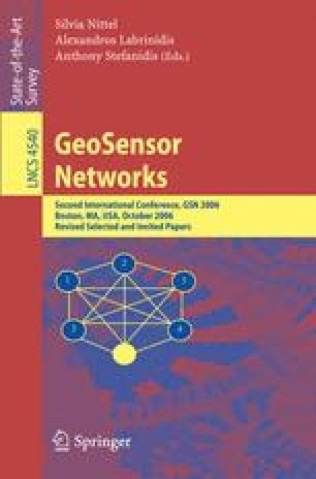
GeoSensor Networks : 2nd International Conference, GSN 2006, Boston, MA, USA, October 1-3, 2006, Revised Selected and Invited Papers
This book constitutes the thoroughly refereed proceedings of the Second GeoSensor Networks Conference, held in Boston, Massachusetts, USA, in October 2006. The conference addressed issues related to the collection, management, processing, analysis, and delivery of real-time geospatial data using distributed geosensor networks. This represents an evolution of the traditional static and centralized geocomputational paradigm.

Geographic Information Science ; 5th International Conference, GIScience 2008, Park City, UT, USA, September 23-26, 2008. Proceedings
This book constitutes the refereed proceedings of the 5th International Conference on Geographic Information Secience, GIScience 2008, held in Park City, UT, USA, in September 2008.The 24 revised full papers presented were carefully reviewed and selected from 77 submissions. Among the traditional topics addressed are spatial relations, geographic dynamics, and spatial data types. A significant number of papers deal with navigation networks, location-based services, and spatial information query and retrieval. Geo-sensors, mobile computing, and Web mapping rank among the important new directions.

Geographic Hypermedia : Concepts and Systems
This book introduces a new paradigm, Geographic Hypermedia, which emerges from the convergence of Geographic Information Science and - permedia technology. Both GI Science and hypermedia have been rapidly evolving fields. The initial idea of Geographic Hypermedia was born in 2004 when the editors had been invited to organize a workshop in conju- tion with the ‘Hypertext’ conference organized annually by the Special - terest Group of the Association for Computing Machinery. The purpose of the workshop was to examine how hypermedia concepts and tools may be applied in geographical domains. The workshop was eventually held in conjunction with the Maps and the Internet Commission of the International Cartographic Association at the annual meeting of the Association of American Geographers in Denver, Colorado, in April 2005. The Denver workshop was a successful event, bringing together mul- disciplinary researchers and professionals in the area of Geographic - permedia.

Genetic rogramming ; Vol. 3447 : 8th European conference, EuroGP 2005, Lausanne, Switzerland, March 30-April 1, 2005, Proceedings
In this volume we present the contributions for the 18th European Conference on Genetic Programming (EuroGP 2005). The conference took place from 30 March to 1 April in Lausanne, Switzerland. EuroGP is a well-established conf- ence and the only one exclusively devoted to genetic programming. All previous proceedings were published by Springer in the LNCS series. From the outset, EuroGP has been co-located with the EvoWorkshops focusing on applications of evolutionary computation. Since 2004, EvoCOP, the conference on evolutionary combinatorial optimization, has also been co-located with EuroGP, making this year’s combined events one of the largest dedicated to evolutionary computation in Europe. Genetic programming (GP) is evolutionary computation that solves complex problems or tasks by evolving and adapting a population of computer programs, using Darwinian evolution and Mendelian genetics as its sources of inspiration. Some of the 34 papers included in these proceedings address foundational and theoretical issues and there is also a wide variety of papers dealing with di?erent application areas, such as computer science, engineering, language processing, biology and computational design, demonstrating that GP is a powerful and practical problem-solving paradigm.
Generative programming and component engineering ; 4th International conference, GPCE 2005, Tallinn, Estonia, September 29 - October 1, 2005, Proceedings
Generative Programming and Component Engineering (GPCE) is a leading - searchconferenceonautomaticprogrammingandcomponentengineering.These approaches to software engineering have the potential to revolutionize software development as automation and components revolutionized manufacturing. The conference brings together researchers and practitioners interested in adva- ing automation for software development. It is also a premier forum for cro- fertilization between the programming language and software engineering - search communities. GPCEaroseasajointconference, mergingthepriorconferenceonGenerative and Component-Based Software Engineering (GCSE) and the Workshop on - mantics, Applications, andImplementationofProgramGeneration(SAIG). The proceedingsofthepreviousGPCEconferenceswerepublishedintheLNCSseries of Springer as volumes2487,2830, and 3286.In 2005 GPCE wasco-locatedwith the International Conference on Functional Programming (ICFP) and the s- posium on Trends in Functional Programming (TFP), re?ecting the vigorous interaction between the functional programming and generative programming research communities. GPCE and ICFP are both sponsored by the Association for Computing Machinery. The quality and breadth of the papers submitted to GPCE 2005 was impr- sive. All 86 papers, including 5 papers for tool demonstrations, were rigorously reviewed by 17 highly quali?ed Program Committee members. The members of the Program Committee ?rst provided in-depth individual reviews of the s- mitted papers, and then debated the merits of the papers through an extended electronicProgramCommitteemeeting.After much(friendly) argument,25r- ular papers and 2 tool demonstration papers were selected for publication. The ProgramCommittee provided extensive technical feedback to the authors of the submittedpapers.Theconferenceprogramwascomplementedwiththreeinvited talks, three extended tutorials, and three all-day workshops.

Fuzzy Systems Engineering : Theory and Practice
This book is devoted to reporting innovative and significant progress in fuzzy system engineering. Given the maturation of fuzzy logic, this book is dedicated to exploring the recent breakthroughs in fuzziness and soft computing in favour of intelligent system engineering. This monograph presents novel developments of the fuzzy theory as well as interesting applications of the fuzzy logic exploiting the theory to engineer intelligent systems.

Fuzzy sets and their extensions : Representation, aggregation and models : Intelligent systems from decision making to data mining, web intelligence and computer vision
This book presents an up-to-date state of current research in the use of fuzzy sets and their extensions, paying attention to foundation issues and to their application to four important areas where fuzzy sets are seen to be an important tool for modelling and solving problems.

Fuzzy Logic and Applications ; Vol. 3849 ; 6th International Workshop, WILF 2005, Crema, Italy, September 15-17, 2005, Revised Selected Papers
This volume contains the proceedings of the 6th International Workshop on Soft Computing and Applications (WILF 2005), which took place in Crema, Italy, on September 15–17, 2005, continuing an established tradition of biannual meetings among researchers and developers from both academia and industry to report on the latest scienti?c and theoretical advances, to discuss and debate major issues, and to demonstrate state-of-the-art systems. This edition of the workshop included two special sessions, sort of subwo- shops, focusing on the application of soft computing techniques (or compu- tional intelligence) to image processing (SCIP) and bioinformatics (CIBB).

Fuzzy Logic and Applications ; Vol. 2955 ; 5th International Workshop, WILF 2003, Naples, Italy, October 9-11, 2003, Revised Selected Papers
This volume constitutes the thoroughly refereed post-workshop proceedings of the 5th International Workshop on Fuzzy Logic and Applications held in Naples, Italy, in October 2003. The 40 revised full papers presented have gone through two rounds of reviewing and revision. All current issues of theoretical, experimental and applied fuzzy logic and related techniques are addressed with special attention to rough set theory, neural networks, genetic algorithms and soft computing.

Fuzzy Information and Engineering ; Proceedings of the Second International Conference of Fuzzy Information and Engineering (ICFIE)
The Second International Conference on Fuzzy Information and Engineering (ICFIE2007), built on the success of previous conferences, the ICIKE2002 (Dalian China), is a major symposium for scientists, engineers and practitioners in China as well as the world to present their latest results, ideas, developments and applications in all areas of fuzzy information and knowledge engineering. It aims to strengthen relations between industry research laboratories and universities, and to create a primary symposium for world scientists in fuzzy fields such as Fuzzy Information, Fuzzy Sets and Systems, Soft Computing, Fuzzy Engineering, Fuzzy Operation Research and Management, Artificial Intelligence, Rough Sets and Its Application, Application in Fuzzy Mathematics and Systems, etc.

Future Interaction Design
In 1969 Herbert Simon wrote a book, The Science of the Artificial, in which he argued that cognitive science should have its area of application in the design of devices. He proposed the foundation of a science of the artificial related with cognitive science in the sense in which we have traditionally understood the relationship between the engineering disciplines and the basic sciences. Such a science has been called cognitive ergonomics or cognitive engineering (Norman 1986). Simon’s cognitive ergonomics (1969), would be independent of cognitive science, its basic science, although both would be closely related. Cognitive science would contribute knowledge on human cognitive processes, and cognitive ergonomics would contribute concrete problems of design that should be solved in the context of the creation of devices. Norman (1986), the author that coined the term cognitive engineering, conceived it as an applied cognitive science where the knowledge of cognitive science is combined with that of engineering to solve design problems. According to Norman, its objectives would be: (1) to understand the fundamental principles of human actions important for the development of the engineering of design principles, and (2) to build systems that are pleasant in their use.
Fundamental approaches to software engineering ; 25th International Conference, FASE 2022, Held as Part of the European Joint Conferences on Theory and Practice of Software, ETAPS 2022, Munich, Germany, April 2–7, 2022, Proceedings
The papers deal with the foundations on which software engineering is built, including topics like software engineering as an engineering discipline, requirements engineering, software architectures, software quality, model-driven development, software processes, software evolution, AI-based software engineering, and the specification, design, and implementation of particular classes of systems, such as (self-)adaptive, collaborative, AI, embedded, distributed, mobile, pervasive, cyber-physical, or service-oriented applications.

Fundamental approaches to software engineering ; 22nd International Conference, FASE 2019, Held as Part of the European Joint Conferences on Theory and Practice of Software, ETAPS 2019, Prague, Czech Republic, April 6–11, 2019, Proceedings
This book cover software verification; model-driven development and model transformation; software evolution and requirements engineering; specification, design, and implementation of particular classes of systems; and software testing.
