



الصفحة 17
الصفحة 17

Biologically inspired cooperative computing ; IFIP 19th World Computer Congress, TC 10: 1st IFIP International Conference on biologically inspired cooperative computing, August 21-24, 2006, Santiago, Chile
The IFIP series publishes state-of-the-art results in the sciences and technologies of information and communication. The scope of the series includes: foundations of computer science; software theory and practice; education; computer applications in technology; communication systems; systems modeling and optimization; information systems; computers and society; computer systems technology; security and protection in information processing systems; artificial intelligence; and human-computer interaction.

Biologically Inspired Approaches to Advanced Information Technology ; 2nd International Workshop, BioADIT 2006, Osaka, Japan 26-27, 2006, Proceedings
This book contains 30 articles and three abstracts of invited talks presented at The Second International Workshop on Biologically Inspired Approaches for Advanced Information Technology,The workshop is intended to provide an e?ective forum for original research results in the ?eld of bio-inspired approaches to advanced information technologies. It also serves to foster the connection between biological paradigms and solutions to building the next-generation information systems.

Bio-inspired modeling of cognitive tasks ; 2nd International Work-conference on the interplay between natural and artificial computation, IWINAC 2007, La Manga del Mar Menor, Spain, June 18-21, 2007, Proceedings, Part I
This volume includes all the contributions mainly related with theoretical, conceptual and methodological aspects linking AI and knowledge engineering with neurophysiology, clinics and cognition.

Autonomy oriented computing : From problem solving to complex systems modeling
Autonomy Oriented Computing explores the important theoretical and practical issues in AOC, by analyzing methodologies and presenting experimental case studies. The book serves as a comprehensive reference source for researchers, scientists, engineers, and professionals in all fields concerned with this promising new development in computer science. It can also be used as a main or supplementary text in graduate and undergraduate programs across a broad range of computer-related disciplines, including Robotics and Automation, Amorphous Computing, Image Processing and Computer Vision, Programming Paradigms, Computational Biology, and many others. The first part of the book, Fundamentals, describes the basic concepts and characteristics of an AOC system, and then it enumerates the critical design and engineering issues faced in AOC system development. The second part of the book, AOC in Depth, provides a detailed analysis of methodologies and case studies to evaluate the use of AOC in problem solving and complex system modeling. The final chapter reviews the essential features of the AOC paradigm and outlines a number of possibilities for future research and development.

Autonomous vehicles technological trends
The automotive industry has always been synonymous with research and innovation, but nowadays the industry is adding pressure and is establishing the agenda of the researchers from the field. Visions have been provided, and the hardware and the software exist; the only question remaining is: “who is going to deliver”? To answer this question, we encouraged scientists, researchers, industry specialists, and academics to share their vision of autonomous vehicles. What will the platform look like? What kind of hardware and software is most suitable? Who will make the connection between these two interdependent environments (and how), so that in the end the AI will define the process? These are the pressing issues of the current moment, and this Special Issue will help all those interested in the topic to promote their vision and ideas.
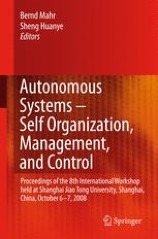
Autonomous Systems - Self-Organization, Management, and Contro ; Proceedings of the 8th International Workshop held at Shanghai Jiao Tong University, Shanghai, China, October 6–7, 2008
The International Workshop on "Autonomous Systems - Self-Organization, Management, and Control " is the eighth in a successful series of workshops that were established by Shanghai Jiao Tong University and Technische Universitat Berlin. The goal of these workshops is to bring together researchers from both universities in order to present research results to an international community.
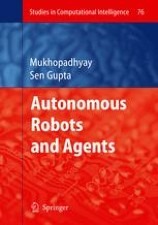
Autonomous Robots and Agents
This book deals with the theoretical and methodological aspects of incorporating intelligence in Autonomous Robots and Agents. Challenges faced in the real world to accomplish complex tasks, which require collaborative efforts, and methods to overcome them, are detailed. Several informative articles deal with navigation, localization and mapping of mobile robots, a problem that engineers and researchers are grappling with all the time.This edited volume is targeted to present the latest state-of-the-art methodologies in Robotics. It is a compilation of the extended versions of the very best papers selected from the many that were presented at the 3rd International Conference on Autonomous Robots and Agents (ICARA 2006) which was held at Palmerston North, New Zealand from 11-14 December, 2006. Scientists and engineers who work with mobile robots will find this book very useful and stimulating.
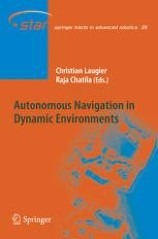
Autonomous Navigation in Dynamic Environments
The purpose of this book is to address the challenging problem of Autonomous Navigation in Dynamic Environments, and to present new ideas and approaches in this newly emerging technical domain. The book surveys the state-of-the-art, discusses in detail various related challenging technical aspects, and addresses upcoming technologies in this field. The aim of the book is to establish a foundation for a broad class of mobile robot mapping and navigation methodologies for indoor, outdoor, and exploratory missions.Three main topics located on the cutting edge of the state of the art are addressed, from both the theoretical and technological point of views: Dynamic world understanding and modelling for safe navigation, Obstacle avoidance and motion planning in dynamic environments, and Human-robot physical interactions. Several models and approaches are proposed for solving problems such as Simultaneous Localization and Mapping (SLAM) in dynamic environments, Mobile obstacle detection and tracking, World state estimation and motion prediction, Safe navigation in dynamic environments, Motion planning in dynamic environments, Robust decision making under uncertainty, and Human-Robot physical interactions.

Autonomic and Trusted Computing ; 5th International Conference, ATC 2008, Oslo, Norway, June 23-25, 2008 Proceedings
This book constitutes the refereed procedings of the 5th International Conference on Autonomic and Trusted Computing, ATC 2008, held in Oslo, Norway, in June 2008, co-located with UIC 2008, the 5th International Conference on Ubiquitous Intelligence and Computing.

Autonomes fahren : Technische, rechtliche und gesellschaftliche aspekte = Autonomous driving : Technical, legal and social aspects
This book provides answers to a wide range of these and other questions. Experts from Germany and the USA describe central topics related to the automation of vehicles on public roads from an engineering and social science perspective. They show which "decisions" are required of an autonomous vehicle or which "ethics" must be programmed. The authors discuss expectations and concerns that characterize the individual and societal acceptance of autonomous driving. An increased safety potential through autonomous vehicles is compared to the challenges and solution approaches that play a role in securing the safety concept. In addition, they explain what possibilities for change and opportunities arise for our mobility and the reorganization of traffic, not least for freight traffic. The book thus offers an up-to-date, comprehensive and scientifically sound examination of the topic of "autonomous driving".
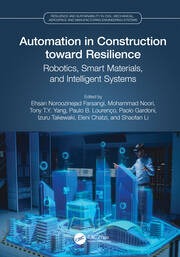
Automation in construction toward resilience : Robotics, smart materials and intelligent systems
Presents all aspects of automation in construction pertaining to the use of information technologies in design, engineering, construction technologies, and maintenance and management of constructed facilities. The broad scope encompasses all stages of the construction life cycle from initial planning and design, through the construction of the facility, its operation, and maintenance, to the eventual dismantling and recycling of buildings and engineering structures

Automated nanohandling by microrobots
Automated Nanohandling by Microrobots introduces an actuation principle for such microrobots and presents a new robot design. Different aspects of this research field regarding the hardware and software implementation of the system components, including the sensory feedback for automated nanohandling, are discussed in detail. Extensive applications of the microrobot station for nanohandling, nano-characterization and nanostructuring are provided, together with the experimental results.

Augmented reality, virtual reality, and computer graphics ; 7th International Conference, AVR 2020, Lecce, Italy, September 7–10, 2020, Proceedings, Part II
The 2-volume set LNCS 12242 and 12243 constitutes the refereed proceedings of the 7th International Conference on Augmented Reality, Virtual Reality, and Computer Graphics, AVR 2020, held in Lecce, Italy, in September 2020.* The 45 full papers and 14 short papers presented were carefully reviewed and selected from 99 submissions. The papers discuss key issues, approaches, ideas, open problems, innovative applications and trends in virtual reality, augmented reality, mixed reality, 3D reconstruction visualization, and applications in the areas of cultural heritage, medicine, education, and industry.

Augmented reality, virtual reality, and computer graphics ; 7th International conference, AVR 2020, Lecce, Italy, September 7–10, 2020, Proceedings, Part I
he 2-volume set LNCS 12242 and 12243 constitutes the refereed proceedings of the 7th International Conference on Augmented Reality, Virtual Reality, and Computer Graphics, AVR 2020, held in Lecce, Italy, in September 2020.* The 45 full papers and 14 short papers presented were carefully reviewed and selected from 99 submissions. The papers discuss key issues, approaches, ideas, open problems, innovative applications and trends in virtual reality, augmented reality, mixed reality, 3D reconstruction visualization, and applications in the areas of cultural heritage, medicine, education, and industry.
Attention in Cognitive Systems : Theories and Systems from an Interdisciplinary Viewpoint ; 4th International Workshop on Attention in Cognitive Systems, WAPCV 2007 Hyderabad, India, January 8, 2007 Revised Selected Papers
The embodied nature of sensory-motor intelligence requires a continuous and focused interplay between the control of motor activities and the interpretation of feedback from perceptual modalities. Decision making about the selection of information from the incoming sensory stream – in tune with contextual processing on a current task and an agent’s global objectives – becomes a further challenging issue in attentional control. Attention must operate at interfaces between bottom-up driven world int- pretation and top-down driven information selection, thus acting at the core of arti?cial cognitive systems. These insights have already induced changes in AI-related disciplines, such as the design of behavior-based robot control and the computational modeling of animats. Today, the development of enabling technologiessuch as autonomous robotic systems,miniaturizedmobile–evenwearable–sensors,andambientintelligence systems involves the real-time analysis of enormous quantities of data. These data have to be processed in an intelligent way to provide “on time delivery” of the required relevant information. Knowledge has to be applied about what needs to be attended to, and when, and what to do in a meaningful sequence, in correspondence with visual feedback.

Attention and Performance in Computational Vision ; 2nd International Workshop, WAPCV 2004, Prague, Czech Republic, May 15, 2004, Revised Selected Papers
This book constitutes the thoroughly refereed post-proceedings of the Second International Workshop on Attention and Performance in Computational Vision, WAPCV 2004, held in Prague, Czech Republic in May 2004. The goal of this workshop was to provide an interdisciplinary forum tocommunicatecomputationalmodelsofvisualattentionfromvariousviewpoints,such as from computer vision, psychology, robotics and neuroscience. The motivation for - terdisciplinarity was communication and inspiration beyond the individual community, to focus discussion on computational modelling, to outline relevant objectives for p- formance comparison, to explore promising application domains, and to discuss these with reference to all related aspects of cognitive vision.
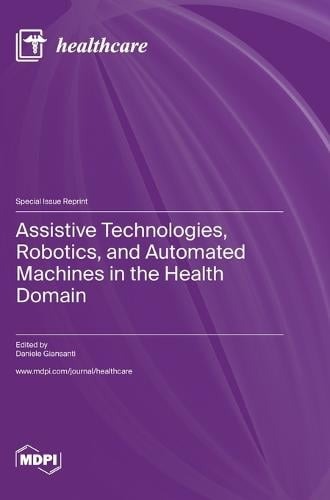
Assistive technologies, robotics, and automated machines in the health domain
The field of healthcare is constantly evolving and advancing with new technologies and innovations. Among these, assistive technologies, robotics, and automated machines are rapidly gaining ground as powerful tools to improve the quality of care and enhance patient outcomes. From wearable devices that monitor vital signs to surgical robots that assist in complex procedures, these technologies have the potential to revolutionize the way we deliver healthcare. The development and the integration of assistive technologies, care robots, and automated machines are strategic both as single components, when paired together, and when interconnected in the health domain.This reprint explores the latest developments in assistive technologies, robotics, and automated machines in the health domain, providing a comprehensive overview of their applications and potential impact. The reprint is for the benefit of healthcare professionals, researchers, engineers, and students interested in these rapidly evolving fields.

Artificial neural networks – ICANN 2007 ; 17th International Conference, Porto, Portugal, September 9-13, 2007, Proceedings, Part II
It features contributions related to computational neuroscience, neurocognitive studies, applications in biomedicine and bioinformatics, pattern recognition, self-organization, text mining and internet applications, signal and times series processing, vision and image processing, robotics, control, and more.

Artificial neural networks - ICANN 2006 ; Vol.4132 : 16th International Conference, Athens, Greece, September 10-14, 2006, Proceedings, Part II
This book includes the proceedings of the International Conference on Artificial Neural Networks (ICANN 2006) held on September 10-14, 2006 in Athens, Greece, with tutorials being presented on September 10, the main conference taking place during September 11-13 and accompanying workshops on perception, cognition and interaction held on September 14, 2006. The ICANN conference is organized annually by the European Neural Network Society in cooperation with the International Neural Network Society, the Japanese Neural Network Society and the IEEE Computational Intelligence Society. It is the premier European event covering all topics concerned with neural networks and related areas.
Artificial neural networks - ICANN 2006 ; Vol.4131 : 16th International Conference, Athens, Greece, September 10-14, 2006, Proceedings, Part I
This book includes the proceedings of the International Conference on Artificial Neural Networks (ICANN 2006) held on September 10-14, 2006 in Athens, Greece, with tutorials being presented on September 10, the main conference taking place during September 11-13 and accompanying workshops on perception, cognition and interaction held on September 14, 2006. The ICANN conference is organized annually by the European Neural Network Society in cooperation with the International Neural Network Society, the Japanese Neural Network Society and the IEEE Computational Intelligence Society. It is the premier European event covering all topics concerned with neural networks and related areas.
