



الصفحة 17
الصفحة 17

Conceptual Landscapes : Fundamentals in the Beginning Design Process
Explores the dilemma faced in the early moments of design thinking through a gradient of work in landscape and environmental design media by both emerging and well-established designers and educators of landscape architecture. It questions where and, more importantly, how the process of design starts. Deconstructs the steps of conceptualizing design in order to reignite pedagogical discussions about timing and design fundamentals, and to reveal how the spark of an idea happens – from a range of unique perspectives. Through a careful arrangement of visual essays that integrate analog, digital, and mixed-media works and processes, the book highlights differences between diverse techniques and triggers debate between design, representation, technology, and creative culture in the field.

Concentrator Photovoltaics
In fact, photovoltaic conversion of concentrated sunlight insures an efficient and cost-effective sustainable power resource. This book gives an overview of all components. The authors report on significant results related to design, technology, and applications, and also cover the fundamental physics and market considerations.

Computer Applications in Sustainable Forest Management : Including Perspectives on Collaboration and Integration
Computer Applications in Sustainable Forest Management presents state-of-the-art computer applications in a variety of specialty areas of forestry, including inventory, remote sensing, information management, modelling and visualization, biometrics, forest and harvest planning, bioeconomics and marketing, and decision science for management. This book emphasizes integration, or collaborative use, of computer technologies across different disciplines through interdisciplinary research and development in North America, China, and Europe. It also offers important new insights on how to continue advancing computational technologies in forest management to better achieve the basic goal of sustainable forest management. Case studies demonstrate integration of, or collaboration among, multiple computer applications for sustainable forest management.

Computational Structural Concrete : Theory and Applications
Concrete is by far the most used building material due to its advantages: it is shapeable, cost-effective and available everywhere. Combined with reinforcement it provides an immense bandwidth of properties and may be customized for a huge range of purposes. Thus, concrete is the building material of the 20th century. To be the building material of the 21th century its sustainability has to move into focus. Reinforced concrete structures have to be designed expending less material whereby their load carrying potential has to be fully utilized.

Computational Quantum Mechanics for Materials Engineers : The EMTO Method and Applications
Computational Quantum Mechanics for Materials Engineers describes new approaches to the modelling of disordered alloys that combine the most efficient quantum-level theories of random alloys with the most sophisticated numerical techniques to establish a theoretical insight into the electronic structure of complex materials such as stainless steels, Hume-Rothery alloys and silicates. The practical success of these approaches to applications in all of these areas are covered in detail. The new EMTO-CPA method is detailed, including its application in alloys to model structural stability and elastic properties of random alloys of arbitrary composition and the effect of alloying elements on elastic stiffnesses stacking fault energies and structural parameters. The EMTO-CPA method makes new approaches to computational alloy design feasible. Computational Quantum Mechanics for Materials Engineers shows how the technique will soon allow materials engineers to become "quantum blacksmiths

Collaborative Product and Service Life Cycle Management for a Sustainable World ; Proceedings of the 15th ISPE International Conference on Concurrent Engineering (CE2008)
Collaborative Product and Service Life Cycle Management for a Sustainable World gathers together papers from the 15th ISPE International Conference on Concurrent Engineering (CE2008), to stimulate the new thinking that is so crucial to our sustained productivity enhancement and quality of life.

Collaborative curriculum design for sustainable innovation and teacher learning
This book provides insight into what it takes to actively involve teachers in the curriculum design process. It examines different aspects of teacher involvement in collaborative curriculum design, with specific attention to its implications for sustainable curriculum innovation and teacher learning. Divided into six sections, the book starts out by introducing the notion of collaborative curriculum design and discusses its historical and theoretical foundations. It describes various approaches commonly adopted to actively involve teachers in the (co-)design of curriculum materials. Sections two and three provide examples of what key phases in the curriculum design process - such as needs analysis, design and development, and implementation - look like across various collaborative curriculum design projects. Section four reports on the impact of collaborative curriculum design on student learning, teacher practices, teacher professional growth, and institutional change. Building on the research evidence about the outcomes of collaborative curriculum design, section five focuses on sustainability, scaling-up and curriculum leadership issues, which are key to the continuation and further evolution of curriculum innovations. Future perspectives are addressed in section six with emphasis on the infrastructure of a sustainable curriculum innovation.

Coding, shaping, making : experiments in form and form-making
Combines inspiration from architecture, mathematics, biology, chemistry, physics and computation to look towards the future of architecture, design and art. It presents ongoing experiments in the search for fundamental principles of form and form-making in nature so that we can better inform our own built environment.

Co-Creativity and engaged scholarship : Transformative methods in social sustainability research
This book explores creative and collaborative research methods within the social sustainability sciences. The term co-creativity is used in reference to both individual methods and overarching research approaches that, through socially inclusive forms of action and reflection, stimulate alternative understandings of why and how things are, and how they could be. Supported by a wide-ranging series of in-depth—including chapters on militant research and guerrilla narrative, decolonial participative approaches, appreciate inquiry and care-ethics, deep-mapping, photo-voice, community-arts, digital participatory mapping, and living labs—the edited collection critically reviews the potential of creative, collaborative and transdisciplinary forms of research praxis to nurture just and transformative processes of change.

Coastal architectures and politics of tourism : Leisurescapes in the global sunbelt
Offers a critical and complicated picture of how leisure tourism connected the world after the World War II, transforming coastal lands, traditional societies, and national economies in new ways. Analyzes selected case studies of architectures and landscapes around the world, contextualizing them within economic geographies of national development, the geopolitics of the Cold War, the legacies of colonialism, and the international dynamics of decolonization. Postwar leisure tourism evokes a rich array of architectural spaces and altered coastal landscapes, which is explored in this collection through discussions of tourism developments in the Mediterranean littoral, such as Greece, Turkey, and southern France, as well as compelling analyses of Soviet bloc seaside resorts along the Black Sea and Baltic coasts, and in beachscapes and tourism architectures of western and eastern hemispheres, from Southern California to Sri Lanka, South Korea, and Egypt.
Mathematical Modelling for Sustainable Development
Mathematics needs Sustainable Development. When science was gradually reinvented in European medieval societies, it was legitimised as contributing to the disclosure of God’s divine creation. The conflicts that emerged became well known as a result of the clash between Galileo and the Church. Science found a new legitimacy through recognition that it was a powerful force against superstition. In the Enlightenment the argument was pushed forward by attributing Progress to the advancement of science: science could produce a better world by promoting rationality. In our modern society, science has become intimately linked to technology. Science for its own sake unfortunately rarely has positive outcomes in terms of research grant applications. Meanwhile, science and technology, and the progress they are supposed to produce, meet with wide scale scepticism. We all know of the current global problems: climate change, resource depletion, a thinning ozone layer, space debris, declining biodiversity, malnutrition, dying ecosystems, global inequity, and the risk of unprecedented nuclear wars

Mathematical Modeling of Concrete Mixture Proportioning
It puts together an understanding of the appropriate principles of ensuring performance and sustainability of concrete. Broadly subdivided into three parts, first part contains the fundamental aspects introducing the constituent materials, the concepts of concrete mixture designs and the mathematical formulations of the various parameters involved in these designs. The second part is dedicated to discussing approaches and recommendations of American, British and European bodies related to mathematical modelling. Lastly, it discusses perceptions and prescriptions towards both the performance assessment and insurance of the resulting concrete compositions.
Materials Issues for Generation IV Systems ; Status, Open Questions and Challenges
Global warming, shortage of low-cost oil resources and the increasing demand for energy are currently controlling the world's economic expansion while often opposing desires for sustainable and peaceful development. In this context, atomic energy satisfactorily fulfills the criteria of low carbon gas production and high overall yield. However, in the absence of industrial fast-breeders the use of nuclear fuel is not optimal, and the production of high activity waste materials is at a maximum. These are the principal reasons for the development of a new, fourth generation of nuclear reactors, minimizing the undesirable side-effects of current nuclear energy production technology while increasing yields by increasing operation temperatures and opening the way for the industrial production of hydrogen through the decomposition of water.
Materials & sustainability building a circular future
Examines sustainable manufacturing, from the extraction of materials to processing, use, and disposal, and argues that significant changes in all of the above are needed for the world to progress toward a more circular economy. Materials and processing methods are usually chosen with performance as the key metric.
Material Flow Management : Improving Cost Efficiency and Environmental Performance
The implementation of material flow management offers enterprises a high potential for realizing new economic competitive advantages. The eco-efficient optimization of material flows aims at reducing costs while simultaneously achieving long-term sustainability with regard to ecological and societal aspects. Knowledge of existing methods and the latest trends is a key prerequisite for successfully implementing, refining and disseminating material flow management approaches.
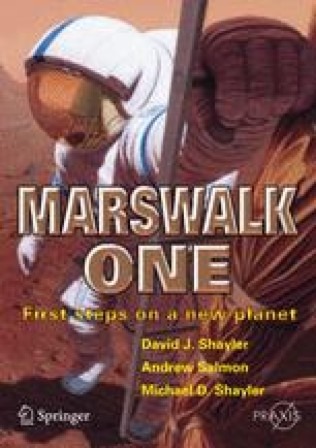
Marswalk One : First Steps on a New Planet
MARSWALK ONE: First Steps on a New Planet addresses the question of why we should embark on a journey to Mars, documenting what the first human crew will do when they place their feet in the red dust of the planet. The book also addresses why we need to carry out these tasks and, more importantly, what a human crew could achieve that an automated mission could not. Understanding the clear benefits of sending a human crew to the surface of Mars, and how these benefits can be seen back on Earth, is the key to sustained long-term public and political support for the programme in terms of cash and commitment. The book accepts that the journey will be made, but does not specify precisely when. Flight time, and how to get to and from the planet are discussed briefly, to understand why the suggested duration spent at Mars is reasonable. The main objective of the work is to look at what science will be done on the surface – supported by orbital operations – and what hardware and technology will be employed to achieve the mission objectives. This analysis is drawn from previous experiences in manned and unmanned space programmes, including Apollo, Skylab, Salyut/Mir, Shuttle and ISS, Viking, Luna/Lunokhod, and recent Mars missions such as Pathfinder and Global Surveyor.
Marketing for Sustainable Development : Rethinking Consumption Models
Many people see a weak association between marketing and sustainable development and even consider them as two incompatible fields. However, marketing benefits from an extremely powerful position to encourage transformations at the production level and to guide consumers towards responsible behaviors. From its inception, marketing has been positioned as a support for the relationship between the company and its customers, with the quest for well-being set in the very foundations of the discipline.
Marketing ; 16th ed.
Expanded coverage on social responsibility and sustainability topics such as privacy, social entrepreneurship, diversity, equity, inclusion, and environmental impact. The 16e continues its real-world focus with “Marketing Matters,” “Making Responsible Decisions,” “Insights about me,” “Applying Marketing Metrics,” “Integration of the Customer Journey” and “Building your Marketing Plan” features throughout. Key marketplace changes related to the pandemic such as curbside pick-up, touchless payment, and delivery have been incorporated.
Maritime Spatial Planning : past, present, future
This book is the first comprehensive overview of maritime spatial planning. Situated at the intersection between theory and practice, the volume draws together several strands of interdisciplinary research, reflecting on the history of MSP as well as examining current practice and looking towards the future. The authors and contributors examine MSP from disciplines as diverse as geography, urban planning, political science, natural science, sociology and education; reflecting the growing critical engagement with MSP in many academic fields. This innovative and pioneering volume will be of interest and value to students and scholars of maritime spatial planning, as well as planners and practitioners.
Marine resource damage assessment : Liability and compensation for environmental damage
MARE-DASM research focused on: (i) the estimation and distribution of marine contaminants in order to assess their long term effects (ecotoxicology); (ii) the integration of these result into a Biological Effects SubModel and a mathematical model assessing the risks associated with accidental spillage of oil at sea and the damage this can cause (modelling); (iii) the assessment of the willingness to pay for ecological damage, based on the Contingent Valuation Method (economics); (iv) the development and evaluation of measures to be taken in order to guarantee a sustainable use of the Belgian part of the North Sea, taking into account the economic and social interests and values (social economics); (v) the potential to develop technical and legal procedures that allow ecological damage to the marine environment to be evaluated and compensated, taking into account constraints in national and international liability legislation (legal).
