



الصفحة 17
الصفحة 17
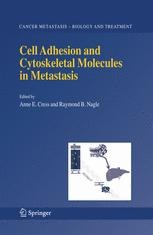
Cell Adhesion and Cytoskeletal Molecules in Metastasis
In this volume, the expression of specific adhesion molecules within human cancer tissues are highlighted. The expression signatures from published DNA microarray and immunohistochemistry studies are detailed. The concept that the alteration of specific adhesion molecules influence the cancer migration ability and cancer damage responses is detailed in this volume; both features are essential for the survival of an invading tumor cell. Defining the minimal adhesion receptors preserved on cancer cells during tumor progression will define the metastatic adhesion signature. Understanding the metastatic adhesion signature will reveal vulnerabilities that could be exploited for the prevention and/or eradication of the invading cancer cell.

Cartooning made easy : Circle, triangle, square : Draw unique cartoon characters using simple geometric shapes
offers easy-to-follow instruction for using basic shapes to draw cute cartoon characters. Her approach is simple: All you need are basic drawing tools and shapes to cartoon! The book features dozens of drawing projects and step-by-step instruction perfect for beginning and aspiring artists, cartoonists, illustrators, pen and graphite artists, and many others. Each project combines simple geometric shapes—including circles and triangles and squares but also ovals, rectangles, and more—to draw adorable, cartoon-inspired artwork, including cartoon: Heads / Faces / Bodies / Unique characters / Animals, such as elephants / And more!
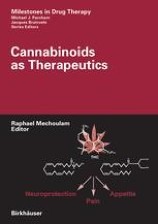
Cannabinoids as Therapeutics
this volume concentrates on the diseases, the physiological effects and therapeutic use of cannabinoids. The volume editor Prof. Mechoulam was the first who isolated the prime active constituent (THC, Tetrahydrocannabiol) of marijuana. He published extensively on the pharmacological activities of cannabinoids. The volume is of interest to researchers and clinicians from pharmacology, neuroscience, and medicinal research
Buildings : Theory and Applications
This book treats Jacques Tits's beautiful theory of buildings, making that theory accessible to readers with minimal background. It includes all the material of the earlier book Buildings by the second-named author, published by Springer-Verlag in 1989, which gave an introduction to buildings from the classical (simplicial) point of view. This new book also includes two other approaches to buildings, which nicely complement the simplicial approach: On the one hand, buildings may be viewed as abstract sets of chambers with a Weyl-group-valued distance function; this point of view has become increasingly important in the theory and applications of buildings. On the other hand, buildings may be viewed as metric spaces. Beginners can still use parts of the new book as a friendly introduction to buildings, but the book also contains valuable material for the active researcher.
Building a Future with BRICs : The Next Decade for Offshoring
In 2003, Goldman Sachs published a startling report on the BRICs (Brazil, Russia, India, and China) region: These four countries would be larger than the G6 economics within 40 years, muscling their way to economic dominance over the coming decades, and powering past developed countries such as the United Kingdom, Germany, and Japan. This book focuses on the technology and technology-enabled services that underpin this social and economic revolution. The editor analyses the reasons why these four countries are in a unique position to lead a 21st century growth in international services. He then features 12 chapters written by the most important chief executives from the BRICs service economy. Indian technology leaders, such as Nandan Nilekani (Infosys), Shiv Nadar (HCL), and Rajendra Pawar (NIIT), feature alongside their peers from Brazil, Russia, and China outlining their views on the next decade for offshoring.
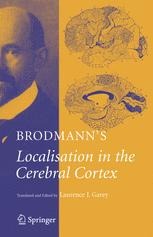
Brodmann's : Localisation in the Cerebral Cortex
It is one of the major "classics" of the neurological world. Even today it forms the basis for so-called "localisation" of function in the cerebral cortex. Brodmann's "areas" are still used to designate functional regions in the cortex, the part of the brain that brings the world that surrounds us into consciousness, and which governs our responses to the world. For example, we use "area 4" for the "motor" cortex, with which we control our muscles, "area 17" for "visual" cortex, with which we see, and so on. This nomenclature is used by neurologists and neurosurgeons in the human context, as well as by experimentalists in various animals. Indeed, Brodmann's famous "maps" of the cerebral cortex of humans, monkeys and other mammals must be among the most commonly reproduced figures in neurobiological publishing. The most famous of all is that of the human brain. There can be few textbooks of neurology, neurophysiology or neuroanatomy in which Brodmann is not cited, and his concepts pervade most research publications on systematic neurobiology.
Breast cancer genetics, immunology, and immunotherapy : An interdisciplinary approach
Publishes comprehensive volumes on immune and genetic mechanisms of breast cancer diagnosis and prognosis. The role of molecular genetics, interleukins, chemokine receptor, and tumor-infiltrated lymphocytes-TILS in breast cancer are explained. Targeting myeloid determinants, SiRNA loaded in drug delivery nanosystems, nucleic acid and drug dual agent nanoplatforms, and oncolytic virotherapy are also discussed in the treatment of breast cancer, particularly in multidrug resistant and metastatic breast cancer.
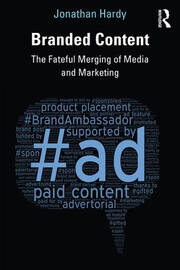
Branded content : The fateful merging of media and marketing
This is a critical study of the changing relationship between media and marketing communications in the digital age. It examines the growth of content funded by brands, including brands’ own media, native advertising, and the integration of branded content across film, television, journalism and publishing, online, mobile, and social media.
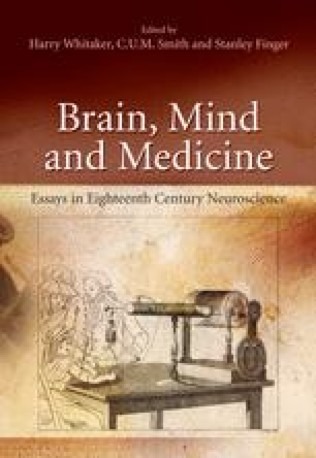
Brain, Mind and Medicine : Essays in Eighteenth-Century Neuroscience
Ideas we associate with the 18th century are clearly seen in work published from the latter decades of the 17th century through the first decades of the 19th century. This is the "long 18th century", a period which exhibits multiple discourses in medicine, brain science and philosophy. The editors have deliberately adopted a "presentist" subtitle, "neuroscience", to emphasize that this collection of essays reflect a range of current thought about 18th century-studies of the nervous system in isolation and in context. There are six sections, each preceded by a short introduction.

Blast effects on buildings
Provides the latest practical guidance on designing buildings to optimise their resilience to blast loading. Focused specifically on the design of commercial buildings, it is an indispensible guide to help engineers reduce the risks posed to building occupants and businesses from terrorist and other explosions. This book provides the engineer with a single and comprehensive source of reference for all the main elements of blast engineering design in modern practice. Industry-accepted methods for the design of glazing to resist blast loading are published for the first time, as well as a new chapter on hostile vehicle mitigation techniques. Guidance on structural steelwork and reinforced concrete design is extended and enhanced, supplemented with material on design in new materials such as steel-concrete-steel composites, this latter addition being published for the first time.
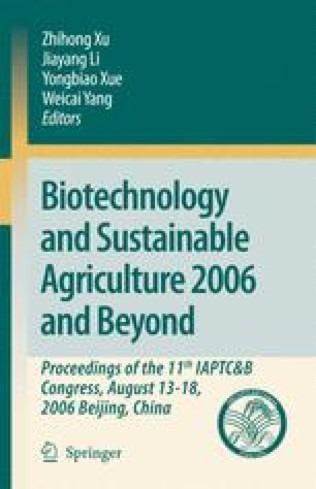
Biotechnology and sustainable agriculture 2006 and beyond ; Proceedings of the 11th IAPTC&B Congress, August 13-18, 2006 Beijing, China
Biotechnology and Sustainable Agriculture 2006 and Beyond is a collection of papers presented at the XIth international congress of the International Association of Plant Tissue Culture & Biotechnology (IAPTC&B). It continues the long tradition of the IAPTC&B to publish the proceedings of its quadrennial congresses. It provides an up-to-date report of the most significant advances in plant tissue culture and biotechnology as presented by leading international scientists.
Biosimilars : Regulatory, clinical, and biopharmaceutical development
Provides a comprehensive overview of the biosimilar regulatory framework, the development process and clinical aspects for development of biosimilars. The development path of a biosimilar is just as unique as a development path of a new drug, tailored by the mechanism of action, the quality of the molecule, published information on the reference product, the current competitive environment, the target market and regulatory guidance, and most importantly, the emerging totality of evidence for the proposed biosimilar during development.
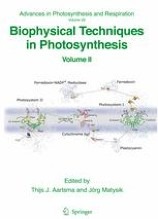
Biophysical Techniques in Photosynthesis ; Vol. II
Since the first volume on Biophysical Techniques in Photosynthesis Research, published in 1996, new experimental techniques and methods have been devised at a rapid pace. The present book is a sequel which complements the first volume (Volume 3 in the Series) by providing a comprehensive overview of the most important new techniques developed over the past ten years, especially those that are relevant for research on the mechanism and fundamental aspects of photosynthesis. The contributions are written by leading scientists in their field. The book has 5 sections: Imaging; Structure; Optical and laser spectroscopy; Magnetic resonance; Theory. Each chapter describes the basic concepts of the technique, practical applications and scientific results. Possibilities and limitations from a technical as well as a scientific point of view are addressed, allowing the reader not only to recognize the potential of a particular method for his/her own quest, but also to assess the resources that are required for implementation. The book is intended for use by graduate students and researchers in photosynthesis as well as in (bio)physics, (bio)chemistry and biology in general.

Biopharmaceutical drug design and development
Biopharmaceutical Drug Design and Development, Second Edition, updates the widely successful first edition, published in 1999. This new, expanded edition investigates the dozens of new biopharmaceutical drugs that have become available since the publication of the first edition. Among the drugs discussed are ones in the categories of monoclonal antibodies for in-vivo use, cytokines, growth factors, enzymes, immunomodulators, thrombolytics, and immonotherapies including vaccines. Additionally, the volume examines new and emerging technologies, such as bioinformatics, DNA microarrays, transgenics, therapeutic gene delivery, stem cells, nucleic acid-based therapeutics, and macromolecular drug delivery. Authors also study pharmacogenetics in the clinic and changes in biologic drug approval at the FDA. Biopharmaceutical Drug Design and Development, Second Edition, is a worthy sequel in the discussion on the dynamic, exciting field of biotechnology.

Bio-mechanisms of swimming and flying ; Fluid dynamics, biomimetic robots, and sports science
This book follows "Bio-mechanisms of Animals in Swimming and Flying" published in 2004 including 11 chapters. This time, the book includes 31 chapters on the latest researches into natural autonomous systems and locomotion in both flying and swimming organisms. The area of sports science such as analysis and simulation of human swimming is newly added. The computational frameworks for the modeling, simulation and optimization of animals in swimming and flying demonstrate an important role in the progress of interdisciplinary work in the fields of biology and engineering. An innovative technology is exhibited for the flight of an insect size micro air vehicle. Neuronal science is not only unveiling the locomotion mechanisms of swimming in fish from the aspect of the neuronal activities, but also applied to underwater biomimetic robots. The interdisciplinary works are exhibited in the fields of biology and engineering, yielding real-world benefits in innovative technologies.
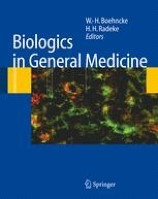
Biologics in General Medicine
The idea for this book was born during the symposium on biologics organized by ZAFES (Center for Drug Research, Development and Safety at the University of Frankfurt am Main) in September 2005. Highly distinguished researchers special- ing in the field of biologics had gathered together to exchange information on this relatively new subject. Realizing that this symposium was one of the few sources of condensed information on biologics, it became obvious that we had to create a means of informing an interested wider circle of scientists and especially general c- nicians. Therefore, the editors of this book suggested to the researchers at the symposium andalsotoprominent scientists andcliniciansinvolvedinthe developmentand application of biologics as their major field of interest the idea of assembling this compendium. We received an overwhelmingly positive response – thankfully also from the publisher – most being more than willing to support this innovative project with highly relevant chapters on the latest state of the art.
Biologically-Inspired Collaborative Computing ; IFIP 20th World Computer Congress, 2nd IFIP TC 10 International Conference on Biologically-Inspired Collaborative Computing, September 8–9, 2008, Milano, Italy
The IFIP series publishes state-of-the-art results in the sciences and technologies of information and communication. The principal aim of the IFIP series is to encourage education and the dissemination and exchange of information about all aspects of computing.
Biologically inspired cooperative computing ; IFIP 19th World Computer Congress, TC 10: 1st IFIP International Conference on biologically inspired cooperative computing, August 21-24, 2006, Santiago, Chile
The IFIP series publishes state-of-the-art results in the sciences and technologies of information and communication. The scope of the series includes: foundations of computer science; software theory and practice; education; computer applications in technology; communication systems; systems modeling and optimization; information systems; computers and society; computer systems technology; security and protection in information processing systems; artificial intelligence; and human-computer interaction.
Biofuels and sustainability : Holistic perspectives for policy-making
This open access book presents a comprehensive analysis of biofuel use strategies from an interdisciplinary perspective using sustainability science. This interdisciplinary perspective (social science-natural science) means that the strategies and policy options proposed will have significant impacts on the economy and society alike. Biofuels are expected to contribute to reducing greenhouse gas emissions, revitalizing economies in agricultural communities and alleviating poverty. However, despite these anticipated benefits, international organizations such as the FAO, OECD and UN have published reports expressing concerns that biofuel promotion may lead to deforestation, water pollution and water shortages. The impacts of biofuel use are extensive, cross-sectoral and complex, and as such, comprehensive analyses are required in order to assess the extent to which biofuels can contribute to sustainable societies.

Biochemistry for medical laboratory technology students
The book will not only help the students to have a better knowledge of the subject but also lay a strong foundation for integration of biochemical processes in clinical subjects, thus helping them in their journey to become highly skilled medical laboratory technologists.
