



الصفحة 17
الصفحة 17

Convexity and Well-Posed Problems
This book deals mainly with the study of convex functions and their behavior from the point of view of stability with respect to perturbations. We shall consider convex functions from the most modern point of view: a function is de?ned to be convex whenever its epigraph, the set of the points lying above the graph, is a convex set. Thus many of its properties can be seen also as properties of a certain convex set related to it. Moreover, we shall consider extended real valued functions.

Controlled Synthesis of Nanoparticles in Microheterogeneous Systems
contains descriptions of one of the most powerful bottom-up methods of synthesizing size controlled and stable nanoparticles. This method is based on the use of surfactant-containing microheterogeneous systems: liquid crystals, monolayers and multilayers, solutions of direct and reversed micelles, direct and reversed vesicles, and water-in-oil and oil-in-water microemulsions. The author is prominent in the field of physico-chemical characterization of microheterogeneous systems and their use as ideal solvent and reaction media for the production and long-term storage of nanomaterials. This is the first book that attempts to unify the knowledge necessary for judicious manipulation of surfactant-based systems and a fine tuning of geometric and physico-chemical properties of nanoparticles of a wide variety of substances

Control of Interactive Robotic Interfaces : A Port-Hamiltonian Approach
This monograph deals with energy based control of interactive robotic interfaces and the port-Hamiltonian framework is exploited both for modeling and controlling interactive robotic interfaces. Using the port-Hamiltonian framework, it is possible to identify the energetic properties that have to be controlled in order to achieve a desired interactive behavior and it is possible to build a port-Hamiltonian controller that properly regulates the robotic interface by shaping its energetic properties.

Control of cracking in reinforced concrete structures
Provides guidelines which can extend the existing standards and codes to cover these types of special works, especially those which are massive in nature, taking account of their specific behaviour in terms of cracking and shrinkage together with other important properties such as water/air leak tightness

Contributions to Ubiquitous Computing
This book puts the larger vision of ubiquitous computing in the context of today’s mobile and distributed computing systems and presents innovative solutions at all system layers ranging from hardware over vertical and horizontal infrastructure services and novel middleware techniques to various types of application software. Some chapters address core properties of ubiquitous applications including mobility, self-healing and self-organisation of both technical and social-technical systems. Other contributions deal with common facilities like secure e-payment or semantic web techniques and business solutions like wireless asset management or e- maintenance. Distributed systems management with self-monitoring capabilities, Internet congestion control, and novel security solutions coping with denial of service attacks against mobile agent systems and software- and hardware-based data encryption methods are further topics addressed.

Continuous-Time Signals
The book systematically covers major principle foundations of the signals theory. The representation of signals in the frequency domain (by Fourier transform) is considered with strong emphasis on how the spectral density of a single waveform becomes that of its burst and then the spectrum of its train. Different kinds of amplitude and angular modulations are analyzed noticing a consistency between the spectra of modulating and modulated signals. The energy and power presentation of signals is given along with their correlation properties. Finally, presenting the bandlimited and analytic signals, the book elucidates the methods of their description, transformation (by Hilbert transform), and sampling.

Continuous Semigroups of Holomorphic Self-maps of the Unit Disc
The book faces the interplay among dynamical properties of semigroups, analytical properties of infinitesimal generators and geometrical properties of Koenigs functions. The book includes precise descriptions of the behavior of trajectories, backward orbits, petals and boundary behavior in general, aiming to give a rather complete picture of all interesting phenomena that occur. In order to fulfill this task, we choose to introduce a new point of view, which is mainly based on the intrinsic dynamical aspects of semigroups in relation with the hyperbolic distance and a deep use of Carathéodory prime ends topology and Gromov hyperbolicity theory.

Continental Scientific Drilling : A Decade of Progress, and Challenges for the Future
Scientific drilling is an indispensable tool of modern Earth science - search, as it provides the only means of obtaining direct information on processes operating at depth. Drilling allows for the determination of - situ properties of solid materials and fluids and permits testing of hypot- ses and models derived from surface observations. In addition, drill holes may be used as a natural laboratory for experiments and as observatories for long-term monitoring of on-going active processes. Earth drilling, therefore, plays a critical role in scientific research directed towards - proved understanding of the workings of our planet and has a key role in solving urgent socio-economic problems. As a rule, drilling projects are an integral component of major geosci- tific research programs, comprising comprehensive pre-site investigations, accompanying laboratory studies, the drilling phase itself, and consecutive measurements and tests in the drill hole. Such drilling programs are costly and thus only realizable to a limited extent. International cost sharing, the optimal utilization of all available resources, the incorporation of inter- tional leading experts, and the application of the existing know-how, as well as the selection of an optimal drilling location (“World Geological Site”), are thus essential elements of an international scientific drilling p- gram.
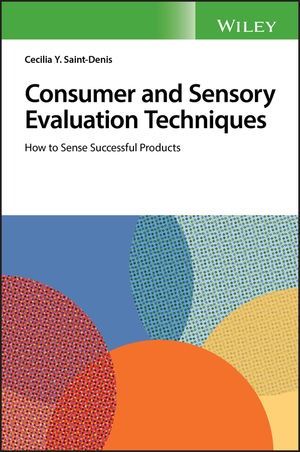
Consumer and sensory evaluation techniques : How to sense successful products
Consumer and sensory evaluation techniques speaks to management and decision-makers within organizations and addresses the main questions (eg: "How much will it cost?" and "How quickly can it be achieved?") that are faced when developing and testing new products before a launch. Chapters cover: The pillars of good consumer and sensory studies; Sensory profile of a product: Mapping internal sensory properties; The foundations of consumer evaluation; Study plans and strategy sustainable short, mid and long-term vision; Real-life anticipation with market factors: Concept, price, brand, market channel; And internal studies versus sub-contracting. Also uses examples from multiple sectors to show how to build a sustainable product evaluation strategy analyses the critical milestones to follow and the pitfalls to avoid.

Construction and analysis of safe, secure, and interoperable smart devices ; Vol. 3362 : International workshop, CASSIS 2004, Marseille, France, March 10-14, 2004, Revised Selected Papers
History based access control and secure information flow / The spec# programming system / Mastering test generation from smart card software formal models / A mechanism for secure, fine-grained dynamic provisioning of applications on small devices / A type system for checking applet isolation in java card / Verification of safety properties in the presence of transactions / Modelling mobility aspects of security policies / Smart devices for next generation mobile services / A flexible framework for the estimation of coverage metrics in explicit state software model checking / Combining several paradigms for circuit validation and verification / Smart card research perspectives

Conducting Polymers with Micro or Nanometer Structure
Conducting Polymers with Micro or Nanometer Structure describes a topic discovered by three winners of the Nobel Prize in Chemistry in 2000: Alan J. Heeger, University of California at Santa Barbara, Alan G. MacDiarmid at the University of Pennsylvania, and Hideki Shirakawa at the University of Tsukuba. Since then, the unique properties of conducting polymers have led to promising applications in functional materials and technologies. The book first briefly summarizes the main concepts of conducting polymers before introducing micro/nanostructured conducting polymers dealing with their synthesis, structural characterizations, formation mechanisms, physical and chemical properties, and potential applications in nanomaterials and nanotechnology. The book is intended for researchers in the related fields of chemistry, physics, materials, nanomaterials and nanodevices.

Conducting Polymers : A New Era in Electrochemistry
The discovery of polymers with variable conductivity brought forth a paradigmatic change in chemistry and in other branches of science and technology. Electrochemistry has played a central role in the preparation, characterization and application of these new materials. This book is a systematic survey of the knowledge accumulated in this field in the last thirty years. It includes thermodynamic aspects, the theory of the mechanism of charge transport processes, the chemical and physical properties of these compounds, the techniques of characterization, the chemical and electrochemical methods of synthesis as well as the application of these systems. The book contains a compilation of the polymers prepared so far and covers the relevant literature.

CONCREEP 10 : Mechanics and physics of creep, shrinkage, and durability of concrete and concrete structures
Contains 187 papers invited on the basis of carefully peer-reviewed abstracts. It elucidates the intricacies of concrete, linking atomistic physics to real life civil engineering design. Topics include: microstructures and micromechanics; multiscale creep, shrinkage, fracture, and durability properties; constitutive and numerical modeling; simulation and design of concrete structures; molecular- to lab-scale simulations and characterization of concrete; macroscopic material testing; creep and shrinkage of concrete under extreme conditions; monitoring of concrete structures and exploitation of measurement data; and creep and shrinkage properties of new cementitious materials.

Conceptual density functional theory : Towards a new chemical reactivity theory
This two-volume reference book shows how conceptual density functional theory can reconcile empirical observations within silico calculations using density functional theory, molecular orbital theory, and valence bond theory. The ability to predict properties like electronegativity, acidity/basicity, strong covalent and weak intermolecular interactions as well as chemical reactivity makes DFT directly applicable to almost all problems in applied chemistry, from synthetic chemistry to catalyst design and materials characterization.

Concepts and Results in Chaotic Dynamics : A Short Course
The book is a good introduction to the field of dynamical systems with a particular emphasis on statistical properties and applications. In particular, the relations both with real experiments with numerical simulations are discussed. The book contains many figures that really help the understanding of the text. The book can be used as a text for an introductory course in dynamical systems

Computing in Algebraic Geometry : A Quick Start using SINGULAR
Algebraic geometry generally studies the properties of solution sets of systems of polynomial equations without direct reference to the actual polynomials used in these systems. … This is especially desirable for classwork where the development of the abstract machinery generally outlasts the patience of the students, except possibly the most motivated ones.

Computer Simulations of Liquid Crystals and Polymers ; Proceedings of the NATO Advanced Research Workshop on Computational Methods for Polymers and Liquid Crystalline Polymers, Erice, Italy. 16-22 July 2003
Liquid crystals, polymers and polymer liquid crystals are soft condensed matter systems of major technological and scientific interest. An understanding of the macroscopic properties of these complex systems and of their many and interesting peculiarities at the molecular level can nowadays only be attained using computer simulations and statistical mechanical theories. Both in the Liquid Crystal and Polymer fields a considerable amount of simulation work has been done in the last few years with various classes of models at different special resolutions, ranging from atomistic to molecular and coarse-grained lattice models. Each of the two fields has developed its own set of tools and specialized procedures and the book aims to provide a state of the art review of the computer simulation studies of polymers and liquid crystals. This is of great importance in view of a potential cross-fertilization between these connected areas which is particularly apparent for a number of experimental systems like, e.g. polymer liquid crystals and anisotropic gels where the different fields necessarily merge. An effort has been made to assess the possibilities of a coherent description of the themes that have developed independently, and to compare and extend the theoretical and computational techniques put forward in the different areas.

Computer simulation studies in condensed-matter physics XVI ; Proceedings of the Seventeenth Workshop, Athens, GA, USA, February 16-20, 2004
This status report features the most recent developments in the field, spanning a wide range of topical areas in the computer simulation of condensed matter/materials physics. Both established and new topics are included, ranging from the statistical mechanics of classical magnetic spin models to electronic structure calculations, quantum simulations, and simulations of soft condensed matter. The book presents new physical results as well as novel methods of simulation and data analysis. Highlights of this volume include various aspects of non-equilibrium statistical mechanics, studies of properties of real materials using both classical model simulations and electronic structure calculations, and the use of computer simulations in teaching.

Computer Aided Verification ; 31st International Conference, CAV 2019, New York City, NY, USA, July 15-18, 2019, Proceedings, Part I
This volume presented automata and timed systems; security and hyperproperties; synthesis; model checking; cyber-physical systems and machine learning; probabilistic systems, runtime techniques; dynamical, hybrid, and reactive systems.

Computational studies of RNA and DNA
Computational Studies of RNA and DNA includes, in an integrated way, modern computational studies of nucleic acids, ranging from advanced electronic structure quantum chemical calculations through explicit solvent molecular dynamics (MD) simulations up to mesoscopic modelling, with the main focus given to the MD field. It gives an equal emphasis to the leading methods and applications while successes as well as pitfalls of the computational techniques are discussed.The systems and problems studied include: Accurate calculations of base pairing energies / Electronic properties of nucleic acids and electron transfer, through various types of nucleic acid / Calculating DNA elasticity
